
1956
The 1950s combined post-war practicality with chrome, colour and new performance. Explore the era and buying advice.

Powerful roadster in rare S-version


Exclusive “big Mercedes” in the best quality and with complete history

Unrestored 1958 Mercedes-Benz 220 S Ponton with data card, delivery note and documented Matching Numbers


1955 Bentley S1 Continental Drophead Coupe by Park Ward.


MG TD | Uitvoerig gerestaureerd | Concoursstaat | 1952

300 SC Coupé

EMW EMW R R 35

IFA / MZ BK 350

1953 Moto Guzzi Falcone + Sidecar '53

BMW R51/3 500cc 30 km since restoration by Marque specialist, matching Numbers, original Dutch, Excellent condition!

RT 350 S

INNOCENTI Lambretta Modell D 125cm³

Saturno 500 cm3

BSA A10 Golden Flash

RT 350, Auto Union - Restauriert

DKW RT 125/2 – Classic from 1953

INNOCENTI Lambretta Modell D 125cm³

The 1950s brought expanding ownership, better roads and a new confidence to Australian motoring. Family cars became roomier and more comfortable, while imported sports cars, American sedans and British motorcycles added glamour. A vehicle advertised as a “1950s classic” is not automatically an Australian-market specification: the same badge could describe a car made in Australia, assembled from imported parts, or imported fully built.
Holden is the clearest local story. General Motors-Holden's Australian-designed 48-215 and FJ belong to the previous decade, but the FE arrived in 1956 as Australia's first Holden station wagon and shared the locally developed six-cylinder family-car formula. The FC followed in 1958. Ford Australia sold and built products such as the V8-powered Customline and Mainline utility, but a US Ford model name does not prove Australian manufacture. Record the build plate, body style, engine and destination market rather than relying on a seller's shorthand.
The Volkswagen Beetle was sold in Australia and some early examples were assembled locally by Volkswagen Australia at Clayton; later examples can be imported or assembled through different arrangements. Treat a Beetle's Australian history as something to document. Chevrolet Bel Airs were generally imported or locally assembled from kits rather than Australian-designed Holdens, and their trim, steering, lighting and compliance details can differ from North American cars. A Jaguar XK, MG TF, Austin-Healey 100 or Morris Minor likewise needs an individual provenance check.
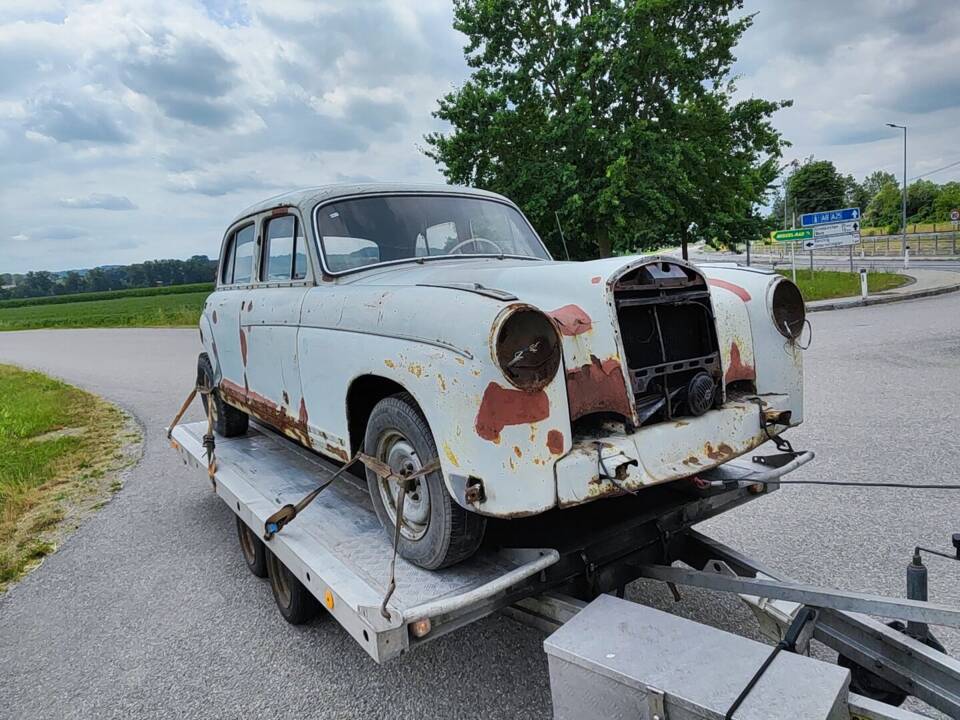
The Citroën DS debuted in 1955, but its sophisticated hydropneumatic suspension and distinctive braking system are model-specific, not a generic 1950s feature. A Mercedes-Benz 300 SL, Porsche 356 or Alfa Romeo Giulietta may have reached Australia through an importer in tiny numbers. Inspect body seams, sills, floors, bulkheads, windscreen surrounds and boot wells before judging chrome or upholstery. Rust hidden beneath old repairs is a greater financial risk than faded paint.
Triumph, BSA, Norton, Ariel, Vincent, BMW and Matchless supplied British and European motorcycles to Australian riders. Vespa and Lambretta scooters suited city transport, while sidecars remained useful for work and family travel. Exact Australian availability varied by importer and year; a badge alone does not establish a model's local delivery specification. The BSA Gold Star, Triumph Thunderbird and Norton Dominator are recognisable names, but frame numbers, engine numbers and period catalogues should support any claimed variant.
Check steering-head bearings, frame alignment, swingarm bushes, fork stanchions, wheel rims, spokes and drum brakes. Look for cracked engine plates, damaged crankcases, leaking seals and poorly repaired mudguards. Start cold where possible and listen for big-end, primary-chain or cam noise. Confirm that the magneto, points, dynamo and six-volt wiring work as intended. A later twelve-volt conversion can be sensible, but it should be recorded and reversible rather than presented as factory originality.
Heat, dust, long distances and rough country roads shaped Australian maintenance. Cooling systems deserve an honest test: a clean radiator, correct fan, sound hoses, pressure cap and accurate gauge matter more than a polished engine bay. Look for blocked passages, cracked solder repairs and evidence of chronic overheating. Utilities such as Ford's Mainline served a very different purpose from a low-slung imported sports car, and local sedans often received equipment suited to Australian fuel, weather and roads.
Be precise with manufacturing language. “Australian model” may mean designed here, manufactured here, assembled from completely knocked-down kits, or merely sold through an Australian distributor. The Holden FE and FC were Australian-manufactured; a 1950s Chevrolet, Ford Customline, Volkswagen Beetle or British car may have an assembly, import or conversion history that must be established from its plate and records. Local trim, right-hand drive conversion, replacement panels and later Australian accessories can all affect originality without making a car fraudulent.
Representative cars include Holden FE and FC, Ford Mainline, Volkswagen Beetle, Chevrolet Bel Air, Jaguar XK, MG TF and Citroën DS. They are not interchangeable mechanical experiences. Separate-frame cars require inspection of rails, cross-members, outriggers and body mounts; unitary shells require careful examination of seams, floors, sills and suspension pick-up points. Timber-framed bodies, where present, bring another set of moisture and joinery risks. Overhead-valve engines, automatic transmissions, improved drum brakes and six-volt electrics appeared with differing timing and specification. Confirm the exact year and Australian-market equipment before calling any component original.
Identity comes first. Photograph chassis and body numbers, compliance or build plates, engine and gearbox numbers, then compare them with factory literature and marque records. Ask whether a replacement shell, front clip, engine or transmission was installed. On a cold start, watch oil pressure and temperature, smoke, coolant contamination, charging voltage and exhaust colour. During a safe road test, check clutch take-up, gearbox synchros where fitted, steering play, brake pull and differential noise. A straight shell with missing trim may be a better project than a shiny car hiding structural rust.
Performance or luxury claims need evidence. Correct wheels, gauges, carburettors, seats, badges, glass and brightwork can be costly; plausible reproductions may look right but alter historic value. Ask for invoices, photographs before paint, import papers, registration history and a list of unfinished work. Have a specialist inspect the underside and, where appropriate, measure corrosion, compression and paint depth. Do not let a recent restoration obscure old accident repairs or incompatible Australian and overseas parts.
Divide the budget into purchase, immediate safety work and restoration. Allow for freight, secure storage, machining, tyres, brake hydraulics, radiator work, trim, chrome, glass and missing parts. A non-running project can be worthwhile only after counting every absent instrument, moulding and fastener. Manuals and club networks help locate parts, but reproduction panels, seals and electrical components may not fit an Australian assembly exactly. Keep removed original parts labelled and photographed.
Originality does not mean leaving unsafe brakes or perished tyres untouched. Period-correct improvements can make a car or motorcycle usable, provided they are disclosed. Use suitable hoses, wiring, fluids and tyres; do not choose a modern part only because it looks old. After recommissioning, test steering, brakes, lights, cooling, charging and fuel-system integrity in a controlled setting. Keep a dated maintenance log with kilometres, photographs and part numbers, and obtain an independent inspection before a long trip.
Before paying, confirm clear title, seller identity, chassis identity, import or assembly records and any finance or registration issue. Contact the road authority in the relevant Australian state or territory before purchase: historic-registration schemes, inspection, engineering approval, number plates, lighting, seating, emissions and permitted modifications differ and can change. The rules for a modified motorcycle, sidecar, right-hand-drive conversion or replacement chassis may be especially important. Arrange suitable agreed-value insurance and never assume a club permit is transferable.
Is a Holden FE an imported car? No. The FE was manufactured in Australia from 1956, although individual components and later replacement parts may have overseas origins. Verify the car's build plate, body and history rather than assuming every surviving FE is unmodified.
Was every 1950s Volkswagen Beetle imported? No. Some were assembled in Australia, including early Clayton production, while others arrived through import channels. The vehicle's plate, date and records establish its story.
Are older Australian registration rules the same everywhere? No. State and territory requirements differ. Ask the current registration authority about inspection, historic schemes and modifications before buying or driving the vehicle.
A carefully researched 1950s vehicle is more than a chrome object. Its factory identity, Australian journey, repair history and present mechanical condition should all be understood. Match the purchase to your storage, skills, intended distance and access to specialists, then preserve the evidence that makes the car or motorcycle distinctive.
National Museum of Australia, “Holden 48-215”; GM-Holden heritage and model literature for FE and FC; Ford Australia model and factory literature for Mainline and Customline; Volkswagen Australia historical material on Clayton assembly; Fédération Internationale des Véhicules Anciens (FIVA), FIVA World Motoring Heritage Policy. Consult current state and territory road-authority guidance for registration and modifications. Model availability and assembly claims should be checked against the individual vehicle's plate and records.
Rounded styling, separate chassis and early monocoque construction, simple carburetted engines and improving comfort define many 1950s vehicles. Australian examples also reflect local assembly and local conditions.
Holden's FE was manufactured in Australia from 1956, while Ford Australia built the six-cylinder Mainline utility and assembled or produced other Falcon-era predecessors and Consul-related models in changing programmes. A Chevrolet or Volkswagen may instead be a local assembly, CKD or imported car, so verify the individual vehicle.
Inspect chassis or shell rust, repairs, cooling, brakes, steering, wiring and trim. Match identification numbers and paperwork, and establish whether the engine, gearbox, body or suspension was changed.
A sound, correctly identified frame, complete period equipment and documented history are usually more valuable than fresh paint. Check forks, wheels, drum brakes, engine cases, magneto or dynamo and the charging system.
Join 100,000+ subscribers getting hand-picked listings
Receive hand-picked collections of the most interesting cars, motorbikes, and auction listings on Classic Trader — straight to your inbox.