- Car
- Mercedes-Benz
- Mercedes-Benz L 1500 (1 offer)
Mercedes-Benz L 1500 classic cars for sale
The Mercedes-Benz L 1500 stands out with its historical relevance and robust engineering, representing a unique offering in the classic commercial vehicle segment. Its availability on the market is rare, and its significance is tightly connected to its use during pivotal historical periods.
Search results
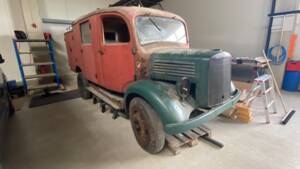
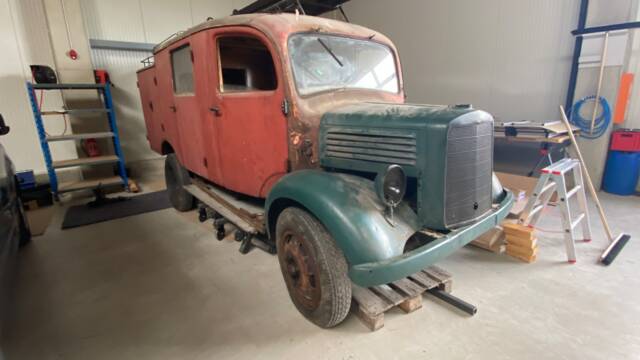
1942 | Mercedes-Benz L 1500 S
Zum Verkauf steht ein außergewöhnlich gut erhaltenes historisches Feuerwehrfahrzeug aus dem Baujahr 1942.
VAT is reclaimable

Mercedes-Benz L 1500 Classic Cars: Prices & Market Values
Introduction and history of the Mercedes-Benz L 1500
The Mercedes-Benz L 1500 was developed in the late 1930s as a light truck primarily for military and civilian use. Launched before World War II, the vehicle played a significant role as a versatile transport solution for the German Wehrmacht as well as for commercial clients in sectors such as agriculture and logistics. Mercedes-Benz engineered the L 1500 to meet the demand for reliability and adaptability in difficult terrain and conditions. Its reputation as a durable and practical truck has persisted, and today it is sought after by enthusiasts interested in historically significant German commercial vehicles.
Model history
The L 1500 series marked a significant step for Mercedes-Benz in expanding its range of light trucks. It followed earlier, less powerful commercial trucks of the 1930s and was later replaced by more advanced models with higher payloads and updated drivetrains, such as the post-war L 3000 and the L 319. The production of the L 1500 encompassed several body variants, including the L 1500 S (standard), L 1500 A (all-wheel drive), and utility versions adapted for specific military and civilian purposes. Its successors benefited from technological advances developed during the operational life of the L 1500 series.
Highlights of the Mercedes-Benz L 1500
The L 1500 series is known for its sturdy ladder frame, robust inline-four engine, and flexibility in configuration, which allowed for both rear-wheel and all-wheel drive options. Noteworthy is its modular design, enabling easy adaptation for various uses including as ambulances, staff cars, and light transporters. Original examples are infrequently seen on the market, and its distinct technical character makes it especially interesting for collectors focused on WWII-era vehicles or those seeking rare classic trucks.
Technical data
Special Editions and Collectible Models
Among the L 1500 range, the L 1500 A (Allrad) variant stands out due to its all-wheel drive system and use in demanding conditions. Additionally, versions modified as field ambulances, fire trucks, or command vehicles are particularly prized by collectors for their unique history and configuration.
Weak Spots and Common Issues
No specific weak spots or maintenance issues have been reported in our current data set for the Mercedes-Benz L 1500. Prospective buyers should, however, carefully assess the typical factors that affect classic utilitarian vehicles of this period, such as frame corrosion, drivetrain wear, and the availability of period-correct spare parts.
Engine and Performance, Transmission and Handling
The engine of the L 1500 was engineered for durability rather than outright speed, providing modest power suited for reliable, economical transport duties. The simple, rugged suspension and layout prioritise function over comfort, yet the model offered good off-road capability in its all-wheel drive L 1500 A variant. The transmission is a manual gearbox that reflects the utilitarian nature of pre-war German light trucks. Particularly noteworthy is the L 1500 A, favoured for its all-wheel drive system and desirability among collectors seeking authentic WWII-era vehicles. The standard L 1500 S, used widely in civilian roles, is valued for its classic utilitarian design and mechanical robustness.
Interior, Comfort, Exterior and design
The L 1500 presents a no-frills, functional design typical of late 1930s and early 1940s work vehicles. The cabin is utilitarian, with minimal comfort features and a focus on ease of maintenance. Exterior details include steel wheels, pronounced fenders, and a simple, box-like cargo body. Rare factory accessories included canvas tops, extra lighting, and specialized racks for military versions. Authentic paint finishes from the period are sought after by enthusiasts, and period-correct restoration enhances both value and appeal.
Other relevant features
Due to its scarcity and the specificity of original examples, documentation and original equipment such as toolkits, jacks, and historically correct paperwork can greatly increase the appeal and historical value of a listed vehicle.
Summary
The Mercedes-Benz L 1500 stands apart as a highly specialized classic, defined by its history as a robust light truck from the pre- and wartime era. Its presence on the market is rare, and interest is concentrated due to its distinct historical context and technical execution. Potential buyers should focus on originality, documentation, and correct restoration when assessing these vehicles.