- Car
- Rainier (0 offers)
Buy Classic Rainier Cars
Rainier built imposing American luxury cars for only seven years, combining large four-cylinder engines with exceptional Edwardian presence. Find a surviving Rainier with the provenance, completeness and specialist support needed for rewarding UK ownership.
Search results
Currently, there are no matching listings for your search.
Create search alert
Let yourself be notified as soon as a listing is published that matches your search filters.
Rainier listing references from Classic Trader
Below you will find listings related to your search that are no longer available on Classic Trader. Use this information to gain insight into availability, value trends, and current pricing for a "Rainier" to make a more informed purchasing decision.
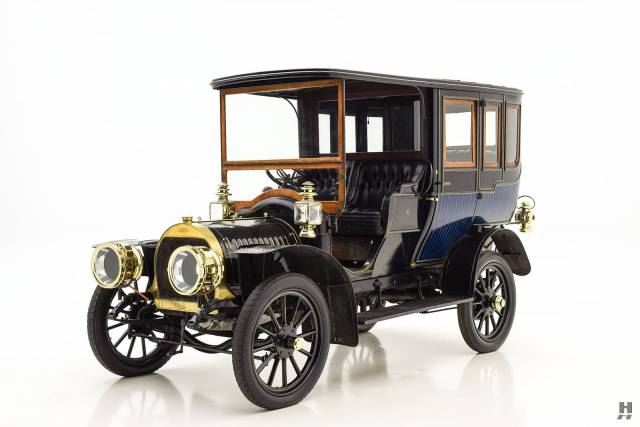
1907 | Rainier Model C
Rainier Model C
Create search alert
Let yourself be notified as soon as a listing is published that matches your search filters.
History of the Rainier marque
The Rainier Motor Car Company belongs to the short, ambitious chapter of American motoring now called the Brass Era. John T. Rainier established the marque at Flushing, Queens, in 1905, at a time when the expensive motor car was still a hand-built mechanical proposition rather than a standardised product. The name should not be confused with Monaco's royal family: this was a New York enterprise whose stated character was luxury, engineering substance and competitive ability.
Rainier's first offering, the Model A, was a 22/28hp four-cylinder touring car on a 98-inch wheelbase. Its chassis came from Garford of Elyria, Ohio, while Rainier assembled and finished the cars in New York. That arrangement was sensible for a small maker, but it left the young company exposed to its supplier. A bigger 30/35hp Model B town car arrived for 1906, followed by the Model C in touring and landaulet form during 1907. These were costly cars, aimed at the owner who wanted a chauffeur-capable machine but did not wish to surrender performance.
The decisive move came in 1907. With Garford and Studebaker drawing closer together, a secure supply of frames was less certain, so Rainier shifted production to Saginaw, Michigan and set out to manufacture a complete car. The Saginaw works opened for the 1908 season. The Model D, a large 40/50hp car, represented the result: a long, high-quality touring chassis available with five- or seven-seat open coachwork and with formal closed bodies. It was Rainier at its independent peak.
Rainier advertised confidence in unusual terms, offering a year's use without repair expense. It was a bold promise for an early car with exposed mechanical systems, but the construction supported the claim: the pressed-steel frame used generous nickel steel, while the powerful engine and four-speed gearbox gave the Model D an unusually purposeful specification. Pricing placed it firmly among the elite. Depending on bodywork, the Model D was listed at roughly $4,500 to $5,500 when a Ford Model T cost a small fraction of that sum.
Financial strength did not match engineering ambition. The Panic of 1907 restricted cash, and despite about 300 Saginaw-built cars being delivered during 1908, Rainier entered receivership late that year. The business was acquired by General Motors in 1909, during William C. Durant's rapid expansion of the group. GM retained Rainier as its intended top-line make, but only briefly. The 1910 and 1911 Model F enlarged the formula to a 50hp touring and formal-car range on a 119- or 120-inch wheelbase. Production ended in 1911; the Saginaw works subsequently built other GM products.
For a British collector, that compressed history is central to the appeal. A Rainier is not simply a large American veteran: it is an exceptionally scarce witness to the period before the US industry consolidated around a few huge concerns. The surviving cars are sparse enough that an individual chassis, its old ownerships and its restoration record often matter more than a nominal model hierarchy.
Highlights and defining features
The characteristic Rainier is an upper-tier, shaft-driven four-cylinder car with real visual scale. Its towering brass radiator, lamps, broad mudguards and upright windscreen make an Edwardian touring body feel more like a rolling drawing room than a lightweight sports car. Yet Rainier did not sell an inert carriage with an engine. Contemporary competition appearances and the Model D's large-capacity motor gave it a sporting undercurrent.
Three strands define the marque. First is the engineering: the 1908 Model D used a 6,759cc T-head four, make-and-break ignition and a four-speed transmission whose top gear was described as overdrive. Second is the material quality, notably the nickel-steel pressed frame and extensive brass fittings. Third is its place in the early General Motors story. It is rare to find a car that can credibly be discussed alongside both American independent luxury makers and the formative years of GM.
The Model D also has documented competition credentials. Rainier driver Louis Disbrow won the 200-mile Atlanta Cup; in a 1909 24-hour race at Brighton Beach, a Rainier finished second ahead of cars driven by Ralph de Palma and Ralph Mulford. These results should not persuade a buyer to treat a surviving tourer as a racing car, but they help explain why its large engine, sizeable ports and valves were valued at the time.
Originality carries exceptional weight. Brass lamps, radiator script, hood irons, side curtains, body fittings, ignition hardware and axle components can be more difficult to replace correctly than components from a mass-produced British make. A striking restoration is welcome, but a well-documented original car with its correct chassis, body and early papers may be the more important object. Ask whether visible Rainier identification is period-correct: some surviving radiator scripts and badges may have been added during old restorations rather than fitted at the factory.
Rainier technical data
Figures vary between period catalogues, surviving-car descriptions and the horsepower naming conventions of the day. The following is a useful buying reference, not a substitute for inspecting the particular chassis.
The numbers reveal the development: the wheelbase grew from 98 to 120 inches in six model years, but the marque never became a volume manufacturer. The Model D's 5 x 5¼-inch cylinder dimensions are frequently quoted in auction descriptions. Its 50hp designation is period rating rather than modern DIN or SAE net horsepower, so modern performance comparisons are unhelpful. Weight, top speed and exact body capacity can differ materially with coachwork and equipment.
Market overview and buying tips
Rainier values cannot be reduced to a generic price guide. Too few examples change hands publicly, and a sale normally reflects survival status, body authenticity, restoration depth and evidence more than it does a simple condition grade. The clearest UK benchmark is particularly instructive: Bonhams London sold the restored 1908 Rainier Model D 40/50hp seven-passenger touring car, chassis 1603, for £167,900 including premium on 5 November 2021. Offered as the sole survivor of its type, it had long California and Buess Collection provenance and had been restored between 2016 and 2021. Bonhams recorded more than £50,000 spent on the restoration, including rebuilt mechanical items, a rebuilt radiator, brass restoration and over £19,000 on trim.
That result is evidence for one exceptional, comprehensively presented car, not an automatic valuation for every Rainier. A project with a replacement engine, unproven body or missing ignition components requires a very different budget. Conversely, an unrepeatable, largely original car with chassis papers and an established club history may justify a premium even if its cosmetic finish is gentler. Since the marque's public market is so thin, buyers should retain auction catalogues, photographs and correspondence as part of the car's value file.
Before agreeing a purchase, match the chassis number across title, old registrations, bill of sale, shipping paperwork and any auction catalogue. Brass Era cars may have short stamped numbers, old replacement plates or later restoration records that use a different description; resolve this before money changes hands. Confirm whether engine, gearbox, axles and body are the original units. A period-correct substitute component is not necessarily a reason to reject a car, but it must be disclosed and reflected in the price.
Inspection should be undertaken with a pre-war specialist who understands T-head fours and early transmissions. On a Model D, scrutinise the pressed frame for corrosion, cracking around cross-members, distortion and poorly executed repairs. Examine spring hangers, kingpins, steering-box wear, wood framing under the body, wheel felloe condition and spoke tension. Look closely at the rear axle and half-shafts: the 2021 Bonhams car's early history included a cracked half-shaft casing and a Pierce-Arrow replacement axle, illustrating why exact axle provenance deserves attention.
Mechanical inspection should include cold starting, lubrication, cooling circulation, carburation and ignition timing rather than merely a warm-engine demonstration. Make-and-break ignition needs competent set-up; worn contact parts, unsuitable batteries or improvised wiring can produce a car that starts theatrically but is not dependable on a long club run. Test every gear gently, assess clutch drag, check propeller-shaft and universal-joint play, and look for overheating or water leaks after a proper run. The big slow-revving engine should feel deliberate and torque-rich, not violently rough.
Do not regard a recent paint finish as proof of restoration quality. Lift carpets where practical, inspect the underside of scuttle and doors, compare body-panel joints with old photographs, and ask for invoices identifying who made new wood, leather, hood fabric and nickel or brass work. A restoration that carefully retains original lamps, instruments and upholstery patterns can be more desirable than an indiscriminate replacement programme. For an open car, ensure the hood frame, side curtains, hood bag and weather equipment are present; reproducing them to a credible standard is expensive.
Parts sourcing will be a bespoke exercise. There is no UK warehouse catalogue for Rainier components. The Horseless Carriage Club of America and US Brass Era owners are valuable research contacts for photographs, dating evidence and possible patterns, while UK organisations such as the Veteran Car Club of Great Britain offer the local knowledge needed for events, road use and sympathetic preservation. Use an established pre-war engineering and coachbuilding specialist for machining, magneto or ignition work, radiator cores, wheel rebuilding and ash framing. Buy a car for which patterns, drawings, photographs and removed original pieces accompany the sale; those are often the most useful spares.
Importing and registering a Rainier in Great Britain
Most Rainiers offered to a British buyer will be in North America. Include ocean freight, marine insurance, port handling, duty/VAT treatment, inland transport and the possibility of a long period without use while documentation is resolved in the purchase budget. Obtain clear US title or ownership documents, a bill of sale, chassis-number photographs, export paperwork and evidence of date of manufacture before the car leaves its seller.
For a permanent import, notify HMRC through NOVA within 14 days of arrival; HMRC must process the notification before DVLA registration. Duty and VAT treatment depends on the vehicle, its origin, the import route and eligibility for any collector-vehicle relief, so confirm the current position with HMRC or an experienced customs agent before bidding rather than relying on a seller's assurance. The buyer should also preserve the customs entry/MRN and all invoices.
DVLA normally uses form V55/5 for a used imported vehicle. The application needs the relevant original foreign registration or title documents where available, HMRC/NOVA evidence and proof of the vehicle's age and identity. If the original registration document is absent, DVLA may accept alternative dating evidence, including a letter from a recognised enthusiast club or manufacturer source. A dated Rainier history file is therefore practical as well as collectible. Be exact: chassis number, model description and dates should agree across NOVA, the V55/5 and supporting documents. Inconsistent data can delay registration or result in a less desirable age-related outcome.
DVLA may inspect the car. Keep it off public roads until it is registered, taxed and insured, and arrange transport from port to storage or workshop. A vehicle first registered more than 40 years ago is generally eligible for the Historic Vehicle tax class and is normally MOT-exempt, but roadworthiness remains the keeper's responsibility. The V5C, insurance and event regulations should be checked for the individual vehicle; a 1900s left-hand-drive touring car demands specialist insurance and a realistic discussion of use on British roads.
Driving a Rainier
A Rainier is not a motor car to be hurried. From the driver's high, exposed position, its bonnet and brass lamps establish the rhythm before the engine turns a wheel. Controls ask for physical sympathy: deliberate clutch work, anticipation before a hill, attention to spark and mixture where fitted, and a wide berth for the car's mass and turning circle. The sensation is less like operating a later vintage sports car than conducting an impressive piece of mobile engineering.
Once moving, the large four-cylinder engine is the surprise. It has the long-striding, low-speed authority expected of an expensive American touring car, and the four-speed gearbox makes the model more flexible than many earlier veterans. A properly sorted example should cruise comfortably within the limits of its era, not at modern traffic pace. Brakes, tyres, lighting and cooling all set the sensible speed. Plan hills, avoid dense high-speed roads and treat a long descent with the respect due to period brakes.
British ownership works best with the right social use: a pre-arranged country run, a Veteran Car Club event, a static concours, or a carefully supported tour rather than a spontaneous motorway journey. A following vehicle with tools, water, fuel and recovery arrangements is sensible for longer excursions. The reward is the spectacle and presence of a car that few people, including experienced collectors, have encountered in motion.
Design and coachwork
Rainier design is defined by proportion rather than a famous named stylist. The Model D's barrel-shaped radiator, tall bonnet and long wheelbase give it a stature comparable with the most costly European and American cars of the period. Its Roi-des-Belges-influenced touring body has a graceful curved rear deck and deep passenger accommodation, set above a purposeful chassis. Seven seats, side curtains and a proper hood made such cars capable of carrying a household or a party in the weather, while the brass trim declared their status.
The evolution from the compact Model A to the 120-inch Model F was an evolution towards formality. Early tourers retained a relatively light, competition-aware character; later Model F catalogue choices included limousines, landaulets and close-coupled tourers, all suited to the wealthy owner or chauffeur. No two survivors should be assumed identical. Coachwork suppliers, customer specifications and later repairs can alter details, which is why period sales material and early photographs are essential references.
For restoration decisions, preserve evidence before replacing it. Photograph paint traces, hood fittings, lamp brackets, body stamps, upholstery seams and wiring routes. A British trimmer can reproduce leather and Wilton carpeting beautifully, but original patterns and fastening hardware are the difference between a sympathetic reconstruction and a generic Edwardian finish. Brass should be restored with care rather than polished indiscriminately; its finish, the radiator's construction and the right lamp equipment materially affect authenticity.
Competition, clubs and provenance
Rainier's short competition record adds credibility to the marque's luxury image. Louis Disbrow's Atlanta Cup win and the Brighton Beach endurance result showed that its expensive touring machinery had stamina as well as polish. However, public-event eligibility in Britain is determined by the organiser and the car's specification, not by historic reputation. Confirm requirements for fire extinguishers, fuel systems, lighting, insurance and recovery support well in advance.
The small number of survivors makes the ownership community international by necessity. In the UK, the Veteran Car Club of Great Britain is an important entry point for Edwardian knowledge, routes and contacts. In the United States, the Horseless Carriage Club of America provides a valuable link to early-car history and owners. Auction houses, marque researchers and prior restorers may be as useful as a conventional model register. A buyer should ask the vendor to introduce them to these people where possible.
Provenance is particularly consequential. The 2021 Bonhams Model D had a documented California delivery, six decades in the Buess Collection, later specialist ownership and an explicit record of its 2016–2021 restoration. Such continuity helps establish what has survived, what was replaced and why. A file containing period images, prior titles, old correspondence, restoration invoices and detailed chassis photographs is not administrative clutter; for a Rainier, it is part of the car.
Summary
A classic Rainier is a rare, substantial choice for the collector who values Edwardian engineering, historical research and the pleasure of preserving an early American luxury car. The Model A, B and C show the New York beginnings; the Model D supplies the marque's most compelling independent-era expression; and the Model F represents the brief GM continuation. None is a casual purchase.
Prioritise a complete, properly identified car with strong provenance, a specialist inspection and realistic access to US and UK club knowledge. Budget for bespoke parts and careful transport, and approach any import with NOVA and DVLA documentation planned before shipment. When those foundations are in place, a Rainier offers an experience few classic cars can match: dignified, mechanically fascinating and unmistakably of the age when luxury motoring was made one car at a time.