- Car
- Rauch & Lang (0 offers)
Buy Rauch & Lang Classic Cars
Rauch & Lang brought Cleveland carriage-making standards to the earliest American electric cars. Find rare Coupés, Broughams and Dual Drive Coaches with sound provenance on Classic Trader.
Search results
Currently, there are no matching listings for your search.
Create search alert
Let yourself be notified as soon as a listing is published that matches your search filters.
Create listing
Do you have a Rauch & Lang that you want to sell? Then create a listing now.
Create listingRauch & Lang listing references from Classic Trader
Below you will find listings related to your search that are no longer available on Classic Trader. Use this information to gain insight into availability, value trends, and current pricing for a "Rauch & Lang" to make a more informed purchasing decision.
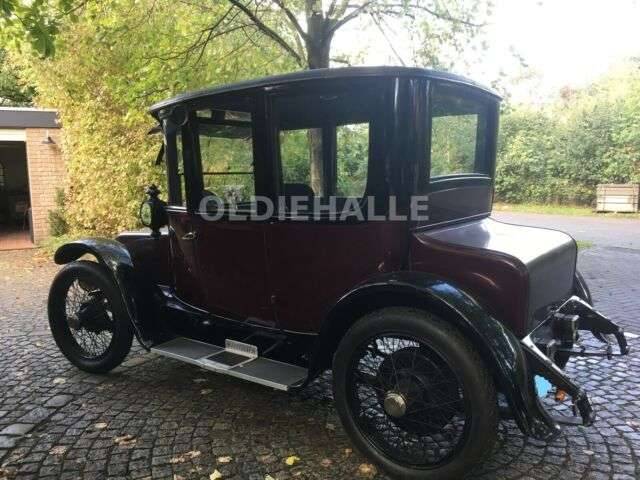
1919 | Rauch & Lang C35
Sonstige Marken

Create search alert
Let yourself be notified as soon as a listing is published that matches your search filters.
Create listing
Do you have a Rauch & Lang that you want to sell? Then create a listing now.
Create listingFrom Cleveland carriage works to electric motoring
Rauch & Lang belongs to the first great age of the electric motor car, yet its story began with wood, paint and carriage fittings rather than with a laboratory or an engine works. Jacob Rauch and Charles E. J. Lang established their Cleveland coachbuilding business in 1884. Their customers expected quiet, handsome and carefully finished carriages, and that established skill explains the character of the automobiles that followed. A Rauch & Lang was conceived as a refined enclosed conveyance first and a machine second: an important distinction when assessing one today.
The firm initially sold Buffalo Electric cars from 1903, before building its own electric Stanhope in 1905. Around 50 vehicles were completed in that first year. Production broadened quickly to include Coupés and depot wagons, and by 1908 capacity was reported at about 500 cars annually. This was a serious specialist concern, not a one-off experiment, although the volumes remain tiny beside the petrol-car industry which later defined American motoring history.
Electric propulsion made excellent sense for the intended owner. In a busy Edwardian city it avoided the noise, smoke, vibration and hand-cranking associated with a petrol car. The driver could proceed smoothly from a townhouse, hotel or station without the dramatic ritual of starting an internal-combustion engine. For many women motorists and urban households with a chauffeur, that civility was a selling point rather than a compromise. The silent electric had a similar appeal in Britain, where town cars and formal broughams already had a strong social role, even if Rauch & Lang itself remained an exceedingly unusual American import.
Early Rauch & Lang cars used a single DC motor and chain drive to the rear wheels. The purchase of Hertner Electric in 1907 brought electric motors and controllers into the company, giving the marque greater control over its principal mechanical components. In 1911 shaft drive became available alongside chain drive. Worm drive followed on 1913–14 models, continuing the quest for quietness that defined the brand. Advertisements of the period quoted ranges of roughly 50 to 150 miles for certain 48- and 80-volt 1911 battery installations, but those claims depended heavily on terrain, weather, batteries, speed and load. They should never be read as a modern usable-range promise.
The business changed as the luxury electric market contracted. Rauch & Lang merged with Baker in 1915 to form Baker R & L. The passenger-car activity moved to Chicopee Falls, Massachusetts, in 1920; taxis became increasingly important. Passenger-car production ended in 1928, while Raulang coachwork continued intermittently until 1932. The result is a marque with a compact but varied lineage: the open 1905 Stanhope, formal Coupés and Broughams, sophisticated Dual Drive Coaches such as the C45 and C55, and later taxi work. For a British collector, the small survivor population is part of the attraction, but it also demands disciplined research before money changes hands.
The qualities that distinguish a Rauch & Lang
Rauch & Lang is not a marque to approach through conventional performance figures. Its appeal lies in coachbuilt presence, near-silent running and early electric sophistication. A high-roofed Coupé or Brougham has the atmosphere of a compact drawing room. It combines upright glazing, substantial doors, upholstery, lamps and fine brightwork in a way that is closer to a private carriage than to a sporting car. Original hardware matters accordingly: an apparently minor missing door handle, interior lamp, voltmeter or window fitting can be exceptionally difficult to replace correctly.
The open Stanhope shows the earliest, lighter side of the range. It makes a persuasive veteran-event car when complete, but it is not simply a body style to be interchanged with a later closed car. The battery layout, controls, wheels, lamps and structure all need to support the claimed date and specification. A depot wagon or roadster reveals the company’s practical breadth, whereas the closed passenger cars best convey its luxury-market identity.
Most conspicuous are the Dual Drive, sometimes described as Double Control, cars. On a C45 or C55 the arrangement allowed operation from the rear passenger compartment as well as from the chauffeur’s position ahead. Twin tillers and duplicated pedals make the idea immediately visible. It was a thoughtful answer to a particular affluent customer: an owner could drive in privacy when desired, yet retain a chauffeur-operated formal car. The feature is fascinating, but it means more linkages, controls and fittings to inspect. A tidy restoration that has made one station decorative rather than operational should be described honestly, not assumed to be correct.
The body is often more important than the model designation. A 1909 Coupé restored to a very high standard, a preserved Coach with authentic materials and a later taxi-derived car will attract different buyers and require different budgets. Originality is not a simple matter of old paint. A sensitively renewed timber frame, correctly made roof covering and documented replacement battery system may make a car more usable than a superficially untouched but structurally weak example. The essential question is whether the work respects the vehicle’s construction, period appearance and historical identity.
Technical data and period specification
These figures are useful markers, not a substitute for examining the individual car. Pre-war makers revised components, bodies and electrical equipment, while later restorations often introduced sensible but non-original changes. The chassis number, body number, controller and motor markings should be photographed and reconciled with ownership records, auction catalogues and specialist knowledge. Do not assume a car is a C45 or C55 merely because it carries a familiar description from an old advertisement.
The battery installation deserves the same care as the identity check. Some cars retain or reproduce period-appropriate lead-acid or nickel-iron arrangements; others have later cells selected for reliability. Either approach can be acceptable if the seller explains it fully. Ask for the battery chemistry, installation date, capacity, charging regime, isolation method, fuse protection, cable sizes and ventilation provisions. Inspect the battery boxes for corrosion and evidence of acid damage. A battery conversion that is neat, secured, electrically protected and reversibly engineered is far preferable to a hidden modern system whose weight, wiring or charging requirements are undocumented.
Electrical controls should be examined cold and under load. A demonstration ought to cover isolation, selection of forward and reverse, movement from rest, braking, charging and a short road test rather than a few yards for photographs. Controller contactors, resistance elements, cabling and motor bearings are specialised work, while mechanical brakes, tyres, hubs and steering require equally close attention. For a car that may travel from the United States to Britain, arrange an inspection by a pre-war electric-vehicle specialist before shipment; an ordinary classic-car survey alone may not identify the relevant risks.
Market overview and buying tips in Britain
The Rauch & Lang market is international, thinly traded and unsuitable for a simple price chart. Public results offer useful context but not a universal value. RM Sotheby’s sold a 1920 C45 Dual Drive Coach for US$66,000 in 2015 and a restored 1909 Coupé for US$99,000 in 2019. A C55 Double Control Coach offered with a US$100,000–130,000 estimate in 2025 did not sell. Those events show how strongly body style, restoration standard, provenance and buyer confidence affect demand; they do not establish a price for every surviving car. The cost of transport, marine insurance, import taxes, commissioning and future specialist work must be considered separately in a UK purchase budget.
British buyers will commonly encounter a left-hand-drive American car. That is not inherently a drawback for a formal, low-speed electric vehicle, but it should shape the intended use. A Dual Drive’s unusual controls are already a learning exercise; add narrow lanes, busy village junctions and traffic approaching from the right, and a cautious familiarisation plan is essential. Such a car is best suited to local runs, club gatherings, veteran and pre-war events, concours lawns and private-estate roads rather than a fast A-road itinerary. Its grace is in unhurried progress, not in keeping pace with modern traffic.
Before purchase, begin with provenance and identity. Request high-resolution images of every chassis, body, motor and controller number, both control positions, the inside of the doors, underside, battery compartment and wiring. Ask for the American title history, previous bills of sale, restoration invoices and photographs taken before repainting. Auction descriptions can be useful leads, but they are not engineering reports. A story of long museum ownership is valuable only when the chain of documents supports it.
Then inspect the coachwork structure. Closed Edwardian bodies can combine timber framing, metal panels, fabric roof material, complex doors and delicate window mechanisms. Look for softness at the sills, cracking around pillars, lifting panel edges, trapped moisture around the roof and uneven door gaps. Fresh paint may improve appearance without proving that the timber below is sound. Establish exactly which wood has been renewed, whether the body was dismantled, and whether photographs record the work. Replacement work is normal on a car of this age; undocumented replacement or poor alignment is the concern.
The British registration route should be discussed before the car leaves its country of origin. An imported veteran may need evidence of date and identity for age-related registration, while a vehicle without a satisfactory existing record can require a specialist route such as an owners’ club-supported application. Historic-vehicle status, vehicle tax and MOT exemption have specific eligibility rules and do not remove the owner’s duty to keep the car roadworthy. Changes to electrical equipment, lights or the battery system should be explained accurately to the insurer and checked against the requirements applying to the intended registration route. Obtain written advice from a marque or pre-war electric specialist, a knowledgeable registration agent and the insurer rather than relying on a general forum answer.
Parts planning is central to ownership. Ordinary consumables and some machined mechanical pieces may be made or sourced through American specialists, but authentic lamps, glass, fittings, control hardware and body-specific trim can take years to locate. Budget for a survey before buying and for a commissioning period after arrival. The strongest British purchase is often the car with a well-recorded restoration, a proven charging system and contacts who have supported it, even if its patina is less dramatic than a freshly painted auction display.
A very different kind of road car
Driving a Rauch & Lang asks the owner to leave modern expectations at the gate. From the elevated seat, the view over the wings and upright bonnet is ceremonial. There is no gearbox to work through and no exhaust note to fill the cabin. Once the controls are understood, the car moves away on a wave of quiet torque, accompanied by tyre noise, the restrained sound of gears or chain, and the faint conversation of a century-old body.
That silence changes the atmosphere of a British outing. A careful early-morning run to a village meet, a slow procession at a pre-war gathering or a circuit of an estate can feel remarkably composed. Passers-by often expect a petrol engine and are surprised when the large formal car glides past almost noiselessly. The experience is less about covering distance than about observing the roads, anticipating traffic and managing momentum. Choose routes with modest speeds, safe turn-round points and a conservative energy margin.
Controls vary substantially, particularly on Dual Drive cars. Learn the tiller, pedals, reversing arrangement, brake effect and emergency isolation with an experienced owner or specialist before joining public traffic. Battery mass influences steering effort, stability and stopping distance. Brakes should be adjusted and tested with great care; traffic behind may not anticipate how slowly an Edwardian electric accelerates or stops. In wet weather, avoid treating its tyres, lights and weather protection as if they were contemporary equipment. The reward for that restraint is a uniquely serene form of motoring.
Coachwork, comfort and social purpose
Rauch & Lang design follows the language of the carriage, not the later language of streamlined motor cars. Tall body sides, formal roofs, generous glass areas and richly treated interiors state the maker’s priorities. The cars were sold when electricity represented cleanliness, discretion and metropolitan sophistication. Their substantial silhouette was therefore not a technical hangover; it was a deliberate expression of comfort and status.
The Brougham and Coach make this particularly clear. A passenger steps through a proper door into an upholstered compartment, surrounded by details that may include interior lighting, fittings and finely finished timber. The body was a place to arrive in, not merely a shell around machinery. A British buyer familiar with Edwardian Rolls-Royce, Daimler or electric town-car culture will recognise the social idea, while also appreciating the distinctly American scale and engineering underneath.
Dual Drive control expands that social purpose. It allows the owner to take charge without abandoning the possibility of chauffeur service. That intriguing arrangement also makes authenticity more important: correct duplicated controls and their finish contribute directly to the car’s historical meaning. A sympathetic restoration may retain honest wear, but it should not replace distinctive trim with generic fittings or simplify the interior to make it look merely tidy. Proportion, materials and the integrity of the body frame matter more than cosmetic shine.
Summary
To buy a Rauch & Lang classic car is to acquire a rare chapter of American electric and coachbuilding history, not simply an early electric vehicle. The Stanhope, Coupé, Brougham and Dual Drive Coach reveal a small marque with unusually broad character, from open veteran motoring to dignified chauffeur-style travel.
For a British collector, the right example is one with corroborated numbers and history, sound documented coachwork, a professionally explained battery installation and a practical plan for inspection, import, registration and support. Choose the actual car rather than an assumed market value, allow time for careful commissioning, and a Rauch & Lang can bring an almost forgotten, deeply civilised way of travelling to the road.