- Car
- Ralt (0 offers)
Buy Ralt classic racing cars
Ralt single-seaters bring Ron Tauranac’s direct, intelligent engineering to British historic racing. Find documented RT1, RT3, RT4 and RT30 cars for competition, track use or a serious motorsport collection on Classic Trader.
Search results
Currently, there are no matching listings for your search.
Create search alert
Let yourself be notified as soon as a listing is published that matches your search filters.
Ralt listing references from Classic Trader
Below you will find listings related to your search that are no longer available on Classic Trader. Use this information to gain insight into availability, value trends, and current pricing for a "Ralt" to make a more informed purchasing decision.
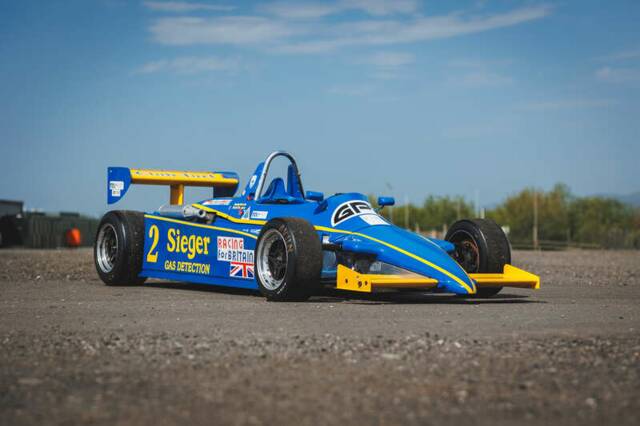
1983 | Ralt RT3 Formula 3
1983 Ralt Formula 3 RT3/83 #375 - Ex-Martin Brundle

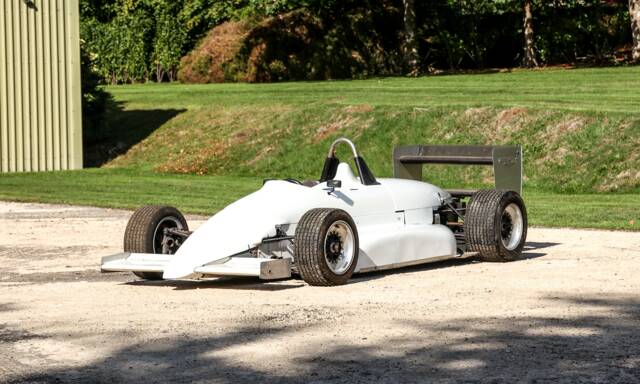
1983 | Ralt RT3 Formula 3
1987 Ralt Formula 3
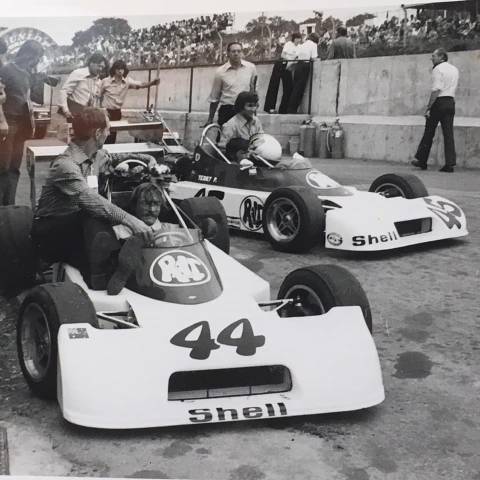
1975 | Ralt RT1
1 of 2 Ralt works cars, competed in the F3 European championship 1975

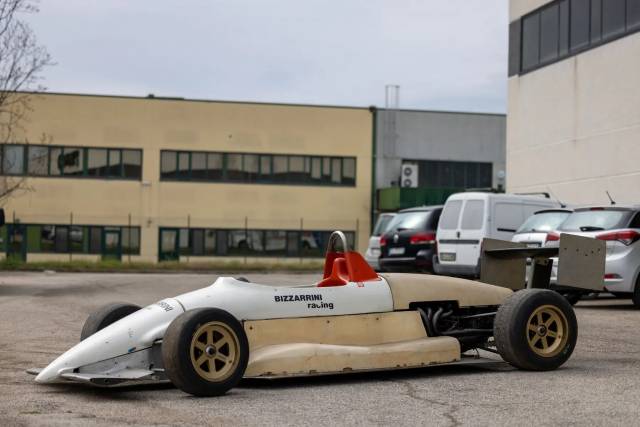
1985 | Ralt RT30/86
Giotto Bizzarrini's Car - Historic Project!

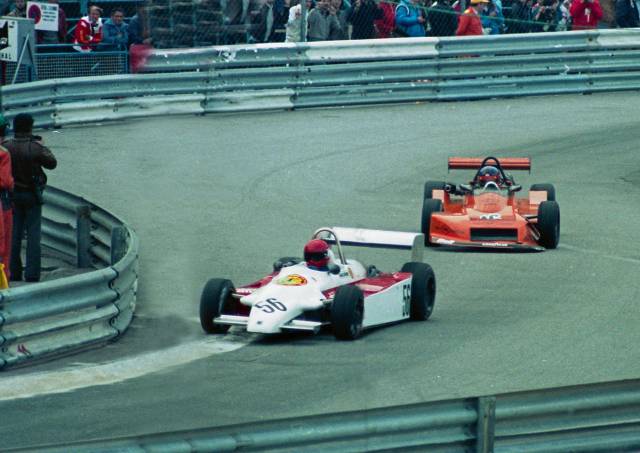
1979 | Ralt RT3 Formula 3
1979 Ralt RT3 F3
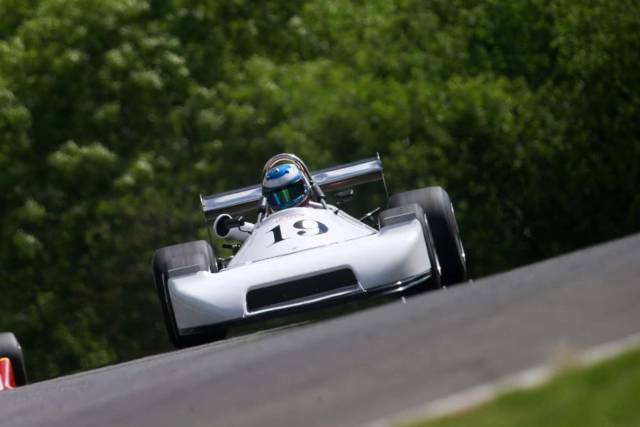
1978 | Ralt RT1
1978 Ralt RT1 (FIA)
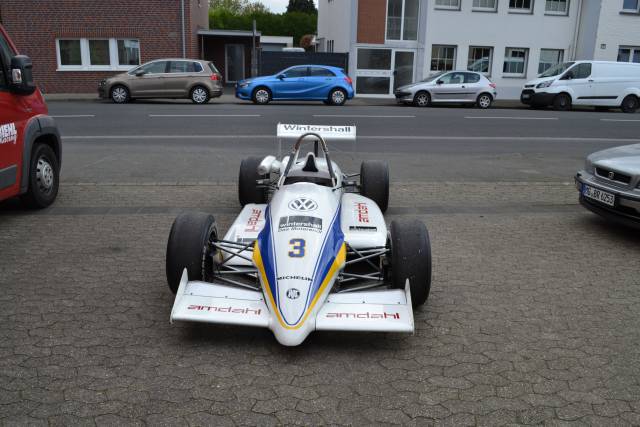
1986 | Ralt RT30/86

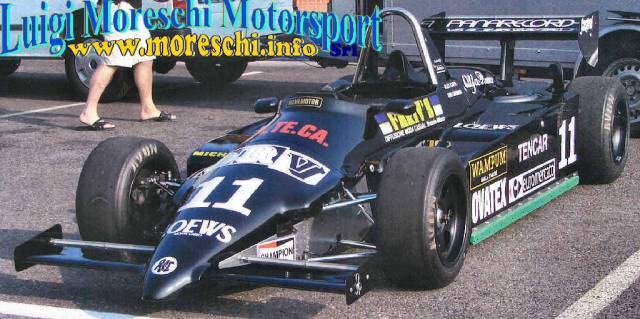
1984 | Ralt RT3 Formula 3
RALT RT3/84 F3
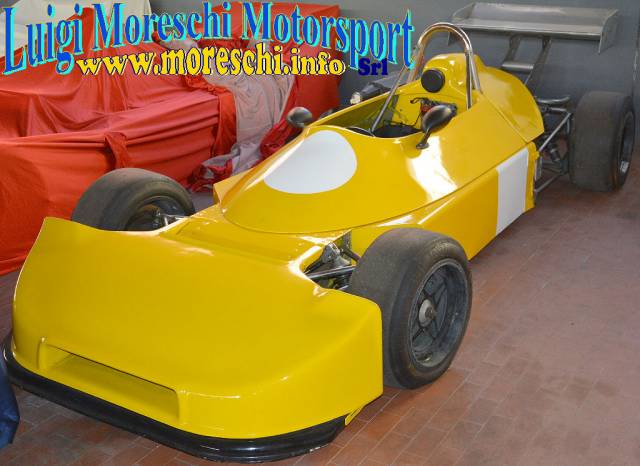
1977 | Ralt RT1
Ralt RT1 F3 Toyota Novamotor
Create search alert
Let yourself be notified as soon as a listing is published that matches your search filters.
Ralt: a British customer-racing story
Ralt made racing cars rather than road cars, and that distinction should shape every purchase. The name combines Ron Tauranac and his brother Austin Lewis Tauranac. Ron had already helped make Brabham one of the defining British constructors before returning to independent design work in the mid-1970s. His new Woking business was built around a clear proposition: a private entrant should be able to buy a properly conceived single-seater, understand it, maintain it and race it hard.
The first major result was the RT1, introduced for 1975. It was a notably adaptable aluminium-monocoque customer car, capable of serving Formula 3, Formula 2 and Formula Atlantic specifications according to its chassis, suspension and engine installation. Larry Perkins won the inaugural European Formula 3 Championship in an RT1 in 1975, giving the new marque instant credibility. The formula worked because Tauranac combined a stiff, serviceable tub with an uncomplicated steel rear structure and suspension that competent race workshops could set up without factory mystique.
The RT1 became a familiar sight in British paddocks. In the second half of the 1970s, young drivers such as Nelson Piquet, Derek Warwick and Elio de Angelis used Ralts on their way through the ranks. Published Ralt production histories commonly record 165 RT1s between 1975 and 1979, although buyers should never use a total as proof of an individual car’s identity. A chassis plate, period logbooks and a continuous ownership or competition trail matter much more.
Ralt’s next great chapter was the RT3. Developed for the changing Formula 3 rules, it arrived for 1979 and evolved rapidly through the early 1980s. Its narrow aluminium honeycomb tub, inboard suspension and ground-effect sidepod philosophy made it a more aerodynamic, more focused machine than the RT1. Early examples took time to mature, but the type became the benchmark in British and European F3. By 1982, Ralts formed roughly three quarters of the British Formula 3 field; that says much about both pace and customer confidence.
The RT3 is also the Ralt most strongly tied to a generation of future Formula 1 drivers. Jonathan Palmer, Tommy Byrne, Martin Brundle and Ayrton Senna all figure in its story. Senna’s 1983 British F3 title campaign with West Surrey Racing is rightly celebrated, but it has also created a reason for caution: an RT3 in period-style WSR colours is not necessarily a Senna car. Exact chassis attribution, race entries, photographs and team records must support any such claim.
Alongside Formula 3, Ralt supplied Formula Atlantic with the RT4. It paired a light ground-effect chassis with the high-revving 1.6-litre Cosworth BDA or BDD four-cylinder familiar to the category. The RT4 travelled exceptionally well: it raced in Britain, continental Europe, North America, New Zealand and Australia. Roberto Moreno’s 1981 Australian Grand Prix victory in an RT4 made the model part of Australian racing folklore, while British examples remain attractive to owners seeking a fast, analogue single-seater with broad historic-race relevance.
The rule change to flat bottoms brought the RT30 for 1985, followed by RT31 and later Formula 3 developments. The RT30’s distinctive asymmetry was a direct response to the regulations: one sidepod carried the principal radiator while the opposing structure performed a different aerodynamic and safety role. Ralt also built Formula Super Vee and Formula 3000 cars, including the RT5 and RT20/21 family. March acquired the company in 1988; cars continued to appear under changing ownership, but the independent Tauranac period remains the core of the marque’s historic appeal.
Why Ralt matters to collectors and racers
A Ralt is compelling because it is not merely a display object. It is a purposeful customer racing car with an unusually strong link to the club and international single-seater ladder. The RT1 offers late-1970s mechanical honesty, the RT3 captures the intensely competitive ground-effect F3 era, the RT4 brings Formula Atlantic power and speed, and the RT30 represents the next regulatory reset. Together they tell the story of British specialist engineering at a time when private teams could still buy a chassis and make a meaningful impression.
That breadth is useful, but the model name alone never tells the whole truth. A car advertised as an RT1 may be an original Formula 3 car, a Formula Atlantic conversion, a re-tubbed historic racer or a hillclimb special. An RT3 may carry a Toyota, Volkswagen or Alfa Romeo F3 engine depending on its period and country. An RT4 may have a correct Cosworth installation, a later Ford Duratec conversion for contemporary use, or no engine at all. Each can be an enjoyable and legitimate racing car, but they are not interchangeable propositions.
For an historic buyer, period correctness and evidence are more useful concepts than untouched originality. Consumable suspension parts, bodywork, wiring, fuel cells and even structural sections may have required replacement over decades of competition. The question is whether that work was competently executed and recorded, whether the resulting specification is eligible for the intended series, and whether the claimed chassis history still stands up. A fresh monocoque section with bills, photographs and specialist inspection can be preferable to an apparently original but corroded tub of uncertain integrity.
Ralt ownership also connects naturally with Britain’s club-racing culture. HSCC grids, historic single-seater meetings, hillclimbs and test days give the right car a life beyond static ownership. That culture rewards preparation, shared paddock knowledge and a supplier network rather than simply the biggest headline. A properly supported RT3 with ordinary provenance can deliver more track time and satisfaction than an illustrious but fragile ex-works-style project.
Technical data for key Ralt types
These figures describe representative period configurations, not a specification guarantee. Racing cars changed continually. Confirm the exact engine block, gearbox casing, tub number, wings, uprights and safety equipment on the car in front of you before treating any table entry as purchase information.
Market overview and buying tips
The Ralt market is small and highly stratified. Provenance, eligibility, condition and spares set value more reliably than paintwork or a famous name applied later. A running, properly presented historic car with current paperwork, a freshly documented engine and a useful trailer-load of spares has a different economic reality from a rolling chassis that has been stored for fifteen years.
Recent market evidence illustrates that range. A 1975 Toyota-powered RT1 in Woking was offered in May 2025 at €49,000 after an engine rebuild, with 2024 belts, extinguisher and battery, and a spare wheel set; its seller described it as suitable for Classic F3 and potentially Monaco F3 eligibility. In late 2025, a 1984 RT3, freshly prepared with a zero-mile Volkswagen engine, FIA papers, mileage logs and spare rims, was advertised from the UK at €60,000 plus VAT. A 1986 RT30 with a Brabham-Judd Volkswagen engine, substantial period documentation and an HTP valid to the end of 2026 was offered in Germany at €29,990 during 2025. These are asking prices, not interchangeable valuations or confirmed sale results, but they are useful contemporary anchors for cars with materially different histories and readiness.
Completed-sale context is equally important. RM Sotheby’s offered the ex-Senna 1982 RT3 in its December 2025 Sealed Drop, a car with documented Mansilla, Senna and Gerhard Berger competition history. That is a provenance-led collector proposition rather than a benchmark for an ordinary RT3. Conversely, a 1985 RT30 sold through RM Sotheby’s for €22,400 in 2016, and The Market recorded a 1984 RT30 at £10,500 in 2019. Both are historical rather than current price points, so use them only to understand how condition, market cycle and presentation can move values; they should not substitute for a 2024–26 specialist appraisal.
For UK use, establish the car’s intended calendar before committing. Motorsport UK’s technical-passport process and the FIA’s Historic Technical Passport (HTP) system serve different purposes: the first supports national competition identification and compliance where applicable, while an FIA HTP records a car’s historic technical identity for FIA historic competition. Neither is simply a transferable ornament. Check expiry dates, the exact specification described, alterations since issue and the regulations of each organiser. An HTP can be invaluable for an FIA event, yet it is not a blanket promise of entry to every British race.
The Historic Sports Car Club and other organisers publish class regulations, invitation criteria and safety requirements that can change by season. Before buying, send the chassis number, date of manufacture, engine and current papers to the championship eligibility contact. Ask specifically about tyre rules, approved engine configuration, minimum weight, wings, fuel-cell date and whether the car is accepted as a period-correct variant. This should happen before a deposit, not on the eve of the first meeting.
A careful inspection should cover the following:
- Identity and provenance: Match the chassis stamping and plate to old logbooks, FIA HTP, Motorsport UK documentation, race programmes, invoices and period photographs. Contact a recognised Ralt historian, previous team or driver where a major claim adds value.
- Monocoque condition: Have a race-car specialist inspect aluminium skins, rivet lines, honeycomb bulkheads, front crash structure, roll-hoop mounts and suspension pick-ups. Look for corrosion between panels, pulled rivets, distortion, unrecorded repairs and paint hiding stress cracking. Consider non-destructive testing where the history is incomplete.
- Suspension and steering: Check wishbones, rockers, pushrods, rod ends, uprights, wheel bearings and pick-up points for play, fatigue cracks and accident repair. Setup sheets, corner-weight records and crack-test evidence are meaningful additions.
- Engine and gearbox: Request dyno sheets, builder invoices, running hours and a stated rev limit. On a Hewland, inspect the casing, dog rings, gears, differential and the included ratio stack. A supposedly inexpensive car can quickly consume its saving in a full engine and gearbox rebuild.
- Safety equipment: Date the fuel-cell bladder, belts, fire-extinguisher system, seat, head restraint, battery isolation and brake lines. A car can be structurally excellent but still need several thousand pounds of mandatory recommissioning before it can race.
- What actually comes with it: Spare noses, sidepods, moulds, wheels, rain wheels, gears, uprights, wishbones, starter equipment and setup notes affect both value and usability. List each item in the purchase agreement rather than relying on a verbal promise.
Most Ralts are not road cars and should be budgeted as competition equipment. Include enclosed transport or a suitable trailer, secure dry storage, race insurance, entry fees, tyres, oil analysis and the availability of a knowledgeable Hewland and engine specialist. UK buyers importing a car from Europe should also cost transport, customs treatment, VAT position and any paperwork needed for temporary competition travel. A documented car supported by a familiar preparer is often the more economical choice even when its sticker price is higher.
What a Ralt feels like on circuit
The pleasure of a Ralt is unusually direct. The driver sits low, enclosed by the tub and fuel tank, with exposed wheels marking the car’s corners. Steering loads, surface changes and the first hint of rear movement come through without the filtering expected of a modern track car. The attraction is not comfort; it is the sensation of a compact machine responding honestly to clean inputs.
An RT1 feels mechanical and approachable in the best sense. Its conventional-looking construction lets a driver understand weight transfer and braking balance, while the light mass makes even modest power purposeful. The RT3 changes the conversation as speed rises. With correctly set ride heights, springs and wings, ground-effect aero gives a confidence that is hard to reproduce in a road-derived racer. It also asks for discipline: abrupt kerb strikes, unsuitable ride height or a poorly matched tyre can unsettle an older car quickly.
The RT4 has the greater theatrical punch of its Atlantic engine. A well-built BDA or BDD is sharp, noisy and demanding, and the car reaches speeds at which circuit knowledge and brakes matter as much as bravery. The later RT30 feels like an evolution of the F3 idea rather than a different philosophy: compact, responsive and technically more dependent on its correct period package. In every case, a first test should be done with the car’s preparer present, conservative gearing and a complete check of oil pressure, temperatures and wheel-nut torque after each run.
Design led by function
Tauranac’s visual language was dictated by access, stiffness and airflow. The RT1’s plain aluminium surfaces, exposed rear structure and simple glassfibre panels have a spare, almost architectural appeal. They are attractive because nothing is pretending to be unnecessary. The RT3 makes the aerodynamic change visible: a narrow central tub leaves room for the broad sidepod and underbody treatment, while inboard suspension reduces airflow disturbance.
The RT30 is among the most recognisable later Ralts because its asymmetric bodywork looks unusual even now. It was not a styling exercise. It records how an inventive constructor looked for performance within a new rulebook. That is why correct body shapes, radiator layout, wing supports and airbox matter to both the visual and historic integrity of a car.
Livery deserves similar care. West Surrey Racing, BP, Marlboro-era graphics and other period colours can make a Ralt visually convincing, but they do not establish history. Distinguish clearly between an authentic team car, a car raced by that team in another colour, a sympathetic later repaint and a tribute livery. The difference protects both the buyer and the story of the chassis.
Competition legacy and ownership today
Ralt occupies a significant place in the talent pipeline that fed Formula 1. Piquet, Senna, Palmer, Häkkinen and Barrichello are among the many future Grand Prix drivers associated with the marque across its categories. Its competition record also includes Formula 2 successes, Formula Atlantic championships and titles in national F3 series. Yet that broad achievement should inspire research rather than shortcuts: the value lies in what a particular chassis did, not in borrowing the fame of another Ralt.
For a UK owner, the most rewarding route is usually to choose the car around the intended use. An RT1 or RT3 with well-understood paperwork and an established Historic F3 home can make sense for regular club racing. An RT4 suits the buyer drawn to Atlantic performance and wider international history. An RT30 can be excellent value when its flat-bottom-era specification, safety file and class eligibility are all in order. Collectors who will not race should still preserve serviceability; periodically running the mechanical systems with a specialist is kinder than leaving a sophisticated single-seater dormant.
Summary
Ralt classic racing cars are some of the most persuasive products of British customer-racing engineering. RT1, RT3, RT4 and RT30 each offer a distinct route into historic motorsport, from late-1970s simplicity to fast Formula Atlantic and flat-bottom Formula 3. Find the right Ralt by putting chassis identity, credible documentation, technical condition, current safety equipment and a realistic programme budget ahead of famous paint or a tempting project price. The result can be a serious collector car that still belongs where it was designed to be: on circuit.