- Car
- Ultima (2 offers)
Buy Ultima Classic Cars
Ultima combines a British spaceframe chassis, a mid-mounted engine and an unusually direct relationship between owner and machine. From early Sports to later GTRs, Can-Ams and Evolutions, the important distinction is the quality and provenance of the individual build.
Search results
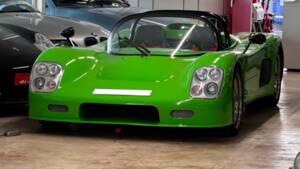
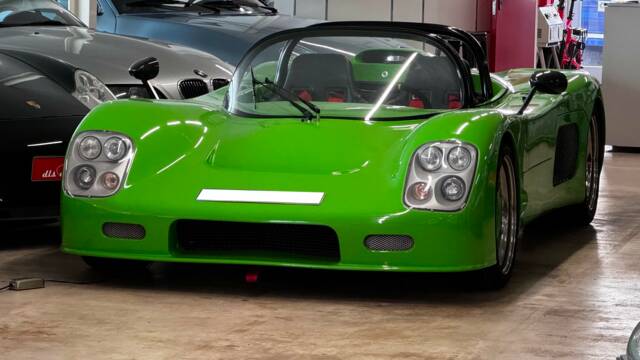
2011 | Ultima Can-Am
ULTIMA CanAm Spider 427V8-LS7 // LHD // road legal with german registration!

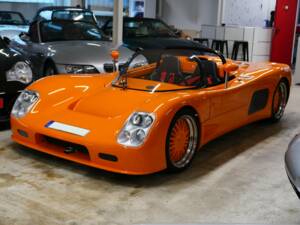
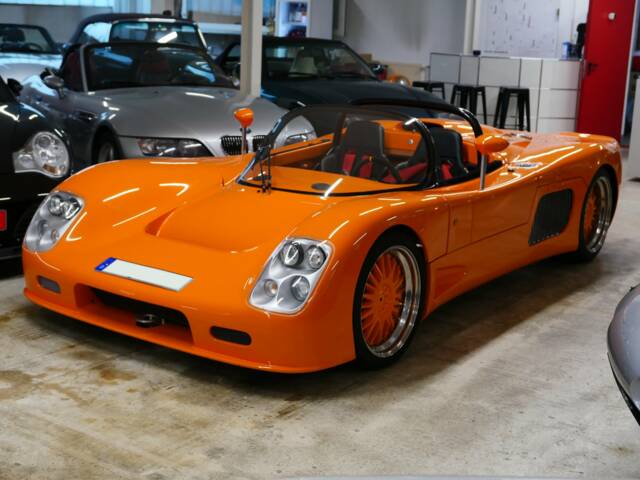
2010 | Ultima GTR 427-LS7
ULTIMA CanAm Spider 427V8-LS7 // LHD // road legal with german registration!
Auctions ending soon

Loading…
Loading…
Loading…
Loading…
Ultima listing references from Classic Trader
Below you will find listings related to your search that are no longer available on Classic Trader. Use this information to gain insight into availability, value trends, and current pricing for a "Ultima" to make a more informed purchasing decision.
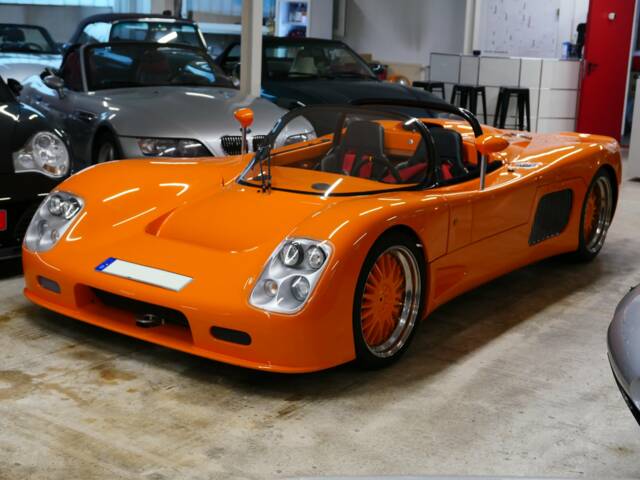
2010 | Ultima GTR 427-LS7
ULTIMA GTR CanAm Spider 427V8-LS7 // LHD // road legal with german registration!
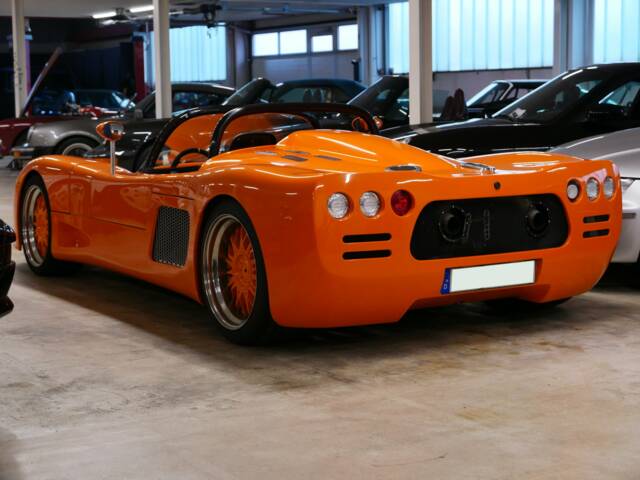
2010 | Ultima GTR 427-LS7
ULTIMA GTR CanAm Spider 427V8-LS7, LHD mit deutscher Straßenzulassung!
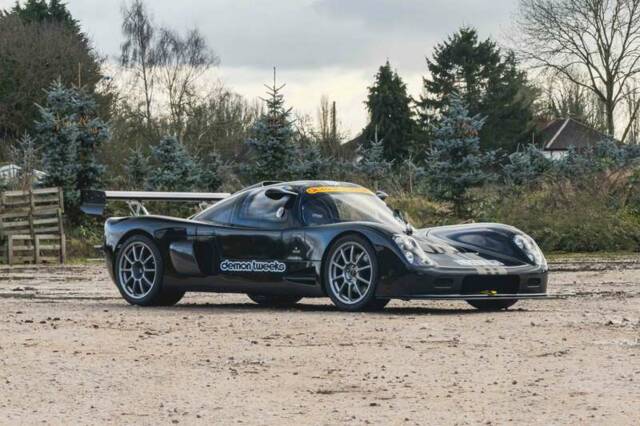
2017 | Ultima GTR 500
**Regretfully Withdrawn**2017 Ultima Evolution LS7

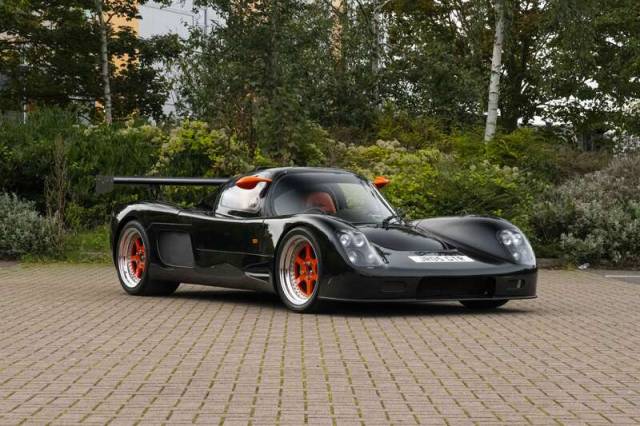
2005 | Ultima GTR
2005 Ultima GTR
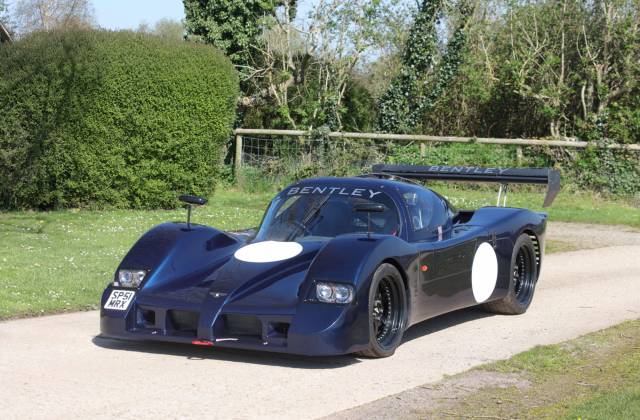
2002 | Ultima GTR
2002 Ultima GTR
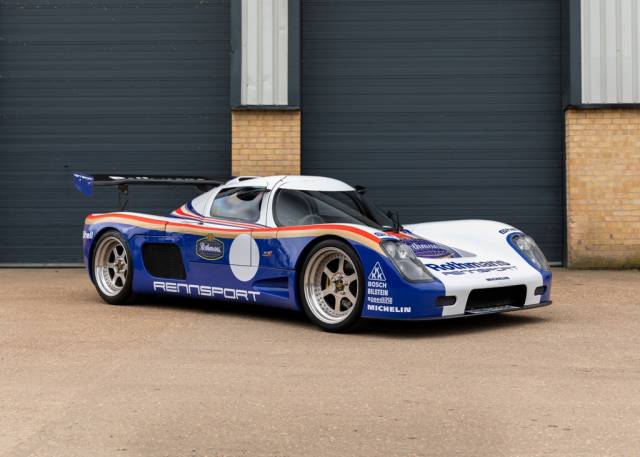
2017 | Ultima GTR
Ultima GTR
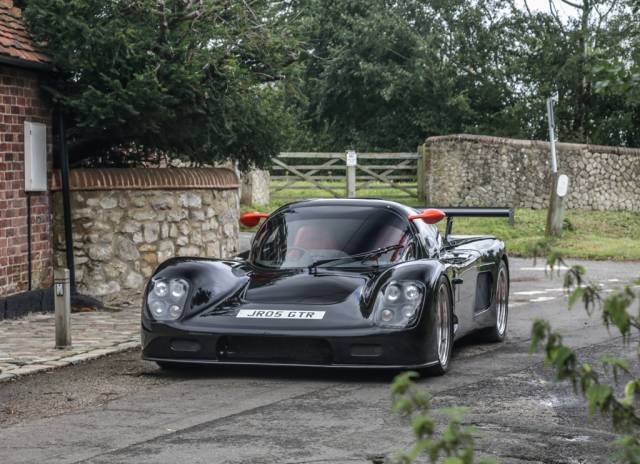
2005 | Ultima GTR Sports
Ultima GTR
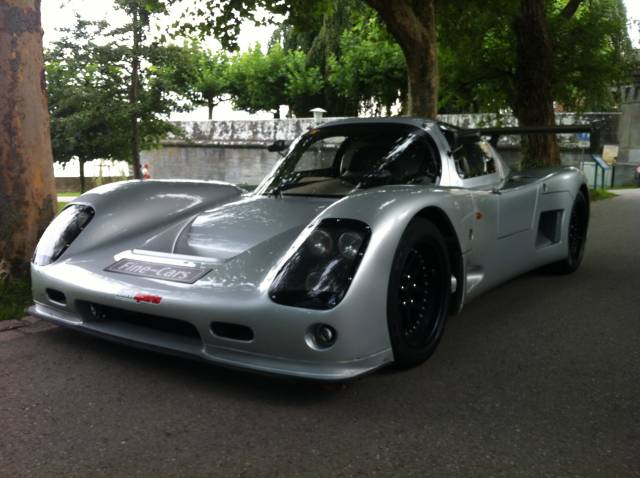
1999 | Ultima GTR
Mit McLaren-Motor 1999, Flügeltüren
History and development of Ultima
Ultima has always been an unusually British answer to the supercar question. Rather than pursuing high-volume production, a dealer network or a single, fixed specification, the marque developed very low, mid-engined cars around a steel spaceframe and allowed knowledgeable owners to participate in their construction. That philosophy makes an Ultima compelling to buy, but it also means that its history must be read through the chassis number, build record and registration file of the individual car.
The story began in 1983, when Lee Noble created the first Ultima at Noble Motorsports. The original Mk1 was a one-off, followed by the Mk2 and Mk3. These early cars were small-run, racing-influenced coupés with tubular frames and glass-reinforced-plastic bodywork. Contemporary accounts commonly put Mk2 production at thirteen cars. The Mk3, introduced in 1989 with revised GRP panels, established the low, wide silhouette that later Ultimas would develop further. They were never conventional production cars, and that is fundamental: early engine and gearbox choices may differ significantly from one car to another.
In 1992, brothers Ted and Richard Marlow acquired the project and formed the business that became Ultima Sports. The Sport was the first important Marlow-era model, with the open Spyder joining it shortly afterwards. A component-car route was central to the offer, although factory-associated and professionally completed cars were also available. Rover V8s, Chevrolet small-block V8s and several transmission arrangements appear in the period. It is therefore inaccurate to describe every Sport simply as a Chevrolet-powered car, or to assume that its registration year is its build year.
The pivotal model was the GTR, introduced in 1999. It brought a more developed body, dramatic butterfly doors and a distinctly Le Mans-prototype-like visual language. The chassis remained a tubular steel spaceframe, with rear-wheel drive and an engine behind the cabin, but the overall package was comprehensively reworked from the Sport. The open Can-Am, introduced during the GTR period, interpreted the same idea without a fixed roof. Both are important representative Ultimas, but each has its own model category; on a make page they illustrate the range rather than replace a focused GTR or Can-Am search.
The GTR era saw the marque attract global attention with powerful American V8 installations and published acceleration records. Factory-associated combinations often used a Chevrolet V8 with a Porsche or Getrag transaxle, yet customer builders could choose other engines, capacities, induction systems and gearboxes. In the 2010s Ultima developed the Evolution as a more extensively revised successor, then the RS as its current high-performance expression. For the collector, this long continuity is useful: an Ultima remains recognisably an Ultima across decades. It is also a warning not to value a car by its badge alone. A late-registered GTR can be an excellent, thoroughly documented completion of an older project; equally, it can hide years of inactivity or changes that need careful explanation.
What makes Ultima special
The defining Ultima ingredients are simple: a steel tubular spaceframe, double-wishbone suspension, GRP body panels, a rear-mid-mounted engine and rear-wheel drive. The formula places mass close to the centre of the car and avoids the weight of a conventional luxury interior. Even a moderately powered example can feel startlingly quick because it has little mass to move. With a large-capacity V8, the performance can be extreme. This is not a supercar bought for anonymous convenience; it rewards mechanical sympathy and gives very direct feedback in return.
Unlike a mass-produced Porsche, Ferrari or Lotus, an Ultima is often the product of several hands. The manufacturer supplied major assemblies and guidance, but the builder, engine supplier, specialist and later owners may all have influenced the finished car. That is not automatically a disadvantage. A carefully completed car by an experienced builder can be outstanding, while a factory-associated vehicle can still have had later modifications. The useful buying rule is buy the build, not just the model name. Ask who completed it, when, to what specification, and who has maintained it since.
This individual character extends to performance claims. A period GTR 640 or GTR 720 was a notable factory-associated proposition, but a number painted on a rear panel proves very little today. Establish the exact engine block, cylinder heads, capacity, camshaft, induction, ECU, exhaust, cooling system and transmission. A dyno graph, engine-builder invoice and service record are more meaningful than an assertion of 600 or 700 bhp. The same principle applies to safety equipment: a cage, harnesses, extinguisher system and seats only add confidence when their mountings, dates and road-use status are correct.
For British buyers, the appeal is also cultural. Ultima sits in the long home-market tradition of specialist sports cars, club support and owner engineering. It can be maintained through a combination of marque specialists, Chevrolet V8 expertise, Porsche-transaxle knowledge and competent race-car workshops. That does not make every part inexpensive or interchangeable. The chassis, body panels, cooling layout, wiring and adapters can be bespoke to the exact car, so a comprehensive parts file and clear contact history are valuable assets.
Technical data and model overview
The figures below are representative period or manufacturer-associated data, not a specification for every car. Component-built Ultimas can vary materially in engine, gearbox, brakes, weight and power. Confirm the particulars of the car offered for sale.
A relatively standard GTR with a 5.7-litre Chevrolet V8 was quoted in period with 345 bhp, a five-speed manual gearbox and approximately 990 kg. It measured around 4,000 mm long, 1,850 mm wide and 1,070 mm high. Those modest external dimensions disguise a serious road car. At the other end, large-capacity naturally aspirated or supercharged V8s require a suitably rated clutch, gearbox, driveshafts, tyres, brakes and cooling package. On a viewing, the harmonious combination matters more than the highest claimed output.
The transaxle deserves particular attention. Porsche G50-family and Getrag units are well-known solutions, but they are not cheap consumables and may have been modified to suit the engine and chassis. Listen for bearing noise, test every gear when cold and hot, check for baulking under load, clutch slip and leaks, and ask what final-drive and gear ratios are fitted. A very short-geared car may be thrilling on a circuit but tiring on a motorway journey. Similarly, a dry-sump engine, aftermarket ECU or throttle-body induction can be excellent when properly installed, but it raises the importance of documentation and specialist support.
Market overview and buying tips
Ultima supply is limited and the market is segmented less by model year than by completion standard, registration status, drivetrain, build provenance, road or track use and documentation. A running, correctly registered, well-maintained GTR is not comparable with a part-built kit, a non-road-going track car or a long-dormant project. The latter may look inexpensive until transport, recommissioning, IVA work, emissions and noise changes, tyres, fuel-system renewal and paperwork are costed.
Recent public results demonstrate this spread without creating a price guide. A 2014 Ultima GTR sold through Collecting Cars for £57,000 on 18 February 2024; the listing recorded 7,831 miles. H&H sold a 2022-registered GTR for £43,875 including buyer's premium on 15 March 2023. It had a 350 bhp 5.7-litre Chevrolet V8, Porsche G50 gearbox and a documented specialist completion, including IVA and registration. In the United States, a 2022 GTR sold for US$91,600 in March 2024, while a recorded sale for a 2020 RS reached £127,000. These are individual transactions in different locations and specifications, not valuations or a substitute for inspecting a car.
For a UK car, start with the V5C but do not stop there. Match its registration number, VIN or chassis number, make, model, engine capacity and fuel type to the car. Use the MOT history alongside invoices to test the mileage narrative and look for recurring advisories. An engine swap or significant change that affects the V5C details should be supported by evidence that DVLA was notified. A V5C records what is registered; it is not a certificate that every component or modification is correct.
The most persuasive Ultima provenance file includes the original order, build manual, component invoices, build photographs, correspondence, engine and gearbox bills, alignment settings, IVA paperwork where applicable, V5C, MOT certificates and maintenance records. Ask for the V627/1 vehicle parts statement and donor evidence if relevant. A seller need not have every piece of paper from a decades-old build, but gaps should be priced and understood rather than explained away. A clear chain from chassis supply to present ownership is especially reassuring.
British registration policy gives that file real practical value. GOV.UK says kit-built vehicles require type approval, normally IVA for a car, and requires a V627/1, official receipts, build plans and evidence for relevant components. A new registration number may be available when all parts are new from the manufacturer, or with no more than one properly reconditioned non-chassis component. A donor-based outcome depends on the evidence and original major components; where identity or age cannot be established, IVA or MSVA may be required and a Q registration can be issued. None of this makes a Q-registered car inherently poor, but it means its identity and documentation deserve particular scrutiny. For an unfinished, altered or imported car, speak to DVSA, DVLA and an IVA-aware specialist before committing, rather than relying on a seller's interpretation.
Chassis and body: Inspect the spaceframe methodically, ideally with the car raised and removable trim opened only with permission. Check the floor, front structure, radiator support, bulkhead, rear chassis, suspension pickup points and welds for corrosion, impact damage, fresh paint or unconvincing repairs. GRP does not rust, but it can crack, craze, delaminate or conceal a poorly repaired collision. Examine the nose, sills, wheelarches, underside and clam-shell fit; uneven panel gaps and stress cracks deserve an explanation. The glamorous exterior should not distract from untidy plumbing, improvised brackets or poorly protected wiring underneath.
Engine, cooling and fuel system: Insist on a genuine cold start. Watch oil pressure, idle stability, smoke and coolant temperature, then allow the car to reach full operating heat. Check radiator condition, hoses, header tank, fans, ducting and evidence of previous overheating. In a tightly packaged mid-engined car, inadequate cooling or heat shielding can become expensive quickly. Identify whether the engine is carburetted or injected, wet- or dry-sump, naturally aspirated or forced-induction, and ask when it was built. Oil leaks, perished fuel hoses, old tanks, fuel smells and unsupported lines are not minor cosmetic issues. The engine number should be consistent with invoices and the V5C where recorded.
Suspension, brakes and steering: Look for play in wishbone joints, rose joints, bushes and wheel bearings; assess damper leakage, spring condition and tyre age, not just tread depth. A fast Ultima needs a credible geometry set-up and brakes matched to its performance. Inspect discs, calipers, brake lines and pedal feel, and establish whether balance-bar or competition hardware is suitable and legally declared for road use. On a test drive, it should track straight, brake without pulling, change direction without clunks and keep stable temperatures. A track history is not disqualifying if operating hours, fluids, brake work, tyre cycles and any accident repairs are openly documented.
Practical ownership: Ask which suppliers still support the exact chassis and body components, and whether spare panels, wheels, lights or custom parts accompany the car. Chevrolet service parts can be accessible, but an Ultima-specific adapter, exhaust, loom or cooling pipe may not be. Confirm insurance before paying a deposit: agreed value, power, modification disclosure, garaging, mileage and track-day use can materially affect terms. Finally, test the physical fit. Visibility, heat in the cabin, pedal position, low-speed manoeuvring, ground clearance and entry through the doors are all part of ownership, not afterthoughts.
Driving an Ultima
An Ultima does not imitate the filtered experience of a current supercar. You sit low, with the front wheelarches visible ahead, a broad sill beside you and the mechanical mass of the powertrain immediately behind. Steering response is direct, the cabin can be warm and a V8's induction and exhaust note become a significant part of the journey. In a well-sorted car, the wheelbase and wide track offer striking composure; the low weight and rear-driven torque still demand deliberate, progressive inputs.
The Sport and Spyder have a more elemental, early-specialist feel. A GTR adds enclosure and a more dramatic visual occasion, while a Can-Am increases airflow, noise and exposure. Evolution and RS examples may be more developed, but the basic relationship between driver, chassis and drivetrain remains unusually intimate. A sensibly powered, accurately set-up Ultima is often more rewarding on a British B-road than an extreme-output car that cannot deploy its power, manage heat or ride acceptably over broken surfaces.
Design and construction
Ultima design is driven by function rather than nostalgia. The low wedge, large front openings, side cooling paths, broad rear haunches and prominent rear aero elements address the needs of a mid-engined car with substantial cooling demand. The GTR's butterfly doors and canopy-like cockpit give it the visual drama associated with endurance-racing prototypes without copying a single production car. The roofless Can-Am makes the mechanical architecture even more visible.
Beneath the GRP lies the real design story: the spaceframe. It enables access, repair and individual specification, but its quality is crucial. A good Ultima looks as disciplined behind trim panels and below the car as it does in photographs. Wiring should be protected and labelled, hoses routed thoughtfully, fasteners appropriate, and aluminium panels neatly fitted. In this market, craftsmanship is not an abstract virtue; it is direct evidence of reliability, serviceability and future value.
Summary
An Ultima classic car suits a buyer who values British specialist engineering, genuine mid-engined architecture and a highly individual driving experience. Mk3, Sport, Spyder, GTR, Can-Am and Evolution trace a coherent history, while offering different ways into the marque.
Choose the actual car with care. The strongest purchase combines a sound chassis, sensible and documented drivetrain, clear builder history, appropriate IVA and V5C evidence, and maintenance by people who understand its exact specification. With that foundation, an Ultima can be far more than a spectacular kit car: it is an exceptionally focused British supercar built around the owner who knows it.