- Car
- UMM (0 offers)
Buy UMM Classic Cars
A UMM is Portugal’s uncompromising answer to the working 4x4: rare in Britain, square-rigged and remarkably capable. Find a sound Cournil, Transcat or Alter with honest history and it offers a distinctive alternative to the familiar Land Rover.
Search results
Currently, there are no matching listings for your search.
Create search alert
Let yourself be notified as soon as a listing is published that matches your search filters.
UMM listing references from Classic Trader
Below you will find listings related to your search that are no longer available on Classic Trader. Use this information to gain insight into availability, value trends, and current pricing for a "UMM" to make a more informed purchasing decision.
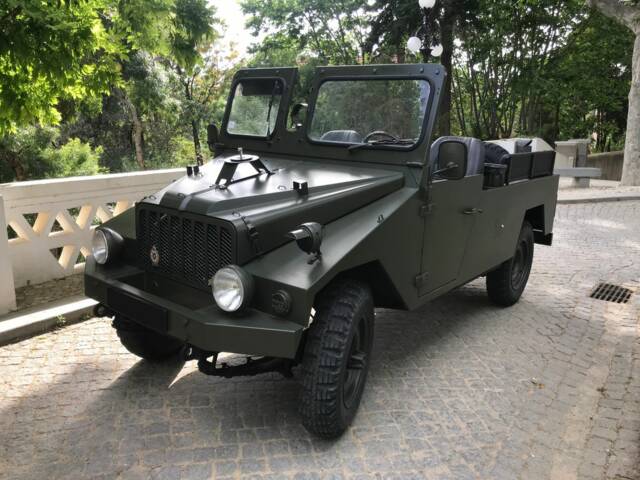
1982 | UMM Cournil Entrepreneur
UMM Cournil | 1982 | Route 66 Auctions - For sale by auction. Estimate 14500 EUR

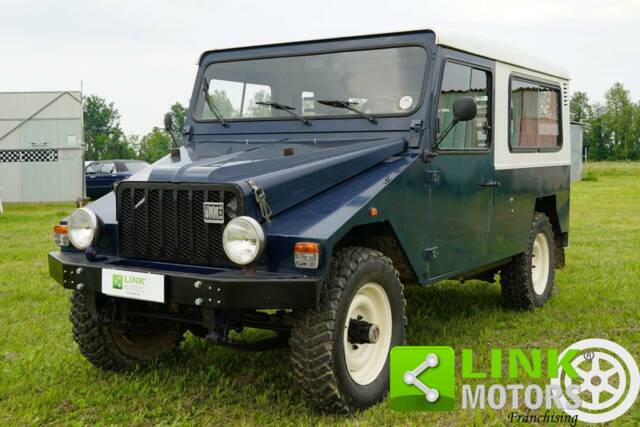
1985 | UMM Cournil Entrepreneur
JEEP UMM Cournil Entrepreneur 4X4 1985 - PRENOTATA

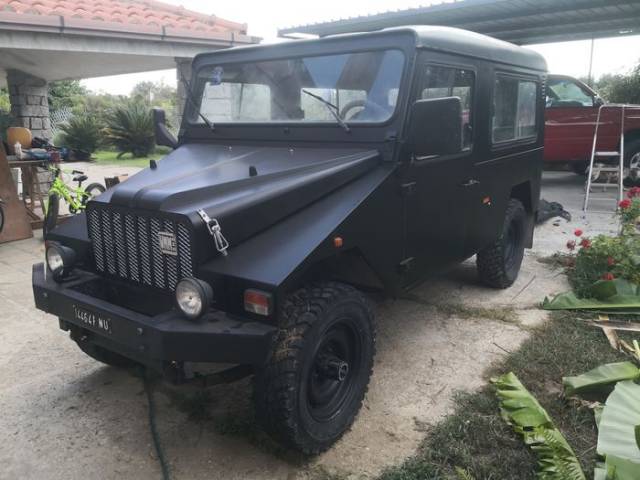
1985 | UMM Alter 2.5 TD
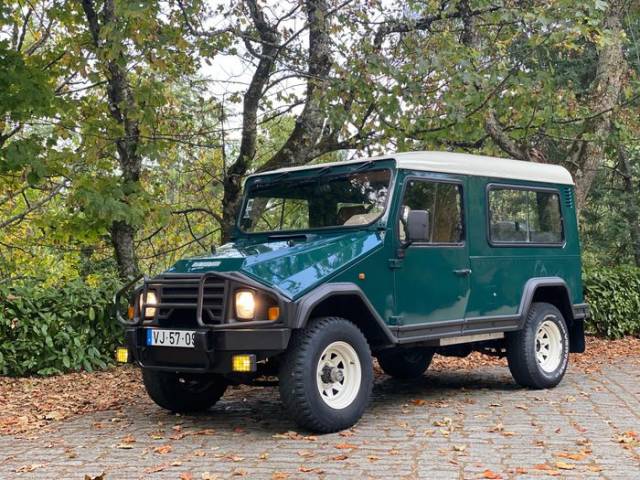
1990 | UMM Alter 2.5 TD
Create search alert
Let yourself be notified as soon as a listing is published that matches your search filters.
UMM: Portugal’s hard-working four-wheel-drive marque
UMM stands for União Metalo-Mecânica, the Portuguese engineering business that made one of Europe’s most unusual post-war 4x4s. It was not conceived as a fashionable leisure vehicle. A UMM was built to carry people, tools and supplies where a conventional car could not go: on farms, forestry tracks, construction sites and military routes. That purpose still defines the appeal of a UMM classic car in Great Britain. It is an engagingly scarce, mechanical and useful alternative to a Series Land Rover or early Defender rather than a substitute for either.
The origin lies across the border in France. Bernard Cournil developed a rugged agricultural 4x4 from Jeep-inspired beginnings at Aurillac. When the Cournil rights were divided in 1977, UMM acquired manufacturing and international commercial rights outside France. Portuguese production began with the short-wheelbase UMM 490 Cournil and the related Tracteur, Randonneur and Entrepreneur versions. The essential recipe was already present: a heavy-gauge steel ladder chassis, leaf-sprung live axles, a blunt steel body and readily serviceable French diesel mechanicals.
By 1979 the range was simplified as the UMM 4x4 Entrepreneur. It became a familiar Portuguese working vehicle and served public bodies as well as private operators. UMM also exported widely: contemporary marque histories record sales in 45 countries, while Portugal’s armed forces, the GNR and overseas users gave the vehicle a hard-earned reputation. From 1979 to 1989, 12,166 UMMs were sold, 7,778 of them in Portugal. Those figures cover the broader Cournil/UMM period, not solely the later Alter, and explain why surviving parts knowledge is concentrated in Portugal and France rather than Britain.
Britain did receive official vehicles. In 1984 Transterrain of Ely imported right-hand-drive UMMs as station wagons, hard tops and pickups, supported by a dealer network that included Peugeot franchises. Some early UK machines are encountered as Transcat or Transterrain-badged vehicles. A later importer, SMC Industrial, handled Alter II sales. Commercial Motor reported in 1994 that fewer than 500 UMMs had been sold in Britain over the preceding three years. That small official presence matters now: a genuine UK-supplied RHD example with an age-related registration, V5C and old invoices is unusually attractive, even though it remains a niche vehicle.
The Alter I of 1985 made the old Cournil concept more civilised without weakening it. Architect Carlos Galamba reshaped the nose and cabin, introduced a fibreglass dashboard and improved weather protection. The Alter II, launched in 1986, brought a revised gearbox, UMM transfer case, revised suspension and more sound insulation. In 1987 the turbo diesel, five-speed gearbox, ventilated front discs and power steering became important improvements. Long-wheelbase, soft-top and pickup bodies widened the working range. A 1993 update brought a different dashboard, suspension changes and a revised front bumper.
Production did not end in one clean moment. Regular private-customer manufacture effectively tailed off in the mid-1990s; a small Alter 2000 programme followed, including 21 long-wheelbase vehicles reported by the UMM club history. UMM subsequently left vehicle production. For a British buyer, that makes model identity and paperwork more important than a neat year-to-year catalogue: cars may have been registered late, rebuilt in Portugal or fitted with later factory-type components.
The qualities that make a UMM special
The UMM’s character starts with its construction. The Alter II club specification describes a 120 x 60 mm, 4 mm-thick rectangular-section chassis, braced by three crossmembers, with a 2 mm steel body welded to it. It is a very different philosophy from a light monocoque SUV. The structure is tough and straightforward, but corrosion can be concealed where the body and chassis meet; “thick steel” is not a substitute for inspection.
Its remarkably short, sloping bonnet is functional, not a styling flourish. The driver can place the front wheels accurately on rough ground, a benefit made more obvious from the high, upright seating position. Live axles, longitudinal semi-elliptic leaf springs, selectable four-wheel drive, low range and freewheeling front hubs give the UMM genuine slow-speed ability. The broad family of bodies—short and long station wagons, hard tops, soft tops, single-cab and double-cab pickups—means that two UMMs can offer quite different ownership experiences.
The familiar Peugeot diesel is another attraction. The naturally aspirated 2.3 and 2.5-litre units are modestly powered but relatively intelligible to a specialist; the later 2.5 Turbo Intercooler is much better suited to British A-roads. UMM combined bought-in components with its own chassis, body and transfer hardware. That creates an important buying distinction: consumables and many Peugeot, Dana/Spicer, GKN or Land Rover-adaptable items can be traceable, while UMM-specific body panels, transfer-case parts and trim require patience and club contacts.
The marque’s image was strengthened by real service rather than advertising. UMMs were used by Portuguese forces, police, firefighters and utilities, and the model appeared in long-distance and Baja competition. UMM entries reached the 1984 Paris-Dakar finish, with the best placed 34th overall according to contemporary marque accounts. A specially prepared Alter also served as the armoured Popemobile during John Paul II’s 1991 Madeira visit. These are enjoyable pieces of provenance for a well-documented vehicle, but they should never be confused with proof that an ordinary ex-working UMM has been gently used.
UMM technical data: representative classics
Specifications vary with year, market and body. The table is a buyer’s orientation, not a replacement for checking the chassis plate, engine number and factory literature for an individual car.
The 110 PS turbo diesel is commonly the sweet spot. It produces its 244 Nm at 2,000 rpm, has a five-speed gearbox and is capable of about 87 mph on paper. The 76 PS atmospheric diesel has appeal for its simplicity, but buyers who expect motorway use, towing or regular cross-country trips should drive one before deciding. Petrol V6 and BMW-engined cars existed in very small numbers, including competition-related vehicles; their rarity does not automatically make them easier to maintain or more valuable.
Market overview and buying tips
UMM values in Britain cannot be treated like Defender values. Supply is irregular, condition descriptions are inconsistent and a sale may take time because the buyer pool is small. Price should therefore follow structure, completeness, provenance and drivability, not novelty alone. A genuine RHD UK vehicle is particularly appealing for use here, but a correctly registered Portuguese left-hand-drive import is not a disadvantage for an enthusiast who values choice and history over overtaking convenience.
There is useful hard evidence, though it is thin. A 1993 Alter II 2.5 turbodiesel with 97,000 km sold on Bring a Trailer on 3 August 2022 for $30,450, reported in Portugal as about €29,000 at the time. That is a real auction result for an unusually well-presented late turbo car, not a universal UMM benchmark. The Classic Trader UK archive has recorded a 1985 Cournil Entrepreneur advertised at £7,254, a 1985 Alter 2.5 TD at £4,694 and a 1990 Alter 2.5 TD at £14,081; these are historic advertised prices, not confirmed sale prices. A Portuguese-market 1993 Alter II was advertised at £11,378 in late 2025/early 2026. Public 2024–26 sold data are scarce, so a seller quoting a single exceptional auction should be asked to justify condition and specification.
As a practical Great Britain guide, a project or incomplete Transcat can sit in the low-thousands, but recovery of rusted structure, a missing hard top, obsolete trim and an unknown transfer case can eclipse the purchase price. A roadworthy, sound atmospheric diesel merits a middle-market figure only when it has documentation and usable bodywork. A complete late, turbo, RHD Alter II with a recent documented restoration may command a strong five-figure ask; whether it achieves it depends on evidence, not paint. Build a contingency fund before importing or restoring one.
Start beneath the car. Check the chassis rails, crossmembers, spring hangers, bumper mounts, outriggers and the body-to-chassis weld line with a torch and hammer test by a professional who understands old commercial 4x4s. Pay close attention to the bulkhead, windscreen surround, floor edges, roof gutters, door bottoms, pickup bed, rear crossmember and all areas trapped behind mud or old underseal. A freshly blackened chassis without photographs of repairs is an invitation to investigate further. On a long-wheelbase vehicle, inspect the full length for sagging, poor grafts and non-standard rear alterations.
Then assess the mechanical system as a whole. A cold Peugeot diesel should start cleanly without excessive crankcase pressure, persistent blue smoke or a pressurised cooling system. Confirm that the cooling fan, radiator, hoses and heater work: slow work and towing expose marginal cooling. On turbo cars, inspect boost plumbing, intercooler, oil feed and signs of neglected oil changes. A rebuilt engine is a benefit only if invoices identify who did it and what was renewed.
Drive in two- and four-wheel drive, high and low range, on a legal loose surface where possible. Engage and disengage the freewheeling hubs, listen for transfer-case chain noise, check every ratio and feel for axle wind-up or clonks. Leaf springs can seize, crack or lose their bushes; tired dampers make an already tall, slow-steering vehicle less pleasant. Examine propshaft joints, axle seals, wheel bearings, steering-box play and brake balance. The 1987-on ventilated front discs and power steering are desirable, but originality is less valuable than safe, correctly documented work.
For parts support, the UMM Owners Club (UK) remains a valuable first call: it hosts workshop manuals, magazines and an alternative-parts guide, and its membership is listed at £8 per year. The club’s guide identifies sources shared with Peugeot, Dana and other makers while warning that substitutions must be verified, especially for braking and safety items. Portuguese specialist Pecas-UMM is another useful route for marque-specific parts. Before paying a deposit, ask the seller for a list of unavailable items; a missing windscreen frame, rear door, canvas or transfer component is more consequential than a worn seat cover.
Imports need a separate budget. A UK resident permanently importing an UMM must make a NOVA declaration to HMRC within 14 days, settle any VAT/duty due and register it with DVLA; the DVLA registration fee is £55. Keep the original foreign registration, bill of sale, shipping/customs evidence, chassis-number photographs and proof of build date. GOV.UK notes that a club or manufacturer letter may assist if the original foreign registration does not establish manufacture date. Do not assume a 5% collector-vehicle import VAT treatment: HMRC sets additional tests around age, originality, scarcity, non-normal use, high value and historical significance. Obtain a tariff ruling or specialist customs advice before buying, especially for a modified ex-service vehicle.
British MOT rules reward careful dating, not complacency. From 1 April 2026, a vehicle built before 1 January 1986 can enter the historic tax class, provided the keeper applies; vehicles over 40 years old may also be MOT-exempt only if they have not had substantial changes. A 1986 Alter is not automatically exempt today, and a diesel conversion, altered chassis or modified running gear can affect the declaration. Even an exempt UMM must be roadworthy. For this type of vehicle, a voluntary annual MOT is sensible evidence of brake, steering, suspension and corrosion condition.
What a UMM feels like on British roads
A UMM makes no attempt to disguise its working origins. The cab is high, the screen is upright, the body is angular and the view over the descending bonnet is unusually useful. At low speed on a wet track, it is satisfying precisely because the controls feel connected to substantial hardware: select the range, lock the hubs when needed, use torque and let the live axles work. The short-wheelbase vehicle feels compact and direct off road; a long-wheelbase station wagon or pickup feels more purposeful with a load.
On tarmac, expectations must be reset. Leaf springs, a high centre of gravity, agricultural gearing and sparse sound insulation make the experience closer to a well-sorted Series Land Rover than a modern SUV. The turbo diesel makes traffic and gradients far less stressful, but it is still a vehicle to drive with mechanical sympathy rather than hurry. Steering wander, loud transmission whine or harsh ride should not be excused as “they all do that”; they may be normal in degree, but a good UMM should still track safely, brake straight and change gear without a fight.
For British ownership, that honesty is part of the pleasure. It will draw questions at a village show where a Defender would pass unnoticed. It can carry camping equipment, tow within its legal ratings and make a green-lane day feel appropriately analogue. Yet it is best chosen by someone who enjoys preventative maintenance, has dry storage and accepts that wet weather brings more wind noise and more inspection work than in a later 4x4.
Design, coachwork and the UMM identity
The Cournil-derived silhouette is one of the most recognisable shapes in European utility vehicles: a steep, forward-sloping face, flat side panels and a cabin drawn around visibility and repairability. It can look almost improvised beside a polished Range Rover, but that is misleading. The form was evolved for access, strong sight lines and inexpensive fabrication from folded steel. The early Cournil/Entrepreneur feels closest to a tractor with doors; the Alter introduced a more integrated front end and a cabin with considerably more thought behind it.
Carlos Galamba’s work on the 1985 Alter was pivotal. He did not redesign the UMM into a luxury vehicle. Instead, he worked within the existing engineering and supplier constraints to make it more habitable: revised nose and windscreen treatment, new dashboard, better noise control and a more coherent interior. The Alter II continued that pragmatic development. The 1993 dashboard and front-end update are welcome signs of a later car, although the best choice remains the one with solid metal and complete, documented systems.
Body configuration should reflect use. A hard-top station wagon gives the most practical all-weather classic; a soft top has maximum charm but demands scrutiny of its hood, frame, door seals and water damage; a pickup is ideal for utility use but may have led a harder life. Original colour and paint are secondary to straight panels, dry seams and honest repairs. Period accessories—winch mount, towing equipment, roof rack or military fittings—are interesting only when safely installed and properly recorded.
UMM in Britain: a small club, real support
The UK UMM community is small but unusually useful. It reflects the marque’s modest official sales and its appeal to owners who fix, use and share information rather than merely collect. The UMM Owners Club (UK) makes English-language manuals available with UMM Portugal’s permission and maintains model-specific knowledge that a general 4x4 garage is unlikely to hold. It is worth contacting before inspection, not after an expensive purchase: members may help identify a Transcat, explain RHD details or spot a mixture of incompatible parts.
RHD deserves a closer look. Official British imports offered it, and a factory RHD UMM avoids the awkwardness of living with a Portuguese LHD vehicle on narrow lanes and when passing slow traffic. Verify it properly, however. Check the wiper sweep, pedal box, steering column, dashboard arrangement and chassis/VIN records rather than trusting the wheel position alone. A converted car is not automatically unacceptable, but it needs a transparent engineering history and accurate DVLA description.
The best ownership pattern is collaborative: use the club, retain old invoices, photograph work before underseal goes on and avoid irreversible modifications. A correctly sorted UMM is not a cheap Land Rover impersonation. It is a rare Portuguese classic with a British support network, capable mechanical roots and a story that rewards the buyer prepared to learn it.
Buy a UMM with eyes open
Buy a UMM for its rugged Portuguese identity, its rare place in the British 4x4 scene and its genuine working ability. The Cournil and Transcat show the original agricultural idea; the Alter and especially the turbo Alter II make the most usable classics. Prioritise chassis integrity, complete four-wheel-drive operation, honest import or UK history and access to parts over mileage or cosmetic freshness.
The right vehicle will feel purposeful rather than polished. With the UK club, Peugeot-based mechanical knowledge and Portuguese parts specialists behind it, a carefully chosen UMM can be an involving classic for lanes, shows and useful weekends. Find the example with the clearest history and the soundest steel, then enjoy one of the least ordinary classic 4x4s on British roads.