- Car
- Unic (0 offers)
Buy Unic Vintage Cars
Unic built rare French passenger cars before becoming known for commercial vehicles, from hard-working taxis to elegant late pre-war saloons. Find a Unic with sound coachwork, convincing identity and the paperwork needed for a British collection.
Search results
Currently, there are no matching listings for your search.
Create search alert
Let yourself be notified as soon as a listing is published that matches your search filters.
Unic listing references from Classic Trader
Below you will find listings related to your search that are no longer available on Classic Trader. Use this information to gain insight into availability, value trends, and current pricing for a "Unic" to make a more informed purchasing decision.

1927 | Unic L61 Torpedo
UNIC L 61

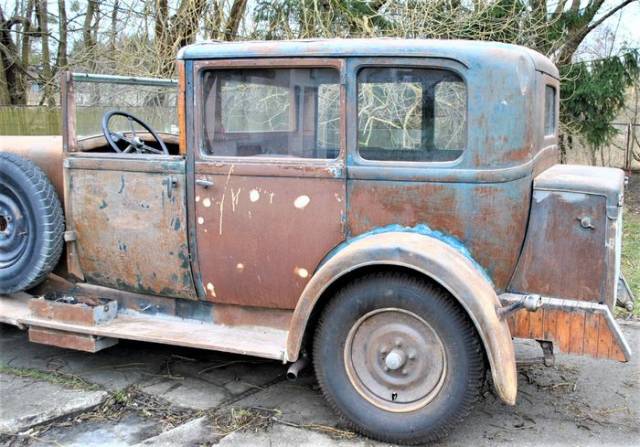
1930 | Unic L1

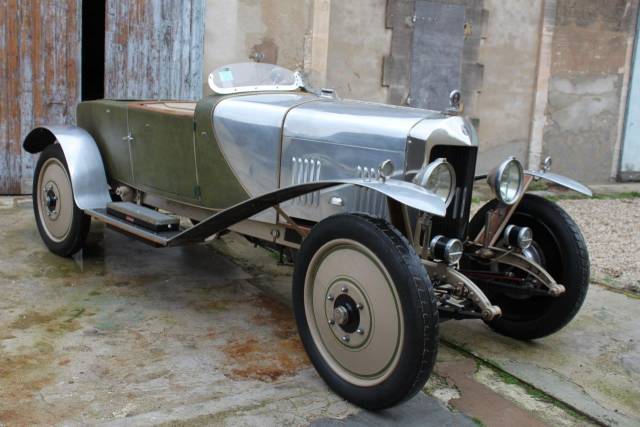
1924 | Unic L1
Unic L2 Supersport


1919 | Unic J3

Create search alert
Let yourself be notified as soon as a listing is published that matches your search filters.
History of Unic
Unic is one of those French names that can wrong-foot a British buyer. Later lorries, buses and service vehicles made the badge familiar long after the passenger-car business had gone, but a pre-war Unic car belongs to a much earlier and very different story. The company was founded at Puteaux in 1905 by Georges Richard, after his departure from Richard-Brasier, with financial backing from Baron Henri de Rothschild. Its original premise was a rational, standardised motor car — hence the name — although the range soon grew beyond a single type.
Early Unics included two- and four-cylinder cars, but their reputation was built just as much on dependable work as on private motoring. The 12/14 hp four-cylinder, of about 1,944cc, became an important taxi engine. Unic cabs were well established in Paris and also appeared in London, a useful point of connection for a marque now seldom encountered on British roads. W. O. Bentley later recalled the robustness and economy of the Unics run by the National Motor Cab Company before he became a manufacturer in his own right. That association does not turn a surviving Unic into a sports car; it does explain the engineering emphasis on endurance and serviceability.
The First World War interrupted normal car development. In the 1920s, the Type L family formed the core of the passenger-car catalogue, but its designation needs careful reading today. At the 1924 Paris Salon the range included the 1,843cc L1T, the two-litre L3T and a 3,450cc 16 CV four-cylinder. L1, L2 and L61 descriptions in modern advertisements should therefore be treated as a starting point, not proof of exact specification. Wheelbase, engine, chassis stamping, period registration evidence and body must all agree. A torpedo that has been rebodied, or a commercial body that has evolved during a century of work, cannot safely be identified from its radiator shape alone.
Unic had begun producing the three-tonne MSC lorry in 1922, the year Georges Richard died, and commercial work increasingly shaped the firm. Passenger cars nevertheless continued. The H1, introduced in 1929, brought a roughly 2.5-litre straight-eight to the catalogue. In 1934, after an interval dominated by industrial production, Unic returned to the car market with the U4. The late U4 and U6 were more ambitious machines: the 1937 U4D used a 2,150cc, 55bhp four, while the U6C combined a three-litre, 85bhp six with Cotal electromagnetic preselector transmission. Passenger-car manufacture ceased in July 1938. Unic continued with commercial vehicles, joined the Simca orbit in 1952 and subsequently became part of the Fiat/Iveco story.
For the collector, this short chronology matters. A Type L represents durable inter-war transport, an H1 a scarce eight-cylinder chapter, and a U4 or U6 a technically more complex late pre-war tourer. None is interchangeable with a later Unic truck, even if the grille badge is similar. A correct car is defined by the whole surviving object — chassis, engine, coachwork and record — rather than by the name on its radiator.
Unic Highlights
The appeal of a Unic lies in the contrast between practical engineering and individual coachwork. Taxis and delivery bodies demanded toughness, while a private customer could specify a tourer, saloon or chauffeur-driven body on a suitable chassis. An original Boulangère body, a credible period coachbuilder attribution or an unbroken sequence of French papers is consequently more than ornament: it may be central to the car’s identity and future desirability.
The Type L illustrates that character particularly well. Its four-cylinder layout and modest scale are approachable by vintage-car standards, but its wooden body frame, fabric or aluminium details and low-volume mechanical components require specialist thinking. Bonhams sold a 1924 L2 Boulangère for US$10,640 including premium in August 2025. In June 2026, Aguttes sold a 1924 L2 Torpedo for €26,000, while a 1925 L2 Torpedo was offered in France at €12,000 in August 2026. These are not a price guide: commercial body, condition, provenance, completeness and sale format are too different. They do show why a buyer should appraise the individual car rather than assume that a rare badge commands a fixed premium.
The late U4 and U6 appeal to a different owner. A U4 brought independent front suspension into the range; a U6 offers six-cylinder refinement and the fascination of Cotal preselection. Both can make handsome Continental touring cars, but the latter must be inspected by somebody who understands its electrical control system. A Cotal unit cannot be judged by the feel expected from an ordinary manual gearbox. Correct operation, wiring condition, relay logic, documentation and access to a credible repairer deserve investigation before money changes hands.
British enthusiasts should also keep Unic’s London taxi connection in proportion. It is an attractive historical link for club events and concours conversation, but most surviving passenger cars offered now are continental left-hand-drive imports, not former British cabs. The right car for a UK owner is normally chosen for preservation, light touring and the pleasure of owning an unusual French pre-war machine, not for everyday commuting or an assumption of local parts-stock support.
Technical Data for Selected Unic Cars
The table is an orientation, not a substitute for a vehicle-specific report. Chassis were supplied with differing bodies and many have been altered, repaired or restored. Weight, braking arrangement, performance and even the exact engine specification can vary by year and body. Ask for clear images of chassis and engine numbers, axles, brake actuation, wiring, body-frame repairs and every relevant page of the French carte grise or other registration record.
Market Overview & Buying Tips
A Unic vintage car is an occasional, research-led purchase in Great Britain. There was no active Classic Trader inventory at the time of research; archive records include L1 and L61 examples. Car & Classic, Bonhams and PreWarCar are useful places to watch alongside French auction houses and specialist advertisements, but archived pages are evidence of past availability rather than a promise of a liquid market. The small number of public results makes a glossy condition report, a comprehensive photographic record and a marque-aware inspection more useful than a broad valuation chart.
For a UK buyer, France is the natural source market. Make the landed figure a sterling budget, not simply a converted hammer price or advertised euro sum. Allow separately for collection or enclosed transport, export administration, marine or transit insurance, customs handling, the HMRC process, DVLA registration, inspection and recommissioning. A genuine collectors’ item more than 30 years old, out of production and substantially in original specification may qualify for 5% import VAT and no customs duty, but eligibility is fact-specific. Confirm the current treatment with HMRC or a customs specialist before bidding; a heavily modified or poorly evidenced car should not be budgeted on the assumption that it qualifies.
Paperwork is especially important after Brexit. Retain the bill of sale with the price, date, seller, buyer and chassis number; obtain the original, correctly transferred foreign registration document; and keep export, shipping and customs records together. A permanent import must be notified through the appropriate HMRC/NOVA route, after which a used import is normally registered with DVLA on form V55/5. Evidence of age can support an age-related registration; weak identity evidence risks delay and potentially a Q registration. On a tiny-production marque, the original French documents, period photographs and a recognised dating opinion can be worth far more than a freshly retrimmed interior.
Most Unics of interest are comfortably beyond forty years old. In Great Britain, an eligible vehicle can be in the Historic tax class and be exempt from annual MOT testing if it has not undergone substantial changes. That exemption never removes the duty to keep it roadworthy. For an unfamiliar imported car, a voluntary inspection before regular use is sensible, particularly for braking, tyres, steering and fuel system integrity. DVLA’s 2025 policy changes made like-for-like restorations less burdensome administratively, but structural alterations still need honest disclosure. Check the current official guidance before applying, rather than relying on an owner’s interpretation of “restored”.
Begin a viewing with identity and structure. Do chassis and engine numbers correspond to the documents? Is the claimed model compatible with the wheelbase and engine? Are there invoices, pre-restoration photographs, previous registration records and a credible ownership trail? An auction catalogue can support the file but is not equivalent to title history. A car that has spent decades in a French collection may have an appealing story; it still needs evidence that connects that story to this particular chassis.
The body is the next major financial risk. Many cars have a timber frame beneath metal, fabric or composite panels. Examine sills, door posts, bulkhead, roof rails, floor edges, rear structure and all timber-to-metal joints for rot, trapped moisture, filler, fresh fasteners and inconsistent panel gaps. On a Boulangère, inspect the load floor, rear openings, roof and body sides with the same care. Fresh paint can conceal expensive carpentry. Correct lamps, instruments, radiator shell, wings, hood frame, seats and screen surrounds may take longer to source than consumables, so make a detailed absence list before offering.
At the chassis, look for cracked or poorly repaired cross-members, tired leaf springs, steering play, wheel condition, tyre date codes, leaks and brake adjustment. A cold start is more revealing than a warmed-up demonstration: listen for uneven running, confirm oil circulation and cooling, and select every gear. Four-wheel drum brakes on an L2 deserve a proper examination of linkages, drums, linings and equalisation. For a U6, commission a Cotal specialist to assess the whole system. Do not buy on the expectation that parts for later Unic commercial vehicles will solve car-specific engine, gearbox or trim problems.
Parts supply is possible but project-based. Bearings, seals, ignition consumables and some gaskets can often be identified by pattern or remade through vintage suppliers. A correct Unic radiator badge, engine casting, body glass, specific instrument or Cotal component may require patient searching in France and beyond. British club culture is a real advantage: pre-war events, restoration workshops and French-car networks can provide practical introductions even where there is no large Unic owners’ club. Buy the most complete, honestly documented car you can afford, and retain every removed original part, invoice and restoration photograph.
Driving a Unic
An early Unic makes its driver part of the machinery. The view over the wings, upright seating position, deliberate pedals and unsynchronised gearbox are a long way from a modern classic. A well-set-up four-cylinder Type L can feel calm on a rural route, using torque rather than revs, but it asks for anticipation at every junction. Braking distances, lighting, cooling and acceleration belong to their period. Hand throttle and ignition controls, where fitted, reward a driver willing to learn their relationship rather than rush the car through contemporary traffic.
The U4 and U6 offer a more composed experience. A longer wheelbase and enclosed body suit an unhurried trip to a VSCC-style gathering, a local French-car meeting or a quiet cross-country run. The U6’s preselector operation adds theatre and refinement, provided it has been sorted correctly. Neither is a sensible machine for motorway pressure or stop-start urban work. Before any longer outing, verify cooling, fuel delivery, tyre condition, brake adjustment and charging system; arrange recovery cover appropriate to a veteran or vintage vehicle rather than assuming ordinary breakdown provision is enough.
Design and Coachwork
Unic often sold a chassis onto which purpose and taste could be expressed. The resulting range runs from taxi and Boulangère bodies to open torpedoes, formal saloons and chauffeur-driven designs. This flexibility makes each survivor interesting but also makes originality assessment more demanding. A documented L2 Torpedo can be visually far removed from a utility-bodied L2 while sharing much of its engineering; both can be authentic if their construction and history support the description.
Late cars were more formal in manner. A U6 coupé-chauffeur body could match the technical sophistication of the six-cylinder and Cotal transmission with a dignified, long-distance presence. Originality should not be confused with untouched condition. Properly renewed ash framing, a replaced hood or a rebuilt engine may be necessary and desirable when the work is recorded, sympathetically executed and supported by photographs. Undocumented rebodies, modernised proportions and missing details without evidence of the original state are much harder to value or register confidently.
Summary
Unic vintage cars are rare French pre-war machines whose story spans taxis, individual coachwork and a later commercial-vehicle legacy. The Type L, H1, U4 and U6 represent distinct moments in that history, but no model name alone fixes a value.
Find a car with convincing numbers, sound timber and chassis structure, complete provenance and a realistic sterling allowance for import and recommissioning. For the British collector prepared to preserve rather than merely display it, a correct Unic offers an unusually direct route into Continental pre-war motoring.