Buy Unique Motorcars Classic Cars
Unique Motorcars has built American Cobra-style roadsters since the late 1970s, combining fibreglass coachwork, Ford V8 power and an unusually complete kit specification. In Britain, the chassis identity, build evidence and registration route matter as much as the dramatic 289 FIA or 427 silhouette.
Search results
Currently, there are no matching listings for your search.
Create search alert
Let yourself be notified as soon as a listing is published that matches your search filters.
Create listing
Do you have a Unique Motorcars that you want to sell? Then create a listing now.
Create listingUnique Motorcars listing references from Classic Trader
Below you will find listings related to your search that are no longer available on Classic Trader. Use this information to gain insight into availability, value trends, and current pricing for a "Unique Motorcars" to make a more informed purchasing decision.
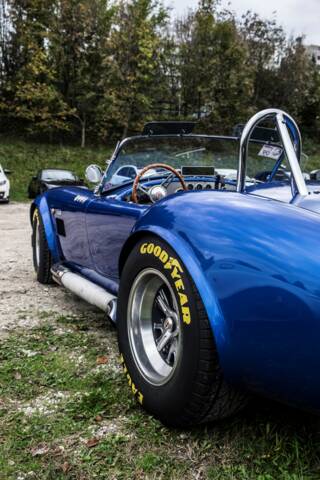
1989 | Unique Motorcars 289 FIA Cobra Replica
HARD TOP "LE MANS"-V8 FORD 289

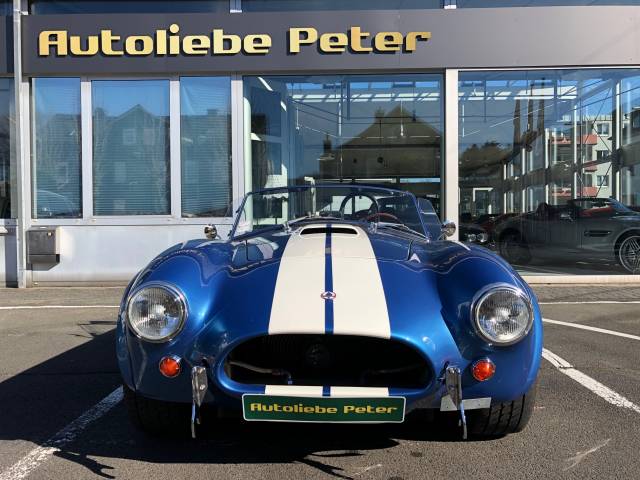
1964 | Unique Motorcars 289 FIA Cobra Replica
289 FIA 5.0 V8 (Unique Motorcars Replica)

Create search alert
Let yourself be notified as soon as a listing is published that matches your search filters.
Create listing
Do you have a Unique Motorcars that you want to sell? Then create a listing now.
Create listingHistory: an Alabama maker of Cobra-style roadsters
Unique Motorcars is an American specialist manufacturer, not AC Cars or Shelby American, and its cars are not 1960s Cobras. That distinction is fundamental. A Unique is a later-built, individually specified Cobra replica: a lightweight V8 roadster made in the visual tradition of the Anglo-American sports-racer, with its own chassis number, completion date and legal identity. A convincing example is valuable because it is a well-made and well-documented product of a long-running kit and turnkey maker—not because a title, advertisement or number plate implies it is an original CSX car.
The company’s roots are in Phoenix, Arizona. Alan and Maurice Weaver, with their family, operated the Antique Car Restoration Center from 1976, restoring collector and museum cars. Bill Close’s early Unique Motorcars operation occupied space in their workshop, and the Weavers helped develop body moulds, jigs and frame fixtures. They acquired the business in 1979, redesigned the moulds to reduce seams, improved production tooling and revised the chassis to make it lighter. In 1981 the family moved production, moulds and fixtures to their home town of Gadsden, Alabama, about 60 miles north of Birmingham, Alabama. The business remains identified with the Weaver family and its Gadsden workshop.
The two roadsters which define the marque are deliberately different interpretations of the Cobra theme. The 427 has the broad-shouldered, later big-block look: flared wings, a wide nose, a driver’s roll hoop and the visual appetite for a large Ford V8. Unique retooled its 427 body in 1989, reshaping the nose and wheel openings. In 1991 it added the narrower 289 FIA competition-style car. Unique commissioned a reworked body intended to capture the earlier racing shape; the first example debuted at the AHA Knott’s Berry Farm Kit Car Show that year and was named Best of Show by Kit Car magazine editor Steve Temple.
Rather than sell a single immutable production car, Unique offered a spectrum from basic kit to a highly prepared Deluxe Pallet Kit, plus completed turnkeys. That is why the year on a V5C, the date of a kit invoice and the date of final assembly may all be different, and why no two cars should be assumed to share an engine, gearbox, axle or brake specification. The firm later added a 1936 Ford-style Cabriolet to its range, but the collector identity of Unique Motorcars remains overwhelmingly its 289 and 427 roadsters.
For a British enthusiast, this American history sits neatly alongside the UK’s long kit-car culture. The visual language began with AC’s Thames Ditton roadster and Shelby’s Ford-powered development, but a Unique arrived much later from the United States. It should therefore be assessed as an imported specialist-built vehicle, not presented as a substitute for an AC or Shelby original. Honest provenance protects both the buyer and the car’s future saleability.
Highlights: a kit designed to be completed properly
Unique’s strongest distinguishing feature is that its more comprehensive kit was much more than an untrimmed fibreglass shell. Factory information describes a powder-coated chassis with the body mounted and its doors, bonnet and boot lid fitted and hinged. The Deluxe Pallet Kit included rack-and-pinion steering, an aluminium radiator, 20-gallon aluminium fuel tank, brake and fuel lines, a wired dashboard, windscreen, instruments, upholstered seats, carpets, roll hoop and side pipes. Custom headers were made to suit the purchaser’s intended Ford engine. This level of pre-fitting can make for a coherent car, but it does not remove the need to establish who completed the assembly and to what standard.
Both roadsters commonly use a steel rectangular-tube frame and four-wheel independent suspension, with a Jaguar independent rear suspension often fitted at the rear. Four-wheel disc brakes, twin electric cooling fans and Stewart-Warner instruments are familiar features. A Jaguar IRS, inboard rear brakes and classic-looking hardware can be appealing, but they are not a substitute for current maintenance records: its mounts, differential, driveshafts, universal joints, bearings and brake service need close scrutiny.
The 289 FIA suits the buyer seeking a more lithe, competition-inspired character. It is normally built around a Ford small-block: a 289, 302, 347 stroker or other Windsor derivative. A Toploader four-speed and side-exit exhaust are common, as are pin-drive wheels and a forward-braced hoop. It is not necessarily slow; reduced mass and a responsive small-block can make it the more satisfying B-road proposition. The 427 accepts either a small-block or a large-block Ford, allowing huge variation. A torquey 428, 460-family or stroked engine makes the wide car an intensely physical experience, but places greater demands on cooling, clutch, rear tyres and a builder’s suspension set-up.
Factory options also included C4 or C6 automatic transmissions, Toploader four-speeds and Tremec five-speeds. Therefore phrases such as “correct Cobra gearbox” have little meaning on their own. A buyer should identify the actual unit, ratios and installation quality. The best Unique is not automatically the highest-powered one: a sensible camshaft, correctly jetted carburettor or mapped injection, stable temperature, strong oil pressure and well-balanced brakes are more valuable for British road use than an ambitious dyno claim.
Technical data: typical, not type-approved specification
The absence of a single factory output, kerb weight or 0–60mph figure is not missing research; it is the nature of the product. A 289 FIA with a carburetted 289 and a 347 with eight-stack electronic injection are materially different cars. Equally, a 427 can carry a civilised small-block or a 462cu in V8. Treat every technical claim in a listing as something to corroborate. Record the engine casting and number, capacity, induction, ignition, gearbox code, axle ratio, brake manufacturer and tyre date codes. Match them to invoices and photographs rather than relying on a seller’s verbal description.
Market Overview & Buying Tips
Unique Motorcars are uncommon in Britain, so the relevant market is international and evidence-led. Three 2025 Bring a Trailer sales illustrate the broad level for finished, usable cars rather than establishing a fixed price book. A 347-stroker-powered 289 FIA with eight-stack electronic fuel injection sold for US$50,500 in July 2025. A 289 FIA-style four-speed with a 289 V8 sold for US$41,200 in October 2025. A 462cu in, four-speed 427 with Jaguar IRS, Carrera coilovers and Wilwood discs sold for US$45,000 in September 2025. These are individual hammer results in US dollars, not UK valuations. Specification, presentation, title, build quality and the buyer pool all differed.
For a UK purchase, price must be considered alongside shipping, insurance, tax treatment and any work needed to make the car acceptable on British roads. Do not convert an American auction result into pounds and assume that is the landed cost. A UK-registered car with a credible V5C, MOT history where applicable, build file and evidence of properly sorted lighting and instruments may command a different premium from a fresh left-hand-drive import. Conversely, a dramatic car with uncertain age, scant receipts or an unexamined American title can become expensive before it has turned a wheel in Britain.
Registration evidence deserves the same attention as chassis condition. GOV.UK says kit-built vehicles require type approval; IVA is the route for amateur-built, rebuilt, radically altered and imported single vehicles. Its current kit-built guidance asks for a V627/1 Vehicle Parts Statement, approval evidence, official receipts, build plans and evidence for reconditioned components. A kit made wholly from new manufacturer-supplied parts can receive a current registration if the documentation satisfies DVLA; with more than one reconditioned component, or insufficient evidence, a Q-prefix registration can result. A Q plate is not a mechanical condemnation, but it is a visible declaration that the age or identity is in doubt and can influence insurance, desirability and resale.
That means a buyer should inspect the V5C and not just take “1965 Cobra” at face value. Check the registered make, model, VIN/chassis number, date of first registration, fuel type, engine capacity and any notes against the physical chassis stamping and supporting papers. For an imported completed car, retain the US title and export/import trail as well as the UK file. For a self-build or unregistered kit, seek the Unique kit invoice, certificate of newness where applicable, build receipts, IVA documentation, V627/1 material, photographs of the build and engine receipts before committing. An IVA pass is useful, but it does not prove that every later modification is safe or that a claimed historic identity is authentic.
Inspect the fibreglass in daylight. Look at the door hinges, bonnet and boot apertures, body-to-chassis mounts, wheel arches, roll-hoop base and side-pipe cut-outs for stress cracks, star crazing, repairs, blistering or thick fresh paint. Uneven panel gaps are not automatically disqualifying on a hand-built car, yet they merit an explanation. Underneath, inspect the whole frame—not merely the accessible front rails—for corrosion, accident repairs, poor welds, crushed tubes, detached outriggers, engine-mount fatigue and damaged suspension pick-up points. Fresh underseal should not end the examination.
The powertrain requires a cold start. Watch oil pressure and water temperature, look for coolant pressurisation and leaks, then drive long enough for the cooling system and gearbox to be fully warm. Check electric fans cut in, the fuel lines are clipped and routed safely away from heat, the side-pipe system is secure and the clutch does not drag. A high-output Ford V8 with an inadequate radiator, improvised wiring or a poor carburettor set-up can be frustrating and unsafe in slow summer traffic. On a Jaguar IRS car, listen for differential rumble and driveline clonk, inspect the condition of rubber bushes and confirm rear-brake operation. A brake test should produce a firm pedal and a straight stop; “they all do that” is not an answer to pull, fade or wandering.
British ownership brings specific practical checks. LHD is normal for a US-built Unique, but test the driving position and visibility for overtaking on narrow roads. Confirm that headlamps dip correctly for UK use, rear lamps, indicators, reflectors, fog lamp, mirrors, speedometer reading and tyre coverage comply with the vehicle’s approval and registration status. Ask an IVA-knowledgeable specialist, insurer or test station about the particular vehicle rather than relying on forum anecdotes: requirements depend on whether it is already registered, newly built or imported. Ford small-block service parts, Tremec components and Jaguar IRS consumables are generally familiar to UK specialists; Unique-specific body panels, screen frames and trim may mean ordering from Alabama and allowing for freight, duty and lead time.
Commission an inspection from a specialist who understands Cobra replicas, fibreglass construction and the relevant registration route. A generic classic-car inspection may miss an unsafe fuel installation or a questionable chassis identity; a short drive with a warm engine will miss cold-start, cooling and paperwork problems. The complete ownership dossier—the kit, engine and paint invoices, photographs, manuals, registration documents and maintenance history—is part of the car’s value.
Driving Feel: mechanical, exposed and demanding
A Unique is not a softly sprung British convertible. You sit low, with a broad bonnet ahead, a compact windscreen close to your face and a V8’s exhaust pulse running beside the cockpit. In a well-sorted 289 FIA, steering response, a short-ratio manual gearbox and a rev-happy small-block create an alert, almost race-car-like rhythm. The narrow body feels more natural on a twisting road, and a well-chosen engine lets the driver use the throttle without constantly overwhelming the rear tyres.
The 427 makes a different argument. The wings fill the mirrors, the long bonnet seems to pull the car forward and a large-capacity V8 delivers force with very little ceremony. It can be thrilling, but it requires patience with cold tyres, damp leaves and abrupt throttle inputs. Neither traction control nor modern crash protection intervenes. The wheelbase is short, the car is light and the driver’s inputs matter. For this reason a pre-purchase drive should include town speed, a fully warm cruise, braking and sensible cornering—not only a noisy straight-line acceleration run.
The most enjoyable examples feel engineered rather than merely assembled: no steering wander, no overheating, no axle tramp, no scuttle shake from loose fittings and no smell of fuel in the cockpit. A correctly balanced small-block can be more rewarding on British roads than an over-cammed big-block. Choose the car whose behaviour, seating and heat management suit the journeys you will actually make.
Design and coachwork: familiar proportions, individual execution
Unique deliberately uses the proportions that made the original Cobra concept so compelling: a long bonnet, rear-set cockpit, abbreviated tail, open wheel arches, simple dashboard and exposed side pipes. The 427 is the muscular interpretation, with broad wings and a prominent hoop. The 289 FIA is slimmer and more competition-oriented, its appearance closer to an early road-race car than a boulevard cruiser. The 1989 427 body revision and 1991 289 body show that the maker did not simply preserve a single old mould forever.
Yet decals, stripes, roundels and knock-off-style wheels cannot determine quality. Look instead for straight, symmetrical body lines; sound screen-frame mounting; cleanly installed weather equipment; secure seats and harnesses; appropriate wiring protection; and a cabin trimmed with care rather than theatrics. A beautiful paint finish cannot compensate for a poor chassis weld, a loose steering column or documentation that does not match the frame. In a hand-built American roadster, craftsmanship is the design detail that matters most.
Summary: buy the documented car, not the story
A Unique Motorcars roadster offers a distinctive route into the Cobra experience: an established US manufacturer, a notably comprehensive kit concept and a choice between the agile 289 FIA and emphatic 427. The 2025 auction results of US$41,200, US$45,000 and US$50,500 show real interest in completed examples, but cannot value an undocumented or poorly finished car.
Find a Unique with a clear legal identity, a substantial build and maintenance file, sound frame and fibreglass, correctly functioning cooling and brakes, and a registration status understood for the UK. Inspect its paperwork as carefully as its V8. With those foundations in place, this is a direct, charismatic classic for owners who value craftsmanship and driving involvement over a claimed 1960s origin.