- Motorcycle
- Sertum (0 offers)
Buy Sertum Motorcycle
Sertum motorcycles are among the rarest names in Italian classic motorcycling, with a compact history, big competition pedigree and real collector appeal. Find original survivors, restored examples and racing-linked machines now.
Search results
Currently, there are no matching listings for your search.
Create search alert
Let yourself be notified as soon as a listing is published that matches your search filters.
Sertum listing references from Classic Trader
Below you will find listings related to your search that are no longer available on Classic Trader. Use this information to gain insight into availability, value trends, and current pricing for a "Sertum" to make a more informed purchasing decision.
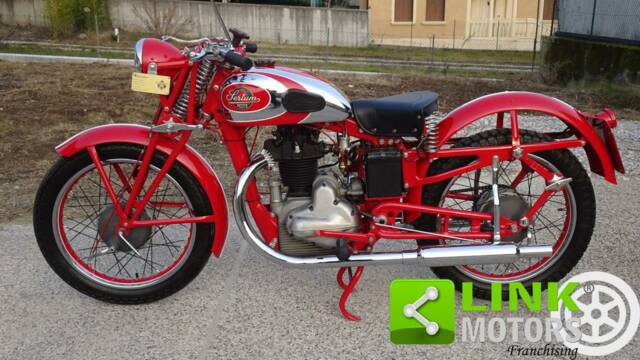
1946 | Sertum 250 VT4
ALTRE MOTO O TIPOLOGIE Sertum 250 CC VT4

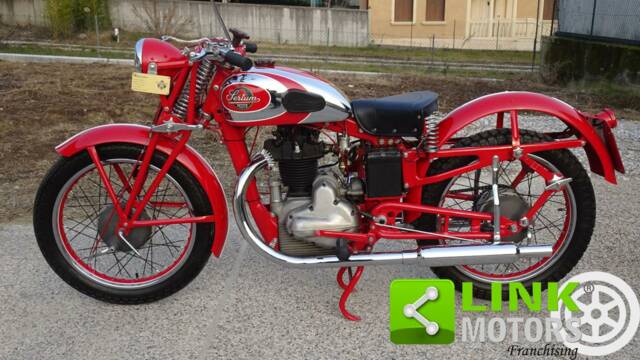
1946 | Sertum 250 VT4
ALTRE MOTO O TIPOLOGIE Sertum 250 CC VT4
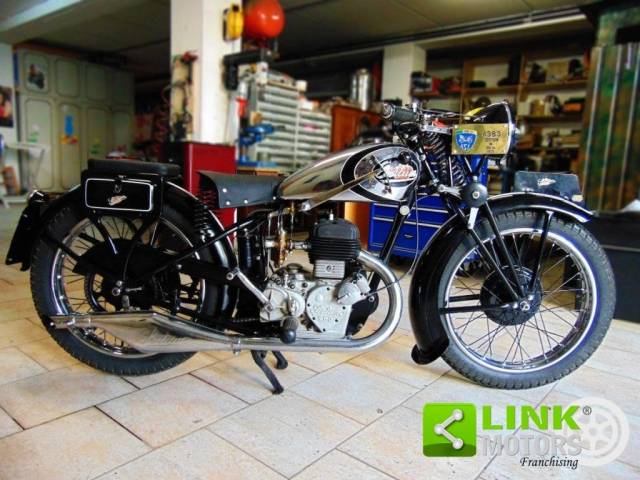
1935 | Sertum 250 VL
OTHERS-ANDERE SERTUM 250cc VL, matching number, targa oro ASI
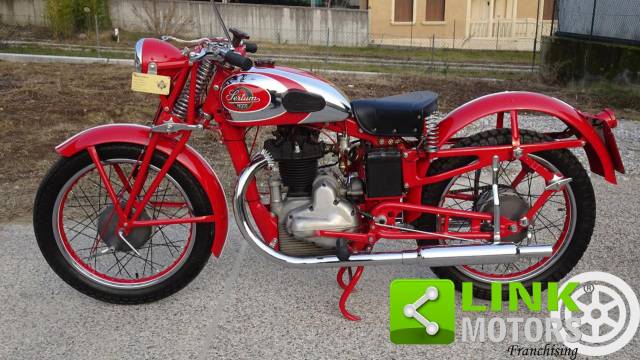
1946 | Sertum 250 VT4
ALTRE MOTO O TIPOLOGIE Sertum 250 CC VT4
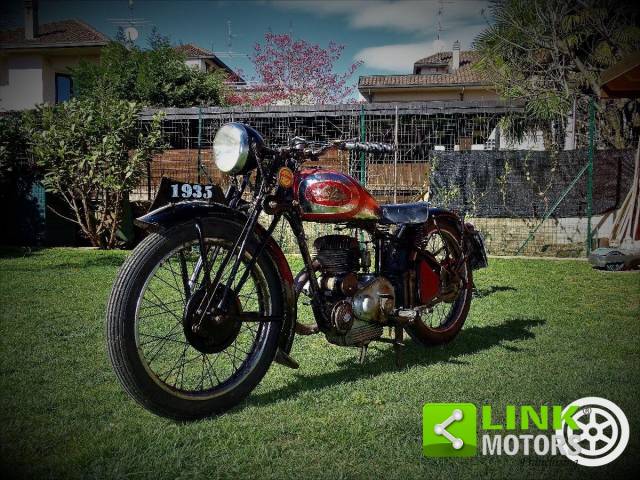
1935 | Sertum 250 VL
SERTUM 250 cc VL**CONSERVATA**
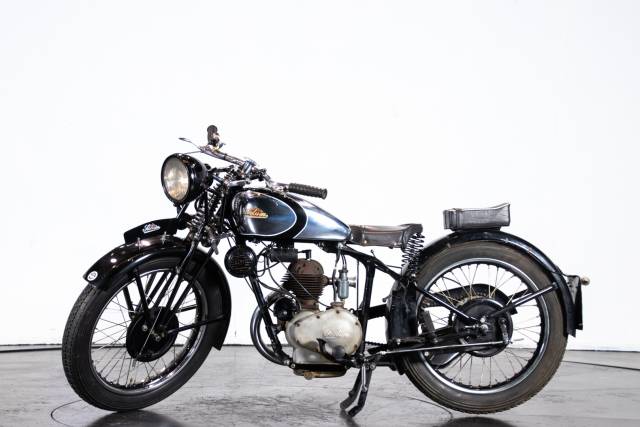
1948 | Sertum 175 Mirimin
-
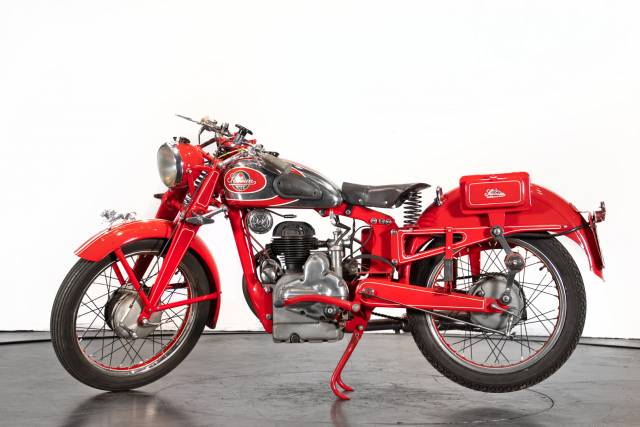
1950 | Sertum 250 VL
-
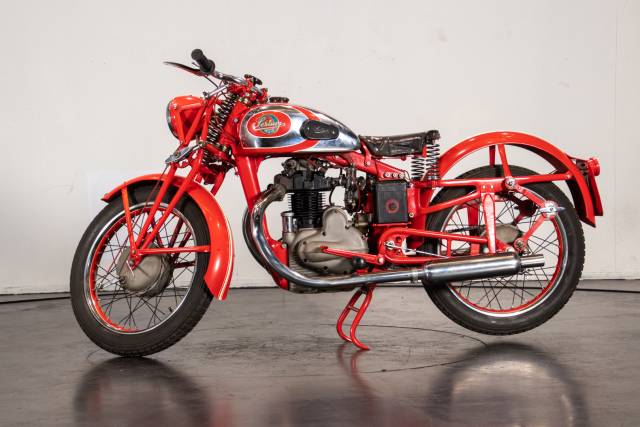
1947 | Sertum 250 VL
-
Create search alert
Let yourself be notified as soon as a listing is published that matches your search filters.
History & Heritage
Sertum is one of those names that rewards the enthusiast who looks beyond the famous giants of Italian motorcycling. Built in Milan from 1932 to 1952, the marque was founded by Fausto Alberti and grew into a maker with a surprisingly broad range, from modest single-cylinder machines to sophisticated twins and military models. In period, Sertum belonged to the Italian “Pentarchy” alongside Benelli, Bianchi, Gilera and Moto Guzzi, a reminder that the brand once stood in serious company.
The story begins in an Italy where engineering ambition and local craftsmanship still carried immense prestige. Sertum’s first motorcycles were built with the practical priorities of the early 1930s in mind: usable performance, solid components and a clear eye on reliability. The early 175 VL established the tone, followed by the smaller Batua 120 and then by a family of 250 cc and 500 cc models that showed how quickly the company learned to move upmarket.
What makes Sertum fascinating today is not just that it was short-lived, but that it was never a superficial badge-engineering exercise. These were proper motorcycles, built with a distinctive sense of purpose. The marque developed its own technical identity, from side-valve engines to overhead-valve designs and from utilitarian singles to more ambitious twins. In an era when buyers could choose between budget transport and genuine sporting machinery, Sertum aimed to sit in the middle ground: refined, competent and capable of long-distance use.
The war years changed the company’s direction, as they did for many Italian manufacturers. Sertum turned to military production, and that chapter left a lasting impression on collectors. The MCM 500 and related wartime machines are prized today because they combine historical significance with scarcity and rugged mechanical character. After 1945, Sertum resumed civilian production and tried to keep pace with a changing market, introducing the VT-4 250 and BT-4 500 among others.
Yet the post-war years brought a harder commercial reality. The market was moving towards small, affordable transport and, soon, scooters. Sertum misread that shift. A planned 125 cc two-stroke never reached series production, and export issues, including a damaging unpaid shipment to Argentina, weakened the company further. By 1952 the firm was bankrupt and liquidated. That abrupt end is part of the appeal now: Sertum motorcycles belong to a finished chapter, not an ongoing lineage.
For collectors in Britain, there is another layer to the story. Sertum’s racing and trial success links the make directly to the International Six Days Trial tradition, and the sport has a particularly strong British association. The ISDT came to Wales in 1949, making Sertum’s three gold medals that year especially resonant for UK enthusiasts. That connection between an Italian specialist brand and British trial history gives Sertum a wider cultural reach than its production figures alone might suggest.
Highlights & Why Collectors Care
Sertum appeals to buyers for one simple reason first: rarity. Even among classic Italian motorcycles, Sertum is an uncommon sight. Surviving examples are scarce, and many appear only occasionally through specialist dealers, auction houses or private sales. For the right collector, that makes the brand deeply rewarding. You are not buying a mainstream classic; you are buying a machine that most people will never have seen in the metal.
The second attraction is breadth. Sertum was not limited to one niche. The 175 VL represents the early touring and light-sport phase, while the Batua 120 adds a small-capacity, more accessible side of the story. The 250 range brought more flexibility, including sporting versions such as the VT and VL variants. At the top end, the 500 Monocilindrica and 500 Bicilindrica turn the brand into a serious pre-war and wartime collector proposition.
For many enthusiasts, the most desirable Sertum is the 500 Bicilindrica. It is the most striking in concept and the most impressive on paper, a twin-cylinder machine that marked the company’s technical confidence. The military MCM 500 is another standout, not because it is the fastest, but because it sits at the crossroads of industrial history, wartime use and post-war survival. Original military machines carry a kind of authenticity that restoration alone cannot fake.
Another highlight is the competition story. Sertum was not a brand that merely advertised durability; it proved it in one of the hardest events in motorcycling. International Six Days Trial success gave the make its sporting credibility, and that remains visible in the market today. A machine with known trial provenance, period photographs or FMI documentation can command stronger interest than an otherwise similar example without history.
Collectors also value Sertum’s visual identity. These motorcycles look purposeful without being excessive. The lines are elegant, the proportions compact, and the engineering often visible rather than hidden. That makes them appealing in a collection of Italian classics: they have presence, but they do not copy better-known rivals. In a market crowded with familiar names, Sertum offers originality.
Technical Data
Sertum’s range evolved quickly, but several technical themes run through the marque. Air cooling, chain final drive, drum brakes and robust Italian single- or twin-cylinder layouts appear again and again. Later models became more advanced, especially in the post-war period.
Common details matter too. Sertum used traditional carburation and ignition systems of the period, with Dell’Orto units on many models, plus magneto ignition on earlier machines and battery/coil systems later on. The brand’s more advanced frames and suspension layouts, especially from the late 1930s onwards, helped distinguish it from simpler utilitarian rivals.
One technical feature worth noting is the way Sertum balanced ambition and durability. Its larger machines were not racing prototypes; they were road motorcycles built to cope with long use, difficult surfaces and demanding events. That is exactly why surviving originals matter so much now. Mechanical completeness is crucial, because missing Sertum-specific parts can be very hard to source.
Market Overview & Buying Tips
The Sertum market is thin, specialist and strongly condition-led. Because supply is so limited, values can vary sharply depending on originality, paperwork, mechanical completeness and whether the bike has been restored correctly. In Britain, buyers should expect a mix of auction results, dealer asking prices and private negotiations rather than a neat published price curve.
As a rough guide, unrestored or lightly restored 250 cc machines can sit in the low-to-mid four-figure range, while well-presented examples can move much higher. Restored 250s may be seen around £8,000 to £15,000 depending on specification and provenance. The 500 Monocilindrica usually sits above that, while a restored 500 Bicilindrica can move into the £18,000 to £30,000+ bracket when properly documented and correctly finished.
The British market provides useful reference points. A Bonhams Stafford sale in April 2023 saw a 1945 Sertum 250 cc Military sell for £2,875 including premium, which is a valuable benchmark for military-condition pricing in the UK. Other market sightings, such as a 1949 Sertum 250 listed around £6,800–£10,200, suggest how quickly values rise once an example is complete and tidy. In York, a Supreme Motos listing for a Sertum 250 in original condition at £3,500 showed that rare bikes can still surface at relatively approachable figures if the bike needs attention.
When buying, originality should be checked carefully. Frame and engine numbers need to match, and any evidence of swapped components should be treated with caution. Sertum records are not as easy to verify as those of larger surviving marques, so period documents, club knowledge and expert inspection matter. FMI recognition, when available, is especially helpful.
Parts supply is one of the biggest challenges. Very few components are available off the shelf, and many Sertum-specific items need custom fabrication. Buyers should assume that good machine-shop support will be necessary sooner or later. Standard consumables are manageable, but rare castings, crank components, suspension parts and trim can become serious projects.
For that reason, the best purchases are often either very complete unrestored bikes or high-quality restorations with photo records and invoices. A cheap project can become expensive fast if key parts are missing. If you want to buy a Sertum in Britain, the safest route is to prioritise completeness, documentation and known mechanical condition over cosmetic shine alone.
Performance
Sertum motorcycles were built for usable performance rather than headline figures, yet the better models still offer real pace by period standards. The smaller 175 and 250 machines deliver a classic pre-war feel: relaxed, tractable and suited to country roads rather than modern traffic. They reward smooth riding and mechanical sympathy, and they are exactly the sort of motorcycles that make slow progress feel enjoyable.
The 175 VL is best understood as a capable light classic. It is not about speed; it is about rhythm, sound and poise. The engine characteristics are gentle and predictable, which makes it a good choice for owners who want something historically important without having to manage a heavyweight twin every time the bike comes out of the garage.
The 250 series is where Sertum starts to feel more accomplished. These bikes have enough performance to make touring viable, and the later OHV versions sharpen the experience further. With around 12 hp in post-war form and a quoted 105 km/h top speed for the VT-4 250, they were respectable machines for their day. On the road, they should feel eager rather than frantic.
The 500 Monocilindrica gives a stronger sense of authority. Its larger capacity brings better low-end pull and more relaxed cruising. For collectors who want a machine with presence, the 500 single is appealing because it combines the visual weight of a big classic with manageable engineering. It is still a vintage motorcycle, so braking and handling remain period-correct, but the engine character can make it feel more substantial than the numbers suggest.
The 500 Bicilindrica is the performance flagship in spirit if not in outright racing terms. Its twin-cylinder layout provides smoother delivery and a more refined feel, and it is the machine most likely to impress people who are seeing a Sertum for the first time. In the context of the 1930s, a 500 twin with around 20 hp and a top speed near 120 km/h was a serious piece of kit.
What all Sertum machines share is the need for respect. They are not modern classics you can simply start and forget. They need warm-up, proper adjustment and regular use. But when sorted, they offer genuine riding satisfaction, especially for owners who enjoy the mechanics of the thing as much as the ride.
Design
Sertum’s design language is one of the brand’s quiet strengths. The motorcycles are not flamboyant in the way some Italian classics can be; instead, they project confidence through proportion, detail and finish. That restrained approach gives them enduring appeal, especially in a collector market that often values visual authenticity.
Early Sertums are recognisable by their upright stance, exposed mechanical elements and traditional pre-war profile. Black or dark finishes, nickel details and spoke wheels give the bikes a suitably serious presence. The overall look is compact and functional, but not plain. There is a sense that every part has been made with care, which is exactly what many classic buyers want from an Italian marque.
The Batua 120 stands apart with its more unusual construction, while the larger models introduce increasingly distinctive frame and suspension solutions. The late-1930s and post-war machines, especially, show how Sertum used engineering to shape visual identity. The central frame sections, practical bodywork and disciplined proportions make the bikes immediately identifiable once you know what to look for.
Military models add another layer. The MCM 500, with its utilitarian finish and purposeful hardware, has the exact sort of honest visual presence that appeals to collectors of military vehicles and wartime motorcycles. It is not decorative, but it is deeply credible. That credibility matters in the market because it suggests a machine that has been preserved rather than prettified.
There is also a charming consistency to the brand’s badges, tank shapes and overall stance. Sertum never became a mass-market stylistic icon, but that is part of the charm. Its designs feel rooted in use, not marketing. In a display of Italian classics, a Sertum often becomes the machine that prompts the most questions, because it is less familiar and yet immediately convincing.
Other: Racing, ISDT and British Links
If there is one reason Sertum deserves a place in a serious collector conversation, it is competition history. The marque’s results in the International Six Days Trial are central to its reputation. In 1939, Sertum took five gold medals. In 1947, it added two more. Then came 1949, when three gold medals extended the tally and reinforced the brand’s toughness at the highest level of endurance trial riding.
For British enthusiasts, the 1949 ISDT in Wales is especially significant. Wales has long been a cornerstone of British trial culture, and that event gives Sertum a direct UK connection that is more than symbolic. It places the marque into a setting many British riders and collectors understand instinctively: harsh terrain, demanding conditions and a premium on reliability over showmanship.
That sporting pedigree matters because it helps explain why Sertum is still respected today. These were not delicate showroom pieces built only for appearance. They were motorcycles expected to survive punishment, and the ISDT results back that up. For buyers, that means a Sertum is not just a rare Italian classic; it is also a machine with proven endurance history.
The British market has picked up on that story in a modest but meaningful way. Auction results at Stafford and occasional dealer listings across the UK show that Sertum is known, if still niche. That is exactly why a well-documented example can stand out so strongly. It is the sort of motorcycle that appeals to connoisseurs, not casual browsers.
Beyond racing, Sertum has a broader cultural value. It represents a Milanese manufacturer that tried to be technically serious, market-aware and export-minded at the same time. The company’s collapse in 1952 turned it into a historical footnote for the mainstream, but for collectors it became something better: a rare, story-rich motorcycle with genuine depth.
Summary
Sertum motorcycles are among the most distinctive rare classics from Italy. Their short production life, strong engineering identity and proven ISDT record give them a collector appeal that is far greater than their present-day visibility might suggest. For British buyers, the Wales connection in 1949 adds an especially strong local resonance.
If you want a bike that is uncommon, historically important and deeply satisfying to own, Sertum is a compelling choice. Just be prepared for careful buying, scarce parts and specialist restoration work. In return, you get a motorcycle that feels genuinely exclusive.
Find Sertum motorcycles for sale on Classic Trader and discover now which original, restored and race-linked examples are available.