- Motorcycle
- Solex (1 offer)
Buy Solex VéloSolex Mopeds
More than eight million sold worldwide since 1946, the Solex VéloSolex is a French icon of affordable, simple mobility. With its distinctive front-wheel friction drive and pedal-assisted engine, it remains a beloved classic for collectors and enthusiasts across the UK.
Search results
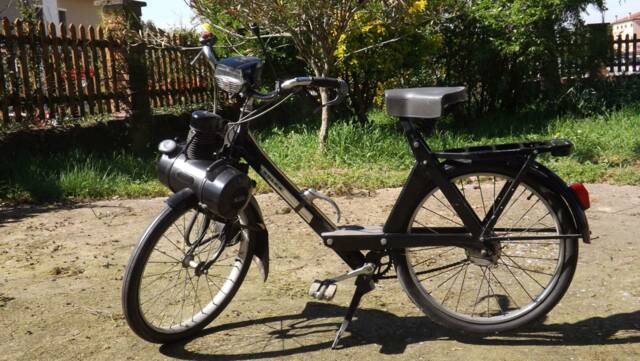

Solex listing references from Classic Trader
Below you will find listings related to your search that are no longer available on Classic Trader. Use this information to gain insight into availability, value trends, and current pricing for a "Solex" to make a more informed purchasing decision.
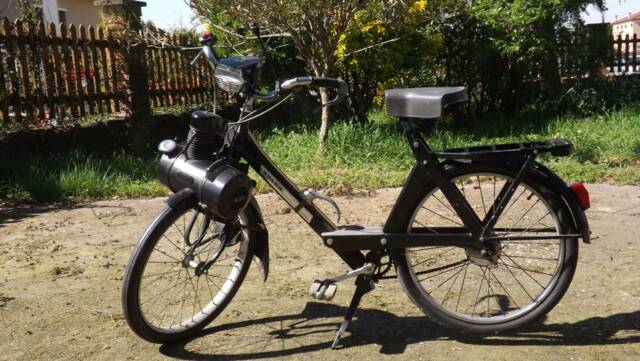
1967 | Solex Vélosolex Model 3800
-
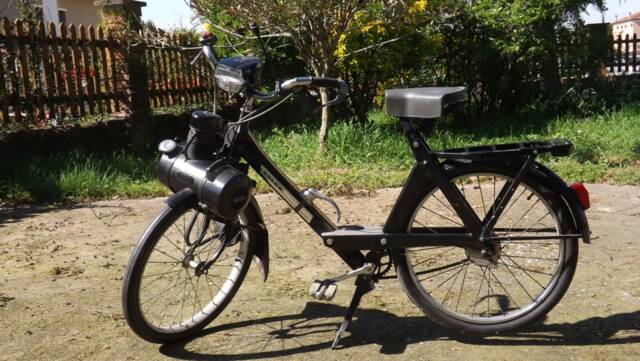
1967 | Solex Vélosolex Ami
-
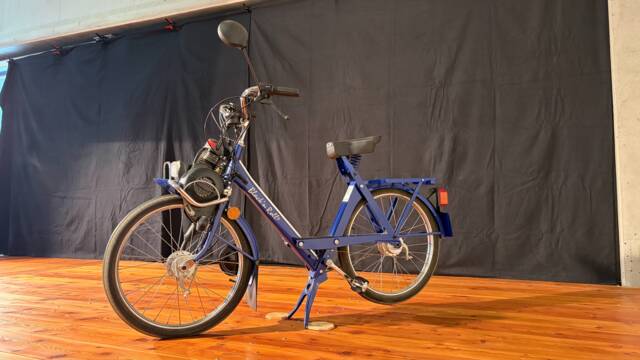
1966 | Solex Vélosolex Model 3800
Reduced to the essentials and all the more special for it

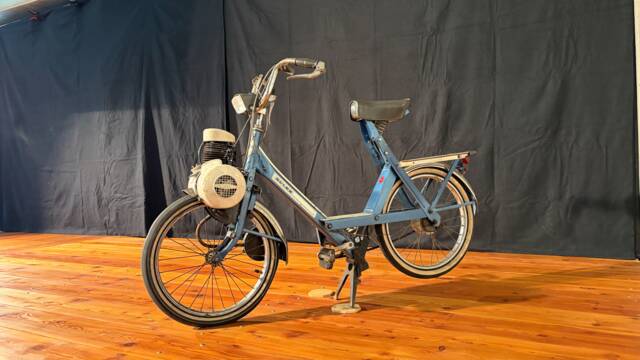
1971 | Solex Vélosolex Model 5000
French mobility classic with characteristic front-wheel drive
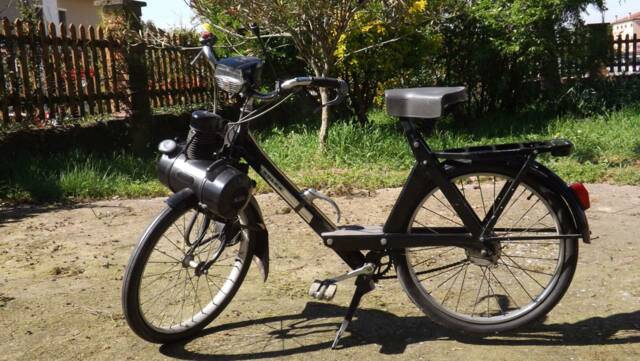
1967 | Solex Vélosolex Ami
-

1962 | Solex Vélosolex Ami
1962 Velo Solex S 2200 V1 49cc

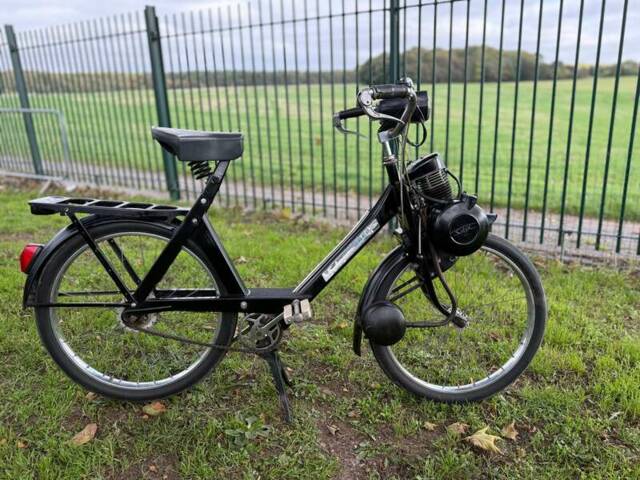
1968 | Solex Vélosolex Model 3800
1968 Velo Solex S 3800 49cc
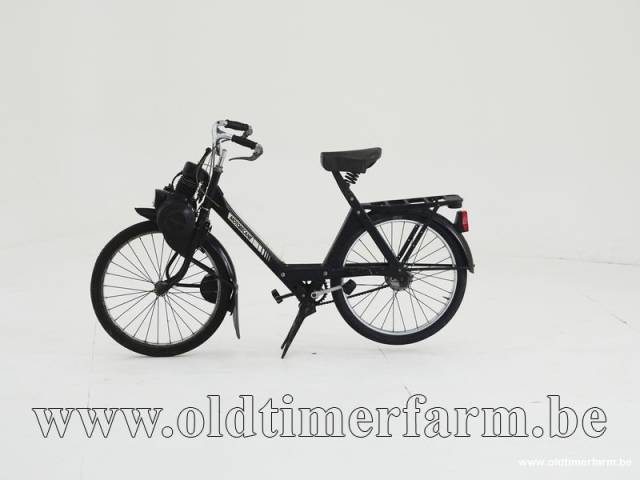
1966 | Solex Vélosolex Model 3800
1966 Solex 3800S '66

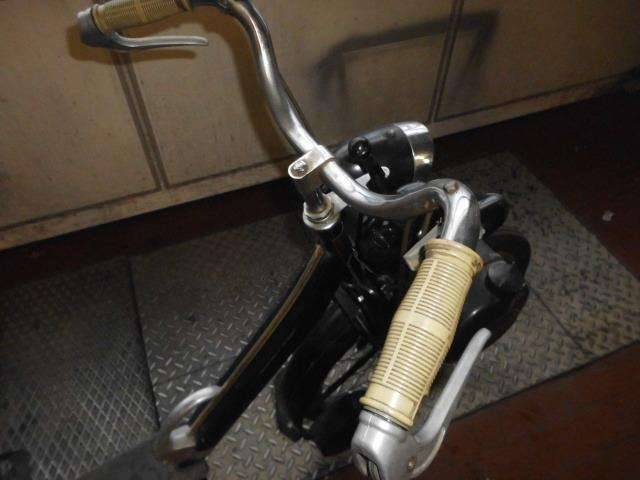
1970 | Solex Vélosolex Model 3800
Velosolex

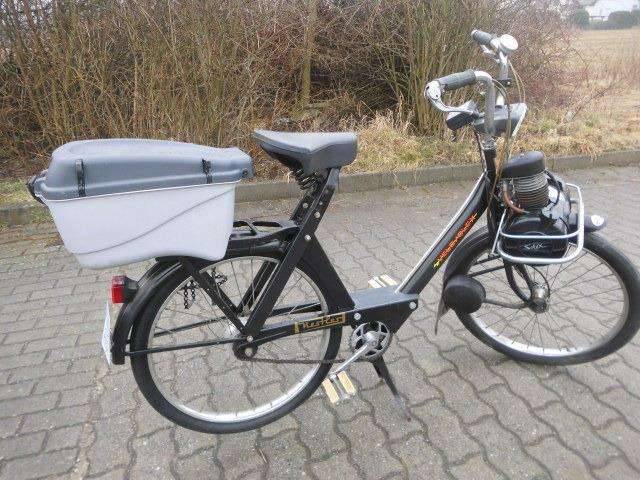
1974 | Solex Vélosolex Model 3800
Velosolex
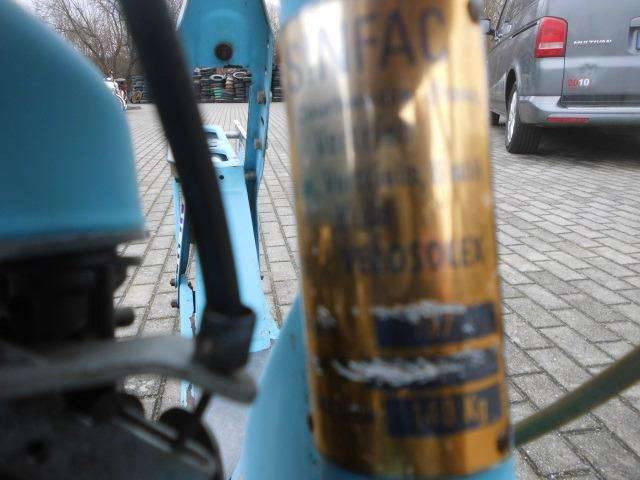
1975 | Solex Vélosolex Model 3800
Velosolex
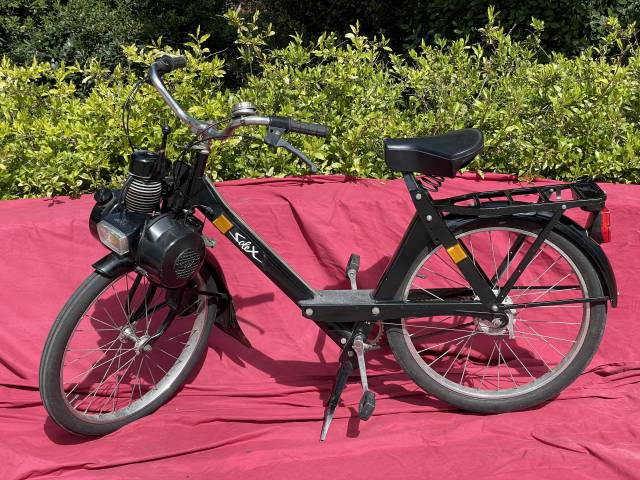
1986 | Solex Vélosolex Model 3800

History and Heritage
The Solex story begins not with mopeds, but with precision engineering. In 1905, Maurice Goudard and Marcel Mennesson, two French engineers, founded Solex to manufacture centrifugal radiators and carburettors. The company's reputation for reliability grew steadily—by the 1930s, Solex carburettors equipped prestigious marques including Rolls-Royce, Mercedes-Benz, and the finest French automobiles. The name itself was chosen for its international appeal and brevity, becoming synonymous with mechanical excellence.
The VéloSolex concept emerged during the Second World War, born from necessity. With fuel rationed and transport infrastructure devastated, Mennesson envisioned a lightweight, economical vehicle that required minimal resources to manufacture. The first prototype appeared in 1941: a simple 38 cc two-stroke engine mounted above the front wheel of a bicycle frame, driving the tyre through a friction roller. Production began in earnest in April 1946 with the VéloSolex 45, and the response was extraordinary.
In post-war France, the Solex represented liberation and mobility. It required no driving licence, no complex mechanics, and cost a fraction of a motorcycle. The machine was classified as a bicycle with an auxiliary motor—a legal and practical distinction that made it accessible to everyone. By the early 1950s, Solexes had become ubiquitous on French roads, the faithful companion of students, workers, and rural postmen alike.
British acquaintance with the VéloSolex began in July 1946 when the motor cycling press announced this curious "French Power-cycle". The early 45 cc model featured a drop frame with a 1¾-inch diameter main tube, developing two-thirds of a horsepower at 2,000 rpm. Maximum speed was a modest 17 mph, but the machine's simplicity and economy captured imaginations. Though never manufactured in Britain, Solexes were imported by enthusiasts and gradually established a devoted following, particularly among those seeking affordable, reliable transport.
The Solex 330 (1953) increased displacement to 49 cc, establishing the engine size that would define the marque for decades. The Solex 1700 (1959) introduced the automatic clutch—a revolutionary feature that allowed the engine to run whilst stationary without requiring the rider to pedal. This innovation transformed urban usability. The Solex S 3800 (1966) represented the pinnacle of the classic era: a more robust frame, optimised engine, and refined mechanics. Over seven million S 3800s were produced, making it the most iconic and collectible model today.
The Solex 5000 (1971) attempted to modernise the brand's image with smaller 16-inch wheels, plastic fuel tank, and vibrant colours—orange, blue, and yellow—targeting younger riders. The Solex Ami offered a variant with slightly different styling. The Solex 3300 (1964–1966) occupied the middle ground between early and later models, representing a transitional design.
French production continued until 1988, after which manufacturing shifted to Hungary and later China. However, for collectors and purists, only the original French-made models—particularly the 3800—hold true significance. The Solex became embedded in French cultural memory, immortalised in films by Jacques Tati and countless photographs of the 1960s and 1970s. In Britain, whilst never achieving the ubiquity of domestic mopeds, the Solex developed a cult following among enthusiasts who appreciated its mechanical honesty and Continental charm.
Highlights and Features
The Solex's defining characteristic is its friction-drive transmission. Unlike conventional motorcycles and mopeds that employ chain or belt drives, the Solex engine is suspended above the front wheel, with a hardened roller (typically made of corindon) pressing directly against the tyre. This ingenious system eliminates the need for a gearbox, clutch, or chain—reducing mechanical complexity to an absolute minimum. The result is a machine that weighs approximately 28–30 kg, can be carried upstairs, and requires only basic tools for maintenance.
The engine itself is a masterpiece of simplicity: a single-cylinder, air-cooled, two-stroke design of 49 cc (post-1953 models). The fuel tank is integrated into the engine block, and the fuel pump operates via membrane action, driven by pressure variations in the crankcase. A transparent return fuel line allows the rider to observe fuel circulation—a charming diagnostic feature. Consumption is extraordinarily frugal: typically 1.2–1.5 litres per 100 km, earning the Solex the nickname "the bicycle that runs for a penny".
Starting the Solex is a ritual. The rider straddles the machine, begins pedalling like a bicycle to build momentum, then engages the engine by lowering a lever that presses the friction roller against the tyre. The small two-stroke coughs to life with a characteristic "pof-pof" sound, and suddenly the pedalling becomes optional. The sensation is unique: you are no longer pedalling a bicycle, but riding a motorised companion that requires your occasional assistance on hills.
The riding position is upright and bicycle-like, with a high handlebar and suspended saddle. Braking is provided by friction pads on the front wheel rim and a small drum brake at the rear—adequate for the modest speeds involved, though requiring anticipation in wet conditions. The Solex is not a machine for speed; it is a machine for presence. At 30–35 km/h (19–22 mph), you remain part of your environment, observing details that faster travel obscures.
The portability of the Solex cannot be overstated. Unlike any motorcycle, a Solex can be wheeled into a flat, stored in a cupboard, or transported in a car boot. This practicality, combined with its mechanical transparency, makes it an ideal entry point for those wishing to understand how engines work. Every component is visible, accessible, and comprehensible. There are no hidden systems, no sealed units, no proprietary parts.
The aesthetic is equally compelling. The traditional black livery, adorned with hand-painted gold pinstripes on the mudguards and tank, conveys understated elegance. The design philosophy is pure functionalism: every element serves a purpose. The frame is a marvel of pressed-steel engineering, the motor mounting is ingeniously simple, and the overall proportions are harmonious. A well-restored Solex is a sculpture of mechanical poetry.
Technical Data
Fuel and Oil: Solex engines require a two-stroke fuel mixture. Modern practice recommends a 2–3% pre-mix ratio using semi-synthetic or synthetic two-stroke oil (e.g., Castrol Scoot-R) with unleaded petrol. Avoid ethanol-blended fuels, which can damage the fuel pump membrane. The original "Solexine" pre-mixed fuel is no longer available, but quality aftermarket alternatives are readily obtainable.
Market Overview and Buying Tips
The UK Solex market is modest but active. Whilst never manufactured domestically, surviving examples have been imported by enthusiasts since the 1950s, and the VéloSolex Club U.K. maintains a vibrant community of owners and restorers. Auction results and private sales indicate steady demand, particularly for well-restored S 3800 models.
Current UK Pricing (2024–2025)
- Barn-find / Requires restoration: £300–£500. Expect seized engines, surface rust, and deteriorated tyres. Ideal for those with mechanical aptitude and patience.
- Running, original condition: £500–£800. The machine starts and runs, but requires cosmetic and mechanical attention. Represents good value for regular use.
- Restored / Excellent original condition: £900–£1,400. Engine rebuilt, paintwork refreshed, consumables renewed. Ready to ride with confidence.
- Rare models (early 45, coloured 5000, Ami variants): £1,500–£2,500+. Exceptional examples or sought-after variants command premium prices.
A 1982 Velo Solex sold at Mathewsons auction in November 2024 for £650 (estimate £700–£800). A 1971 S 3800 achieved £600 at Spicers Auctioneers in August 2024. A 1966 S 3800 sold without reserve at Charterhouse Auctioneers in June 2024. These results reflect the steady, modest appreciation of well-maintained examples.
Inspection Checklist
The Engine: This is paramount. Attempt to turn the flywheel by hand—it should rotate with moderate resistance. If it is seized, the galet may be stuck to the tyre (often remediable) or the engine may have internal damage. Check compression by removing the spark plug and feeling resistance as you turn the flywheel. Weak compression suggests worn piston rings. Listen for rattles or grinding sounds, which indicate bearing wear.
The Friction Roller (Galet): Inspect the roller surface for cracks, missing chunks, or excessive wear. A smooth, shiny galet will slip on the tyre, especially in wet conditions. Replacement galets cost £40–£60. Check for excessive play in the roller bearing—a worn bearing will cause vibration and poor power transmission.
The Fuel System: Verify that fuel flows from the tank to the carburettor. If the engine has been idle for years, the membrane pump may be perished. Replacement pumps are inexpensive (£20–£40) and straightforward to fit. Inspect the fuel tank interior for rust and corrosion—a pitted tank may require replacement or professional restoration.
The Frame: Examine the frame for cracks, particularly around the engine mounting points and the steering head. Rust is common on older machines, but surface corrosion is cosmetic. Structural rust—particularly in the lower frame tubes—is more serious. A bent or twisted frame is uneconomical to repair.
Tyres: Original Solex tyres are now unobtainable; modern replacements in the correct sizes (1.75 × 19 for the 3800, 2.00 × 16 for the 5000) are available from specialist suppliers. Cracked or perished tyres are a safety hazard and should be replaced immediately.
Documentation: UK registration (V5C) is now mandatory for all mopeds, including historic Solexes. Purchasing a machine with existing registration simplifies matters considerably. If unregistered, you will need to apply to the DVLA with proof of age (engine number records from the VéloSolex Club U.K. are invaluable) and an MOT certificate. The process is bureaucratic but achievable.
Parts Availability
Parts availability is excellent. Specialist suppliers including Chebco (France), VSX France, and Solex-Story stock refabricated components: piston rings, gaskets, fuel pumps, carburettors, and complete engine gasket sets. The VéloSolex Club U.K. maintains technical libraries with original service manuals, parts lists, and torque specifications—all translated into English. Sourcing parts is rarely a barrier to restoration.
Riding Experience
Riding a Solex is a sensory experience that modern transport has largely eliminated. The ritual begins with the pedal-start: you mount the machine, position yourself on the saddle, and begin pedalling as though on a bicycle. The friction roller is disengaged, so you are simply building momentum. Once you have sufficient speed, you lower the engagement lever, and the roller presses against the tyre. The engine coughs, sputters, and suddenly catches. The vibration of the small two-stroke transmits through the frame, and you feel the machine come alive.
The acceleration is gentle. There is no dramatic surge of power—the 0.8 bhp is modest—but there is a palpable shift from human-powered to engine-assisted motion. The characteristic "pof-pof" of the two-stroke exhaust becomes your constant companion, a rhythmic percussion that is simultaneously annoying and endearing. The smell of two-stroke oil mingles with petrol fumes, a scent that defines the Solex experience.
At cruising speed (25–30 mph), the Solex feels stable and composed. The bicycle-like geometry and modest weight make it nimble in traffic. You can weave through congestion, slip into tight parking spaces, and navigate urban environments with ease. The upright riding position provides excellent visibility, and the high handlebars offer comfortable control.
Hills present a challenge. As the gradient increases, the engine labours, and the small roller begins to slip on the tyre. The solution is to pedal—to assist the engine in climbing. This interaction between human and machine is what makes the Solex unique. You are not merely a passenger; you are an active participant in the journey. On a steep hill, you may find yourself pedalling hard, the engine straining, the whole machine moving at walking pace. It is humbling and oddly satisfying.
Braking requires anticipation. The rim pads and small drum brake are adequate for the speeds involved, but they lack the power of modern systems. In wet conditions, the friction roller may slip, reducing traction and braking effectiveness. Experienced Solex riders develop a smooth, progressive braking technique and avoid sudden stops.
The noise is constant. The engine is never silent—even at idle, it mutters and pops. The friction roller produces a characteristic whistle as it contacts the tyre. Wind noise is minimal at these speeds, but the mechanical symphony is ever-present. For some, this is the Solex's greatest charm; for others, it is a drawback. Either way, it is impossible to ignore.
Comfort is modest. The suspended saddle absorbs some road vibration, but the lack of suspension means every pothole and cobblestone is transmitted to the rider. Long journeys can be fatiguing. The Solex is a machine for short urban trips, weekend rides, and leisurely exploration—not for distance touring.
Design and Philosophy
The Solex embodies a design philosophy that has become rare: form follows function. Every element serves a purpose; nothing is superfluous. The pressed-steel frame is simultaneously light and rigid, a testament to 1960s manufacturing expertise. The engine mounting is ingeniously simple, using rubber bushings to isolate vibration whilst maintaining structural integrity. The fuel tank is integrated into the engine block, eliminating a separate component and reducing weight.
The traditional black livery was originally a practical choice—black paint was economical and simple to apply. Over decades, it became the Solex's signature, reinforced by hand-painted gold pinstripes that add a touch of elegance. The colour scheme conveys understated sophistication, a contrast to the garish hues of contemporary scooters and the chrome excess of American motorcycles.
The friction-drive system is the Solex's defining innovation. Whilst other manufacturers pursued conventional chain or belt drives, Solex's engineers recognised that a friction roller offered unparalleled simplicity. The system is self-adjusting: as the tyre wears, the roller naturally compensates. There is no chain to stretch, no belt to slip, no sprockets to replace. The elegance of this solution—solving a complex problem through mechanical simplicity—is the essence of good design.
The Solex's philosophy is one of democratic mobility. Maurice Goudard's vision was to provide affordable, reliable transport to ordinary people. The machine required no driving licence, no complex maintenance, and minimal fuel consumption. It was transport for students, workers, and rural communities—not a status symbol or a plaything for the wealthy. This egalitarian spirit remains the Solex's greatest appeal.
In contemporary design discourse, the Solex represents a counterpoint to planned obsolescence and technological complexity. A Solex from 1970 can still function reliably with basic maintenance. The mechanical systems are transparent and comprehensible. Repair and restoration are within the reach of any competent amateur mechanic. In an era of sealed units and proprietary parts, the Solex's openness is refreshing.
Culture and Community
The Solex occupies a unique position in European popular culture. In France, it is an icon of post-war reconstruction and the student life of the 1960s. In Britain, whilst never achieving such cultural saturation, the Solex has developed a devoted following among enthusiasts who appreciate its mechanical honesty and Continental charm.
The VéloSolex Club U.K. is the focal point of British Solex enthusiasm. Founded by dedicated collectors and restorers, the club organises regular summer rides, maintains extensive technical libraries, and provides invaluable support to owners navigating registration, restoration, and mechanical challenges. Membership offers access to original service manuals, parts lists, and a community of knowledgeable enthusiasts. The club's website (velosolexclubuk.com) is an essential resource for anyone considering Solex ownership.
The Solex has appeared in numerous films and television programmes, often as a symbol of European charm or period authenticity. Its presence in a scene immediately evokes a specific era and sensibility. For collectors, owning a Solex is a form of cultural participation—a statement of values favouring simplicity, sustainability, and mechanical engagement over technological complexity.
Restoration culture around the Solex is vibrant. Enthusiasts share knowledge through online forums, club meetings, and specialist publications. The mechanical simplicity of the machine makes restoration accessible to amateurs, yet the aesthetic and historical significance of the Solex attracts serious collectors who pursue concours-level restorations. This range—from basic functional restoration to museum-quality preservation—ensures that Solexes remain active and appreciated across the enthusiast spectrum.
Summary
The Solex VéloSolex is far more than a nostalgic curiosity; it is a functional, reliable, and genuinely enjoyable vehicle that has earned its place in the pantheon of classic motorcycles. Whether you seek the robust S 3800, the colourful 5000, or an early 45 for its historical significance, the Solex offers mechanical simplicity, affordability, and a direct connection to the history of European transport.
The UK market for Solexes is modest but active, with prices ranging from £300 for barn-finds to £1,500+ for exceptional examples. Parts availability is excellent, thanks to specialist suppliers and the dedicated work of the VéloSolex Club U.K. Restoration is within the reach of any competent amateur mechanic, and the resulting machine will provide years of reliable, economical transport and genuine pleasure.
Owning a Solex is an act of resistance against planned obsolescence and technological excess. It is a commitment to understanding how machines work, to maintaining and repairing rather than discarding, and to experiencing transport as an active, engaged process rather than a passive convenience. The Solex invites you to slow down, to observe your surroundings, and to rediscover the simple joy of mechanical motion.
The "bicycle that runs all by itself" remains, after nearly eighty years, a remarkable achievement of engineering and design. Find your Solex on Classic Trader today, and join a global community of enthusiasts who have chosen simplicity, reliability, and charm over complexity and speed.