- Motorcycle
- SIS Sachs (0 offers)
Buy SIS Sachs Motorbike
SIS Sachs is one of those rare classic motorbike names that feels like a discovery rather than a default choice. Born in Portugal and powered by German Sachs engineering, it offers collectors a genuinely off-the-beaten-track path into the classic bike scene.
Search results
Currently, there are no matching listings for your search.
Create search alert
Let yourself be notified as soon as a listing is published that matches your search filters.
Create listing
Do you have a SIS Sachs that you want to sell? Then create a listing now.
Create listingSIS Sachs listing references from Classic Trader
Below you will find listings related to your search that are no longer available on Classic Trader. Use this information to gain insight into availability, value trends, and current pricing for a "SIS Sachs" to make a more informed purchasing decision.

1954 | SIS Sachs 50
C.M.P. Sachs 50 Velocipede

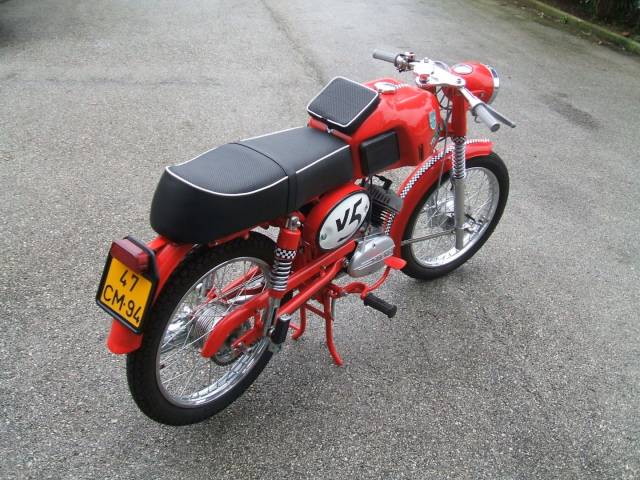
1975 | SIS Sachs V5 Sport
SIS SACHS V5 Racing Sport

Create search alert
Let yourself be notified as soon as a listing is published that matches your search filters.
Create listing
Do you have a SIS Sachs that you want to sell? Then create a listing now.
Create listingHistory
SIS Sachs occupies a special place in European motorcycling because it was never simply a badge-engineering exercise. The story begins in the early 1950s with Joaquim Simões Costa, who founded Sociedade Irmãos Simões in Anadia, Portugal. From the outset, the company was shaped by a practical idea that would define much of its output for decades: build light, accessible motorbikes around proven German engines, then give them a distinctly Portuguese identity.
That German connection came through Fichtel & Sachs of Schweinfurt. SIS adopted Sachs power units early on, and by the mid-1960s its machines had begun to develop a personality of their own. The brand was not just assembling imported parts; it was creating a local two-wheeled culture in a country where motorcycling was still finding its industrial footing. For classic bike collectors today, that matters. SIS Sachs represents the kind of regional engineering story that is easy to overlook if your usual reference points are British singles, Italian sports bikes or Japanese twins.
In 1964, the company was acquired by Aulácio Almeida of OSP and renamed SIS-Veículos Motorizados. This was the moment when the modern SIS-Sachs identity really took shape. The Sachs link became more than a supply relationship, and the brand name started to carry weight on its own. A few years later, in 1971, production was consolidated in the new factory at Malaposta, Anadia, a move that brought the company’s activities under one roof and gave it a stronger industrial base.
Another turning point came in 1975, when SIS began licence-building Sachs motors in Portugal. That step is important because it shows how the brand evolved from importer and assembler to manufacturer with real technical capability. The company kept leaning on German mechanical know-how, but it was increasingly doing the hard work at home. For enthusiasts, that mix is part of the appeal: SIS Sachs machines are Portuguese in character, but with a mechanical lineage that is easy to understand, maintain and appreciate.
Over the years, the range grew into a compact but memorable family of small-displacement motorbikes. The early Lebre established the brand’s name beyond Portugal, and the V5 Sport became the machine most closely associated with SIS Sachs. Later came the V5 Turismo, V5 Top Racing, V5 Lotus, Minor 505, RE50 trail models and the fully faired GP1. Each reflected a different phase in the company’s life, from lightweight everyday transport to more styled, more ambitious machines aimed at a wider export audience.
SIS Sachs also spread further than many people expect. In the mid-1960s, the brand was sold in the United States through Cycle International in California, while the Swiss importer A. Strasser in Biberist helped the marque reach another serious European market. That international footprint is one reason the name still surfaces in collector circles outside Portugal. It is not a mass-market giant, but it is far from a local footnote.
The final chapter came in September 1995, when the factory in Anadia closed. By then, the classic small-capacity market had changed beyond recognition, and the low-cost, high-volume competition from Asia had pushed many European specialist firms to the edge. Yet SIS Sachs left behind a clear legacy: a small manufacturer that built its own identity around practicality, lightness and a very specific blend of Portuguese ambition and German precision.
Highlights
What makes SIS Sachs so appealing to collectors is not only the history, but the way the brand translated that history into machines with a strong identity. In the UK classic bike scene, where there is a deep love for everything from commuter singles to rare continental two-strokes, SIS Sachs stands out precisely because it is not part of the usual conversation. It is the kind of machine that gets people talking at a show or an auction because it is familiar enough to understand, yet unusual enough to feel like a smart find.
The best-known model is the V5 Sport, designed by António Quadros and produced from 1965 to 1987. It is the SIS Sachs that most neatly captures the brand’s personality: slim, sporty, mechanically straightforward and visually distinctive. Its name can be misleading at first glance, but the “V5” does not refer to a V5 engine layout. Instead, it points to the 5-speed gearbox, which gave the small 49 cc motorbike unusual flexibility for its class.
That gearbox is one of the reasons the V5 Sport earned such a good reputation. In a segment where many rivals still relied on simpler transmissions, a five-speed setup gave the SIS Sachs a more purposeful feel. It encouraged riders to keep the engine on the boil, use the rev range properly and make the most of what was, on paper, a modest output. The result was a small machine with real character rather than a purely utilitarian commuter.
The Lebre is another important model, especially for buyers who value rarity and early brand identity. It was among the SIS machines that helped establish the marque beyond Portugal, and it even attracted praise in the international press. Cycle Magazine reviewed the Lebre in July 1965 and singled out its stopping power, a notable compliment for a lightweight bike at the time. That sort of period recognition adds depth to the SIS Sachs story and reminds buyers that the brand was taken seriously far beyond its home market.
Later variants broadened the appeal. The V5 Turismo leaned into practical road use, while the V5 Top Racing and V5 Lotus added a more styled, more aspiration-driven edge. The V5 Lotus is especially interesting today because it is both recognisable and less common than the core V5 Sport, which makes it a natural target for collectors who want something distinctive without moving into the most obscure corners of the market.
The RE50 showed that SIS Sachs could do more than sporty road bikes. As a trail model, it brought a tougher stance, more versatility and a broader use case. Then there is the GP1, the fully faired late-period model produced between 1991 and 1994. Only around 50 units were imported to Germany, which makes it one of the rarest SIS Sachs variants seen in the collector market. For enthusiasts who want a bike that feels genuinely uncommon, the GP1 is a fascinating late chapter.
Taken together, these models show a brand that never sat still. SIS Sachs was not trying to be the biggest or the loudest. It was trying to build small bikes with enough engineering substance and visual identity to matter. That is exactly why they are now attractive to serious collectors.
Technical Data
The technical core of SIS Sachs is compact, simple and surprisingly sophisticated for its class. The following figures help explain why the marque has endured in the memory of collectors and restorers.
The Sachs 50 S engine that powered the best-known V5 variants is worth a closer look. Its bore and stroke of 38 x 44 mm give it a very traditional small-two-stroke layout. Output of 5.3 bhp may not sound dramatic, but with a claimed weight of only 68 kg, the power-to-weight ratio was more than adequate for the period. For riders in the classic 50 cc class, that combination mattered more than headline figures.
The V5 Sport also carried a 16-litre fuel tank, which gave it unusually useful range, and 100 mm drum brakes that were perfectly in keeping with the bike’s era. The 2.75 x 21-inch tyres are another period clue: tall, narrow and very much tuned to light weight and simple road manners. The whole package feels honest and mechanical, which is exactly what many classic-bike buyers are looking for today.
Market Overview & Buying Tips
SIS Sachs sits in an appealing niche of the classic market: not so rare that parts and information are impossible, but uncommon enough to feel special. In the UK, where classic bike culture is strong and curiosity for offbeat continental machines is high, that niche matters. Many collectors already own the familiar British or Japanese staples; SIS Sachs offers a way to expand a garage with something more individual.
As of 2025/2026, the market looks roughly like this:
- Project bikes: £300–700
- Running riders: £700–1,300
- Restored V5 Sport: £2,000–3,000
- V5 Lotus, top examples: up to £4,000
Those numbers are best understood against the brand’s rarity. A clean SIS Sachs may not always command the same money as a widely known British classic, but good examples are increasingly appreciated by buyers who want a story, not just a spec sheet. The market is strongest for complete, original machines with correct bodywork, sound paint and decent documentation. As with most classic small-capacity bikes, originality counts for a great deal.
The sale of a 1975 V5 Sport at a US auction for $2,250 in 2025 gives a useful sense of where the market can sit for a decent survivor. That figure is not a ceiling; it is more a reminder that well-kept SIS Sachs machines are no longer budget curiosities. They are legitimate collector pieces with a growing audience.
When buying, the first thing to assess is not the shiny paint but the mechanical health of the bike. Crankshaft bearings are a known weak point and can announce themselves with a grind or a whine when the engine is running. That noise should never be ignored. A worn Bing carburettor needle is another common issue, often showing up as poor running, hesitation or inconsistent fuelling at low openings. These are manageable problems, but they are the sort that can turn a cheap purchase into an expensive one if you are not careful.
Gearbox oil is another item buyers should check properly. These motors should use ATF, not GL-5. Using the wrong oil can damage the clutch and create unnecessary mechanical headaches. It is a small detail, but on a SIS Sachs it matters a great deal. A seller who knows this detail is usually worth taking more seriously than one who does not.
If the bike is a model with the integrated frame tank, such as the Saxy, inspect carefully for corrosion. Internal rust can be difficult to see and expensive to remedy. On bikes that have sat for years, tank condition can become one of the deciding factors in whether a project is worth saving.
Parts availability is mixed. Mechanical pieces for the Sachs engines are comparatively manageable, but body parts are scarce outside Portugal. That is the key buying reality. A motor can often be rebuilt; a missing side panel, fairing section or correct trim piece may take time, contacts and money to source. For the GP1 and some RE50 parts, scarcity can be especially acute.
That said, collectors who are prepared to search can still find help. The best purchases tend to be bikes that are mostly complete, even if tired. A rough but original machine is usually a better long-term bet than a cosmetically improved example with missing rare parts. If you want to find a SIS Sachs to buy, start with completeness, then assess engine condition, then worry about cosmetics.
Typical buyer profiles are easy to spot. The first group is the enthusiast who values Iberian motorcycle history. The second is the collector who wants a conversation piece in a garage already full of the usual names. The third is the hands-on owner who enjoys restoring small two-strokes and appreciates the relative simplicity of the Sachs engine family. SIS Sachs suits all three, but especially the buyer who wants to discover now something more unusual than the standard British or Japanese fare.
Performance
On the road, the best SIS Sachs machines feel lively in the way only a light two-stroke can. The V5 Sport is the model that best represents this experience. With 5-speed gearing and a compact 49 cc motor, it rewards an attentive rider. It is not about brute force; it is about keeping the engine in the sweet spot and working with the bike rather than against it.
That is part of why the V5 Sport earned such a following. The bike asks for involvement. It responds to throttle input, gear choice and road reading in a way that makes even modest speeds feel meaningful. The claimed top speed of around 75 km/h may sound modest today, but in period it gave the bike enough pace for everyday transport and a little extra confidence on open roads.
The chassis is light and easy to place. At 68 kg, the V5 Sport is a featherweight by modern standards, and that low mass helps it feel nimble at parking-lot speeds and stable enough once rolling. With a 16-litre tank, it also has the range to feel practical rather than toy-like. That combination of lightness and usability is one of the reasons it remains attractive to collectors who still ride their classics.
The brakes are period-appropriate rather than sensational. The 100 mm drum brakes work in the context of the machine, but they demand respect. Anyone buying a SIS Sachs should treat braking performance as something that depends heavily on correct adjustment, cable condition and overall mechanical health. In a classic bike with small drums, a well-set-up system matters more than any headline specification.
The RE50 has a different personality. As a trail model, it brings a more relaxed, more flexible feel, especially on mixed surfaces. It is the sort of bike that looks happiest on country lanes, rough tarmac and light off-road use. The GP1, by contrast, is more about form and late-period ambition. Its fully faired bodywork and six-speed transmission make it feel like a miniature sports machine, and that makes it particularly attractive to collectors who enjoy uncommon silhouettes as much as engineering detail.
If you are choosing between SIS Sachs models, think about use first. For regular classic riding, a sound V5 Sport is probably the sweet spot. For show appeal and rarity, the V5 Lotus and GP1 pull harder. For a more practical, less precious character, the RE50 makes strong sense. In every case, the ride is defined by lightness, mechanical honesty and the sense that you are riding a machine built with purpose rather than fashion.
Design
The design story of SIS Sachs is rooted in function, but it is never dull. That is important, because many classic small bikes can look anonymous today if their styling has not aged well. SIS Sachs avoided that trap by giving its machines a clear identity from the beginning. The lines are compact, the proportions slim, and the overall appearance is purposeful without being severe.
The V5 Sport is the best example. Designed by António Quadros, it has a clean, almost European sporting stance that feels modern even in older photographs. The tank line, seat unit and side panels create a neat profile, while the visible engine and simple cycle parts keep the bike visually honest. There is no excess here. Instead, the bike makes its case through balance and detail.
That balance is part of why the V5 line still looks good in a lineup of classic machines. It has enough chrome and brightwork to feel period-correct, but not so much that it becomes fussy. For collectors, that is ideal. A machine that looks tasteful today is easier to live with, display and restore than one that depends on an outdated fashion language.
The V5 Lotus shows how SIS Sachs adapted the original formula to later tastes. Its more styled bodywork gives it a slightly sharper presence and helps separate it from the earlier V5 variants. It is the sort of machine that appeals to buyers who like a classic core but want a more distinctive visual signature. The GP1 pushes that further with full fairing and a much more aggressive silhouette. Even parked, it looks like a serious little sports machine.
One of the most interesting design elements across the range is how strongly the bikes communicate their mechanical simplicity. The engine is visible, the frame is understandable, and the overall layout is easy to read. That makes SIS Sachs especially satisfying for enthusiasts who enjoy classic engineering as much as classic styling. The bikes do not hide what they are; they celebrate it.
Colour and trim also matter. Original paint and correct decals can add real value, especially on rarer variants. Because body components are not always easy to source, originality is often more desirable than a half-hearted cosmetic refresh. For anyone searching the market, that means a complete, honest bike with decent period detailing can be a better buy than a shinier but more compromised machine.
Other
SIS Sachs has enough cultural depth to deserve a wider look beyond specifications and prices. In Portugal, the brand is part of motorcycling memory rather than just an old manufacturer name. Its V5 even earned a Portuguese postage stamp, which tells you how deeply the model entered the country’s visual and industrial identity. That kind of recognition is rare and gives the marque a status that goes beyond enthusiast circles.
The export story is equally interesting. SIS Sachs was not just a local success; it found buyers in places as varied as the United States and Switzerland, and it also reached markets where lightweight two-strokes had a practical role in everyday transport. This international spread makes the brand especially appealing to collectors who enjoy tracing how small European manufacturers adapted to different countries and regulations.
In the UK, where the classic scene has room for everything from cafe racers to mopeds and continental oddities, SIS Sachs fits well into a growing appreciation for the unusual. Many British collectors already know the obvious names inside out. A SIS Sachs offers something different: a machine with real period engineering, real export history and a look that will not be parked next to another identical example at every rally. That sense of rarity is a big part of the attraction.
The brand also shows how European small-bike culture was never one-dimensional. SIS Sachs sat at the meeting point of local manufacturing, German engineering and export ambition. The result was not just a range of products, but a small industrial story that helps explain how motorcycling developed across the continent in the second half of the twentieth century.
Summary
SIS Sachs is one of the most rewarding off-mainstream classic motorbike names a buyer can choose. It combines Portuguese origin, German Sachs engineering and a genuinely distinctive visual identity. For collectors, that makes it more than a curiosity: it is a brand with a clear story, a compact but memorable model range and a market that still offers sensible entry points.
The V5 Sport remains the key model, but the Lebre, V5 Lotus, RE50 and GP1 all add depth to the range. The best examples are no longer cheap, especially in restored condition, yet they remain accessible enough for collectors who want something individual without stepping into the price territory of the most famous European classics.
If you are looking to find a classic bike that reflects a different side of motorcycling history, SIS Sachs is well worth your attention. Check completeness carefully, listen for bearing noise, verify the correct oil is used and pay close attention to parts availability. Do that, and you may uncover a machine that is not only enjoyable to own, but genuinely satisfying to own because it is so far from the standard crowd.
For buyers who want to buy something with character, history and a touch of rarity, SIS Sachs is the kind of name that rewards patience. Discover now the available offers and prices on Classic Trader.