- Car
- Pilgrim (1 offer)
Buy Pilgrim Classic Cars
Pilgrim represents the resourceful side of British specialist motoring, from pre-war-style tourers to muscular open two-seaters. A well-chosen car rewards careful examination of its build, paperwork and individual specification as much as its appearance.
Search results


1981 | Pilgrim Sumo
AC Cobra Pilgrim replica 2.9 v6

Pilgrim listing references from Classic Trader
Below you will find listings related to your search that are no longer available on Classic Trader. Use this information to gain insight into availability, value trends, and current pricing for a "Pilgrim" to make a more informed purchasing decision.
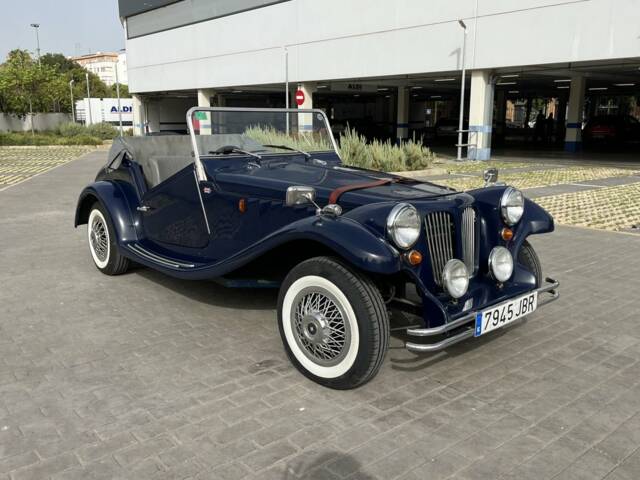
1975 | Pilgrim Bulldog
Morris Marina cabriolet | 1975 | Route 66 Auctions - For sale by auction. Estimate 10500 EUR

1971 | Pilgrim Sumo
Traumschöne Cobra


1990 | Pilgrim Sumo
Pilgrim Sumo | 1990 | Route 66 Auctions - For sale by auction. Estimate 20500 EUR

1991 | Pilgrim Sumo
Overig Pilgrim Sumo | Body-off gerestaureerd | Hard top |
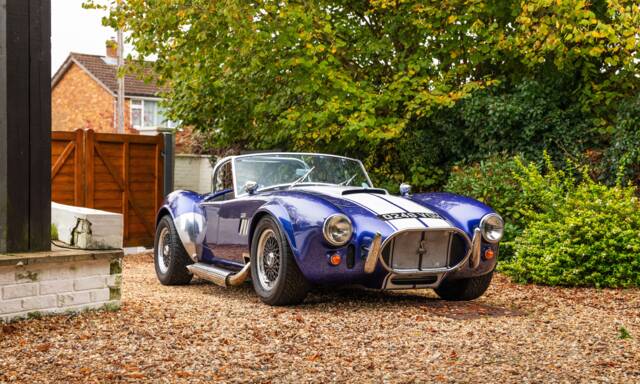
1997 | Pilgrim Sumo
1997 AC Cobra by Pilgrim *WITHDRAWN*


1991 | Pilgrim Sumo
Pilgrim Sumo Roadster | 1991 - For sale by auction. Estimate 89950 EUR

1991 | Pilgrim Sumo
Overig Pilgrim Sumo | Body-off gerestaureerd | Hard top |
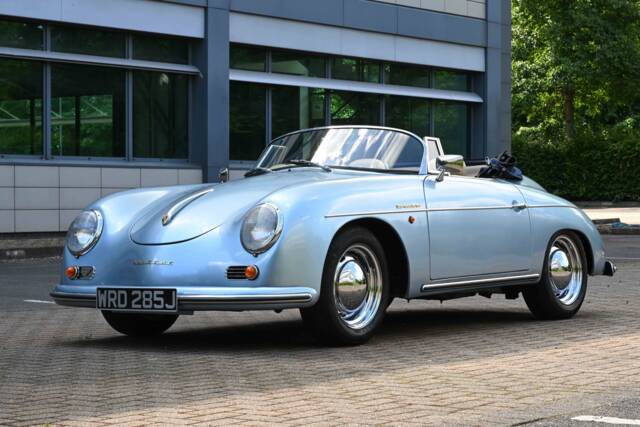
1971 | Pilgrim Sumo
Desirable Recreation of the Stuttgart Legend
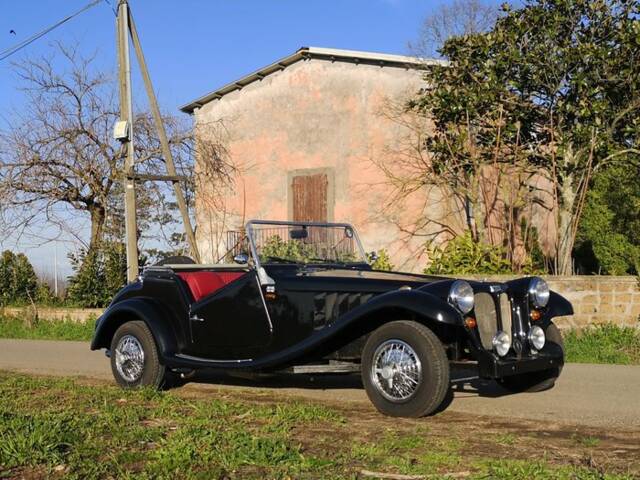
1989 | Pilgrim Bulldog
Pilgrim - Bulldog - 1989

1990 | Pilgrim Sumo

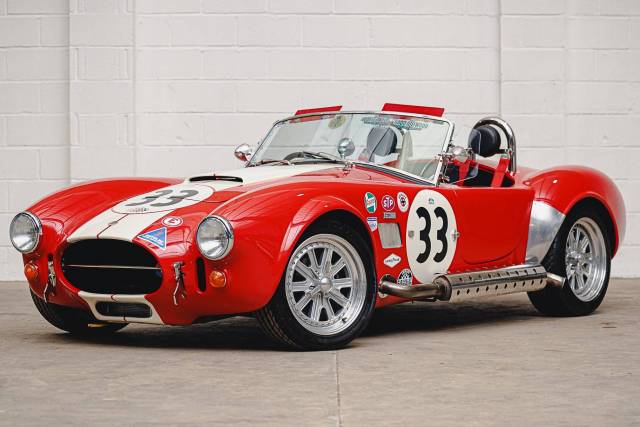
2011 | Pilgrim Sumo
5L V8 Track-Day-Focussed Legend – RHD!
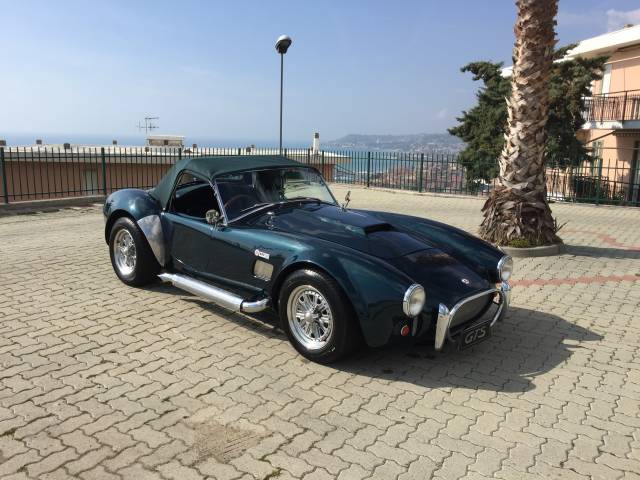
1978 | Pilgrim Sumo
Pilgrim Sumo II Shelby Cobra 427

1977 | Pilgrim Sumo
A Very Tempting Replica!
History of Pilgrim Cars
Pilgrim is one of the names that makes most sense when viewed through Britain’s long tradition of specials, home-built sports cars and small-volume engineering. Founded by Den Tanner and Bill Harling in 1985 at Small Dole near Henfield, West Sussex, Pilgrim supplied bodies, kits and, at different points, completed cars for owners who wanted an evocative shape with readily serviceable mechanical components. It was not a conventional production-car manufacturer with one fixed specification per year. Its identity lay in offering a convincing, usable interpretation of several much-loved motoring themes.
That idea had deep roots in the British enthusiast scene. For decades, capable owners had built cars around a donor Ford, Triumph, Morris or Rover rather than accept that distinctive motoring was reserved for expensive factory sports cars. Kit cars gave builders a route to ownership, a practical education in engineering and a sociable network of clubs, magazines and local meetings. Pilgrim arrived in the 1980s when donor parts were plentiful, GRP bodywork was familiar to the industry and a healthy appetite existed for both pre-war imagery and American-influenced roadsters.
The early catalogue was broad. The Bulldog adopted the upright wings, separate lamps and leisurely character of a 1930s touring car. The Hawthorn offered a lighter, open British roadster treatment. Pilgrim also listed the Family Tourer, Haldane, Jeepster and Martini, while later cars included the Porsche 356-inspired Speedster and the Minotaur. This variety matters to a buyer considering a Pilgrim make page: the badge does not automatically mean one type of car or one mechanical package. A carefully restored Bulldog and a V8-powered Sumo may share a maker yet deliver entirely different ownership experiences.
The car most closely associated with Pilgrim is the Sumo, introduced in 1987. Its long bonnet, set-back cockpit and abbreviated tail clearly recall the big-block AC/Shelby Cobra 427 idiom, but the Sumo should be bought as a British kit car in its own right rather than as a substitute for an original Cobra. Early examples used Ford Cortina-based running gear. The Mk II developed a stronger chassis and could use Granada-based independent rear suspension; by 1990 a version arranged around the Rover V8 was available. The later Mk III evolved the structural concept again, with a steel backbone/ladder/space-frame hybrid, sheet-steel floors and bulkheads beneath its non-structural glassfibre body.
Pilgrim’s corporate history, changes of ownership and the survival of individual kits mean that dates can be less straightforward than on a mainstream marque. Cars built from a kit may have a donor’s component dates, a completion date and a registration date that are all different. Period Pilgrim material referred to roughly 3,500 kits at one point, while the UK Cobra Replica Club has estimated that more than 12,000 Sumos were built. These figures give an impression of the model’s reach, not a precise production ledger. The individual chassis, the person who built it and the evidence that accompanies it are more useful than any broad production claim.
Highlights and Characteristics
Pilgrim’s appeal is individuality made practical. A conventional classic may be judged against a factory build sheet; a Pilgrim needs to be judged against the quality and coherence of its own build. That is not a weakness when approached properly. A good car can combine a dramatic body with engines and service parts that British specialists understand well. Ford four- and six-cylinder engines, the Rover V8, Ford Windsor V8s and Chevrolet small-blocks have all appeared in Sumos, while other Pilgrim models draw on a variety of mainstream donor mechanicals.
The Sumo Mk III’s construction is more substantial than the phrase “fibreglass kit car” suggests. Its period manual describes a steel frame incorporating a low-level ladder structure, a strong central tunnel, steel floors and bulkheads, plus bracing. The GRP exterior is not intended to carry the loads. This makes a tidy body finish welcome but never sufficient: the buyer must look underneath and behind the trim for the chassis, suspension pick-up points, seat-belt mountings and fuel-line routing that determine whether the car is safe and satisfying.
Another attraction is the scope for a car to suit its owner. A modest Ford engine can make a light, approachable weekend roadster. A Cologne V6 gives easy long-distance torque, while the Rover V8 supplies the low-rev soundtrack many owners seek from the Sumo shape. The more powerful Ford and Chevrolet installations can be genuinely rapid. They also demand properly selected brakes, cooling, tyres, differential and suspension settings. The best specification is not necessarily the largest capacity; it is the one supported by engineering, invoices and thoughtful road manners.
Parts support is usually better than the badge’s small-scale status might suggest. Sierra, Granada and Rover-derived components are well known in the UK specialist trade, and the kit-car community remains unusually useful for identifying suppliers and past build methods. Yet donor availability does not mean every part is standard. A Sumo may combine an axle from one Ford, hubs from another, bespoke wishbones, a modified steering column and a home-made wiring loom. Establish exactly what is fitted before assuming that a catalogue part will solve a future repair.
Technical Data by Representative Model
These details are a starting point, not a chassis-number specification. Pilgrim documentation described Ford donor engines from 1.3 to 2.9 litres as possibilities, but a V8 conversion needs its own engine mounts, gearbox crossmember, exhaust routing and cooling solution. Power figures, kerb weight, final-drive ratio and brake arrangement must therefore be taken from the actual vehicle, not copied from an advertisement for another Sumo.
For the same reason, inspect any claimed upgrade with a calm eye. “Cosworth”, “302” or “race brakes” may describe an excellent, well-documented installation, or only a collection of parts. Ask for engine and gearbox numbers, rolling-road evidence where performance is claimed, receipts for machining and rebuild work, and photographs taken while the car was assembled. A coherent build file is especially valuable when the car has changed hands several times.
Market Overview & Buying Tips
The Pilgrim market is small, informed and predominantly British. Cars also appear in continental Europe, but Great Britain offers the deepest pool of builders, specialists, historic paperwork and owners who understand the marque. Prices vary much more by build quality, engine, presentation and registration history than by a simple age hierarchy. A buyer should treat auction outcomes as useful evidence of what particular cars achieved, never as a formula for every example.
There are meaningful recent reference points. Hagerty’s past-sales records show a 2011 Sumo sold for US$35,571 on 7 February 2024 and a 1995 car for US$26,862 on 18 July 2025. Collecting Cars sold a 1993 Mk II with a 3.5-litre Rover V8 for £16,080 on 7 August 2025. Iconic Auctioneers sold a 2021 Sumo 3 with a 210 bhp Cosworth V6 for £18,000 on 9 November 2025, while Pilgrim V8 recorded a 2022 Mk III 3.5 V8 as sold at £35,950 during 2025. The gap between these results reflects specification and condition, but also presentation, venue and the depth of the car’s documentation.
Start with the registration file. The V5C should be consistent with the chassis identity, engine details where recorded and the vehicle’s description. Ask when the kit was bought, when it was completed and which donor was used. A build album, kit invoice, major-component receipts and earlier MOT records are more persuasive than a seller’s recollection. For a post-1998 newly built kit car, establish whether it passed SVA or IVA as appropriate to its date. A car that has been on the road for years may be entirely legitimate, but do not assume that its visible age answers the approval question.
The DVLA’s INF318 guidance is essential reading where a rebuilt vehicle’s identity is relevant. It explains the evidence and points-based approach used in decisions on retaining a vehicle registration. It is not an instruction to improvise a historic identity around a new kit. The underlying vehicle, chassis/frame evidence and major components must be supportable. Before completing a purchase, especially where the paperwork is incomplete or an engine change has occurred, speak to DVLA or an experienced vehicle-registration specialist rather than rely on forum hearsay. A cherished registration plate is never proof by itself that the construction and identity history are sound.
Inspect the steelwork before admiring the paint. Some Pilgrim chassis were galvanised, which is a worthwhile advantage, but galvanising cannot protect poorly finished holes, trapped moisture, later welding or neglected fasteners. Check the floor edges, central tunnel, crossmembers, boot area, suspension brackets, engine and gearbox mountings, roll-bar attachments and seat-belt anchorages. Fresh underseal deserves questions, particularly when it conceals welds or chassis tubes. On a road test, steering should be accurate without excessive play, brakes should pull straight and the rear axle should feel settled rather than nervous over bumps.
GRP requires its own inspection routine. Look closely around hinges, wheel-arch returns, the screen frame, exhaust cut-outs and roll-bar mounting areas for cracks, star crazing or repairs showing through. Uneven panel gaps, a soft floor or stress marks can indicate a structural issue underneath rather than merely cosmetic age. Confirm that bonnet catches, doors, lighting and wipers are securely mounted. A car built for spirited use needs particularly careful examination of tyre age, wheel condition and clearance at full lock and suspension compression.
Mechanical checks need to recognise the car’s bespoke nature. Test the cooling system in traffic as well as at speed; side-exit exhausts and tightly packed V8 bays make heat management important. Inspect fuel hoses for age, routing and heat protection, and check electrical wiring for fusing, grommets and a sensible layout. A carburetted Rover V8 can be charming and dependable, but only if it starts cleanly, holds oil pressure and does not overheat. A Ford V6 is not second-best when it has been rebuilt, correctly geared and installed with care. In all cases, seek evidence for brake upgrades and make sure the tyres are suited to both the rim width and the car’s weight.
Originality has a different meaning here. The aim is not a factory-correct museum specification, because Pilgrim deliberately offered choices. Instead, look for a period-appropriate, documented and safe configuration. Thoughtful improvements such as an upgraded radiator, modern fuel hose, electronic ignition or better lighting can enhance usability. Undeclared structural alterations, unprotected wiring and mismatched brake components cannot. The right Pilgrim is the best-built, best-evidenced example within budget, not simply the loudest V8 or shiniest body.
Driving Feel and Ownership
In a Sumo, the experience begins before the engine starts: you sit low behind a small screen, look along a long bonnet and have very little insulation between yourself and the mechanical work. A four-cylinder or V6 car can feel alert and playful because of its compact dimensions and open cockpit. A Rover V8 changes the character to a relaxed, bass-rich surge of torque. The highest-output small-block versions offer a serious performance-to-weight ratio; they reward smooth throttle use and demand respect on damp British roads.
Bulldog and Hawthorn ownership is gentler in spirit. Their pleasure is in the visibility over the wings, the deliberate pace of an open-air journey and the fact that a roadside conversation is almost guaranteed. They suit the kind of Sunday run, local show or club event where a polished but personable build is more important than outright acceleration. In any Pilgrim, a long test drive over broken B-roads is valuable. It reveals whether the suspension, body and chassis work as one, or whether rattles and bump steer betray a car finished too quickly.
Pilgrim ownership also benefits from club culture. The UK Cobra Replica Club is an obvious resource for Sumo owners, while marque-specific groups, kit-car gatherings and practical specialist workshops can provide knowledge that is rarely written in a handbook. A seller willing to introduce the buyer to a previous builder, parts supplier or owners’ club is offering something genuinely valuable. For a newcomer, that network can be the difference between confident maintenance and an avoidable search for the provenance of an unfamiliar hub, caliper or differential.
Design and Construction Philosophy
Pilgrim used recognisable historic forms as inspiration rather than attempting to make every car look alike. The Bulldog carries the theatrical upright stance of a pre-war tourer; the Hawthorn has the simple, lightweight vocabulary of a British sports car; the Speedster evokes the rounded Porsche 356 shape. The Sumo is the most extrovert: flared arches, broad tyres, muscular haunches and, on many examples, side exhausts make it impossible to mistake for an ordinary production roadster.
The most successful cars balance that visual drama with restraint. Wheels should fill the arches without fouling them, exhausts need convincing heat shielding, and a roll bar should look properly integrated rather than added as an afterthought. Inside, well-trimmed seats, securely mounted instruments and intelligently positioned switches say more about build quality than expensive leather alone. Because no two cars are precisely alike, a buyer can choose between a period-style presentation and a subtly modernised touring specification; either can be desirable if the execution is consistent.
Summary
To buy a Pilgrim classic car is to choose a distinctly British form of collector motoring: expressive bodies, accessible mechanical roots and a story shaped by its builder. The Bulldog, Hawthorn, Speedster, Minotaur and Sumo show the marque’s range, while the Sumo remains its best-known performance roadster. Find the right car by prioritising chassis condition, build records, IVA/SVA and DVLA evidence where relevant, and honest engineering over badge, engine size or registration year alone.