- Car
- Kia (0 offers)
Buy Kia Classic Cars
Early Kia cars offer an unusually broad route into modern classic ownership, from the modest Pride to the Lotus-derived Elan. Find a well-documented Kia classic on Classic Trader and assess its condition, provenance and UK usability before you buy.
Search results
Currently, there are no matching listings for your search.
Create search alert
Let yourself be notified as soon as a listing is published that matches your search filters.
Kia listing references from Classic Trader
Below you will find listings related to your search that are no longer available on Classic Trader. Use this information to gain insight into availability, value trends, and current pricing for a "Kia" to make a more informed purchasing decision.
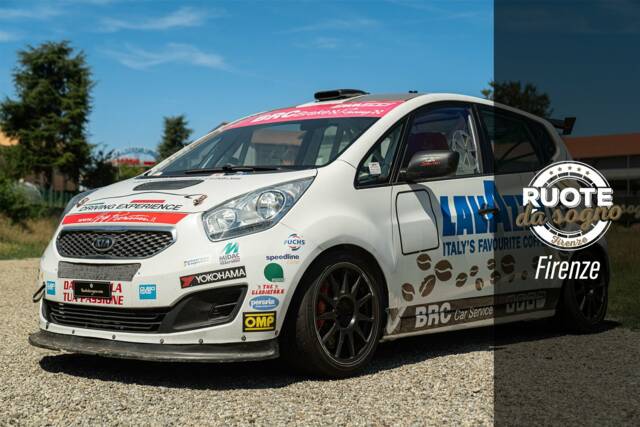
2011 | Kia Venga BRC

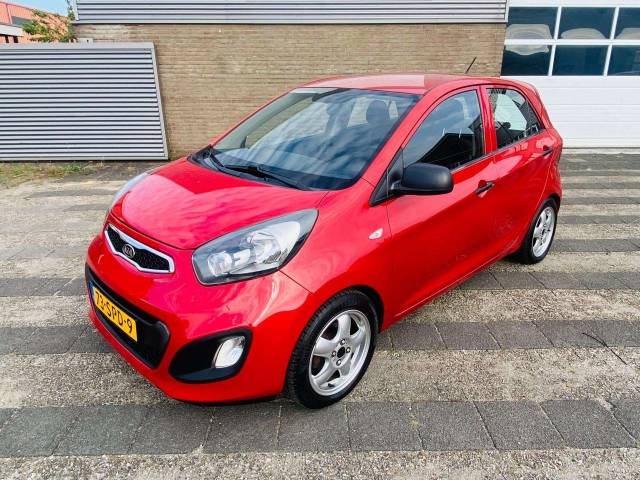
2011 | Kia Picanto 1.2 CVVT
Kia Picanto 1.2 CVVT Comfort Pack Automaat LPG 2011 lees adver

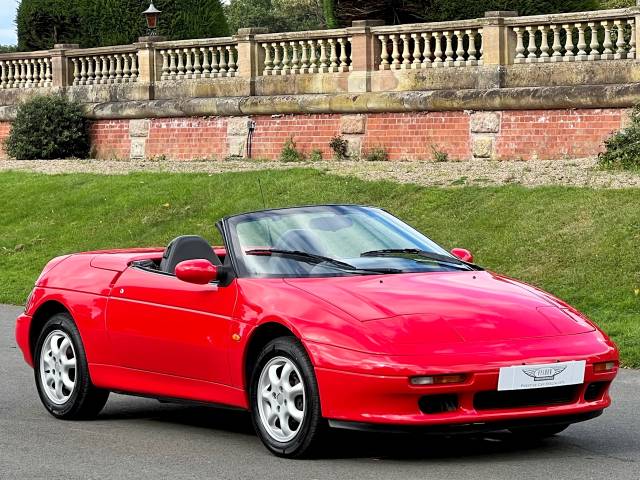
2001 | Kia Elan
Ultra rare!

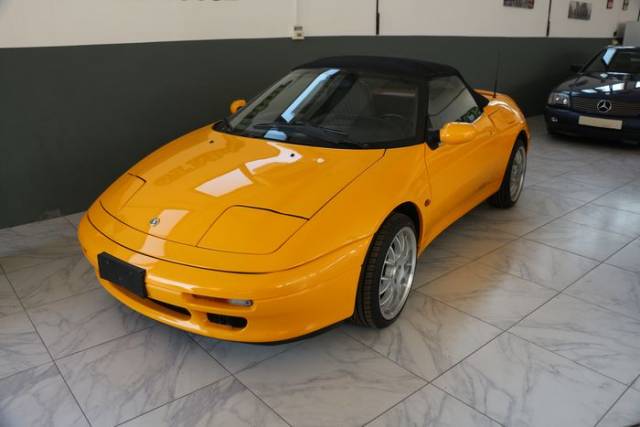
1999 | Kia Elan
Create search alert
Let yourself be notified as soon as a listing is published that matches your search filters.
Kia history and heritage
Kia’s early collector story is not one neat, uninterrupted line of prestige cars. That is exactly why it is interesting. The marque began life in Korea as Kyungsung Precision Industry in 1944, became Kia Industrial Company in 1952 and spent decades making bicycles, motorcycles and commercial vehicles before becoming a car maker. For a buyer, the result is a back catalogue that records the practical, partnership-led development of a manufacturer rather than a retrospective parade of halo cars.
The Brisa, introduced in 1974, is the first essential landmark. Built under licence from Mazda and related to the Mazda Familia, it brought passenger-car production to Kia’s portfolio in saloon and pick-up forms. Its place in the story is larger than its survival rate: a Brisa is an exceptionally scarce early Korean-built car, not a routine UK classic. If one appears here, provenance, registration history and the legality of any import conversion matter at least as much as its cosmetics.
Kia’s return to passenger cars came through another Japanese connection. The Pride, launched in 1987, was based on Mazda’s DA-platform family and had Ford Festiva connections in various markets. It was made as a three- and five-door hatchback, saloon and estate, providing inexpensive, light transport rather than attempting to imitate an executive car. Pride production continued to 2000. Crucially for British buyers, Kias entered the UK new-car market in 1991, so a right-hand-drive, UK-supplied Pride can be a far more straightforward ownership proposition than an imported Korean-market predecessor. It is a small but meaningful piece of the brand’s British beginning.
The 1990s then gave Kia two sharply different calling cards. The Sportage arrived in 1993, an early compact SUV whose ladder-frame origins and available four-wheel-drive made it a recognisable alternative long before the crossover became the default family car. It established a nameplate that would become central to Kia, though the earliest examples have a distinctly old-school character. At the other extreme, Kia bought the rights and tooling for the Lotus M100 Elan and built the Kia Elan from 1996 to 1999. It retained the Lotus-designed fibreglass body and front-wheel-drive chassis concept, but used Kia’s naturally aspirated 1.8-litre engine. The result is one of the strangest and most appealing footnotes in British sports-car history: a Korean-badged roadster whose roots are at Hethel.
Kia entered a difficult period during the Asian financial crisis. Hyundai acquired Kia in 1998, creating the corporate relationship that later underpinned the marque’s huge expansion. For the classic buyer, however, the attraction remains the pre-consolidation years: Brisa, Pride, first Sportage and Elan each show a different way Kia learned to build cars. They should be approached as individual propositions, not treated as interchangeable old Kias.
Highlights and defining features
The best reason to seek an older Kia is unfashionable specificity. A tidy Pride is a tangible example of entry-level motoring from the moment Kia arrived in Britain; a first Sportage is a period 4x4 with a much less familiar face than a contemporary Japanese rival; an Elan is a genuine engineering conversation starter. None needs an inflated mythology to be enjoyable.
The Pride’s virtues are its compact exterior, low mass, simple mechanical layout and an abundance of Mazda/Ford-family engineering logic. It rewards an owner who likes a car that can be understood, maintained and used without ceremony. A three-door hatchback feels particularly direct, while the estate has the unexpected usefulness that made small estates popular with practical British owners. Specification is more important than badge assumptions: retain the correct trim, wheel covers or alloy wheels, upholstery and dealer accessories where possible. A basic, unmolested car is often more convincing than a superficially upgraded one.
Early Sportages stand apart because they are genuine 1990s utility vehicles rather than merely tall cars. Their square proportions, rear-mounted spare wheel on many versions and separate-chassis architecture give them character. Four-wheel-drive hardware, a manual gearbox and a clean, unmodified cabin make a strong period combination. They are not the ideal choice for someone who wants the refinement or economy of a current SUV; they suit a buyer who wants an unusual usable classic for lanes, shows, light leisure use or a carefully chosen winter journey.
The Elan is the marque’s collector outlier. Lotus’s M100 platform was developed to make front-wheel drive behave with uncommon precision, and its double-wishbone suspension is central to the experience. Kia’s 1,793cc four-cylinder produced 151bhp and drove the front wheels through a five-speed manual. Contemporary reporting records only 792 cars built in one count, while other frequently repeated sources cite 1,056; neither figure should be presented as settled without factory confirmation. That uncertainty itself makes documentation and identity important. A Kia Elan should be bought for its uncommon origin, sound chassis condition and open-road ability—not because an ambitious production total has been printed in an advert.
Across the make, condition beats rarity. A rare Kia with corrosion hidden by underseal, incomplete import paperwork or unobtainable trim can absorb far more money and time than a well-kept mainstream 1990s example. Conversely, an honest, low-spec Pride with an MOT history and a file of ordinary maintenance can be a delightful way into a marque whose early UK cars are seldom preserved.
Technical data: representative Kia classics
The figures below are useful identifiers, not substitutes for checking the exact registration, handbook and VIN. Outputs, weights and equipment changed with market and year, especially on cars imported into Britain.
The Brisa’s rear-wheel-drive layout is a useful historical contrast with later Kias. The Pride and Clarus represent the front-drive, partner-engineered everyday cars that established the brand in export markets. The Sportage’s driveline needs verifying from the vehicle itself: do not assume that a spare wheel, raised stance or badge means that a particular example has four-wheel drive. On the Elan, the engine number, chassis plate, steering position, lights and the quality of any conversion deserve close attention, because most British sightings are imports rather than ordinary dealer-stock cars.
Market overview and buying tips
The UK market for early Kias is thin and uneven. That creates opportunity but removes the comfort of a deep stream of directly comparable sales. Be wary of confident price claims based on one unusual advert. Published UK evidence illustrates the spread: PistonHeads featured a 34,000-mile, left-hand-drive Kia Elan at an asking price of £7,995 in November 2023, while a UK dealer later advertised a low-mileage example at £12,000. These are advertised prices, not auction results and not a valuation guide. They do show why an Elan needs inspection rather than a percentage uplift for scarcity. There is no broad, verifiable 2024–26 UK auction run for Brisas, Prides or first Sportages from which to derive a reliable make-wide price range.
That absence should change how a buyer negotiates. Start with the car in front of you: structural condition, MOT record, paperwork, parts position and the cost to make it dependable. For a Pride or Clarus, the market is usually led by useable condition and originality, not by the odometer alone. A cherished, regularly tested UK car with clear ownership history may be worth paying more for than a nominally low-mile imported car with uncertain mileage. For a first Sportage, usable four-wheel-drive systems and a sound chassis are worth more than fashionable accessories. For an Elan, the exact import history, left- or right-hand drive configuration and specialist assessment can outweigh a bright body colour or low recorded mileage.
Rust is the make-wide priority. Inspect Pride sills, floor edges, rear arches, suspension pick-up areas, front crossmember region and the lower tailgate or estate rear structure. Lift mats and look beneath plastic trims; water trapped behind them can conceal a more serious problem. On a first Sportage, examine chassis rails, body mounts, outriggers, suspension mounts, brake and fuel lines, rear floor and the spare-wheel area. A fresh black coating is not proof of preservation—look for photographs before treatment, invoices and crisp seams rather than thick texture over corrosion.
With the Elan, remember that fibreglass panels do not rust but the steel backbone chassis can. Look under the car on a lift for corrosion, accident damage, poor jacking scars and evidence of water entry. Inspect the composite body for stress cracks, mismatched paint, distorted shut lines and poor repairs. Check hood operation, seals and drains. A test drive should confirm clean gearchanges, stable coolant temperature, precise steering and no suspension knocks. Parts overlap with the Lotus M100 in places, but it is unwise to assume every Kia-specific trim, lighting or electrical part is available on demand.
Mechanical checks should suit each car. On a Pride, assess cold starting, carburettor or injection behaviour as applicable, clutch bite, gearbox synchromesh, cooling fan operation and service evidence for belts. On a Sportage, test engagement of four-wheel drive only as the handbook prescribes, listen for transmission and differential noise, and inspect for fluid leaks. Diesel examples need an especially careful cold start and smoke assessment. Any car that has stood for years requires brakes, tyres, fuel system and cooling system scrutiny before it becomes a bargain.
UK paperwork is part of the condition report. Match VIN, engine details where recorded, V5C, MOT history and import documents. For a Japanese- or Korean-market import, establish how lighting, speedometer markings, rear fog lamp and insurance valuation were handled. A car over 40 years old may be exempt from the annual MOT test in Great Britain, provided it has not been substantially changed; GOV.UK’s guidance also makes clear that owners remain responsible for roadworthiness. In 2026, that can be relevant to an eligible 1974 Brisa, but it does not turn an imported or modified car into a paperwork-free purchase. A Pride, Sportage or Elan remains within the normal annual-MOT age range.
Parts availability is model-specific. Routine service consumables for Mazda- or Ford-connected cars can be less intimidating than the badge suggests, but verify part numbers before committing. Search owners’ clubs, marque forums, specialist breakers and Japanese/Korean parts suppliers for model-specific weatherstrips, lamps, interior pieces and body panels. Buy a complete parts catalogue and workshop manual with the car if possible. A donor vehicle may look tempting, but storage, condition and identity should be considered before it is treated as an instant solution.
Driving feel across the range
An early Kia does not deliver one universal driving sensation. The appeal is the contrast. The Brisa is a small, simple rear-drive saloon from an era when steering feel and visibility mattered more than isolation. Its rarity means sympathetic, occasional use is sensible, but the mechanical layout gives it an immediacy that later family Kias do not share.
The Pride is the cheerful opposite of a heavy modern hatchback. It is narrow, light and easy to place on a B-road or in town. With modest power, momentum is part of the fun; the driver uses the gearbox and enjoys the clean sightlines rather than expecting effortless overtaking. A good one should feel willing, not frighteningly quick. It is a car for owners who appreciate modest scale and the freedom to use a classic without constantly worrying about its footprint.
A first Sportage is slower to change direction and less polished, but it has a useful, upright confidence. You sit high, see its corners and feel the mechanical distinction between a 1990s utility vehicle and a modern crossover. On a well-maintained example, that is part of the charm. On a neglected one, vague steering, drivetrain noise and poor brakes are warnings, not personality.
The Elan is the surprise. Its front-wheel drive is not a compromise to be apologised for: the chassis was developed by Lotus to steer accurately and retain composure on a fast, uneven road. It combines a low seating position, quick responses and a practical sense of security in wet British conditions. The Kia engine changes the character from the turbocharged Lotus versions, but the roadster still feels far removed from the Pride or Sportage. It is the Kia for a buyer who wants a sports car first and a marque curiosity second.
Design and the changing Kia identity
Early Kia design followed purpose and partnership. The Brisa’s crisp three-box shape and compact proportions are recognisably 1970s Japanese-family-car in influence, appropriate for a Mazda-licensed product. The Pride carried that logic into the late 1980s: an upright glasshouse, short overhangs and simple panels made it cheap to package and easy to see out of. Its lack of ornament is now a virtue. An original bumper, grille and wheel treatment tell the period story better than later styling add-ons.
The first Sportage made functionality visible. Its high roofline, squared rear and externally mounted spare-wheel treatment on relevant versions advertised its outdoor purpose. A colour-coded, lowered or heavily accessorised example may be enjoyable, but a standard one communicates the original intent more clearly. Look for straight panel gaps and factory-looking trim, since replacement plastic and model-specific exterior parts can be harder to find than mechanical service items.
The Elan could not be more different. Peter Stevens’ Lotus M100 shape is low, rounded and wedge-like, with pop-up headlamps and a compact roadster tail. Kia’s version is not merely a badge-engineered imitation: it is the authorised continuation of a British-developed design, built with acquired tooling. That provenance is the design story. Keep Kia badges, lamps, wheels and cabin details where feasible; converting it visually into a Lotus may make explaining it easier, but it dilutes the very identity that makes the car unusual.
UK context, clubs and ownership choices
Kia’s 1991 UK arrival gives locally supplied Prides, Sportages and later cars a particular appeal. They are reminders of a time when Kia was still establishing its dealer network and public identity here. UK registration documents, period dealer plates, brochures, service stamps and old MOT certificates are not trivial ephemera: together they make a humble car more legible and more saleable to the next custodian.
British club culture can be valuable even where there is no vast single-marque classic network. A Pride owner may find practical knowledge through Mazda and Ford enthusiasts as well as Kia groups; an Elan owner benefits from the active Lotus M100 community while respecting the Kia-specific differences. Do not confuse the model name with Pride in London or other LGBTQ+ Pride events: when discussing a Kia Pride’s availability in Britain, the relevant fact is its official arrival in the UK Kia range from 1991 and the survival of individual cars, not an affiliation with those events.
For imported cars, speak to an insurer before purchase and obtain a chassis-number quote. Confirm whether the car’s agreed-value policy accepts its unusual specification, whether left-hand drive affects terms and whether modifications are declared. In wet UK weather, invest in cavity protection only after the structure has been properly inspected and repaired; coating over rot simply preserves the problem. Regular use, dry storage, careful battery maintenance and prompt attention to leaks will normally serve an early Kia better than long periods of inactivity.
Summary: finding the right classic Kia
A classic Kia is rarely bought to follow a crowd. The Brisa offers pioneering Korean passenger-car history, the Pride is a modest but important chapter in Kia’s British arrival, the first Sportage is a distinctive early compact SUV, and the Elan brings genuine Lotus-derived engineering into the picture. Each deserves a model-specific inspection and a realistic plan for parts.
Find the strongest documented example rather than the rarest story. Confirm rust protection and structural condition, match paperwork to the car, understand its MOT obligations and reserve time for locating trim or import-specific components. With those checks complete, a well-chosen Kia classic can be an engaging, refreshingly individual car to buy and use in Britain.