- Car
- Kimera (0 offers)
Buy Kimera Classic Cars
Kimera builds hand-finished Italian collector cars for drivers who want Group B theatre without accepting an old rally car’s compromises. Find an EVO37, EVO38, Martini special or forthcoming K-39 with the provenance, approval paperwork and specification to suit a UK collection.
Search results
Currently, there are no matching listings for your search.
Create search alert
Let yourself be notified as soon as a listing is published that matches your search filters.
Kimera listing references from Classic Trader
Below you will find listings related to your search that are no longer available on Classic Trader. Use this information to gain insight into availability, value trends, and current pricing for a "Kimera" to make a more informed purchasing decision.
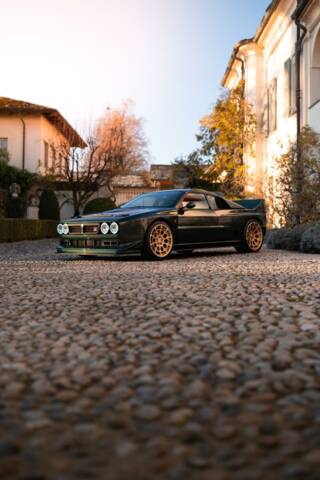
1976 | Kimera Evo 037
Kimera Evo 037

Create search alert
Let yourself be notified as soon as a listing is published that matches your search filters.
Kimera history: a modern Italian answer to Group B
Kimera Automobili is not a revived Lancia division and its cars should never be represented as original Lancia 037s. It is a small Italian manufacturer founded in Cuneo by former rally driver Luca Betti, whose idea was more interesting than a simple restoration: imagine the development route the 037 might have taken had Group B and its engineering arms race continued. That distinction matters to a UK buyer. An EVO37 is a newly built, low-volume collector car with its own VIN, technical specification and approval history, not an aged homologation special wearing a fresh body.
The visual starting point is the Lancia Rally 037, itself derived from the Beta Montecarlo and created by Abarth and Pininfarina for the 1982 World Rally Championship. The 037’s 1983 manufacturers’ title made it the last rear-wheel-drive car to take the WRC crown. Its famous rivals – Audi’s quattro, Peugeot’s 205 T16 and Lancia’s later Delta S4 – make the story especially resonant in Britain, where historic rally stages, retro road rallies and specialist clubs retain a knowledgeable following for the era.
Kimera’s debut EVO37 arrived in 2021 as an ultra-limited run of 37 cars. It borrowed the rally car’s compact silhouette, lamps, rear buttresses and mid-engined layout, but used modern manufacture, carbon-composite coachwork and a thoroughly re-engineered 2.15-litre four-cylinder. The point was sensory rather than merely numerical: a six-speed manual, exposed mechanics, boost response and an analogue driving position in a car that could be used on today’s roads. Period racing figures including engineers and drivers associated with the 037 programme contributed knowledge and credibility, but buyers should judge each car by its individual build file rather than by implied factory lineage.
The EVO38 is the second chapter, limited to 38 examples. It takes the imaginary continuation literally: all-wheel drive, greater output, push-rod suspension and more electronics, while retaining a manual gearbox and the twin-charged four-cylinder character. Its launch coincided with a renewed appetite for high-end restomods, but it is more accurately a low-volume, coachbuilt interpretation than a modified donor car. That is why its paperwork, service relationship and specification matter as much as mileage.
At the far end of the range is the K-39, Kimera’s first clean-sheet hypercar. Revealed for production in 2026, it takes visual cues from the Lancia Beta Montecarlo Turbo Group 5 racers rather than simply reworking an 037 theme. Kimera has announced a bespoke Koenigsegg-developed twin-turbo V8 with around 1,000 hp and 1,200 Nm, alongside a road-going car and a Pikes Peak-focused configuration. It is a future acquisition rather than an established used-market proposition: allocation terms, final British approval route and delivered specification must be confirmed in writing.
Kimera highlights: why collectors look beyond the badge
The attraction starts with rarity that is genuinely small-scale. Thirty-seven EVO37s and 38 EVO38s make a conventional price guide unreliable; a single exceptional car can reset expectations. Yet the low number is only part of the appeal. Kimera combines a compact 4.055-metre body with a mid-mounted, twin-charged engine and a manual transaxle – ingredients that are almost absent from new supercars. The result addresses a UK enthusiast who may already own a Ford Escort RS, Lancia Delta Integrale, Porsche 911 or Alpine A110 but wants something more individual for an event, a Sunday morning in the Peaks or a carefully planned European rally tour.
The EVO37’s 2.15-litre KA-EVO37 engine uses both a Roots-type supercharger and a centrifugal turbocharger. The electronically clutched supercharger helps fill the lower rev range; the turbo assumes the heavy work higher up. Kimera quotes 505 CV and 550 Nm, with 400 Nm available from 2,000 rpm. That is not simply a headline figure: it explains the unusually dense, urgent feel of a four-cylinder car weighing roughly 1,100 kg. A dry-sump system, triple-stage oil pump, water-cooled charge air system, limited-slip differential and 365 mm brakes indicate how far the car sits from a cosmetic tribute.
The EVO38 preserves the same basic architecture but turns it into a four-wheel-drive machine. Factory figures are 600 CV and 580 Nm in standard form. A 48-volt system supports the active driveline functions, while the front propshaft is a piece of theatre in its own right, visible through the cabin’s central tunnel. Push-rod suspension and a hydraulic lift system designed to add useful clearance make the later car more credible on broken B-roads, steep hotel ramps and rally-route surfaces than its low stance suggests. It remains an uncompromising low-volume supercar, however; a lift system is not a licence to treat its carbon underbody as a skid plate.
The Martini 7 deserves separate treatment. It was an extra seven-car EVO37 series marking Martini Racing’s seven WRC titles, with each car linked to a significant 037 podium. It is not just blue-and-red striping added by a later owner. For a collector, confirmation of the factory designation, matching colour and trim specification, build number, correspondence and any associated presentation material will have a direct bearing on value. A later EVO38 Collezione Martini has broadened the theme through several colour interpretations; do not conflate that collection with the seven EVO37 Martini 7 cars.
Britain’s specialist roadster and rally culture gives these cars a natural setting. They will draw knowledgeable attention at a Lancia Motor Club gathering, a historic rally service park, a Goodwood breakfast club or a smaller Italian-car meet in a way that a serial-production supercar may not. The same community is useful practical infrastructure: independent marque specialists, transporters experienced with low cars, concours detailers, insurers and organisers understand that an event car needs careful logistics, not just a full fuel tank.
Kimera technical data
The figures below describe the published core specification. Because Kimera is a hand-built manufacturer, buyers should obtain the VIN-specific build sheet; options, calibration and later factory upgrades can change what is actually offered.
Across EVO37 and EVO38, the engine is mounted longitudinally behind the cockpit, has four valves per cylinder and dry-sump lubrication. Both use 245/35 R18 front and 295/30 R19 rear tyres, with ventilated 365 x 29 mm discs and four-piston calipers at each end. The 1,905 mm width deserves attention when booking storage or choosing an older British ferry, workshop bay or village road; the car’s tiny visual footprint disguises a broad, serious track.
Kimera market overview and buying tips
Kimera is a thin, relationship-led market, not a marque where asking prices form a smooth public curve. Cars are often allocated before build, retained by original clients or offered through a short list of specialist dealers. Accordingly, a sensible buyer treats an advertised price as an invitation to inspect the exact car, not as proof of a generic market value.
For UK context, contemporary reporting put an EVO38 at roughly £560,000 before taxes at announcement, while later British reporting described a new-car cost of approximately £918,000 including 20% VAT for a fully specified example. These are new-car reference points, not comparable completed-auction results. Public, arms-length 2024–26 auction evidence for EVO37s, Martini 7s and EVO38s remains too scarce to claim a dependable “average”. The asking price for a documented, UK-ready Martini 7 may therefore be materially higher than that of a standard EVO37, but provenance, tax status, delivery condition and the seller’s ability to transfer factory support are more important than a percentage premium.
Ask the selling dealer for a transparent sterling breakdown: vehicle price, whether it is VAT paid, any overseas delivery or collection charges, import duty where applicable, NOVA evidence, registration costs, transport, insurance and any factory inspection. Do not assume that an EU car is automatically tax-neutral after Brexit. Rules depend on origin, transaction structure and the buyer; HMRC and a customs specialist should confirm the position before a deposit is released. A car already registered in Great Britain with a V5C and clear tax history can be simpler, but still examine the identity and approval documents rather than treating a number plate as a complete due-diligence report.
For a new or newly imported low-volume car, registration and approval must be planned before the deal closes. GOV.UK states that approval can be required for an imported, built, rebuilt or radically altered vehicle. For a single or very small number of cars, Individual Vehicle Approval (IVA) may be the route; an EU-registered car may instead need a manufacturer Certificate of Conformity or, in particular circumstances, GB conversion IVA. A left-hand-drive Italian Kimera is likely, so headlamp pattern, rear fog lamp location, speedometer presentation and visibility requirements should be addressed by the importer and DVSA/VCA route chosen. The buyer should request the exact approval basis, IAC or CoC, overseas registration record if relevant, VIN photographs and written confirmation that the car can be registered and taxed in the intended UK configuration. This is not legal advice: ask DVSA, DVLA and a specialist importer for the current requirements for the individual chassis.
The same caution applies to the K-39. With more than 20 allocations reported before production deliveries, an early slot is not the same thing as a car with settled road registration. Establish whether the sale is an allocation assignment, a manufacturer contract or a completed vehicle; whether VAT has been accounted for; what deposit protection applies; and who bears the cost if the final production specification needs UK-market changes. A spectacular Pikes Peak pack may be precisely what a collector wants, but road legality, noise, ground clearance and insurability should be checked separately.
Inspection priorities for an EVO37 or EVO38
Provenance first. Match the chassis VIN, engine number where accessible, factory build certificate, purchase invoice, service book and all software or calibration records. Confirm the model designation: a Martini-liveried EVO37 is not automatically a Martini 7. Ask Kimera or its appointed representative to verify the car’s original specification, warranty history, campaigns and transferable support in writing.
Examine the composite body and structure in strong light. Look for mismatched weave, cloudy clearcoat, pinholes, repaired edges, poorly aligned clam sections, disturbed fasteners and fresh underseal around the lower body. A carbon panel may be repairable, but an insurer and factory body specialist should approve the method before purchase. Check the exposed mechanical bay for heat staining, fluid traces, corrosion on fittings and evidence of careless lifting.
Treat the powertrain as bespoke. From cold, listen for abnormal supercharger, turbo, accessory-drive or gearbox noises. Confirm oil-pressure behaviour, cooling-fan operation, charge-cooler pump operation and absence of boost leaks. The dry-sump system needs the specified oil, correct warm-up procedure and disciplined servicing. A running car that feels dramatic is not necessarily healthy; commission a factory-aware inspection, diagnostic scan, fluid analysis where practical and a controlled road test after full warm-up.
Test the manual drivetrain and chassis systems. The twin-plate clutch, shift mechanism, limited-slip differentials and EVO38 four-wheel-drive controls should operate cleanly without graunching, slipping, warning lights or unexplained transmission wind-up. Inspect dampers, push-rods, hydraulic lift, brake discs and tyre dates. On a 1,100 kg, 500–600 CV car, an old set of tyres or a poorly aligned suspension is a safety issue, not a bargaining detail.
Check usability items. Operate lamps, wipers, demist, cameras, charging system, infotainment where fitted and the EVO38’s active systems. Verify the handbrake arrangement and all IVA-related equipment exactly as the car will be presented. Ask for two keys, security documentation, battery conditioner, tool kit, spare wheel strategy, manuals, paint codes and an inventory of bespoke luggage or display items. These details matter in a small-number collector market.
Parts availability is encouraging only when it is specific. Some consumables are familiar motorsport-grade items, but Kimera-specific carbon, glass, body hardware, electronics and engine calibration support can involve lead time and transport from Italy. Before buying, identify the UK service partner, agree annual maintenance, understand parts ordering and establish who can undertake accident repair. Budget for enclosed transport to major services rather than assuming every local performance workshop has the equipment or data.
Driving feel: a rally car fantasy with road-car discipline
An EVO37 should feel smaller and more alert than its price suggests. You sit low, with the windscreen and rear haunches presenting the theatre of an 037, but the real defining sensation is the transition from supercharger-filled response to turbocharged urgency. The engine is not a silky Italian V12; it is mechanical, pressurised and busy. The manual shift asks for a deliberate hand and the rear-drive chassis asks the driver to respect throttle position. On a damp British B-road, that makes the car an occasion rather than an effortless cross-country tool.
The EVO38 changes the language without deleting it. Four-wheel drive and its selectable power delivery give the driver more purchase out of tight, messy corners, while the push-rod suspension and lift system improve confidence on imperfect surfaces. It is still loud, low and highly strung. A buyer looking for a relaxed motorway grand tourer may be happier in a conventional supercar; a buyer seeking a modern car with the ritual of a rally-derived machine will understand the appeal immediately.
For either car, choose roads with sight lines, use high-quality fuel as specified by the manufacturer, warm the fluids fully and leave room for the brakes and tyres. Joining an Italian-car or historic-rally tour can be more rewarding than chasing lap times: the cars are rare enough that shared knowledge, careful pace notes and sympathetic support are part of ownership.
Design and coachwork: recognisable without pretending to be original
Kimera’s best design decision is restraint. The EVO37 unmistakably remembers the 037 – quad lamps, Y-shaped grille, fast roofline, short nose and muscular rear deck – yet it does not simply copy every panel. Carbon surfaces, modern lighting, enlarged cooling exits and exposed detail give it a different visual density. It has the evocative proportion of a competition car made road-legal, which is exactly why it works beside classic rally machinery rather than as a pastiche of it.
The cabin continues the contrast: machined metal, visible mechanical elements and hand-finished trim sit beside modern controls and safety systems. On the EVO38, the visible driveshaft channel is an unusually honest piece of engineering theatre. Buyers should distinguish deliberate hand-built character from poor finish; panel fit, trim consistency, paint quality and operation of every control should meet the standard promised by a six-figure collector car.
The K-39 moves the visual reference toward Group 5 endurance racing. Its longer, tensioned surfaces, dramatic rear aero and S-duct-led front end were conceived around airflow from the outset. The production car’s ultimate form, colours and aero packages remain allocation-specific, so retain renderings and launch imagery as inspiration only. The signed final specification is the design that matters to a buyer.
Kimera motorsport culture and special editions
Kimera’s cultural currency comes from rallying, but its ownership life will be broader. In Britain, a Martini 7 can feel at home at a historic rally celebration, a motorsport art event or an Italian-car concours; it can also be too conspicuous for a casual supermarket run. That is part of the proposition. The best owners preserve the story with photographs from delivery, event invitations, factory correspondence, service invoices and records of any public appearances, while avoiding irreversible cosmetic changes.
The Martini name carries exceptional recognition because of the racing team’s seven WRC titles, but originality remains paramount. Confirm whether stripes are factory-applied, whether the livery has been re-cleared after repair, and whether branded helmets, books or display equipment belong to the car rather than the dealer. A correctly documented special edition should be preserved as a coherent object; a non-original recreation may still be enjoyable, but should be priced and described honestly.
Summary: choosing the right Kimera in Great Britain
Buy a Kimera for the engineering experience, the limited production and the rally-era emotion, not because it resembles an old Lancia in photographs. The rear-drive EVO37 is the purist’s choice; the EVO38 adds all-weather traction, 600 CV and a more developed chassis; a verified Martini 7 is a particularly collectible interpretation; and the K-39 is an exciting but as-yet unseasoned hypercar allocation or delivery proposition.
For a UK purchase, insist on a VIN-specific factory build record, specialist inspection, clear sterling tax and import position, insurance approval and a documented DVLA/DVSA registration route before committing. With those basics secured, a Kimera can be one of the most compelling ways to join Britain’s enduring roadster, rally and Italian-car community.