Buy Rauch & Lang Classic Cars
Rauch & Lang combined Cleveland carriage craftsmanship with remarkably refined electric motoring. Find rare American Coupés, Broughams and Dual Drive coaches with convincing provenance on Classic Trader.
Search results
Currently, there are no matching listings for your search.
Create search alert
Let yourself be notified as soon as a listing is published that matches your search filters.
Create listing
Do you have a Rauch & Lang that you want to sell? Then create a listing now.
Create listingRauch & Lang listing references from Classic Trader
Below you will find listings related to your search that are no longer available on Classic Trader. Use this information to gain insight into availability, value trends, and current pricing for a "Rauch & Lang" to make a more informed purchasing decision.
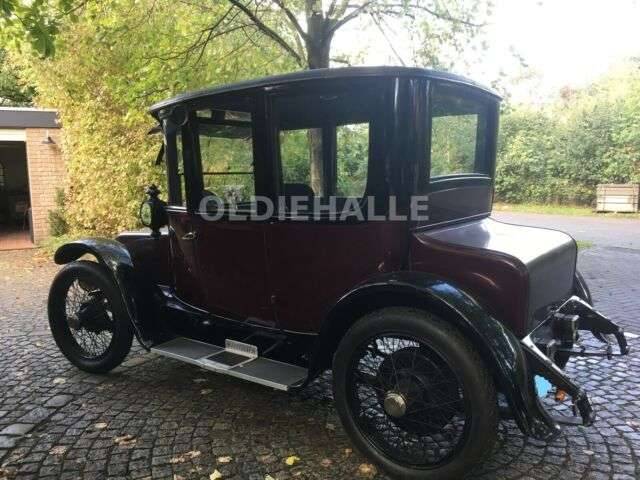
1919 | Rauch & Lang C35
Sonstige Marken

Create search alert
Let yourself be notified as soon as a listing is published that matches your search filters.
Create listing
Do you have a Rauch & Lang that you want to sell? Then create a listing now.
Create listingFrom Cleveland carriage maker to electric-car specialist
Rauch & Lang belongs to the first great age of electric motoring, rather than to the later story of petrol-powered American automobiles. Jacob Rauch and Charles E. J. Lang established their Cleveland carriage business in 1884. The firm had learnt its trade where it mattered for a high-grade early motor car: in body construction, paint, upholstery, doors and the quiet, solid feel expected by a well-to-do client. It began selling Buffalo Electric vehicles in 1903 and introduced its own Rauch & Lang electric in 1905. Around 50 cars were made in that first year.
This was a credible commercial proposition in the Edwardian city. A petrol car needed starting, gear changing and regular attention to its engine; an electric offered clean, near-silent progress and straightforward control. Rauch & Lang did not try to outpace large petrol manufacturers. Instead, it sold a refined urban conveyance to buyers who valued privacy, good coachwork and the ability to drive without fumes or a hand crank. The open Stanhope was among the first types, followed by enclosed Coupés, Broughams, depot wagons and more formal coaches.
The company expanded rapidly. By 1908, capacity was reported at about 500 vehicles a year. In 1907 it acquired Hertner Electric, bringing the motors and controllers it had used into the business. This was an important step: a Rauch & Lang was not merely a carriage body placed on a purchased chassis. Its electrical equipment, controller and transmission development became part of the marque's own engineering story. Early cars commonly drove the rear wheels by chain. Shaft drive became available in 1911, while worm drive appeared on 1913–14 models, contributing to the quietness that suited a luxury electric.
The range changed as the market did. A 1911 buyer could encounter 48- or 80-volt battery arrangements, with contemporary claims of 50 to 150 miles under favourable conditions. Those claims should be read as period advertising, not as a promise for a century-old car on Australian roads. Battery chemistry, terrain, speed, passenger load and controller condition make every surviving car its own case. What survives from the period is the ambition: Rauch & Lang treated electric propulsion as a mature, premium technology rather than an experiment.
In 1915, Rauch & Lang merged with Baker, another leading American electric-car name, to form Baker R & L. The Rauch & Lang name reappeared on cars after the merger, but the economics of expensive passenger electrics had become difficult. The passenger-car operation moved to Chicopee Falls, Massachusetts, in 1920. Later work increasingly included taxis and coachbuilding. Passenger production ended in 1928, although Raulang bodywork continued intermittently into the early 1930s. For a collector, that short independent history and the small number of survivors explain why a genuine car can be far more significant than its modest mechanical output suggests.
The cars that define Rauch & Lang
The appeal of a Rauch & Lang is founded on silence, formal coachwork and unusually thoughtful controls. It is an American luxury car, but its character is closer to a private carriage or drawing room than to a roaring touring car. The cars make an especially interesting counterpoint in an Australian collection dominated by British roadsters, American V8s or post-war European sports cars.
The Stanhope represents the light, open early electric. It gives the clearest impression of the carriage age, with an upright seating position and exposed occupants. It is likely to suit a collector seeking a museum-quality early electric or carefully limited event use. At the other end of the social scale are enclosed Coupés and Broughams. Their high roofs, glazed sides, upholstery and intricate fittings gave owners a protected, dignified city vehicle. On an authentic example, the lamps, hardware, window mechanisms and body proportions matter at least as much as the running gear.
The most distinctive examples are the Dual Drive or Double Control coaches, including the C45 and C55. They provided a driving position for a chauffeur at the front and controls that allowed an owner to operate the car from the rear compartment. Double pedal sets and two tillers make the arrangement immediately recognisable. It was a clever response to a market in which an owner might wish to drive independently but still retain a chauffeur for formal occasions. A documented 1920 C45 Dual Drive Coach has been described with a 3 hp, 90-volt Baker DC motor, worm drive and a 100-inch wheelbase; the larger 1921 C55 Double Control used a 102-inch wheelbase.
Late R & L taxis are a separate proposition. They reveal the commercial afterlife of the electric chassis, where quiet operation and predictable city routes still made sense. They do not have the same social role as a lavishly trimmed Coach, and buyers should not assume that a taxi-derived body shares its equipment or market with an earlier private Brougham. At make level, the important point is variety: Rauch & Lang produced an open runabout, enclosed personal transport, chauffeur-capable coach and working city vehicle within a very small overall production.
Condition and authenticity can divide two outwardly similar cars dramatically. Original controls, a period-appropriate Warner speedometer or voltmeter, lamps, handles, glass and body fittings are difficult to replace. A beautiful paint finish cannot correct a roof frame that has lost its shape, a missing controller or an invented interior. Before falling for a Coach's presence, ask whether the body number, chassis identity, controller and surviving specification tell one coherent story.
Technical data: what the numbers can and cannot tell you
These are useful reference points, not a substitute for inspecting the individual car. Power figures from the period are not comparable with modern kW ratings and are less relevant to ownership than the health of the electrical installation. A surviving vehicle may have lead-acid, nickel-iron or later replacement batteries. A conversion can be sensible and may be the only way to make a car usable, but it changes weight distribution, charging arrangements, range and possibly the historical presentation.
Request detailed photographs of the battery trays, cable runs, fuses, isolator, controller, motor plate and charger. Look for secure mounting, sensible cable sizing, insulation in good condition and a clearly labelled main disconnect. Ask for a battery age record, charger documentation and a demonstration that includes both charging and a sustained drive. A car moved quietly for a photograph is not necessarily an operational electric vehicle. If it carries modern lithium batteries, obtain the full system specification, protection strategy and installer information before it is insured or shipped.
The mechanical side deserves equal attention. The weight of a battery bank loads the chassis, timber body structure, suspension and brakes. On a Dual Drive, confirm that both control stations function as intended and that the linkage does not bind. Check the worm-drive housing, universal joints or chains according to the car's period, wheel bearings, steering play and rear-brake operation. A specialist in pre-war American electrics is far more valuable than a general inspection alone.
Market overview and buying advice in Australia
Rauch & Lang is a thin, international market. Cars tend to surface through American collectors, specialist dealers and major auction houses rather than through a regular local supply. That scarcity makes sale records helpful as context but unsuitable as a price list. RM Sotheby's sold a 1920 C45 Dual Drive Coach for US$66,000 in 2015 and a restored 1909 Coupé for US$99,000 in 2019. A C55 Double Control offered in 2025 with a US$100,000–130,000 estimate did not sell. Those events show that serious values are possible, not that every example is worth a six-figure sum.
For an Australian buyer, the purchase price is only the opening number. Most cars will be left-hand drive imports from the United States. Budget separately for specialist packing or container freight, marine insurance, port charges, customs processing, quarantine work, inland transport and state-based registration. Exchange-rate movement can also be material on a rare car bought in US dollars. A pre-purchase inspection in the United States is inexpensive compared with discovering structural wood decay or an incomplete electrical system after the car reaches Australia.
Start with provenance. Request the current title or ownership evidence, any previous US registrations, auction catalogue descriptions, restoration invoices and a clear chain of custody. Match all available chassis, body, motor and controller numbers to those papers. There may be no modern VIN in the familiar sense, so registration authorities and insurers need a clear, defensible identification trail. Do not rely on a catalogue caption or a club story in place of physical evidence.
Then investigate the coachwork. Early enclosed bodies commonly combine timber framing, sheet metal, fabric roof material, glazing and elaborate hardware. Soft lower rails, cracking at door pillars, loose skin, swelling around window frames, a damp roof and doors that no longer fit squarely are warning signs. Fresh paint may hide corrosion or poor timber repairs. Ask for restoration photographs before the finish was applied and invoices that distinguish proper frame work from cosmetic patching. A complete but tired original car may be a better basis than a glossy restoration with undocumented structure.
Australia's biosecurity rules deserve planning before a car is loaded. Imported vehicles and machinery must be clean, particularly underneath and in wheel arches, chassis rails, battery boxes and other dirt-catching cavities. Soil, plant material, insects and animal contamination can trigger inspection, cleaning, treatment or delay at the border. Arrange cleaning before export, retain photos of the clean underside and do not use the car as a container for loose parts, tools or contaminated personal effects. A vehicle that is difficult to access once packed can become expensive to rectify at the port.
Vehicle import approval is a separate federal matter; state or territory registration comes afterwards. For an old collector car, eligibility should be confirmed under the applicable import pathway before shipping. The relevant Commonwealth approval, import documentation and evidence of age and identity must travel with the car. Registration standards, engineering requirements, historic-vehicle schemes and the treatment of left-hand-drive vehicles vary by jurisdiction. Contact the registering authority in your state or territory and a specialist import broker about the specific chassis, not merely a similar American car. A pre-war electric is unusual enough that an early written discussion can prevent an avoidable impasse.
Also consider materials. Imported vehicles can be subject to Australian asbestos controls, and a very old car can contain unexpected friction, insulation or gasket materials. Establish what is present before shipment and use qualified advice where doubt exists. Modern battery installations require equally careful transport and insurance discussions. The right question is not simply “does it run?” but whether its exact construction, documentation and condition can be accepted safely into the Australian collection and registration environment.
Parts are seldom bought off the shelf. General bearings, timber, wiring, fasteners and some brake materials can be made or sourced locally, but original lamps, gauges, controller components, body hardware and curved glass may require American specialist networks or careful reproduction. Buy the most complete car you can afford. A restoration of a missing bonnet fitting or trim item can consume far more time than a mechanical overhaul, and a wrong substitute can compromise a rare car's credibility.
An early electric on Australian roads
A Rauch & Lang is not driven like a modern EV and should not be treated as a silent shortcut to modern usability. The initial impression is the absence of combustion: no idle vibration, exhaust note or gearchange competes with the sound of tyres, chain or gear train, and the body itself. At modest speed it has a deliberate, exceptionally composed manner. In a closed Coach, the experience is almost architectural; the passenger compartment, upright windows and carefully trimmed cabin are as central as the motor.
Controls require familiarisation before the first road outing. Tiller steering, pedal layout, reversing procedure and brake balance differ by year and body. Battery mass makes acceleration smooth but gives the car real momentum, particularly downhill. Range should be planned conservatively, and a short circuit around a historic precinct, club gathering or concours is more appropriate than a long country run. Heat, gradients and charging availability all matter more in Australia than they do in a static display.
The Stanhope is the most exposed and immediate version, with the road close at hand. A Brougham or Coupé is more secluded, communicating its motion through the seat, the controls and the view through tall glazing. A Dual Drive adds the theatre of its two stations, but it also asks an owner to understand every linkage and safety procedure. The reward is a form of motoring that feels both very old and unexpectedly current: immediate electric torque, quiet progress and no need to manage a gearbox.
Coachbuilt presence, not petrol-era styling
Rauch & Lang design comes from carriage building, not from the later vocabulary of radiators, long bonnets and sporting exhausts. High bodies, formal roofs, large glass areas and restrained external detailing expressed comfort and social confidence. The marque addressed city users for whom a clean, quiet vehicle was an advantage. That makes the cars visually distinctive in Australia, where many early American imports are petrol tourers with very different proportions and purpose.
On a Brougham or Coach, the details make the design. Door pulls, interior lamps, upholstery, window catches, step plates and trim are not peripheral decorations; together they create the intended private-carriage atmosphere. The double-control layout was equally revealing of the target buyer. It allowed an owner to take the controls without abandoning the option of a chauffeur, a practical expression of early twentieth-century independence and status.
Authenticity need not mean over-restoration. Honest patina can be preferable to a heavily modernised interior or a body reshaped to look more fashionable. Look for correct materials, coherent proportions and evidence that original hardware has been retained or accurately reproduced. The best Rauch & Lang cars feel complete because their electrical, mechanical and coachbuilt elements all support the same period identity.
Summary
To buy a Rauch & Lang classic car is to acquire a rare chapter of American electric and coachbuilding history. The Stanhope, enclosed Coupé and Brougham, Dual Drive Coach and late taxi illustrate a marque with unusual breadth but very limited surviving supply. Their value lies in the individual car: body type, original equipment, electrical safety, documented identity and quality of restoration outweigh any broad model label.
For an Australian purchase, include inspection, import approval, biosecurity preparation, freight and local registration feasibility in the decision from the beginning. Find a complete, well-documented example, involve early-electric and import specialists before it ships, and a Rauch & Lang can become a quietly compelling addition to a serious collection.