Dodge Power Wagon classic cars for sale
The Dodge Power Wagon is a robust, four-wheel drive truck with impressive off-road capabilities, produced from 1945 to 1980 and revived for modern enthusiasts in recent decades. Its reputation for exceptional durability and utility has established it as a sought-after classic for collectors and truck aficionados. Discover the distinct features and historical depth that define every Dodge Power Wagon.
Search results
Currently, there are no matching listings for your search.
Create search alert
Let yourself be notified as soon as a listing is published that matches your search filters.
Create listing
Do you have a Dodge Power Wagon that you want to sell? Then create a listing now.
Create listingDodge Power Wagon listing references from Classic Trader
Below you will find listings related to your search that are no longer available on Classic Trader. Use this information to gain insight into availability, value trends, and current pricing for a "Dodge Power Wagon" to make a more informed purchasing decision.
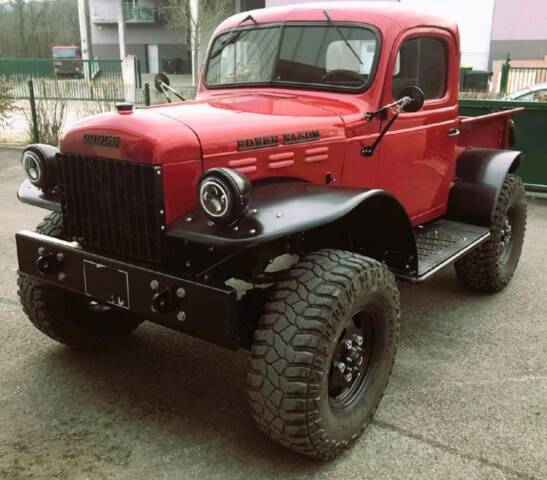
1960 | Dodge Power Wagon
Traum Auto

Create search alert
Let yourself be notified as soon as a listing is published that matches your search filters.
Create listing
Do you have a Dodge Power Wagon that you want to sell? Then create a listing now.
Create listingDodge Power Wagon Classic Cars: Prices & Market Values
History of the Dodge Power Wagon
The Dodge Power Wagon entered production in 1945, directly drawing on Dodge’s military vehicle legacy from the Second World War. Originally developed as a civilian adaptation of the military WC series, the Power Wagon quickly distinguished itself as one of the earliest mass-produced four-wheel drive trucks available to the public. Over the decades, it evolved through various series, constantly adapting to changing requirements, from farm and industrial work to off-road utility roles. The Power Wagon’s production run in its original form lasted until 1980, before its nameplate was revived in the 21st century as a performance-oriented package for Ram trucks.
Model History
The Dodge Power Wagon’s model history begins with civilian use in 1945. The earliest versions were essentially military trucks retrofitted for civilian markets, featuring robust chassis and powerful inline-six engines. Through the 1950s and 1960s, the model series expanded with updates in bodywork and increased payload. Production ceased in 1980, but in 2005 Dodge resurrected the Power Wagon name for a specialised 2500 Ram, consolidating its appeal among off-road and heavy-duty users. Today, the Power Wagon is available as a high-performance package on the Ram 2500.
Highlights and Unique Features
Key features of the Power Wagon include advanced four-wheel drive systems for its era, high ground clearance, and a chassis designed for extreme durability in off-road and commercial applications. It is notable for pioneering four-wheel drive in a civilian medium-duty truck, giving it a unique market positioning for decades. Its utilitarian design, combined with mechanical simplicity, made the Power Wagon especially favoured among rural and industrial users.
Technical Data
Special Editions and Collectible Models
While early Power Wagons are highly prized for their wartime DNA, later models and post-2005 Ram 2500-based Power Wagons feature unique trim and tech packages, such as locking differentials, heavy-duty winches, and exclusive paint and badging. These limited-production or commemorative editions are particularly notable for collectors seeking standout variants.
Weak Spots and Common Issues
Classic Power Wagons, built for function over comfort, demand diligent care of their aging mechanicals. Potential buyers should check for worn drivetrain components, corrosion on the frame and body—especially on trucks used in harsh climates—and ensure the state of original electrical and braking systems. Given their robust mechanical layout, mechanical parts are generally durable, but locating original or OEM-quality spares can require specialist suppliers.
Engine and Performance, Transmission and Handling
The Power Wagon’s performance excels off-road, with a straightforward four-wheel drive system and substantial torque for towing and utility. Early models focused on practicality over speed, delivering reliable handling on tough terrains. Later developments brought improvement in power output and comfort, especially in the Ram 2500 Power Wagon models, which deliver advanced traction control systems paired with more powerful engines. • Dodge Power Wagon WM300 (late 1950s): Known for ruggedness and classic utilitarian design. • Ram 2500 Power Wagon (post-2005): Combines off-road technology with modern comfort, featuring electronically locking differentials and hill descent control.
Interior, Comfort, Exterior and Design
The Power Wagon’s design is purposeful: a steel-clad exterior with an upright cab, signature round fenders, and functional bed to maximise utility. Interior appointments in early models are basic, prioritising practicality over comfort. Optional winches, tow hooks, and, in more recent versions, off-road accessories distinguish the Power Wagon visually and functionally. Specially optioned paint schemes and commemorative badges on newer Ram-based Power Wagons enhance their appeal to dedicated enthusiasts.
Other Relevant Features
One often-overlooked aspect is the diversity of Power Wagon applications—from agricultural and industrial conversions to rescue and military adaptations. Aftermarket support and communities dedicated to restoration and upgrades contribute to the sustained popularity and longevity of these trucks.
Summary
The Dodge Power Wagon stands out through its military-derived heritage, unmatched utilitarian value, and evolution into a modern off-road powerhouse. With its 100% presence among classic Dodge ads and parallel demand, it’s clear the Power Wagon remains the quintessential classic Dodge truck, valued by enthusiasts seeking rugged, historically significant, and mechanically engaging vehicles.