- Car
- REO (0 offers)
Buy a pre-war REO classic
A REO is an unusually direct link to Ransom E. Olds, American motoring’s earliest industrialist, and to the handsome, technically adventurous cars built in Lansing before the Second World War. Find a pre-war REO with sound structure, known provenance and the right handbooks before buying into one of the rarer American marques in Britain.
Search results
Currently, there are no matching listings for your search.
Create search alert
Let yourself be notified as soon as a listing is published that matches your search filters.
REO listing references from Classic Trader
Below you will find listings related to your search that are no longer available on Classic Trader. Use this information to gain insight into availability, value trends, and current pricing for a "REO" to make a more informed purchasing decision.
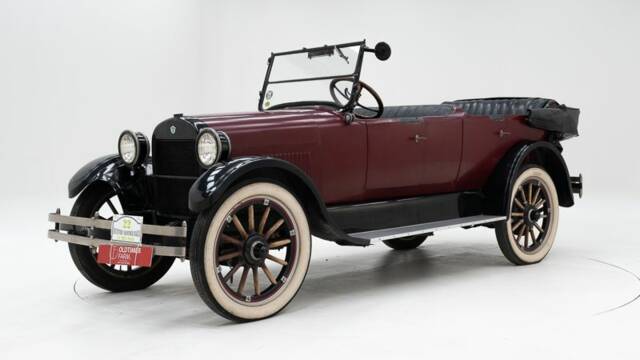
1922 | REO T-6
1922 REO 6C open tourer '22

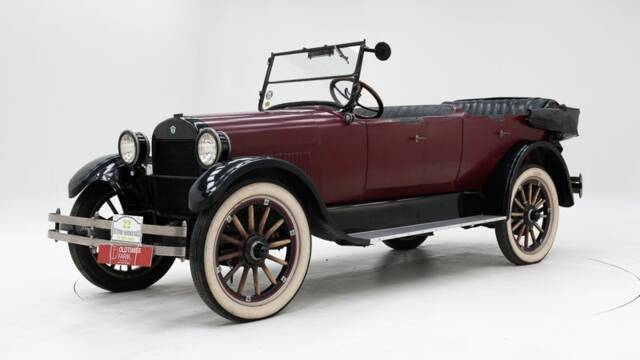
1922 | REO T-6
1922 REO 6C open tourer '22
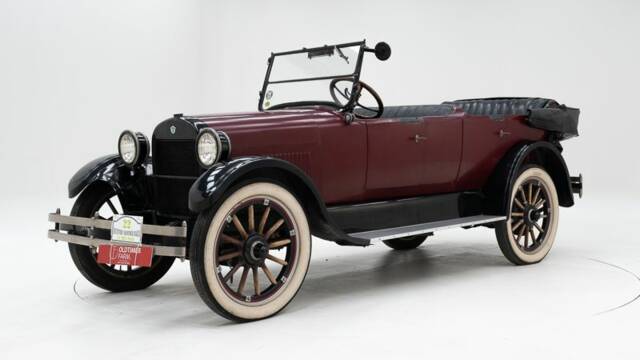
1922 | REO T-6
1922 REO 6C open tourer '22
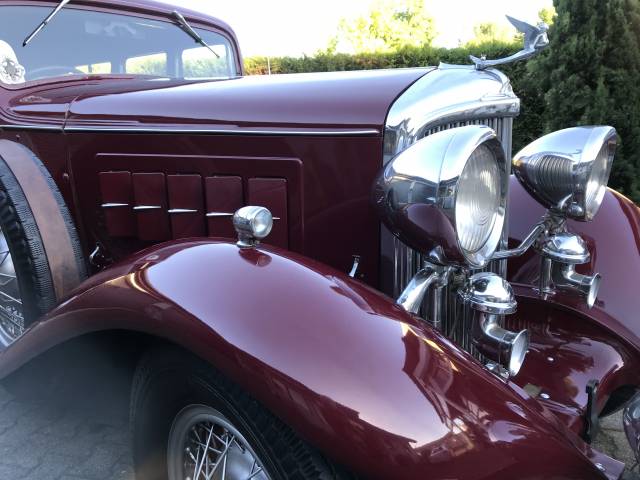
1934 | REO Royale 8-35
Royal Straight Eight One off 7 Pers. Royale Long-Version-Speed Wagon orig.Fzg.

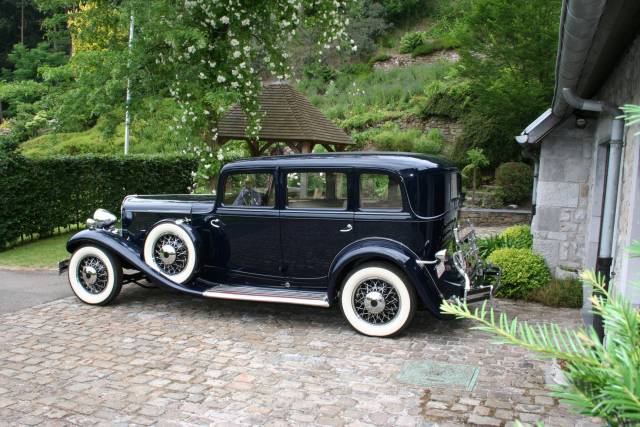
1931 | REO Royale 8-35
FULLY PROFESSIONALLY RETORED REO ROYALE SEDAN 8-35
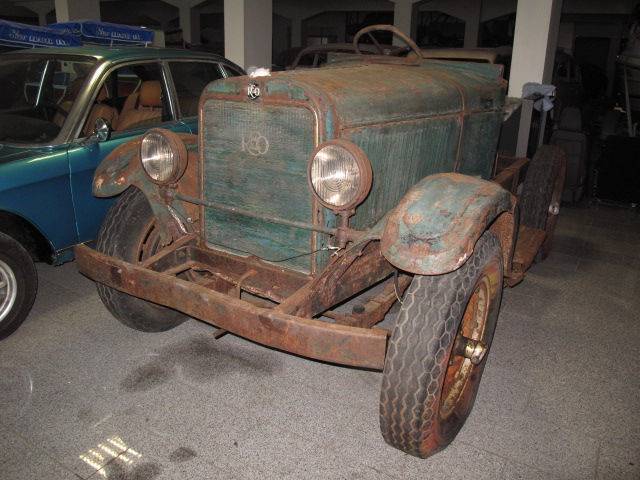
1925 | REO T-6
Andere REO "Speed Wagon" Vorkrieg

1929 | REO Flying Cloud Master
Andere REO Flying Cloud Master
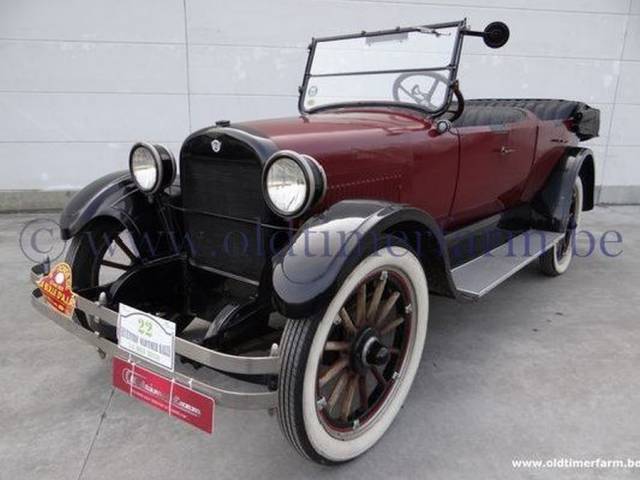
1922 | REO T-6
Restored in 1955
Create search alert
Let yourself be notified as soon as a listing is published that matches your search filters.
REO: the marque in context
REO is inseparable from Ransom Eli Olds, but it should not be confused with Oldsmobile. Olds had founded Olds Motor Works and helped turn the Curved Dash Oldsmobile into a mass-market success before disputes with investors pushed him out in 1902. On 16 August 1904 he and new backers incorporated the R. E. Olds Company in Lansing, Michigan. A legal challenge from Olds Motor Works made the name untenable; it became REO Car Company that September and REO Motor Car Company in 1906. The initials were both a practical solution and a remarkably good trademark.
The company’s archives at Michigan State University preserve an unusually rich record of this story. They show a manufacturer that made passenger cars and commercial vehicles side by side, then increasingly depended on its trucks. REO Motor Truck Company was formed in 1910, and its operations were combined with the car company in 1916. By 1919 REO sold more trucks than cars, a position it held through the end of passenger-car production. The famous Speed Wagon name belonged to those light commercial vehicles; it later had a life in popular music, but a Speed Wagon is not a passenger REO.
For a British collector, that dual identity explains why a REO can be both an elegant tourer and a very substantial machine. Early REOs earned a reputation for robust engineering rather than fragile novelty. The pre-First World War range offered high-wheeled runabouts and touring cars, while the 1910s and 1920s brought more conventional, lower-built cars with increasingly powerful engines, electric starting and enclosed bodies. The marque was a serious rival in the broad American middle and upper-middle market, not a tiny coachbuilder.
Among the representative passenger cars, an early Model B or Model G tourer captures the brass-era company: upright, purposeful and most rewarding at modest speeds. The Flying Cloud name, used in the 1920s and again on the 1930s range, is the better-known choice for a collector who wants a closed saloon or handsome sedan. At the other end is the 1930s Royale, REO’s ambitious premium car. Its styling and engineering aspirations placed it against larger Buicks, Chryslers and Packards, though the timing was cruel.
The Depression cut deeply into sales. REO agreed in 1935 that Graham-Paige could use its dies, and on 3 September 1936 it suspended automobile production. That date matters when assessing an advertised “1937 REO”: it may be a late registration, a leftover or an auction-house description, rather than evidence of a new 1937 model year. The MSU archive records passenger-car production ending in 1936; ask a seller for chassis evidence and period paperwork rather than relying on a registration year.
REO survived in trucks and later lawn equipment, but the passenger-car chapter was closed. The company was reorganised as REO Motors, Inc. in 1938, and the truck legacy ultimately passed through Diamond REO. This short, finite car-making history is part of the appeal. A surviving REO is not simply an old American car: it is evidence of a maker whose passenger models vanished while its commercial reputation endured.
What distinguishes a REO?
The attraction starts with authorship. R. E. Olds was not an outsider trying to imitate Detroit; he was one of its formative figures. Yet REO never became a ubiquitous export marque in the way Ford or Chevrolet did. In Britain that creates a satisfying combination: familiar American pre-war engineering principles, but a car unlikely to be duplicated at the local show.
REO’s best cars balance conservative foundations with real ambition. The early tourers have simple, accessible mechanical layouts and a physical, open-air character. Later Flying Clouds offer the long-bonnet, broad-seat American saloon experience without the scale of a top-line luxury car. The Royale adds a deliberate 1930s flourish, with imposing proportions and the kind of detail that makes it a centrepiece at a concours or VSCC-adjacent gathering.
There is also an important practical distinction between the marque and a particular body. A four-door Flying Cloud sedan, a seven-passenger touring car and a Royale sedan are different ownership propositions. The first may suit relaxed family road use; the brass-era car invites shorter, fair-weather trips and hands-on maintenance; the large 1930s car needs garage space, a confident plan for parts and a willingness to learn its systems. Buy the individual car, not the badge alone.
Rarity deserves perspective. It can mean a rewarding conversation wherever the car is parked, but it never substitutes for condition. A complete, honest American saloon with working instruments, original hardware and a documented engine number is normally a stronger proposition than a grander but dismantled project. REO-specific spares are not stocked in the same depth as Ford parts, so completeness is an asset with a real cash value.
Representative REO technical data
Specifications varied by year, body and export arrangement; the figures below are useful buying identifiers rather than substitutes for a factory specification sheet. Verify the engine, wheelbase and body plate against period literature for the exact car.
The table also underlines why advertising copy needs careful reading. “Flying Cloud” was a name used across more than one era, and a nominal horsepower figure in an early catalogue may be taxable or rated rather than directly comparable with later brake horsepower. Likewise, American wheelbase and engine data can vary with a coachbuilt body, commercial derivative or a car assembled from remaining stock. Period brochures, the original owner’s manual and club knowledge are more valuable than a generic online specification.
On most cars the fundamentals are familiar: front-mounted engine, rear-wheel drive, separate chassis, beam axles and mechanical brakes on the oldest examples. These are sturdy systems, but they demand proper set-up. A 1930s six or eight that pulls cleanly, holds temperature and stops straight is a better guide to care than a gleaming repaint with no evidence of recent mechanical work.
Market Overview & Buying Tips
REO pricing is thinly traded, so an individual result must be read as evidence, not a price list. In July 2024, Mathewsons sold a 1936 REO Flying Cloud for £10,000. That is a useful British reference for a usable late car, but it does not establish the value of every Flying Cloud: body style, history, condition, roadworthiness and paperwork can move the result sharply. A 1929 Flying Cloud sold through Bring a Trailer for US$17,000 in 2025, illustrating that a presentable, running 1920s example can attract a materially higher dollar bid in a large US audience. At the project end of the market, Cottone Auctions reported a non-running advertised 1937 REO at US$3,600. Its low result is a warning, not a bargain benchmark; recommissioning a rare, incomplete car can easily absorb many times the purchase price.
For a UK buyer, use those sale prices to frame questions rather than to set an offer. Establish whether the car is in Britain, whether it is already on a V5C, and whether its date of manufacture is documented. A pre-1960 vehicle does not require an annual MOT in Great Britain, but the owner remains responsible for keeping it roadworthy. A voluntary test from a specialist can be worthwhile, especially where brakes, steering, tyres and lighting have not been independently assessed. Historic Vehicle taxation and registration treatment should be confirmed with DVLA from the car’s own evidence; do not assume that age alone resolves an imported car’s records.
Most REOs offered in Britain will be left-hand drive American imports. That is normal and not a defect, but it changes the test drive. Check sightlines at junctions and overtaking visibility, ensure the headlamps are suitable for driving on the left, and make sure the wipers, demister and trafficators or indicators work as intended. If the vehicle was newly imported or substantially altered, registration requirements can differ; IVA is not a casual checkbox for an original historic car and should only be discussed with DVLA or a recognised registration specialist for the exact circumstances. A seller should be able to explain the route by which the car obtained its UK identity.
Before viewing, request clear photographs of the chassis number, engine number, firewall plate, bulkhead, frame rails, floor edges and the underside of the body. Ask for old US title documents, shipping papers, UK registration history, invoices, club correspondence and any dating letter. On a marque with limited production records in circulation, this file can be as reassuring as the car itself. Be wary of a description that calls a late car “1937” without explaining the 1936 end of passenger manufacture.
At inspection, prioritise structure and completeness. Examine the wooden framing in saloon bodies for soft timber, loose joints, door sag and bubbling beneath paint; many American closed bodies used timber within the body structure. Probe running boards, lower door skins, wings, sill areas, boot floor, floor pans, chassis crossmembers and spring mounts for corrosion. A thick underseal coating can hide old repairs. On an open car, inspect the body tub, scuttle and hood bows as carefully as the chassis.
Then assess the mechanical basics from cold. A correct engine should turn freely, build oil pressure promptly and avoid persistent smoke or deep knocks. Look for frost damage in the block, leaks around core plugs and evidence of poor cooling-system maintenance. On a long-parked six or eight, budget for fuel-system cleaning, tank treatment, brake hydraulics where fitted, tyres, hoses and electrical renewal even if the engine runs briefly. A weak starter or six-volt charging issue can be minor; missing carburettor, distributor, gearbox components or instruments can become a slow international search.
Drive the car long enough to judge clutch take-up, gearbox synchro or non-synchro behaviour, steering play, brake balance and temperature at a sustained cruise. Early brakes may be mechanically correct yet need careful adjustment; they should not pull violently or leave the car unable to stop with confidence. Look for cracked wheel spokes where applicable, tired leaf springs and worn kingpins. An expert familiar with pre-war American cars is more valuable than a general modern-car inspection, even if that expert has never previously seen a REO.
Parts support is best approached through networks, not assumptions. Consumables such as bearings, ignition components, hose, brake lining and some engine service parts can often be matched by number or specification. Body fittings, lamps, trim, instruments, engine castings and correct badging are different. Join an American REO club before committing, ask what parts are shared with contemporary suppliers, and price the shipping, VAT and carriage time from North America. A car with its proper lamps, bonnet hardware, hubcaps, seats and dashboard may save years of hunting.
The REO driving experience
A good REO feels less like a museum object than a record of how American motorists travelled before uniformity took hold. The early tourer asks the driver to participate: the controls are deliberate, the engine’s rhythm is close at hand and weather is part of the journey. Keep speeds sympathetic, plan braking space and it becomes an absorbing country-road car rather than a stressful one.
The Flying Cloud is a different kind of pleasure. It is about sitting high, looking down a long bonnet and letting a big-capacity six settle into an unhurried gait. A sound example has the breadth and suppleness expected of a 1920s or 1930s American sedan, not the darting responses of a British sports car. On UK lanes its width, LHD position and period brakes reward anticipation; on an A-road at a sensible pace, it can feel wonderfully composed.
The Royale adds ceremony. Its length, straight-eight torque and formal cabin make every arrival feel intentional. It is for an owner who enjoys preparing a car, explaining it to interested onlookers and taking the long route to a show. None of these REOs should be bought for effortless motorway commuting. They are at their best when driven often enough to stay healthy, but on journeys paced for their age.
Design, bodies and identity
REO design followed the broad American move from carriage-derived upright forms to fully enclosed, streamlined 1930s automobiles. The earliest cars are defined by their tall wheels, exposed mechanicals, brass or nickel brightwork and practical touring bodies. Their visual authority comes from honesty of construction rather than ornament.
By the Flying Cloud years, REO had adopted the long bonnet, formal grille and substantial enclosed passenger compartment expected by American buyers. The name itself helped sell a sense of speed and modern travel, even when the engineering remained sensibly durable. Late Flying Clouds have a clean, period-correct mass: rounded wings, integrated body volumes and grilles designed to make an affordable car look confidently established.
The Royale was the marque’s statement piece. It is proof that REO was capable of more than reliable transport and trucks. When considering a restoration, retain that identity. Correct grillework, hood side panels, wheel equipment, interior hardware and the relationship between body and chassis matter more than an over-restored finish. An honest, well-preserved car with its original details is usually more convincing than one rebuilt to a generic idea of “American luxury”.
Why REO still matters
The Library of Congress’ Historic American Engineering Record has documented the REO Motor Car Company complex in Lansing, recognising the industrial setting in which these cars and trucks were made. It is a useful reminder that a REO carries local history as well as a maker’s badge: Lansing, industrial organisation, the transition from early automobiles to mature mass production, and the eventual dominance of commercial vehicles.
For British ownership, the marque’s obscurity can be an advantage. There is no pressure to follow a one-model restoration recipe, and a sound REO will stand out at American-car meetings, heritage events and local shows. The counterweight is responsibility: document what you find, preserve original components and share part numbers with fellow owners. The next custodian may depend on that record.
Summary
A pre-war REO rewards a collector who values history, individuality and mechanical presence over easy parts-catalogue ownership. Choose between brass-era touring intimacy, Flying Cloud practicality and Royale grandeur according to the use you genuinely intend.
The strongest purchase is not necessarily the cheapest or grandest. It is the car with structural integrity, a complete set of difficult-to-find parts, an honest identity and enough documentation to explain its American and UK history. With those foundations in place, a REO offers a distinctive way to enjoy the years when R. E. Olds’s second company was still making passenger cars in Lansing.