- Automobil
- Piccard-Pictet
- Piccard-Pictet 20/30 CV (0 Angebote)
Piccard-Pictet 20/30 CV classic cars for sale
The Piccard-Pictet 20/30 CV stands as a striking artifact of early 20th-century Swiss engineering. With its distinct technical features and a reputation for robust construction, the 20/30 CV is now a rarely seen gem pursued by committed collectors.
Suchergebnisse
Zur Zeit sind keine passenden Inserate zu Ihrer Suche veröffentlicht.
Create search alert
Let yourself be notified as soon as a listing is published that matches your search filters.
Create listing
Do you have a Piccard-Pictet 20/30 CV that you want to sell? Then create a listing now.
Create listingPiccard-Pictet 20/30 CV listing references from Classic Trader
Below you will find listings related to your search that are no longer available on Classic Trader. Use this information to gain insight into availability, value trends, and current pricing for a "Piccard-Pictet 20/30 CV" to make a more informed purchasing decision.
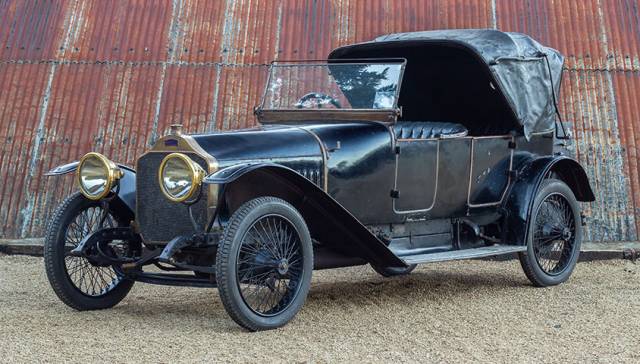
1913 | Piccard-Pictet 20/30 CV
THE SOLE-SURVIVING 1913 PICCARD PICTET MIII 20/30HP FOUR-SEATER SPORTING VICTO

Create search alert
Let yourself be notified as soon as a listing is published that matches your search filters.
Create listing
Do you have a Piccard-Pictet 20/30 CV that you want to sell? Then create a listing now.
Create listingPiccard-Pictet 20/30 CV Classic Cars: Prices & Market Values
Origin and history of the Piccard-Pictet 20/30 CV
Piccard-Pictet was a Geneva-based marque, founded by Charles and Paul Piccard alongside Lucien Pictet, that specialised in luxury automobiles at the dawn of the automobile era. The 20/30 CV first appeared in the mid-1910s at a time when European manufacturers vied for technological distinction and reliability. Piccard-Pictet vehicles quickly achieved recognition for their advanced mechanical designs, which borrowed concepts from aviation—a field both Piccard brothers were deeply engaged in. Production was severely impacted by the First World War, limiting numbers and elevating the model’s significance among early Swiss motoring achievements.
Model history
The 20/30 CV followed Piccard-Pictet’s earlier 10/12 CV and 15/22 CV series, positioning itself as a more powerful and refined offering in their line-up. Its production spanned only a few years, with most surviving examples featuring custom coachwork by leading Swiss and French craftsmen. No direct successor was produced, as the brand ceased car manufacturing shortly after WWI, making the 20/30 CV the pinnacle of Piccard-Pictet’s efforts.
Highlights of the Piccard-Pictet 20/30 CV
A centrepiece of Swiss automotive heritage, the 20/30 CV boasted features uncommon among its contemporaries: A robust straight-four engine equipped with overhead valves, extensive use of lightweight alloys, and advanced cooling solutions. Its chassis allowed for bespoke bodies, resulting in a wide variety of elegant and practical designs depending on client wishes. The rarity of the model today is further accentuated by the very limited production numbers.
Technical data
Special Editions and Collectible Models
Several 20/30 CV chassis received custom bodies from esteemed coachbuilders such as Carrosserie Worblaufen and J. Saoutchik. Individual ‘specials’ exist, typically commissioned by affluent Swiss industrialists or for use in concours d’élégance, occasionally featuring unique paintwork, trim, or instrumentation.
Engine and Performance, Transmission and Handling
Performance characteristics of the 20/30 CV reflected early-20th century priorities: the car was engineered for longevity and smoothness, not for outright speed. The straight-four engine delivered steady power at low revs, with torque suitable for hilly Swiss terrain. Steering and suspension set-ups were considered advanced for their era, giving the car a controlled, confident ride. Manual transmissions require careful adjustment, and correct engine timing is key for optimal running. There is mention of a handful of preserved 20/30 CV models with open-touring coachwork, favoured for their combination of mechanical simplicity and spacious cabins.
Interior, Comfort, Exterior and Design
Each 20/30 CV was typically delivered as a chassis with running gear, to be completed by the buyer’s preferred coachbuilder—resulting in significant variation in appearance and amenities. Frequent choices included hand-trimmed leather interiors, wooden dashboards, and polished brass fittings. Exteriors ranged from formal limousines to sporty tourers, often finished with two-tone paint schemes and elaborate mouldings. Options such as special lighting, luggage racks, or removable roofs were available on request.
Other relevant features
In the small Swiss car scene of the pre-war era, the Piccard-Pictet 20/30 CV was viewed as a symbol of technical prowess and innovation—often owned by engineers, entrepreneurs, and academics with an eye for forward-thinking engineering. Surviving documentation and period advertisements are rare, making factory-original details prized by restoration specialists.
Summary
The Piccard-Pictet 20/30 CV stands as a rare witness to Swiss automotive ambition before the mass motorisation age. Its technical ingenuity, bespoke craftsmanship, and limited production yield a highly individual collector’s experience, with each vehicle reflecting personal tastes and innovation from a long-lost Geneva atelier. Today, the search for surviving examples remains a challenge even for dedicated enthusiasts.