Ford Quadricycle classic cars for sale
The Ford Quadricycle marks the start of automotive history for Henry Ford—an elemental contraption with a petrol engine and bicycle wheels. Its straightforward mechanics and historical impact make it a unique presence among classic vehicles.
Search results
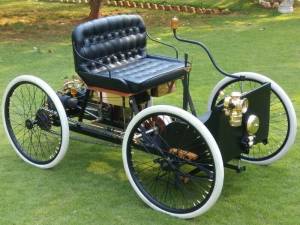
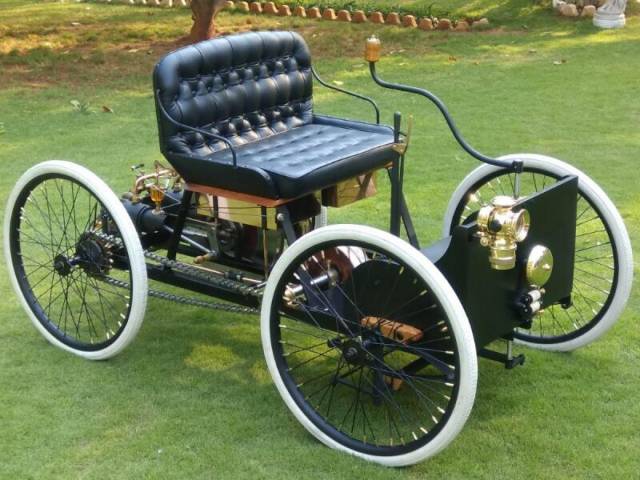

Ford Quadricycle listing references from Classic Trader
Below you will find listings related to your search that are no longer available on Classic Trader. Use this information to gain insight into availability, value trends, and current pricing for a "Ford Quadricycle" to make a more informed purchasing decision.
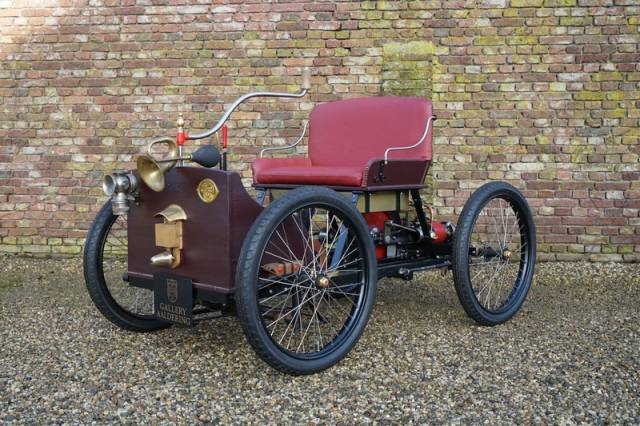
1896 | Ford Quadricycle
Ford Quadricycle replica PRICE REDUCTION

Ford Quadricycle Classic Cars: Prices & Market Values
History of the Ford Quadricycle
In 1896, Henry Ford completed the Quadricycle, his first successful self-propelled vehicle. Conceived in a small Detroit workshop, the Quadricycle consisted of a lightweight frame, four wire wheels from bicycles, and a simple two-cylinder engine running on petrol. Rather than resembling the cars we know today, the Quadricycle was more akin to a motorised carriage. Its construction marked the beginning of Ford's engineering legacy, acting as a launchpad for automotive innovation in America.
Model history
The Quadricycle stands as a one-off experimental prototype without direct predecessors within the Ford brand. It laid the groundwork for Ford's later innovations and inspired the development of the original Ford Model A, which arrived a few years later as his first production vehicle.
Highlights of the Ford Quadricycle
The Quadricycle is notable for its minimalistic yet ingenious engineering, featuring a lightweight chassis and a unique powertrain for its era. Its design made pioneering use of bicycle technology—a practical solution at a time when the motor car was still a concept. Collectors value the Quadricycle for its historical significance as Henry Ford’s first foray into building a petrol-powered car.
Technical Data
Special Editions and Collectible Models
Since only the original Quadricycle and a handful of replicas exist, there are no factory special editions. Authentic early replicas made for museum display or historical events can be considered notable due to their connection to the original prototype.
Engine and Performance, Transmission and Handling
The engine, a simple two-cylinder unit, produced around 4 horsepower—barely enough to reach speeds of approximately 20 km/h. The direct drive transmission and gear system lacked modern clutch functionality. Handling drew from early bicycle design, giving it a rudimentary but functional ride. With exposed mechanics and minimal suspension, operating the Quadricycle required mechanical sensitivity and real-time intervention from its driver. - Ford Quadricycle (single configuration): 2-cylinder, approx. 4 hp, tubular frame, chain drive, lever steering
Interior, Comfort, Exterior and Design
The Ford Quadricycle’s open frame layout uses steel tubing and wire wheels typically found on bicycles of that era. The seat is basic, without the padding or upholstery seen on later vehicles. There are no true interior appointments, dashboards, or comfort features. The simple levers and minimalist controls capture the spirit of experimental motoring. Special features include fully exposed mechanics and a lack of body panels, embodying the origins of automobile design.
Other features
The original Quadricycle holds a place of honour in automotive museums, with accurate replicas sometimes built for exhibitions or educational use. Its influence on the early 20th century automotive industry continues to be recognised today.
Summary
The Ford Quadricycle represents the earliest spark of innovation from Henry Ford, blending ingenuity with stripped-down mechanics. As a historic one-off, it offers both a tangible link to the roots of automotive engineering and a unique item for connoisseurs of motoring history.