- Car
- Kia (0 offers)
Buy Kia Classic Cars
Kia classics offer a surprisingly broad collector story: Mazda-derived Brisa and Pride small cars, the locally familiar Ford Festiva, the pioneering first Sportage and the rare Lotus-related Elan. For Australian buyers, the strongest examples reward careful provenance checks, realistic import planning and an appreciation for a marque that grew from practical transport into a serious global manufacturer.
Search results
Currently, there are no matching listings for your search.
Create search alert
Let yourself be notified as soon as a listing is published that matches your search filters.
Kia listing references from Classic Trader
Below you will find listings related to your search that are no longer available on Classic Trader. Use this information to gain insight into availability, value trends, and current pricing for a "Kia" to make a more informed purchasing decision.
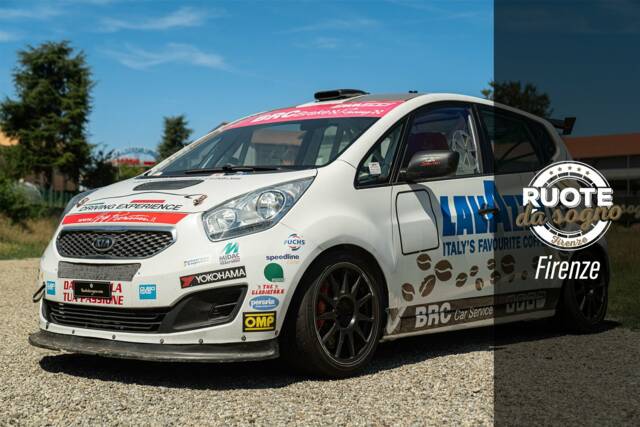
2011 | Kia Venga BRC

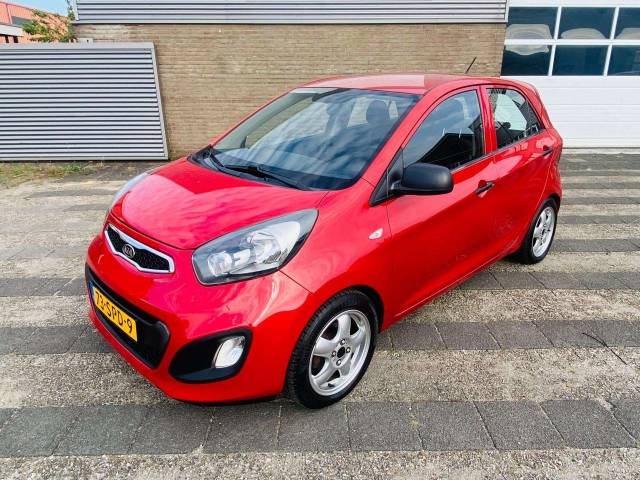
2011 | Kia Picanto 1.2 CVVT
Kia Picanto 1.2 CVVT Comfort Pack Automaat LPG 2011 lees adver

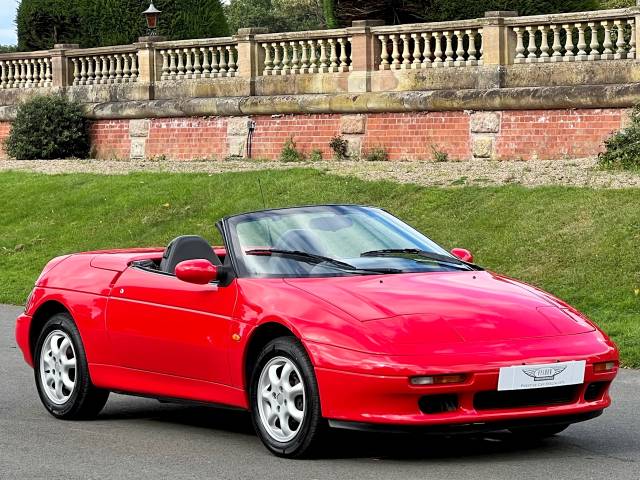
2001 | Kia Elan
Ultra rare!

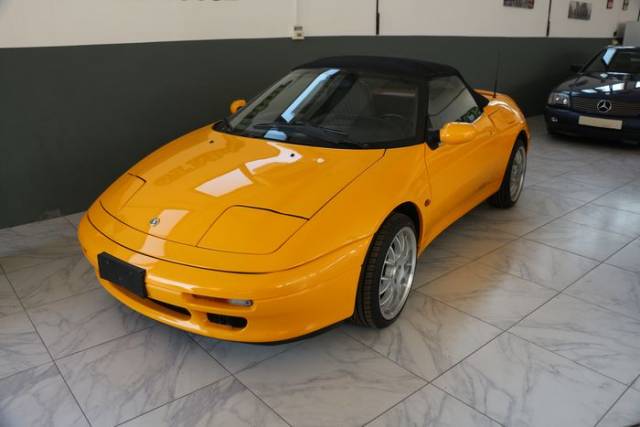
1999 | Kia Elan
Create search alert
Let yourself be notified as soon as a listing is published that matches your search filters.
History & Heritage
Kia’s collector history is much richer than its short Australian showroom memory suggests. The company began in 1944 as Kyungsung Precision Industry, making bicycle parts, became Kia Industries in 1952 and moved through motorcycles, trucks and licensed manufacture before becoming a car maker. That long industrial prelude matters. Early Kia cars were not glamorous exercises in badge-building; they were products of a young Korean industry learning how to build affordable, durable transport at scale.
The first passenger-car landmark was the Brisa, introduced in 1974. Kia describes it as Korea’s first small passenger car and its first passenger model with an in-house-developed engine. Its Mazda relationship is central rather than incidental: the rear-drive Brisa was based on Mazda’s Familia, with saloon, estate and pickup derivatives. In Korea it became a familiar family car and taxi; a small batch of Brisa pickups exported to Qatar in 1975 marked Kia’s first completely built vehicle export. Passenger-car production ceased in the early 1980s under government-directed industry consolidation, leaving Kia to concentrate on commercial vehicles for several years.
Kia returned to cars through a three-way Ford–Mazda–Kia arrangement. The Pride, launched in 1987, was Mazda-designed, Kia-built and sold under Ford badges in several export markets. Kia’s Heritage Archive gives the Pride a production run of more than 1.45 million cars through 1999, with over half exported to 38 countries. It was a turning point for Korea and for Kia: an attainable first car at home, and proof that Kia could produce a world-market small car in meaningful volume.
Australians know that chapter by another name. The Ford Festiva sold here from 1991 to 1994 was built by Kia. That connection gives the marque an unusually accessible local foothold. A well-kept Festiva is not a Kia-badged collectible, but it is an Australian-delivered, right-hand-drive expression of the same Pride programme, with Ford dealer history, familiar Mazda mechanical ancestry and a genuine role in Kia’s rise. It also explains why a buyer should not dismiss a modest-looking 1990s hatch merely because the badge says Ford.
Kia’s next aim was independence. The Sephia, launched in 1992, and the Sportage, in production from 1993 after its 1991 Tokyo Motor Show debut, represented original Kia model programmes rather than a simple licensed continuation. The first Sportage was a compact body-on-frame 4WD with Mazda-derived petrol power, conventional low-range hardware on many versions and a shape that pre-dated the crossover boom. Kia records the Sportage’s 1993 Paris–Dakar finish as a significant early publicity achievement. It was not the first SUV ever made, but it was an early, compact, passenger-car-oriented SUV with a very different brief from the large wagons Australians associated with serious off-road work.
The fascinating exception is the Kia Elan. When Lotus ceased M100 Elan production, Kia acquired the rights, tooling and technology. The Korean-built Elan appeared in 1996 and was produced until 1999, retaining the Lotus-designed front-drive chassis and composite body but replacing the Isuzu turbo engine with Kia’s naturally aspirated 1.8-litre unit. Around 1,000 were built; published totals commonly state 1,059. It is the collector Kia with the strongest built-in story: a Lotus silhouette, a Korean powertrain and a production run tiny beside any mainstream Kia.
The Asian financial crisis reshaped the company. Kia entered receivership in 1997 and Hyundai acquired Kia in 1998. The acquisition gave Kia the stability, engineering scale and component access that underpin its later international success, but it also marks a useful collector dividing line. The Brisa, Pride/Festiva connection, first Sportage and Elan belong to the earlier, more improvisational Kia story. Together they are five representative ways into the marque without pretending that one model defines it all.
Highlights of Classic Kias
Classic Kia ownership is about context. These are usually not cars bought for blue-chip prestige or a familiar Australian restoration network. They appeal to buyers who value industrial history, unusual cross-brand connections and an honest mechanical brief. The early range moves from a small Mazda-based family car to a Ford/Mazda/Kia global project, a compact 4WD and a Lotus-derived roadster in barely a quarter-century.
The Brisa is the historical choice. Its appeal lies in being an early Korean passenger car from a formative period, not in extravagant specification. Surviving examples are scarce outside Korea and originality is crucial: period trim, correct badging, factory interior fabrics and unmodified bodywork can be harder to source than Mazda-style service parts. A Brisa pickup is especially significant because of its export story, but it is also likely to be an import project with more administrative and parts complexity than a locally delivered small car.
The Pride offers the opposite kind of pleasure: it is a simple, light, pragmatic hatch, saloon or wagon. Mazda’s compact engineering means its basic layout is intelligible and the Ford Festiva link gives Australian enthusiasts a ready point of reference. It is best regarded as an exceptional survivor rather than a blank canvas. Factory wheel trims, correct interior, original decals and an unmolested engine bay are more persuasive than a lowered, modified example. The three-door and early-specification cars have more period character, while a local Festiva can be the sensible way to enjoy the mechanical family in RHD.
The first Sportage is a different proposition again. It is an early compact SUV from before the word SUV described everything with a high seating position. Buyers can choose between a soft-top, hardtop or five-door body depending on market, and between two-wheel-drive and four-wheel-drive configurations. Its attraction is its compact size, straightforward 1990s cabin and real mechanical transfer case on appropriate versions. An honest, standard first Sportage with its factory wheels, spare-wheel carrier and usable 4WD system is more compelling than a cosmetically fresh car with no evidence of maintenance.
The Elan is the specialist’s Kia. It does not have the turbocharged character of the Lotus M100, but the Kia’s 1.8-litre engine produces a more conventional, linear response and keeps the car recognisably different from its British predecessor. The front-wheel-drive layout can surprise buyers expecting an old-school roadster, yet the Lotus-developed suspension gives it composure that most 1990s compact convertibles cannot approach. Rarity makes documentation, correct panels and a knowledgeable inspection much more important than a low odometer alone.
Across the marque, several themes are worth retaining:
- Shared engineering is useful, not a substitute for verification. Mazda, Ford, Lotus and later Hyundai connections can help with knowledge and selected parts, but VIN, engine, trim and market specification still need to be checked as Kia-specific.
- Originality has disproportionate value. Thin collector supply means a complete car is often a far better purchase than a cheap project with missing mouldings, lights or interior pieces.
- Condition beats novelty. A Kia is unusual in Australia already. There is no need to add rarity through neglect, unsuitable modifications or a complicated conversion.
- The export-market story matters. Korean domestic, European, Japanese, North American and Australian-delivered examples can have different equipment, steering position, compliance history and parts paths.
Technical Data of Key Kia Classics
The table is a make-level snapshot. Specifications vary by market, body and year; a seller’s build plate and factory literature should take priority when assessing an individual car.
The figures show why Kia should not be treated as one type of classic. Brisa and Pride are light, modest-powered small cars. The Sephia is an early original compact sedan. Sportage brings a taller, heavier 4WD layout, and Elan combines the shortest wheelbase here with the highest specific performance. For buyers, the key is to select a Kia for its actual use: a club-day roadster, a compact weekend 4WD, a period city car or a historically important Korean import.
Market Overview & Buying Tips in Australia
Australia’s Kia-classic market is small and uneven. That can be an advantage: buyers are less likely to face automatic badge-driven premiums, and an Australian-delivered Ford Festiva provides a practical RHD entry point. It also means there is no dependable local supply of every body panel, weatherstrip or interior part. Buy the best, most complete example available and price the project in landed and restored terms, not merely in the seller’s currency.
There are no broadly reported, repeatable Australian auction benchmarks for Brisa, Pride, first Sportage or Elan that justify quoting a single sale-price range. That absence is useful information rather than a reason to invent a number. Assess an individual listing against condition, originality, steering position, compliance status, freight, marine insurance, port and broker charges, GST and the state’s registration pathway. A low overseas asking price can become an expensive Australian car before the first local road test.
For imports, start with the federal process. An import approval is required before shipping a vehicle to Australia, and the applicable approval pathway depends on the vehicle and its age. The 25-year rule is often relevant to older vehicles, but it is not a substitute for checking the current Department of Infrastructure requirements or for obtaining approval before export. Quarantine cleaning, shipping documentation and identity evidence all deserve attention. A car that arrives with soil, plant material or an incomplete paper trail is not a bargain.
Then check the destination state or territory before committing. Most Brisas, Prides and Elans offered from Korea, Japan or continental Europe will be left-hand drive, whereas Australia drives on the left. Registration and conditional-registration rules are state based, not a single national promise. An older LHD vehicle may be eligible in some jurisdictions under age-based or club schemes, with specific conditions; the details vary and change. Do not assume that an importable car is automatically straightforward to register for the way you plan to use it. Written advice from the relevant authority and a pre-purchase discussion with an approved engineer or club are sensible safeguards.
Brisa: inspect corrosion comprehensively. Age, scarce panels and a likely overseas life make sills, floorpans, chassis rails, suspension pick-ups, lower guards, door bottoms and the boot floor decisive. Confirm whether the engine, trim and exterior badges match the claimed specification. Mazda ancestry may aid consumables, but it will not recreate a missing grille or correct dashboard.
Pride and Festiva: inspect the basics with unusual discipline. Rust around windscreens, hatch openings, front towers, sills and rear suspension mounts can defeat the value of a cheap hatch. Check cold starting, carburettor or injection behaviour as fitted, cooling system condition, gearbox synchros, clutch operation and evidence of timing-belt maintenance where applicable. An Australian-delivered Festiva should be examined on its own merits: service books, compliance plate, untouched wiring and a clean body may outweigh the appeal of importing a Kia-badged equivalent.
Sephia: buy on maintenance evidence. It is not yet a high-demand collector car, which makes a neglected example especially risky. Look for cooling-system history, oil leaks, automatic-transmission quality where fitted, suspension wear, electrical repairs and corrosion around the lower body. Its appeal is as an early original Kia programme and a usable 1990s sedan, not as a shortcut to investment.
First Sportage: establish the drivetrain before admiring the paint. Test 4WD engagement and low range on a suitable surface, check transfer-case operation, universal joints, wheel bearings, CV joints and differential leaks. Examine chassis and body mounts, rear suspension, tailgate or soft-top condition, cooling system and any sign of hard off-road use. A tidy car that has spent its life on sealed roads is usually preferable to an aggressively lifted one with undocumented modifications. If it is an Australian-delivered RHD example, confirm that its compliance and registration history align with the body and drivetrain actually fitted.
Elan: pay for a marque specialist’s inspection. The GRP composite body does not rust, but accident damage, poor fibreglass repairs, crazing, paint adhesion and panel alignment can be costly. Inspect the steel chassis thoroughly for corrosion, particularly around suspension mounting areas; check the hood frame and seals, headlamp mechanisms, brakes, steering, cooling, gearbox operation and evidence of regular belt and fluid service. Verify it is a Kia Elan rather than a Lotus M100 described loosely, and establish which market supplied it. Specialist Lotus knowledge is valuable, but Kia-specific engine and trim sourcing should be researched before purchase.
Parts planning should be deliberate. Routine filters, brakes, bearings and some mechanical components can be sourced through Mazda, Ford or Hyundai-era channels after exact part-number confirmation. Model-specific trim, glass, body panels and Elan soft-top hardware are another matter. Ask a vendor what has been replaced, retain removed original parts and identify overseas specialists before a restoration begins. For an Australian buyer, freight time and consolidated shipping can matter as much as catalogue price.
Driving Feel
A classic Kia collection can cover distinctly different kinds of driving. In a Brisa, the point is lightness and mechanical directness. It asks for momentum, rewards modest speeds and makes a suburban run feel like a small historical event. It is best enjoyed sympathetically, with room around it and no expectation of modern refinement.
Pride and Festiva driving is more familiar to Australians of a certain age. The upright glasshouse, narrow body and low mass make them easy to place in traffic. A good manual car feels willing rather than quick; its pleasure is in simple controls, excellent visibility and the way a light hatch makes ordinary roads feel active. It is a car for a relaxed club run or a local show, not a long freeway sprint.
The first Sportage has a useful split personality. Its seating position and compact dimensions suit a weekend trip, while a proper 4WD version has more mechanical involvement than modern soft-roaders. It is not a contemporary touring wagon: allow for 1990s braking, noise, ride and economy. Nevertheless, a sound example on factory-sized tyres can be charming on gravel roads and remarkably practical at an event.
The Elan is the revelation. The steering, damping and body control reflect Lotus engineering even though the driven wheels are at the front. It feels low, precise and eager, with a more polished cornering manner than its badge leads many people to expect. A good road is its natural habitat; it makes a persuasive argument that Kia’s pre-Hyundai history contains more than economical transport.
Design & Coachwork
Kia’s early design language followed its industrial circumstances. Brisa’s compact, conventional three-box forms reflected Mazda influence and a need for efficient family transport. Pride translated the same discipline into the late-1980s global supermini: clean, square, economical and easy to package. Neither relies on decorative excess, which is why original bumpers, lamps and wheel trims matter so much today.
The early Sportage changed the proportion dramatically. Its short wheelbase, upright glass and rear-mounted spare made a compact 4WD look purposeful without pretending to be a full-size wagon. Soft-top variants are especially evocative of the period, but all original first-generation cars benefit from restraint. Factory ride height, correct wheel arches and intact exterior hardware preserve the design’s modest confidence.
Elan is the outlier: its smooth wedge, pop-up headlamps, deep windscreen and compact tail are unmistakably products of Lotus’s late-1980s thinking. Kia did not design the original form, but its decision to continue the car gave the shape a second life. A properly kept Kia Elan should not be disguised as a Lotus. Its unusual identity is its strongest visual asset.
Other Kia Collector Context
Kia’s early motorsport and export stories add substance without turning every car into a competition replica. The first Sportage’s Paris–Dakar completion was a calculated demonstration that a new compact 4WD brand could endure a demanding international event. Pride’s export success was equally consequential: more than half its production went abroad, making it one of the vehicles that carried Korean car manufacturing into everyday markets around the world.
For Australia, the Ford Festiva link is the cultural bridge. It joins the local small-car history of the early 1990s to Kia’s Korean production story and makes marque events more interesting: a preserved Festiva, an imported Pride and an Elan can show three very different outcomes of the same manufacturer’s ambition. That is more satisfying than treating Kia solely through today’s new-car reputation.
Summary
To buy a classic Kia in Australia is to choose an underexplored history. Brisa offers early Korean passenger-car significance; Pride and the Australian Ford Festiva reveal the Mazda/Ford/Kia alliance; Sportage captures an early compact-SUV idea; and Elan brings rare Lotus-developed handling to the badge.
Prioritise completeness, provenance and a registration plan over novelty. Confirm import approval and state-based LHD eligibility before shipping, inspect each model’s known structural and mechanical risks, and build a parts plan that acknowledges distance. Find a well-documented Kia on Classic Trader and the reward is a classic with a story far larger than its market profile.