- Car
- Kimera (0 offers)
Buy Kimera Classic Cars
Kimera turns the spirit of Turin’s Group B era into extremely limited, hand-built performance cars. Find Kimera EVO37 and EVO38 opportunities on Classic Trader, with the Australian import and registration questions considered from the outset.
Search results
Currently, there are no matching listings for your search.
Create search alert
Let yourself be notified as soon as a listing is published that matches your search filters.
Kimera listing references from Classic Trader
Below you will find listings related to your search that are no longer available on Classic Trader. Use this information to gain insight into availability, value trends, and current pricing for a "Kimera" to make a more informed purchasing decision.
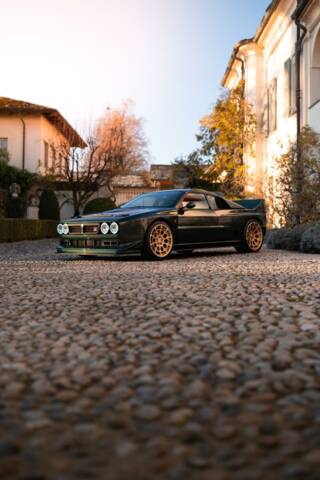
1976 | Kimera Evo 037
Kimera Evo 037

Create search alert
Let yourself be notified as soon as a listing is published that matches your search filters.
Kimera history and the road from 037 to K39
Kimera Automobili is not a revived Lancia division, nor does it make a conventional continuation car. Founded in Cuneo, Piedmont, by former rally driver Luca Betti, it is a small Italian maker with a very specific counterfactual: what if the rear-engined, rear-wheel-drive Lancia 037 programme had continued to evolve after 1983 rather than giving way to four-wheel-drive Group B machinery? Its cars borrow the visual language and mechanical ancestry of that period, then take it somewhere modern, highly bespoke and very expensive.
The reference point matters. The Lancia Rally 037 was conceived around the Beta Montecarlo silhouette, but its rally chassis, supercharged Lampredi four-cylinder and fibreglass-composite bodywork were purpose-built. With Walter Röhrl and Markku Alén among its drivers, Lancia won the 1983 World Rally Championship for Manufacturers. It remains the last two-wheel-drive car to take that title. Kimera’s EVO37 is a tribute to that idea rather than a claim to be an original homologation 037; a buyer should treat the two as entirely different collecting categories.
The first Kimera, the EVO37, arrived in 2021. It uses a donor Lancia Beta Montecarlo/Scorpion structure as the basis of a comprehensive recreation and re-engineering programme. The name announces the connection, while the execution is deliberately contemporary: a 2.15-litre, dry-sump Lampredi twin-cam with both a Roots supercharger and turbocharger, fuel injection, large brakes, push-rod suspension and a six-speed manual transaxle. The company stated that 37 standard EVO37s were planned and subsequently sold out. That number is important, but it is not the total number of Kimera cars with 037-shaped bodywork: the later Martini 7 tribute programme is a distinct ten-car series celebrating seven Martini Racing titles, and specification varies between individual cars.
Kimera’s next chapter is the EVO38, a 38-car evolution conceived as the four-wheel-drive answer that the 037 never became. It retains the compact, mid-rear longitudinal four-cylinder layout and manual-first philosophy but adds an electronically controlled hydraulic all-wheel-drive system, revised chassis and more power. The first customer EVO38 appeared publicly during Monterey Car Week in 2025. As at mid-2026, it is a newly delivered, low-volume model rather than a mature used-car market; advertisements, factory availability and completed transactions must not be conflated.
The third name, K39, represents a bigger break. Kimera describes it as its first wholly Kimera “K”, visually inspired by the Beta Montecarlo Turbo endurance racers rather than rebuilt around the EVO donor formula. Official material now specifies a carbon monocoque and a bespoke Koenigsegg-developed twin-turbo V8 rated at 1,000 hp and 1,200 Nm, with road-legal intent and a dedicated Pikes Peak configuration. It is a future hypercar project, not evidence that a buyer can presently assess a long-established production run, public auction record or Australian registration precedent. That distinction should govern both due diligence and valuation.
Kimera highlights and collector appeal
The appeal of a Kimera is concentrated in a few unusually coherent choices. First is analogue control. The EVO37’s exposed mechanical character is not decorative nostalgia: it has three pedals, a manual six-speed, rear-wheel drive and an engine whose compressor is designed to fill response before the turbo is doing its hardest work. Secondly, Kimera’s design is recognisably 037 without being a copy-paste body kit. Round lamps, a short nose, deeply cut side intakes, exaggerated rear haunches and a high, functional tail all speak to the Turin rally car, while carbon, machining and finish quality belong to the twenty-first century.
Third is scarcity with a caveat. Thirty-seven standard EVO37s and 38 EVO38s are genuine tiny runs, but collector value rests on the particular car, not a badge and a headline number. An EVO37 with factory build records, original donor identity, matching drivetrain documentation, its delivery specification and a direct service trail has a stronger story than an undocumented “037-style” conversion. For a Martini 7 car, establish exactly which edition it is, whether its livery and power upgrade were factory supplied, and whether the paper trail supports its claimed place in that ten-car programme.
Kimera also sits at an interesting intersection in an Australian collection. It has the Italian theatre of a Stratos, rally connection of an 037 and tactility that enthusiasts may associate with older manual supercars, yet it is a very recent low-volume vehicle. It is therefore neither an easy historic import nor an Australian-delivered mainstream exotic. Buyers who want a car for club runs, track days and displays should price the ownership route as carefully as the purchase; collectors who intend to store it abroad should decide whether Australian compliance is worth pursuing before funds are committed.
The strongest comparison is conceptual, not financial: a Prodrive P25, Singer Porsche, Alfaholics GTA-R or Totem GT restomod may share the modernised-classic proposition, but each has different legal identity, supply chain and original-car relationship. A Kimera buyer is buying an Italian artisan manufacturer’s interpretation of a rally lineage. It is not buying Lancia factory provenance, FIA Group B eligibility or automatically transferable Australian road registration.
Kimera technical data
Factory figures are useful for comparing the two EVOs, but they are not substitute for the build sheet of a particular car. Kimera’s published EVO38 weight was still listed as TBA on its technical page; reports have quoted different figures. It is better to request a certified, individual weight than repeat an unverified headline.
The EVO37 figures come from Kimera’s published technical specification: 85 x 95 mm bore and stroke, 7.5:1 compression, air-to-water intercooling and a triple-stage oil pump. The low compression ratio and compound charging explain why a proper pre-purchase inspection must include boost, fuelling, cooling and oil-system evidence rather than a brief road test alone. The standard 245/35 R18 front and 295/30 R19 rear tyre sizes and 1,905 mm width also make tyre availability, transport clearance and Australian roadworthiness inspection details worth checking early.
Kimera market overview and buying tips in Australia
Kimera is too young and too scarce for a reliable Australian price guide. There is no broad pool of local completed sales from which to announce a market price in A$. Use disclosed evidence, currency conversion and a fully costed landing model instead. At launch, the standard EVO37 was widely reported at €450,000 before local taxes; Top Gear reported the later ten-car Martini 7 cars at €840,000. An authorised US retailer, Issimi, displayed an EVO37 at US$725,000 in late 2024. These are historical factory/retail asking references, not Australian auction results and not an appraisal for a particular chassis. The EVO38’s reported new price has varied by source and equipment; seek a dated factory quotation, not a social-media claim.
For an Australian buyer, the displayed overseas price is only the opening number. A high-value import may incur ocean or air freight, marine insurance, port, broker, storage, biosecurity cleaning and inland transport costs. Australian Border Force says not to arrange shipping until the relevant import approval has issued; a car arriving early can attract storage charges and may have to be exported or destroyed at the importer’s cost. Keep the purchase agreement, bank-transfer records, factory invoice, build sheet, service invoices, registration history and bill of lading. ABF normally uses the price paid to establish customs value, but may require an alternative valuation where the transaction-value method cannot be used.
Tax is equally material. For a taxable import, GST is 10% of the value of the taxable importation, which includes customs value, duty and international transport/insurance to Australia. Luxury Car Tax is separate. The current 2026–27 threshold for a non-fuel-efficient car is A$80,809, and LCT is 33% of the GST-exclusive amount above the threshold; the ATO formula is (LCT value − threshold) × 10 ÷ 11 × 33%. An EVO37 or EVO38 is far above that threshold, so it should be modelled as a material cost rather than a rounding error. Applicable customs duty depends on tariff classification, age and any concession; do not assume a 30-year-old-vehicle concession for a recent Kimera. Ask a licensed customs broker to quote the specific VIN and transaction before signing.
Import eligibility is the harder issue. The common 25-year older-vehicle pathway does not fit an EVO37 or EVO38: the Department says the vehicle must have been originally built, or significantly modified, more than 25 years before application. A recent donor car does not automatically make a new restomod an older vehicle, and recent substantial modifications require their own assessment. A left-hand-drive car is not solved merely by crossing the border either. The Department explicitly says a concessional RAV entry approval does not guarantee state or territory registration, especially for LHD vehicles.
For a recent specialist vehicle, investigate the RVS/SEVS route before buying. The relevant model must be on the Specialist and Enthusiast Vehicles Register, a suitable Registered Automotive Workshop (RAW) Model Report must be available, the owner/intended owner must obtain the applicable concessional RAV entry approval, and the RAW’s work is independently verified by an Approved Vehicle Verifier before RAV entry. An entry on the SEVS Register alone is not a promise that a Model Report exists or that compliance can be achieved. A private right-hand-drive conversion carried out after purchase is not a safe substitute for this process: it can affect engineering, resale, insurance and compliance, and may not be permitted by the applicable report.
Accordingly, call the registration authority in the state where the car will live—Transport for NSW, VicRoads, Queensland TMR, or the equivalent—before shipment. Ask about LHD restrictions, engineering certification, emissions/noise testing, lighting pattern, speedometer units, seat belts, child-restraint requirements if relevant, roadworthy inspection and club/historic schemes. A limited-use historic scheme should never be assumed for a 2020s Kimera. In practical terms, a factory- or compliance-approved RHD route, written advice from a RAW and an insurer willing to cover the agreed value are more valuable than a verbal promise from a seller.
Inspection priorities
- Identity and contract: Verify the donor VIN, Kimera serial/build number, invoice chain and who has legal title. Clarify whether the transaction is a completed vehicle, an allocation, a rolling restoration or a future K39 build slot.
- Build dossier: Ask for factory configuration, dynamometer record, ECU calibration version, suspension alignment/corner-weight data, wheel/tyre approvals and every service campaign. On a bespoke car, documentation is a service tool as well as provenance.
- Engine systems: Have a marque-experienced technician inspect cold start, turbo/supercharger transition, boost control, intercooler pump, coolant plumbing, dry-sump lines and oil pressure. Request oil analysis and leak-down/compression results where mileage and access permit.
- Chassis and composite body: Inspect the underlying donor structure, welds, corrosion, accident repair, composite bonding, panel fit and underbody protection. Beautiful carbon and paint can conceal expensive structural work.
- Transmission and brakes: Test clutch effort and engagement, shift quality when hot, LSD operation, CV joints, hydraulic lines and brake-disc condition. EVO38 buyers should obtain diagnostic access and fault history for the AWD hydraulics, electronic locking and front differential.
- Australian fit: Confirm headlights, rear fog light, indicators, side repeaters, speedometer, tyre load/speed ratings and exhaust noise are addressable under the actual import pathway. Do not spend on a conversion until the RAW and state engineer have confirmed the legal scope.
Parts support is factory-centred. Some Lampredi-family knowledge and generic consumables may be available through Italian specialist networks, but bespoke carbon panels, compound-charging hardware, electronics, transaxle components and interior trim should be treated as Kimera-dependent. Obtain written terms on warranty, remote diagnosis, spare-parts lead times, Australian freight, technician training and whether Kimera will support a car altered for local compliance.
Driving a Kimera
An EVO37 is designed to feel physical rather than filtered. The view forward is framed by the low, rally-derived body; behind the driver, the engine is close enough to make induction, wastegate and mechanical noise part of the experience. Compound charging is intended to make the four-cylinder urgent at low revs and increasingly forceful higher up, while the manual shift and rear-drive chassis ask the driver to place the car rather than delegate it to software. On a dry, open road it promises the appealing tension of an old rally special with braking, steering and structural precision no original road-going 037 owner could have expected.
That should not be romanticised into invulnerability. Five hundred-plus metric horsepower in a compact rear-drive car is serious on cold tyres, broken tarmac or a damp Great Dividing Range morning. It deserves deliberate warm-up, conservative throttle use and drivers who understand that short wheelbase, rear-biased traction and boost can magnify a small error. A sensible owner will learn the car at a controlled circuit or driver-training day, not on an unfamiliar public road.
The EVO38 changes the emphasis, not the theatre. Its four-wheel-drive system, additional torque and revised push-rod suspension are intended to provide more deployment and a more modern level of control. Kimera still describes a short-ratio six-speed manual as its central configuration, so it is not a dual-clutch hypercar pretending to be a rally car. The attraction is that the driver remains part of the mechanism. Before buying, drive the exact specification where possible: software mapping, damping, tyre choice and alignment can make two hand-built examples feel materially different.
Kimera design, coachwork and provenance
Kimera’s silhouette works because it understands the 037’s essential proportions: a compact wedge, cabin pushed forward, large side breathing space and an abrupt rear that looks like it has been designed around airflow, cooling and service access. The EVO37’s body uses modern carbon-composite construction and enlarged openings, but avoids turning the source car into a generic supercar. Its most persuasive details—the round lights, slatted rear treatment and huge rear wing—are rally vocabulary with a reason to exist.
The EVO38 sharpens the same idea. Its altered intakes, cleaner aerodynamic management and more assertive surfaces communicate that it is an imagined 038-like successor, not simply an EVO37 with driven front wheels. That evolution is valuable only if the build records identify the original factory specification. Colour is personal, but a period-style livery can have outsized value implications; verify licensing, factory application and the relevant tribute edition rather than trusting photographs.
K39 deliberately moves away from this donor-car visual logic. Its longtail endurance proportions, aero channels and dramatic rear wing reference the Beta Montecarlo Turbo Group 5/Group C atmosphere. The published carbon-monocoque claim and Koenigsegg engine partnership position it as a bespoke hypercar. Until final production specifications, build numbers, road homologation and customer deliveries are independently documented, it should be evaluated as a development-stage commission, with all the deposit, delivery and specification-change risk that implies.
Motorsport DNA and ownership context
Kimera’s motorsport narrative is strongest when it is precise. The original Lancia 037’s 1983 title, Martini Racing colours, Cesare Fiorio’s team leadership and Röhrl’s driving are real historic foundations. Kimera has also involved figures connected with that era, including engineer Claudio Lombardi, and has used the Martini 7 cars to celebrate the Martini Racing title story. Those associations explain the emotional pull; they do not make an EVO37 an ex-works rally car, an FIA-homologated Group B machine or a Lancia-built vehicle.
For an Australian owner, that honesty improves the ownership experience. Enter it in events and collections as a Kimera, explain the donor basis and factory build, and retain its papers. If a car is stored in Europe for servicing or rally-tour use, insure it for its territory of use and understand temporary-import requirements before returning it to Australia. If it stays local, establish a relationship with a specialist workshop capable of handling Italian performance cars, dry-sump systems and motorsport-grade plumbing, while keeping the factory in the service loop.
Buy Kimera classic cars: the considered conclusion
A Kimera is for the buyer who wants the emotional architecture of the Lancia 037 with modern engineering and does not need it to be an original Lancia. The EVO37 is the raw rear-drive statement, with 37 standard examples and an unusually charismatic compound-charged manual drivetrain. The EVO38 adds 38-car scarcity, 600 cv and sophisticated four-wheel drive, but remains a very new market. The K39 is an exciting declared direction, not yet a substitute for an established sales history.
Find Kimera classic-car opportunities on Classic Trader, then make the decision on evidence: exact build specification, factory support, legal identity, condition, service history and a written Australian import/compliance plan. In A$ terms, freight, GST, LCT, brokerage, compliance, state registration and insurance can alter the real purchase cost substantially. Secure approval and registration advice before shipment, commission an inspection before payment, and buy the individual car—not merely the evocative number on its tail.