- Car
- Brabus (0 offers)
Buy Brabus Classic Cars
Since 1977, Brabus has turned Mercedes-Benz cars into exceptionally fast, individual machines, from discreet 190 E conversions to V12 saloons and Rockets. Find documented Brabus classics with the specification, history and engineering that make the badge meaningful.
Search results
Currently, there are no matching listings for your search.
Create search alert
Let yourself be notified as soon as a listing is published that matches your search filters.
Brabus listing references from Classic Trader
Below you will find listings related to your search that are no longer available on Classic Trader. Use this information to gain insight into availability, value trends, and current pricing for a "Brabus" to make a more informed purchasing decision.
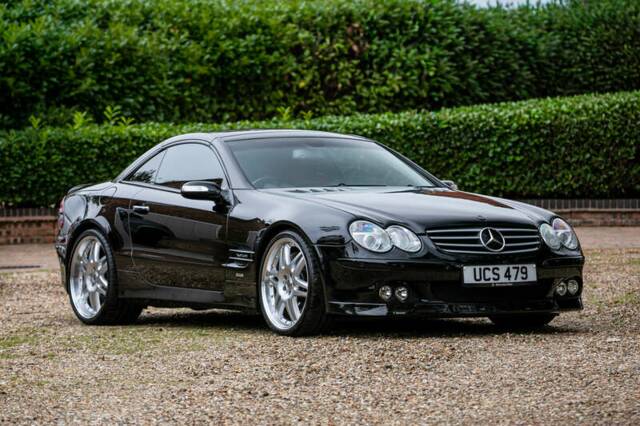
2004 | Brabus SV 12
2004 Mercedes-Benz Brabus SV12 BiTurbo Roadster

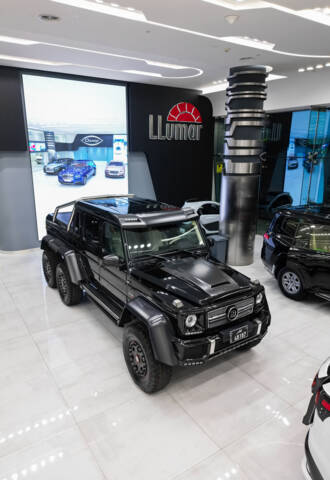
2014 | Brabus G 700 6x6
6X6
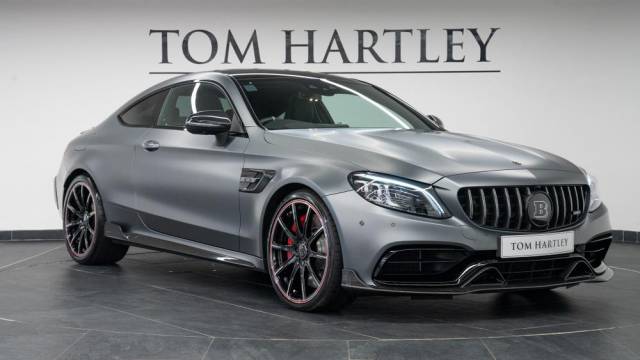
2021 | Brabus 650
Mercedes-Benz C63 Brabus C650
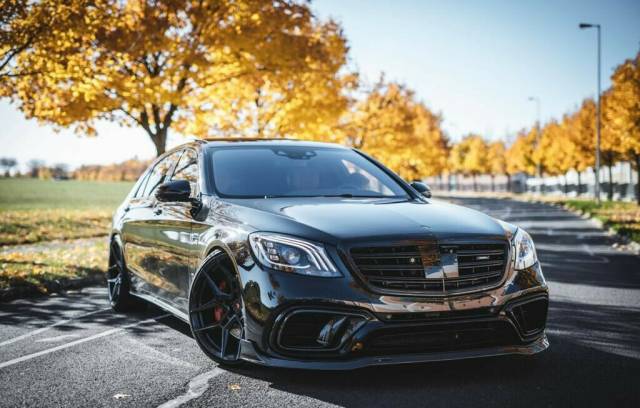
2018 | Brabus 800
BRABUS B800 im Neuzustand

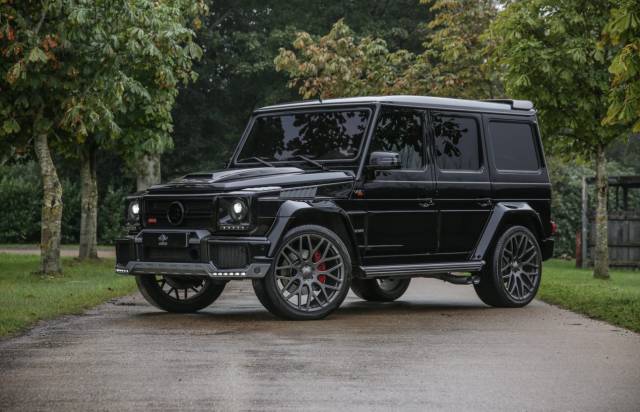
2013 | Brabus G 800 Widestar
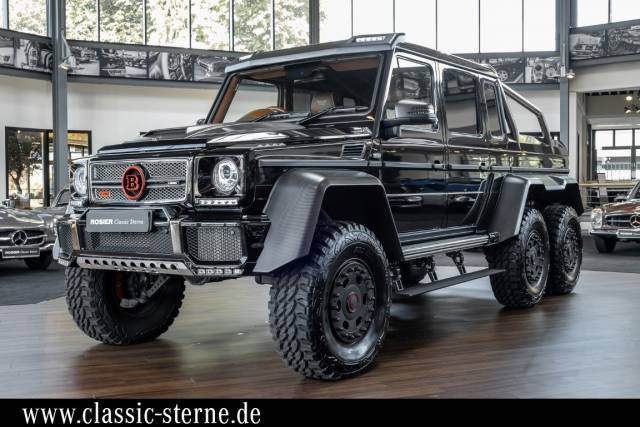
2015 | Brabus G 700 6x6
G 63 AMG 6x6 Brabus700 Limited 1 of 15 NewCar
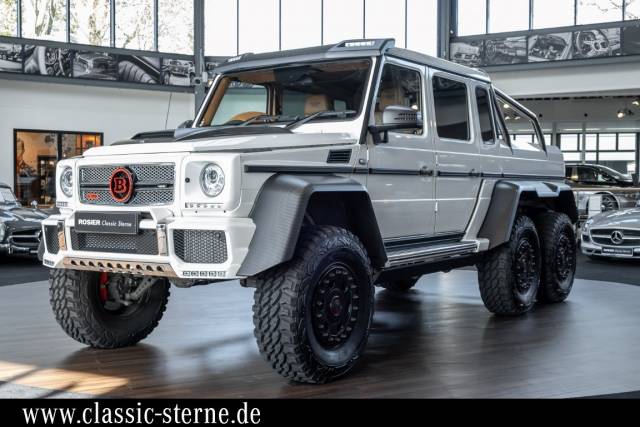
2015 | Brabus G 700 6x6
G 63 AMG 6x6 Brabus700 Limited 1 of 15 NewCar
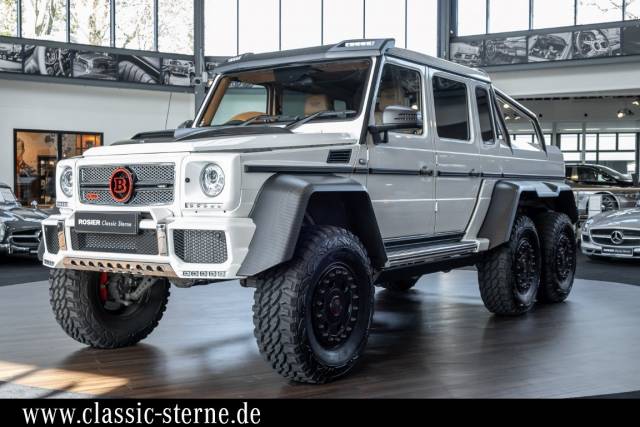
2015 | Brabus G 700 6x6
G63 AMG 6x6 Brabus700 Limited 1 of 15 NewCar
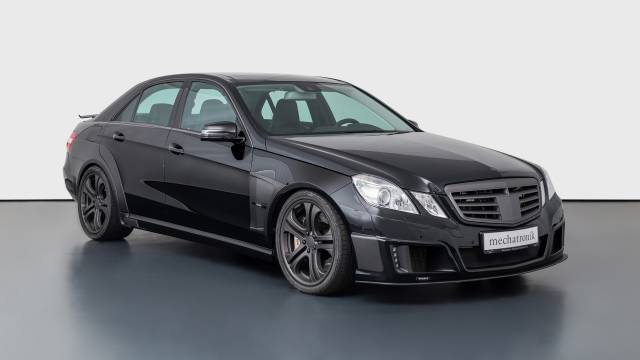
2009 | Brabus E V12 800
Bis zu 370 km/h Höchstgeschwindigkeit
Create search alert
Let yourself be notified as soon as a listing is published that matches your search filters.
History and heritage of Brabus
Brabus is not a motor manufacturer in the usual century-old sense; it is a Bottrop engineering and refinement house whose work can create a car with an identity distinct from its Mercedes-Benz donor. Bodo Buschmann and Klaus Brackmann founded the company in 1977. Its name combines the first three letters of their surnames. Brackmann soon departed, while Buschmann built the business around a particularly German idea of performance: take a well-engineered, comfortable Mercedes and make it faster, more individual and, where the customer requested it, more luxurious without abandoning its long-distance manners.
That distinction matters to an Australian buyer. A period Mercedes wearing a Brabus boot badge, wheel-centre caps or an aftermarket steering wheel is not automatically a Brabus car. Some cars left Bottrop as extensive conversions, with an engine, transmission, suspension, brakes, bodywork and cabin specified together. Others received dealer-supplied accessories or later upgrades. Both can be enjoyable classics, but their authenticity, insurability, registration prospects and value are very different. The surviving order, invoice and certification records are often more important than the visual drama.
Brabus made its early reputation through cars that challenged the limits of their donor platforms. The 1983 190 E V8 put Mercedes' 4,973 cc M117 V8 into the compact W201, a conversion requiring far more than a bolt-in engine. Brabus quoted 250 PS and a 0–100 km/h time of six seconds. In the same decade, aerodynamic work was not merely styling: a modified W124 230 E recorded a 0.26 drag coefficient and earned a Guinness World Records title. These projects established the mix that still defines the marque: engineering substance, high-speed stability and visual restraint.
The late-1980s 190 E 3.6S is one of the most appealing early collector Brabuses. Its enlarged inline six, chassis work, stronger brakes and unmistakable Monoblock wheels created a compact executive saloon with a much more serious purpose. It is significant not because it is the fastest Brabus ever built, but because it captures the analogue era: naturally aspirated response, a manual gearbox in many examples and a cabin that could remain almost understated.
The V12 projects raised the stakes. In 1993 Brabus installed a 6.9-litre V12 into a W124 E 500. The E V12 was claimed at 509 PS and 710 Nm, with a 286 km/h top speed. A W210-based successor followed in 1996 with a 7.3-litre V12 producing 582 PS and 772 Nm; its 330 km/h limitation reflected tyre approval rather than a lack of ambition. It became recognised as the world's fastest road-legal saloon. Later biturbo V12 cars, including the W211 E V12 and the CLS-based Rocket, took this formula into an electronic, forced-induction age. The Rocket's 362.4 km/h four-door record at Nardò in 2006 remains central to the Brabus story.
The breadth is important on a make-level page. Brabus also worked with SL roadsters, estates, vans, smart cars, Maybachs and, later, other premium brands. A collector may be drawn to the compact sharpness of a 3.6S, the outrageous practicality of a V12 estate, the theatre of a Rocket or a small smart Brabus. They are connected by a philosophy rather than one body style: a high-quality base car, an unusually specific customer brief and performance that was intended to be usable, not merely quoted.
What makes a classic Brabus special
Classic Brabus cars reward close reading. The company offered anything from wheels and aerodynamic parts to deeply re-engineered engines. On significant period builds, hubraum before software was a useful description of the approach: increased capacity, modified crankshafts, pistons, cylinder heads, camshafts, intake and exhaust systems, cooling and calibration were developed as a package. A 6.9- or 7.3-litre V12 conversion is consequently a different proposition from an otherwise standard Mercedes with a power chip.
The visual language could be surprisingly discreet. Early Monoblock alloy wheels, a neatly integrated front spoiler, side skirts, a small rear lip and a Brabus speedometer identify many cars to those who know what to look for, while preserving the donor car's proportions. That understatement is a major part of the appeal of a W201 or W124 conversion. By contrast, later Rocket and Widestar projects use larger air openings, carbon-fibre components and broader guards to announce their performance. Neither style is inherently more valuable; coherent period specification and evidence matter more.
Four representative directions show why a single value guide cannot explain the marque. The 190 E 3.6S is an analogue, relatively light performance saloon. A W124 conversion combines classic Mercedes build quality with an extraordinary engine or aerodynamic package. The E V12 cars turn saloons and estates into autobahn weapons with immense torque. An R230 SV12 Biturbo Roadster or early Rocket belongs to the complex, turbocharged era, where electronics, cooling and hydraulics are as relevant as power. A buyer should choose the experience they want rather than chase the largest number on a boot lid.
Specification and provenance drive desirability. A complete, documented conversion with Brabus invoices, an original data sheet, matching component numbers, service records and original parts occupies a different market from a car fitted with several accessories. Even a genuine period upgrade can vary enormously in scope. A vehicle with wheels, exhaust and interior trim may be honest and attractive, but it should not be represented or priced as a full Brabus engine conversion. Ask what was installed, when it was installed, by whom, and whether the paperwork follows the car rather than a story.
Technical data for notable Brabus classics
The figures below are useful reference points rather than a substitute for a vehicle-specific inspection. Brabus builds were often made to customer order, so year, base vehicle, gearing, equipment and output may differ. Published production totals for many historic complete conversions are not reliable enough to repeat as fact.
These numbers explain why mechanical condition takes precedence over a glamorous odometer reading. High output creates heat, load and expensive bespoke wear items. On early naturally aspirated cars, assess compression, oil pressure, cooling behaviour, fuel delivery and the quality of the original installation. On biturbo V12s, add charge-air plumbing, turbo condition, exhaust systems, injectors, engine management and transmission adaptation. A period dyno sheet is a welcome document, but it cannot replace a cold start, diagnostic scan and road test.
Market overview and buying tips in Australia
The Brabus market is small, international and uneven. Recent public results illustrate the range rather than establish a price list. Iconic Auctioneers sold a 2004 SV12 Biturbo Roadster with 30,459 miles, history and recent servicing for £66,375 in November 2025. Bonhams Cars recorded £24,661 for a 2012 smart Brabus Ultimate 120 in December 2024. Currency conversion, auction premium, condition and transport mean neither result is an Australian valuation. They do demonstrate that provenance and exact model can outweigh familiar-looking bodywork.
For Australians, the best car is not always the cheapest overseas listing. A locally delivered right-hand-drive Mercedes with a well-documented Brabus conversion can be easier to inspect, insure and register than an imported left-hand-drive V12 bargain. Conversely, many historically important Brabus cars were built for European markets, so a serious collector may need to import. Start with the numbers in Australian dollars: purchase price, auction premium, inland collection, shipping, marine insurance, customs charges, GST where applicable, port costs, biosecurity cleaning, compliance work, engineering reports and state registration. Leave a contingency for specialist repairs after arrival.
Australia's federal import process and state or territory registration process are separate. Obtain the relevant vehicle import approval before the car is shipped. Historic vehicles and modified vehicles can fall under different pathways and requirements, which change over time; do not assume that a 25-year-old car is automatically simple to import or that overseas papers satisfy local rules. Check the Department of Infrastructure, Transport, Regional Development, Communications and the Arts guidance for the vehicle's exact age, identity and import option, then speak with the registering authority in the state where the car will live before committing funds.
Right-hand drive is a practical advantage, but it is not a complete answer. A genuine UK, Japanese or Australian-market RHD base may suit Australian roads and improve resale confidence. A converted steering arrangement, a left-hand-drive European donor or a heavily modified V12 may require more evidence. Registration authorities can scrutinise braking, lighting, tyres, wheels, seat belts, emissions-related equipment, noise and engineering modifications. Requirements differ between NSW, Victoria, Queensland, Western Australia and other jurisdictions. Ask the authority or an accredited engineer what documentation they will want before the car lands, not after it has accumulated storage charges at the port.
Biosecurity is also a real ownership cost, not a formality. The Department of Agriculture, Fisheries and Forestry can inspect imported vehicles for soil, plant material, seeds, insects and contamination. Thoroughly steam-clean wheel arches, undertrays, chassis cavities, engine bay, luggage areas and the interior before export; retain cleaning photographs and invoices. A vehicle that looks presentable in a European showroom can still attract cleaning, treatment or delay at an Australian port. Do not leave loose tools, food, leaf litter or spare parts packed with dirt in the car.
The purchase file should be as complete as the workshop file. Request the VIN, registration documents, Brabus order number or invoice, certification, period photographs, service book, maintenance invoices and a clear account of ownership. Ask Brabus, where possible, or an experienced marque specialist to assess whether the specification is plausible. UK Brabus representatives have warned about replicas and untested performance software; poor panel fit, missing records and vague claims should be treated as red flags. A badge is evidence of almost nothing on its own.
At make level, the key condition themes come from both Mercedes and Brabus. W201, W124 and W210 cars need a serious corrosion inspection: jacking points, floorpan, subframes and mounts, wheel arches, doors, boot floor and suspension pick-up areas deserve attention. Look below aero parts for trapped moisture, accident repairs and improvised fasteners. Original Monoblocks should be checked for cracks, repairs, correct dimensions and tyres with adequate load and speed ratings. A convincing replica wheel is still not an original wheel, and old tyres can make a powerful car unsafe regardless of tread depth.
On a test drive, insist on a true cold start. Blue smoke, fuel smell, coolant loss, oil leaks, unstable idle, boost faults, warning lights or limp mode all require a written diagnosis. Test automatic shifts under light and full throttle, listen for driveline clunks, and inspect engine and transmission mounts, differential, tailshaft, brakes and dampers. R230 cars deserve special attention to roof hydraulics, ABC suspension, battery condition and electronic modules. Cars that have stood still in a collection can require major recommissioning despite low kilometres.
Parts support is split. Routine Mercedes consumables for common donor cars are often obtainable in Australia or through international suppliers. Brabus-specific engine internals, exhaust pieces, carbon panels, upholstery, instruments, wheels and older electronic components may be costly, slow to source or unavailable. Before buying, identify a workshop that understands the relevant Mercedes platform and, for a major V12 or ABC-equipped car, has proven diagnostic capability. A pre-purchase inspection by the right specialist is modest insurance against an expensive international mistake.
Driving a Brabus classic
A classic Brabus should not feel like an ordinary modified Mercedes. In a 190 E 3.6S, the reward is the compact seating position, mechanical inline-six response and directness of a comparatively light W201. The steering and suspension still communicate the character of the base saloon, while the extra performance asks the driver to participate. It is not a modern track car, and it is better approached as a rapid, unusually focused period machine.
The large W124 and W210 conversions offer the opposite sensation. They can settle into a quiet touring rhythm, with generous cabin space and the solidity expected of a Mercedes of the era, then deliver torque that transforms an overtaking manoeuvre. On Australian roads, that effortless mid-range is more relevant than an old autobahn top-speed claim. It also demands restraint: tyre age, road surface, alignment and brake condition matter greatly when a rear-wheel-drive saloon has far more power than its original chassis was asked to manage.
An R230 SV12 Biturbo or Rocket brings a different layer of capability. Turbo torque arrives with a smooth, almost improbable force; the electronics, active systems and massive brakes make the car feel newer, but they increase the consequences of neglected maintenance. Warm oil before using full load, exercise the car regularly and recommission it carefully after long storage. A well-used, carefully serviced Brabus is usually a more persuasive prospect than an ultra-low-kilometre example with gaps in its history.
Design, cabin and brand character
Brabus generally worked with the architecture of the donor car instead of disguising it. Earlier cars use clean German surfaces, functional air management and wheels that fill the guards without destroying the silhouette. Monoblock wheels are not mere decoration: their style, size, date appropriateness and markings can help establish whether a car's story is coherent. Later projects progressively embraced carbon fibre, larger apertures and wider bodywork as performance and customer expectations changed.
Inside, leather, timber or carbon trim, revised steering wheels, instruments and individual details sat alongside Mercedes comfort equipment. Authenticity is in the totality, not one plaque. Original Brabus trim may show honest wear; a freshly retrimmed cabin may be excellent, but it should be disclosed and supported by photographs or invoices. Compare stitch pattern, materials, switchgear, speedometer, plaques and body details with period literature and the car's own paperwork before paying a premium for a supposedly original specification.
The enduring brand image is therefore neither simply luxury nor simply horsepower. It is the confidence of an executive car made deliberately more extreme by a specialist. That makes a documented Brabus compelling in Australia: it can be a conversation piece at a club event, an absorbing weekend drive and a credible long-distance grand tourer, provided its condition and registration status match the ambition of its specification.
Summary: finding the right Brabus
Brabus classics range from the analogue 190 E 3.6S to V12 saloons, roadsters and Rocket projects. Their common value is not the name on the boot lid but the verifiable union of engineering, period design and Mercedes-Benz foundations. Find Brabus cars on Classic Trader, favour comprehensive records over claims, budget properly for Australian import and biosecurity requirements, and commission a specialist inspection before you buy.