Buy Unique Motorcars classic cars
Unique Motorcars brings the Cobra formula to life through hand-laid fibreglass roadsters, American V8 power and remarkably individual specification. For Australian buyers, the decisive questions are the quality of the particular build, its engineering and registration trail, and the documents behind its identity.
Search results
Currently, there are no matching listings for your search.
Create search alert
Let yourself be notified as soon as a listing is published that matches your search filters.
Create listing
Do you have a Unique Motorcars that you want to sell? Then create a listing now.
Create listingUnique Motorcars listing references from Classic Trader
Below you will find listings related to your search that are no longer available on Classic Trader. Use this information to gain insight into availability, value trends, and current pricing for a "Unique Motorcars" to make a more informed purchasing decision.
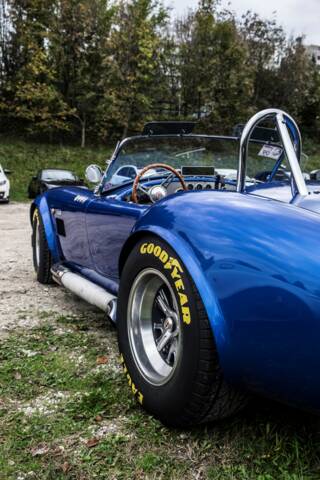
1989 | Unique Motorcars 289 FIA Cobra Replica
HARD TOP "LE MANS"-V8 FORD 289

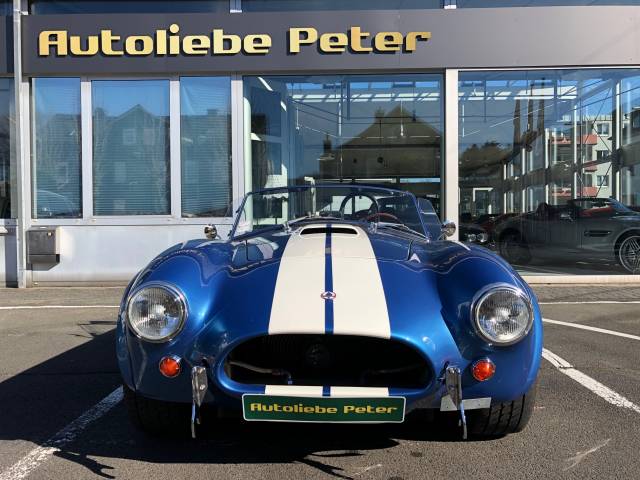
1964 | Unique Motorcars 289 FIA Cobra Replica
289 FIA 5.0 V8 (Unique Motorcars Replica)

Create search alert
Let yourself be notified as soon as a listing is published that matches your search filters.
Create listing
Do you have a Unique Motorcars that you want to sell? Then create a listing now.
Create listingHistory of an American replica specialist
Unique Motorcars is an American maker of Cobra-style kit and turnkey cars, rather than AC Cars or Shelby American and not a producer of 1960s Cobras. That distinction is fundamental. A Unique is a later-built specialist vehicle with its own manufacturer history, chassis identity and component list; it is not made more authentic by an advertisement that calls it a 1964 or 1965 Cobra.
The company’s roots lie in Phoenix, Arizona. Alan and Maurice Weaver and their family operated the Antique Car Restoration Center from 1976, restoring collector cars for private owners, museums and A & G Classic Cars. They also assembled Intermeccanica Speedster and Auburn Boattail replicas. Bill Close founded Unique Motorcars in their workshop, and the Weavers helped develop its body moulds and frame fixtures before acquiring the business in 1979. The factory’s own account says that the moulds were then redesigned, mould seams reduced and the frame lightened.
In 1981 the family moved production to Gadsden, Alabama. The company’s enduring products have been broad-bodied 427 S/C-style roadsters and, from 1991, the narrower 289 FIA-style car. In 1989 Unique retooled the 427 body, using photographs of original Cobras to refine the nose, wheel openings and symmetry. The 289 FIA followed after World of Fibreglass in Phoenix reshaped the concept into a competition-style body; it debuted at the 1991 AHA Knott’s Berry Farm kit-car show. The company also offered a 1936 Ford Cabriolet replica, but collector interest in the marque centres overwhelmingly on the Cobra-derived cars.
That longevity matters in a sector where many kit makers were short-lived. Unique supplied a spectrum from a minimum-order kit to a Deluxe Pallet Kit and a completed turnkey car. Consequently, no two examples should be assumed to be alike. A chassis may have left Alabama as a largely assembled rolling platform, then received its engine, transmission, trim, paint and final wiring from the owner, a specialist shop or Unique itself. The most desirable listing is therefore not necessarily the most aggressively described one, but the one whose build story is easy to prove.
For an Australian enthusiast, this is a particularly useful way to frame the car. The attraction is not a claim to be an original Shelby; it is access to the same basic drama—very low weight, exposed V8 character and open-roadster visibility—in a vehicle whose quality can be assessed on its own merits. Its year of manufacture for registration and compliance purposes is the year supported by its documents and physical identity, not the era its styling evokes.
Highlights of the Unique approach
Unique’s recipe is refreshingly direct: a hand-laid fibreglass body on a rectangular-section steel chassis, independent front suspension and usually Jaguar independent rear suspension, with Ford V8 power most commonly chosen by the builder. The factory FAQ describes 2 x 4-inch main rails with 0.120-inch wall thickness, outer 2 x 2-inch rails and additional bracing around the cowl and door-post structure. That is a substantial foundation, but it is only the beginning of an inspection; weld quality, corrosion protection and later alterations remain vehicle-specific.
The 289 FIA is the more delicate-looking proposition. It has the narrow competition silhouette, a trunk-lid dimple, forward-braced black roll hoop and, conventionally, a small-block Ford. Its Le Mans filler sits on the rear deck and its bodywork lends itself to a single transverse team stripe, quick jacks and a period hardtop. A 289 or 302 Ford, Toploader four-speed or Tremec five-speed can give it a lively, mechanical character without overwhelming the chassis.
The 427 represents the swollen-arch, maximum-theatre alternative. It generally has a smoother boot lid, filler cap in the right rear guard, twin centre stripes, larger side pipes and a rear-braced chrome hoop. It will accept a Ford small block or FE big block; 427 and 428 installations need the appropriate engine mounts, cooling package and exhaust. Unique has also supplied 427 bodies with modest small-block engines, so body badge and engine capacity should never be conflated.
Its deluxe package was more than a bare shell. Contemporary material lists a rolling chassis with powder-coated suspension, brake and fuel lines, a 20-gallon aluminium tank, a custom aluminium radiator, fitted doors, bonnet and boot lid, original-style windscreen frame, lighting, headers and side pipes. Leather seating and numerous authentic-looking fittings were available. This gives a sound factory baseline, but even a kit supplied in that form still relies on the standard of the final assembly.
Useful original-style details include the simple dash layout, Stewart-Warner-type instruments, side vents and the low windscreen. They contribute to the appeal, but they are not evidence of provenance. A carefully executed car with an honest Australian compliance history is preferable to a showy example with incorrect brake plumbing, unknown engine internals or a muddled VIN story.
Technical data: common configurations, not a fixed specification
The table is a buying framework, not a type approval. Factory information says its 427 kit could accommodate Ford small- and big-blocks, while the 289 was intended for most small-block engines; some manuals also list mounts for Chevrolet installations. A car can therefore have a 347-cubic-inch stroker, carburettors or injection, a different final drive, a rebuilt Jaguar assembly or completely different brakes. Ask for engine-block casting numbers, invoices for internal work, gearbox identification, differential ratio and brake-caliper details rather than relying on a seller’s power claim.
Nor does a quoted factory weight predict the weight of a particular car. Big wheels, a heavy iron FE engine, air conditioning, a hardtop, sound deadening and fuel all change it. The key practical outcome is that even a relatively restrained small-block Unique has an exceptional power-to-weight ratio, no stability control, a short wheelbase and little weather protection.
Market Overview & Buying Tips
The Unique market is international and thinly traded. It is better understood as individual, documented builds than as a uniform production-car price guide. Three 2025 Bring a Trailer sales provide concrete recent reference points: a 289 FIA with a 289 V8, Jaguar rear end, four-wheel discs and assembly documentation sold for US$41,200; a 427 with a 462-cubic-inch V8, four-speed, limited-slip differential, Jaguar IRS and Wilwood brakes sold for US$45,000; and a 347-stroker 289 FIA reached US$50,500. These are completed auction transactions, not valuations, and Australian landed cost can differ radically once freight, insurance, duty, GST, compliance work and state registration are included.
The stronger cars command attention because they make their history legible. Look for the original Unique sales invoice, chassis number and tag, kit manual, build-stage photographs, parts invoices, engine-builder paperwork, alignment and brake records, and continuous registration documents. If the car was imported, retain the import approval and shipping documentation together with Australian engineering and registration papers. A recent paint job without these basics should reduce confidence, not increase it.
Australian registration is a state and territory matter, so requirements must be checked with the authority where the car will be garaged. A newly constructed or substantially altered vehicle may be assessed as an Individually Constructed Vehicle (ICV) and may need engineering certification against applicable Australian Design Rules and state inspection requirements. An imported vehicle with an old foreign title is not automatically simple to register locally. Before sending a deposit, speak to the relevant state registration authority and a recognised automotive engineer about the specific chassis, manufacture date, engine, emissions equipment, lighting, windscreen, seatbelts, brakes, noise level and documentation. Do this before shipping, not at the first roadworthy inspection.
Also establish whether the advertised date is a styling reference, kit invoice date, completion date or first-registration date. Treat a US title describing “1965 Cobra” with care: it does not establish that the vehicle is a 1965 original, and it may not establish how an Australian authority will classify it. Match the chassis number on the frame and identification plate to every document. Any inconsistency warrants specialist advice and an independent pre-purchase inspection.
Start the physical assessment with the fibreglass and frame. Inspect beneath the paint at door hinges, bonnet and boot edges, wheel arches, roll-bar penetrations, body mounting points and side-pipe exits for stress cracks, crazing, repairs or heat distortion. Uneven panel gaps, ripples, fresh black coating on the underside or paint bubbles demand closer scrutiny. Fibreglass does not rust, but moisture can hide in the steel structure below it. Examine chassis rails, crossmembers, suspension pickups, engine mounts, steering mounts and every accessible weld for corrosion, distortion and amateur modifications.
Cooling, braking and fuel systems deserve special attention in Australian conditions. A high-compression V8 and a small frontal opening can make traffic, humid summer weather and long climbs unforgiving. Test from cold, then confirm stable coolant and oil temperatures after a proper drive; verify fan operation, radiator condition, hose routing, expansion-tank arrangement and absence of fuel smell or vapour lock. Side pipes and headers can expose occupants to extreme heat. Check that brake lines are clipped and protected, flex hoses are dated and uncracked, the pedal is firm, and the car stops straight. A vague pedal or wandering under brakes is not “old-car character”.
On a Jaguar IRS car inspect differential mounts, universal joints, half-shafts, hubs, bearings and lower-arm bushes. On the front, assess ball joints, rack mounts, wheel bearings, coil-over leakage and tyre wear. Low annual kilometres do not excuse hardened tyres; their age code, load rating and clearance on full lock matter more than their tread depth. A road test should include gentle and firm braking, a heat-soak restart, clutch engagement, gear changes and listening for driveline clunks on lift-off.
Finally, be honest about support. Ford small-block parts, Tremec servicing components and many Jaguar IRS parts are available in Australia through the performance, restoration and hot-rod trade. Unique-specific body panels, windscreen parts, interior trim and exact hardware may require US freight and patience. Price the car as a specialist vehicle that rewards an involved owner, not as a turnkey modern convertible.
Driving Feel: compact, vivid and physical
A Unique asks the driver to participate. The seat is low, the scuttle is close, the front guards define the view and the big steering wheel transmits texture rather than filtering it away. With a small-block 289 FIA, the experience can be surprisingly agile: the engine responds cleanly, the short gearing keeps the car alert and the narrower body feels less intimidating on a winding country road.
The 427 body changes the emotional scale. A well-sorted FE or stroker delivers a muscular shove from low rpm, exhaust noise rolls down the side of the car and the throttle must be treated as an analogue control rather than an on-off switch. In either version, tyres and setup govern the outcome. Cold tyres, rain, poor road surfaces and excess throttle can quickly turn a charismatic roadster into a demanding one. The best Unique is not the one with the largest advertised output, but one with calm steering, predictable brakes, a cool-running engine and a suspension tune that lets the driver use its performance.
Design and build philosophy
Unique deliberately follows the proportions that made the original Anglo-American sports racer so compelling: long bonnet, rearward cabin, abbreviated tail, exposed wheels and a plain functional cockpit. The two bodies make different arguments. The 289 FIA’s narrower flanks and competition details evoke a purposeful endurance racer; the 427 has the exaggerated arches, broader grille and planted stance associated with the big-block era.
Yet build execution is more important than decorative stripes, a roundel or knock-off-style wheels. Look for straight shut lines, secure windscreen mounting, tidy wiring, consistently finished fibreglass inside the wheel wells, properly supported exhaust and a cabin whose materials and fixings suit the car’s claimed build period. The 1989 427 retooling was intended to improve symmetry and reduce preparation work, but a later repaint can still conceal mediocre bodywork. An independent inspection is money well spent.
Summary
A Unique Motorcars roadster is a credible, long-running American Cobra-replica proposition, defined by hand-laid bodywork, robust steel chassis design and enormous scope for individual specification. The 289 FIA offers the leaner competition character; the 427 provides the broader, more forceful expression. Find a car with coherent factory, build, import and registration records, then inspect its chassis, fibreglass, cooling, brakes and driveline without assumptions. For an Australian buyer, that diligence is what turns a compelling V8 roadster into an enjoyable and registrable classic.