- Car
- Volkswagen
- Volkswagen Golf
- Volkswagen Typ 330 (2 offers)
Volkswagen Golf Typ 330 Classic Cars for Sale
The Volkswagen Golf Typ 330, better known as the Golf Mk3, arrived in 1991 as a front-wheel-drive hatchback with petrol and diesel engines, five-speed manual or automatic transmission, and a 55-litre fuel tank. Its range spans everyday 1.4- and 1.6-litre cars, the 115 hp and 150 hp GTIs, 1.9-litre TD/TDI diesels and the Cabriolet reintroduced for this generation in 1993.
Search results
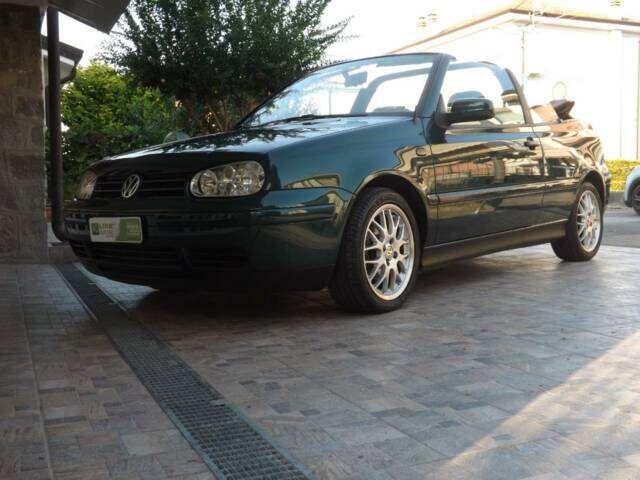


1996 | Volkswagen Golf III 2.0 GTI "Edition"
Golf 3 2.0 GTI Edition

Volkswagen Golf Typ 330 listing references from Classic Trader
Below you will find listings related to your search that are no longer available on Classic Trader. Use this information to gain insight into availability, value trends, and current pricing for a "Volkswagen Golf Typ 330" to make a more informed purchasing decision.
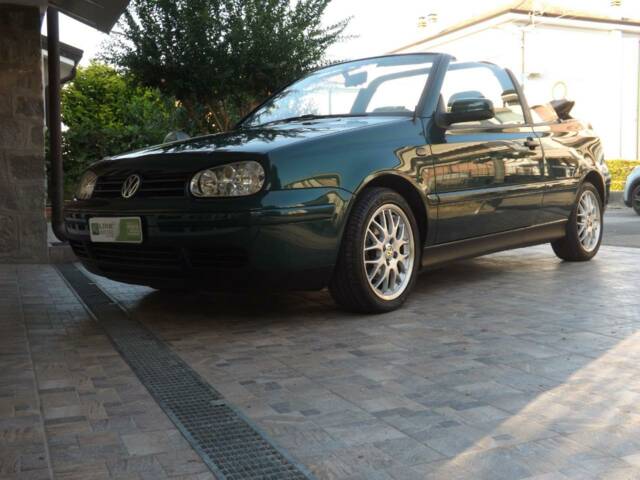
1998 | Volkswagen Golf III Cabrio 1.6

1993 | Volkswagen Golf III 1.8
Automatic Unique original condition - Retired vehicle until 07-2025

1996 | Volkswagen Golf III 1.8
Volkswagen Golf III – Einzigartiger Zustand,


1993 | Volkswagen Golf III 2.0 16V GTI

1992 | Volkswagen Golf III 1.4
Oldtimer wie frisch aus dem Werk

1996 | Volkswagen Golf III Cabrio 1.6

1995 | Volkswagen Golf III 2.0 16V GTI

1995 | Volkswagen Golf III Cabrio 2.0
Charity Lot: 1995 Volkswagen Golf Cabriolet Mk III Pink Floyd Edition - Offered Directly from Nick Mason CBE


1992 | Volkswagen Golf III 2.0 16V GTI
1992 Volkswagen Golf Mk. II GTi 16v

1994 | Volkswagen Golf III 2.0 16V GTI
VOLKSWAGEN Golf 2.0 16V cat 3p GTI
Volkswagen Golf Typ 330 Classic Cars: Prices & Market Values
Volkswagen Golf Typ 330: history
Volkswagen introduced the third-generation Golf in 1991. Known internally as Typ 330 and commonly called the Golf Mk3, it combined a more rounded front end with the distinctive four-headlamp arrangement. The model received the Car of the Year award in 1992.
The range was offered chiefly as a five-door or three-door hatchback, with front-wheel drive throughout. The Golf Cabriolet returned in 1993; there had been no Golf II Cabriolet, so this version replaced the previous-generation convertible. Cabriolet production continued until around 2000, beyond the main Golf III production period of approximately 1991 to 1997. The codes 1H and 1E are associated with the Golf III range.
Model history
The Golf Typ 330 followed the Golf II. Whereas the Golf II programme had no convertible, the Typ 330 range again included a Cabriolet from 1993, alongside the hatchbacks. Main-model production ran from 1991 to about 1997, while the open model remained available until around 2000.
Within the Typ 330 family, the choice extended from smaller petrol hatchbacks to GTI 8V and 16V versions, 1.9-litre turbo-diesel derivatives and the four-seat Cabriolet. This makes the body style and engine code particularly important when comparing a Golf Mk3 for sale.
Highlights of the Volkswagen Golf Typ 330
The Typ 330 paired a compact 418 cm body with a 248 cm wheelbase and five seats in hatchback form. The Cabriolet normally has four seats and an electrically operated or fully automatic soft top; equipment often included electric windows, central locking, alloy wheels, wind deflector and tinted glass.
At the sporting end, the 2.0-litre GTI was offered in 8-valve form with about 115 hp and 16-valve form with 150 hp. Period details can include BBS alloy wheels, Recaro sports seats, sports suspension, air conditioning, ABS and front or dual airbags, depending on trim and year.
Technical data
Special editions
The 20 Years GTI Anniversary Edition of 1996/97 is the most clearly identified special Golf Typ 330 in the supplied information. It combined anniversary badging and specific interior details with Recaro seats and BBS wheels. Other cars may be described by trim or appearance packages such as GT Look or GL, and period colours listed include Mystic Blue Pearl, Alpine White, Classicgrün and silver metallic. Verify the original specification through the service book, vehicle documentation and factory-equipment evidence rather than relying on badges alone.
Points to check before buying
No model-specific weak spots are provided in the source material. For a Golf Typ 330, the available information does underline the value of a comprehensive service history, factory maintenance booklet and documentation of periodic inspections such as the MOT or TÜV.
On a Cabriolet, establish whether the electrically operated or automatic soft top functions correctly and inspect the wind deflector, electric windows and central locking if fitted. For cars advertised with original paint, panels, BBS wheels, Recaro seats or a period VW Alpha/Gamma radio, confirm that these items are present and documented, as equipment differs substantially by trim and special edition.
Engines, transmission and driving characteristics
The Golf Mk3 used front-wheel drive with a five-speed manual gearbox as the usual arrangement; automatic transmission was also available on many models. Engine choice ranges from 1.4-litre petrol power to 2.0-litre GTIs and 1.9-litre TD/TDI diesels. Depending on version, quoted 0–100 km/h times are approximately 11 to 15.5 seconds, with top speeds from 163 to 193 km/h.
The 2.0 8V GTI offers around 115 hp, while the 2.0 16V reaches 150 hp. Sports suspension was available on GTI, sport and certain special-edition models. Consumption figures supplied for applicable variants are approximately 7.7 l/100 km combined, 10.9 l/100 km urban and 5.9 l/100 km extra-urban.
Notable versions:
- Golf GTI 8V — 2.0 litres and approximately 115 hp.
- Golf GTI 16V — 2.0 litres and 150 hp.
- Golf 1.9 TD/TDI — turbo-diesel alternative within the Typ 330 range.
- Golf Cabriolet — four-seat open version with electrically operated or fully automatic soft top. undefined
Design, interior and equipment
Compared with the Golf II, the Typ 330 has a rounder nose and its characteristic four-headlamp front treatment. The hatchback measures approximately 418 cm long and 168 cm wide, while the Cabriolet introduces a fabric roof designed for electrically operated or fully automatic operation and noted in the supplied information for insulation and ease of use.
Interior trims included fabric, velour or leather according to version. Equipment specified across the range includes a height-adjustable driver’s seat, split-folding rear seat, electric front and rear windows, headlamp levelling, heated washer nozzles, dust and pollen filter, trip computer, cruise control and manual or automatic air conditioning. GTI and edition cars may carry Recaro sports seats, BBS wheels, sports suspension and distinctive badging. Original VW Alpha or Gamma radios, as well as period Pioneer units, are among the audio equipment mentioned.
Registration and documentation
Later versions are listed with Euro 2 emissions classification, while earlier cars are listed as Euro 1. In markets where it applies, a Golf Typ 330 may be eligible for historic registration, subject to the local rules and the individual vehicle’s age and condition.
Original paintwork and body panels, documented service records and complete equipment are relevant details when assessing an individual car. Some cars in certain markets retained factory glass etched with the registration number.
Volkswagen Golf Typ 330 summary
The Volkswagen Golf Typ 330 is the 1991-on Golf Mk3, available as a hatchback or, from 1993, as a Cabriolet. It combines front-wheel drive, five-speed manual or optional automatic transmission, petrol engines from 1.4 to 2.0 litres, 1.9-litre turbo-diesel options and GTI outputs of approximately 115 or 150 hp. When comparing cars for sale, distinguish 1H and 1E variants, verify the original equipment and service documentation, and identify whether a claimed GTI or anniversary specification is supported by the car’s records.