- Car
- Volkswagen
- Volkswagen Golf
- Volkswagen Typ 155 (10 offers)
Volkswagen Golf Typ 155 classic cars for sale
The Volkswagen Golf Typ 155 is the Karmann-built Golf Mk1 Cabriolet, produced from 1979 until 1993. Its fixed rollover hoop, known in Britain as the “basket handle”, reinforced the open body and gives this four-seat Golf Cabriolet its instantly recognisable profile.
Search results
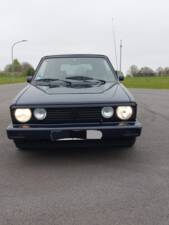
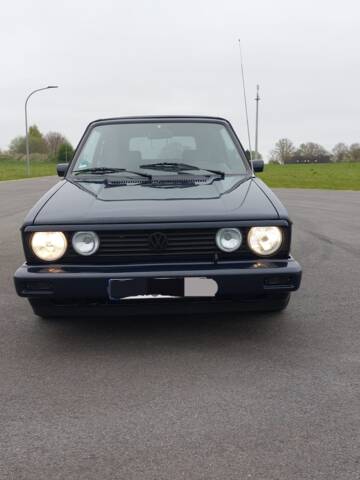
1989 | Volkswagen Golf Mk I Convertible 1.8
Golf 1 convertible classic with H registration

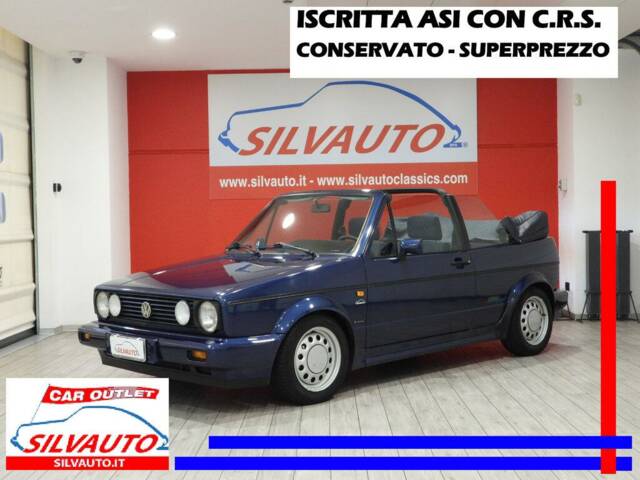
1993 | Volkswagen Golf Mk I Convertible 1.8
VOLKSWAGEN GOLF CABRIOLET 1.8 MKI ”YOUNG LINE” (1993) ISCRITTA ASI CON C.R.S. – SICURA RIVALUTAZIONE – SUPERPREZZO

Auctions ending soon

Loading…
Loading…
Loading…
Loading…
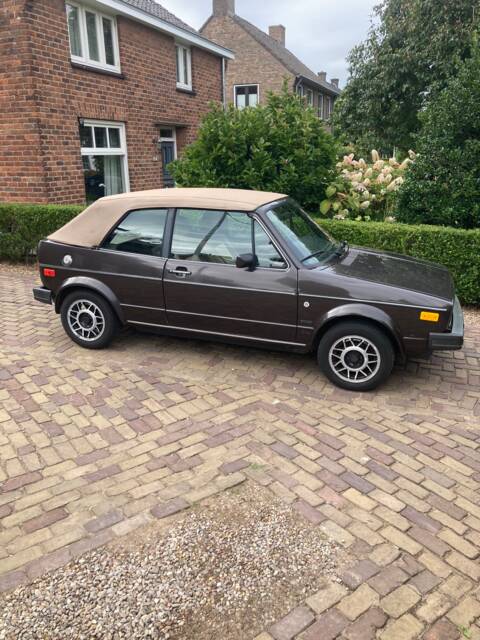
1986 | Volkswagen Golf I Cabrio GLi 1.8
Rare Golf 1 Cabriolet Limited Edition Wolfsburg

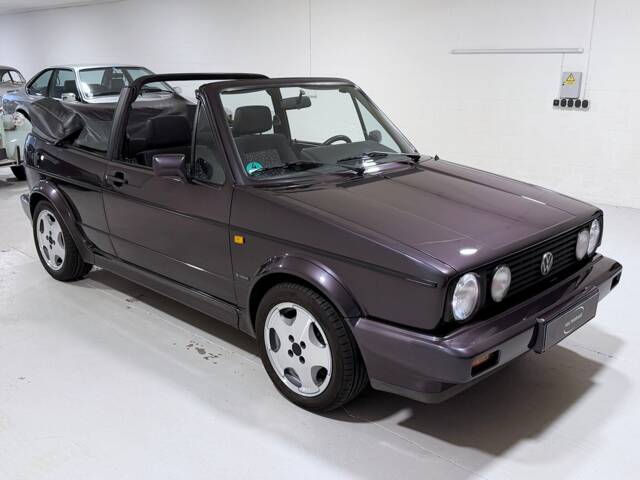
1993 | Volkswagen Golf Mk I Convertible 1.8
VW Golf I Cabrio Special Edition „Fashionline“
Newsletter
The best Volkswagen listings, straight to your inbox
Get hand-picked Volkswagen listings, plus the best of cars, motorbikes, and auctions on Classic Trader — all in one place.
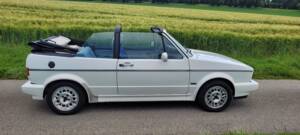
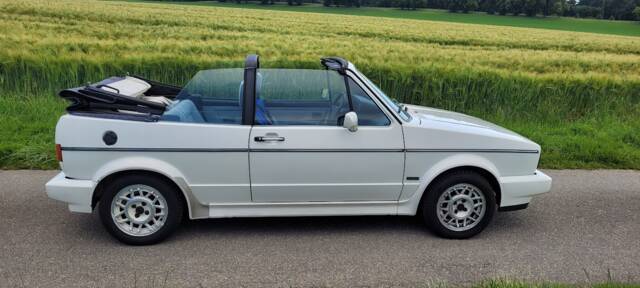
1988 | Volkswagen Golf Mk I Convertible 1.8
1988 Golf 1 Cabriolet · Karmann · Original paint · only 2 previous owners · very good convertible top · H-plate assessment and HU freshly completed in August 2026
VAT is reclaimable


1990 | Volkswagen Golf Mk I Convertible 1.8
Volkswagen Golf Cabriolet 1.8 Clipper

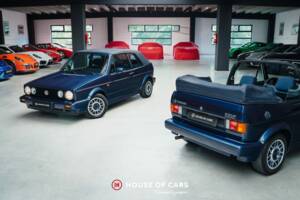
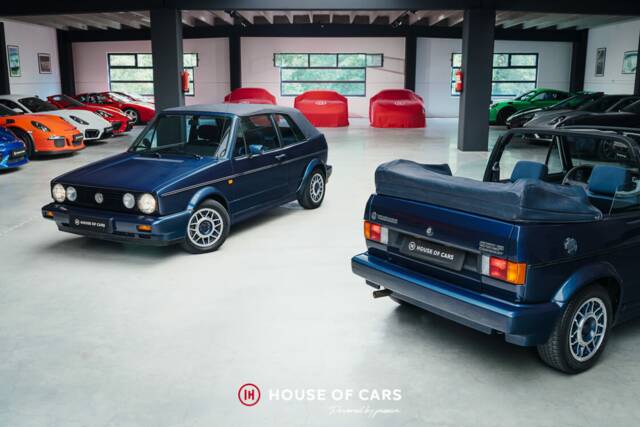
1992 | Volkswagen Golf I Cabrio GLi 1.8
Cabriolet 1992 – Low mileage – Triple blue


1981 | Volkswagen Golf Mk I Convertible 1.5
EXCELLENT !!!!


1990 | Volkswagen Golf Mk I Convertible 1.8
Sondermodell Quartett


1987 | Volkswagen Golf Mk I Convertible 1.6
Golf 1 Cabrio Typ 155
Volkswagen Golf Typ 155 listing references from Classic Trader
Below you will find listings related to your search that are no longer available on Classic Trader. Use this information to gain insight into availability, value trends, and current pricing for a "Volkswagen Golf Typ 155" to make a more informed purchasing decision.
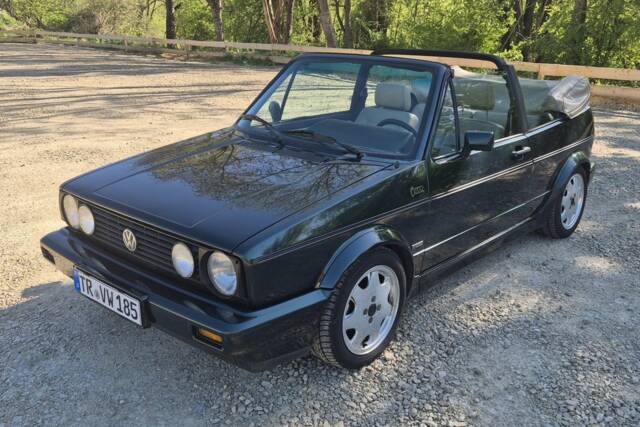
1991 | Volkswagen Golf Mk I Convertible 1.8
Volkswagen Golf Cabriolet Classic Line | 1991 | Route 66 Auctions - For sale by auction. Estimate 5400 EUR
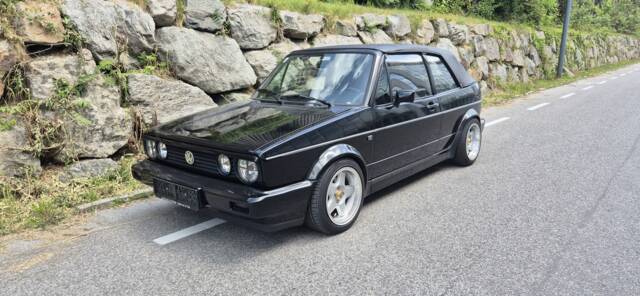
1993 | Volkswagen Golf Mk I Convertible 1.8
Cult Youngtimer

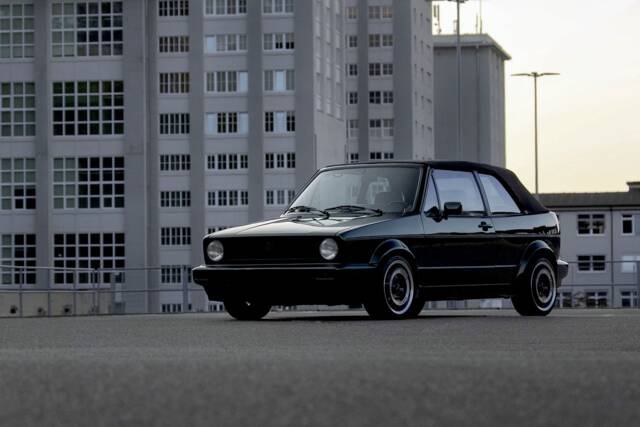
1991 | Volkswagen Golf Mk I Convertible 1.8
Classic Line | Engine rebuilt | Technology renewed
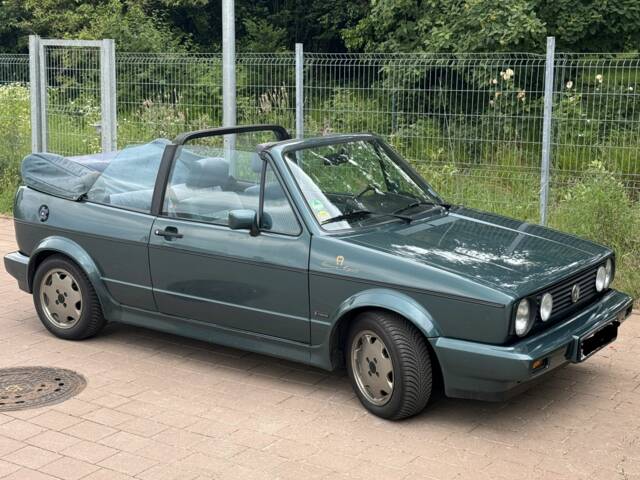
1990 | Volkswagen Golf Mk I Convertible 1.8
Etienne Aigner 1. Hand unrestaurierter Originalzustand

1991 | Volkswagen Golf I Cabrio GLi 1.8
Geheel origineel en inclusief alle opties!
Volkswagen Golf Typ 155 Classic Cars: Prices & Market Values
History of the Volkswagen Golf Typ 155
Volkswagen introduced the Golf Mk1 Cabriolet in 1979. While the Golf hatchback moved on to the Mk2 platform, the open Golf remained in production on the original Mk1 basis until 1993. This unusually long production run makes the Typ 155 a bridge between two Golf generations.
Karmann in Osnabrück carried out the conversion and assembly. Removing the hatchback’s roof required more than fitting a hood: Karmann reinforced the sills and floor structure, then added the permanent rollover hoop behind the front seats. The resulting profile earned the car nicknames including “strawberry basket” and, in English-speaking markets, “basket handle”.
The Golf Cabriolet combined the compact Mk1 footprint with a proper 2+2 cabin, front-wheel drive and a manually or electrically operated hood. Late-production Typ 155 examples date from August 1987 to October 1993, but the designation is also used for the wider Golf Mk1 Cabriolet family.
Model history
The Typ 155 is the Cabriolet derivative of the first-generation Golf. It retained the Mk1 platform after the Mk2 Golf hatchback arrived, rather than adopting the newer hatchback body structure.
Across its production life, trim and mechanical specification evolved from early cars with chrome or metal bumpers to later versions with plastic mouldings and larger bumpers. A mid-1980s facelift brought technical and visual updates. The range included standard versions, GL, GLI and GTI Cabriolets, with engines spanning 1.1-, 1.3-, 1.5-, 1.6- and 1.8-litre four-cylinder units depending on year and market.
Most cars were fitted with a five-speed manual gearbox. Four-speed manuals appeared on some early or export versions, while a three-speed automatic was also offered. The successor in the Golf Cabriolet story arrived after Typ 155 production ended in 1993.
Highlights of the Volkswagen Golf Typ 155
The defining engineering feature is the fixed rollover hoop. Together with reinforced sills and floorpan, it addressed the loss of stiffness caused by removing the fixed roof. It also leaves the rear glass window exposed above the folded hood, a detail unique to this Golf body style.
At roughly 3.89 metres long and 1.64 metres wide, the Cabriolet kept the compact proportions of the Golf Mk1. Yet it was certified as a four-seater and could tow up to 1,200 kg braked or 500 kg unbraked. Depending on version, equipment could include power steering, heated seats, sports seats, MFA trip computer, remote central locking and, on later cars, air conditioning.
Original, unmodified cars preserve the period details particularly well: VDO instruments, a rev counter or digital clock, factory radios such as VW Alpha or Gamma, and wheels ranging from steel rims to Ronal, Le Castellet, BBS or Avus alloys.
Technical data for the Volkswagen Golf Typ 155
Special editions of the Golf Typ 155
Volkswagen offered numerous named versions of the Golf Cabriolet, including Classic Line, Sportline, Genesis, Bel Air, Fashionline, Etienne Aigner and Quartett. Their distinction lies chiefly in specified paint, hood, upholstery, wheels and badges rather than a different body structure.
The late Classic Line combined selected metallic colours such as Flash Red Metallic or Classic Green Metallic with a red soft top, beige leather upholstery, Le Castellet alloy wheels and dedicated badging. The Etienne Aigner was a luxury-oriented edition identified by jacquard upholstery woven with Aigner motifs, green heat-insulating glass and exclusive Le Castellet alloys.
The GTI Cabriolet was the performance-focused specification: its 1.8-litre eight-valve DX engine used K-Jetronic injection and produced 112 hp. Sports suspension, alloy wheels and supplementary gauges accompanied the engine.
Weak spots and checks before buying
Corrosion inspection is central when assessing a Golf Typ 155. Particular attention is warranted at the wheel arches, body end sections and windscreen frame; factory cavity protection does not prevent age-related rust repairs in these areas. Check the reinforced sills and floor carefully, as these components are fundamental to the Cabriolet’s structure.
Inspect the hood for wear, operation and fit, whether manual or electric, and verify the condition of the heated glass rear window. Interior trim, electrical equipment and weather sealing can show age-related deterioration. Period equipment such as central locking, MFA, instruments, heated seats and air conditioning should be tested individually where fitted.
Originality matters when identifying special editions. Confirm that wheels, upholstery, hood colour, badges and optional equipment correspond with the claimed version. Useful supporting items can include the V.A.G. owner’s manual, service book, radio documentation and a Volkswagen AutoMuseum Foundation birth certificate.
Engines, transmission and driving character
The Golf Typ 155 uses front-wheel drive and a compact four-cylinder engine range. Its character changes markedly with specification: a 1.1-litre early car serves a different purpose from a fuel-injected 1.8-litre GTI or GLI. The majority use a five-speed manual, while four-speed manuals and three-speed automatics are also found.
Karmann’s reinforcements and rollover hoop distinguish the Cabriolet structurally from the hatchback. The open body adds weight compared with a fixed-roof Golf, but the Cabriolet remained a relatively light car at 963–1,006 kg depending on version. It was conceived for open-air touring rather than outright performance.
Notable versions:
- 1.8 GTI Cabriolet (DX) — 1.8-litre, eight-valve K-Jetronic injection engine with 112 hp; sports suspension, alloy wheels and extra gauges.
- 1.8-litre carburettor or injection models — 90–112 hp depending on engine and specification, including 2H injection and EX carburettor variants.
- GLI — higher-output 1.6- or 1.8-litre specifications, depending on model year and market. undefined
Body, hood and interior design
The Golf Cabriolet’s silhouette is defined by the permanent rollover hoop, short rear deck and fabric hood. Early examples use chrome or metal bumpers; later cars gained plastic mouldings and larger bumpers. This makes bumper treatment a useful clue to a car’s production period.
Inside, the cabin retains the straightforward Golf Mk1 layout with analogue controls. Upholstery ranged from cloth, including early chequered patterns, to vinyl and leather. Special editions introduced jacquard fabrics, colour-coordinated interiors and, in some cases, Recaro sports seats.
Hood materials included Sonnenland fabric, with colours varying by version. The Classic Line’s red hood and beige leather cabin are among the most identifiable factory combinations. Factory and period-correct accessories may include fog lamps, tinted glass, an MFA computer, a VW or Blaupunkt radio, and BBS, Ronal, Le Castellet or Avus wheels.
Documentation and identification
For many European-market Golf Cabriolets, the VIN begins WVWZZZ15Z. This can assist with identifying the correct Golf Cabriolet family, although specification should also be verified from the vehicle itself and its documentation.
Later catalytic-converter-equipped cars may meet higher emissions standards than earlier Euro 0-equivalent versions. As with other cars of this age, registration and emissions requirements depend on the country of registration. A large enthusiast community and broad parts availability support ongoing maintenance and restoration.
Volkswagen Golf Typ 155 summary
The Volkswagen Golf Typ 155 is the long-running Golf Mk1 Cabriolet built by Karmann from 1979 to 1993. Its reinforced body, fixed rollover hoop, four-seat layout and front-wheel-drive Golf mechanicals set it apart from the Mk1 hatchback.
Buyers can choose from modest early engines through to the 112 hp 1.8 GTI Cabriolet, plus well-specified editions such as Classic Line and Etienne Aigner. When comparing cars for sale, inspect rust-prone body areas and the hood carefully, then verify the claimed trim against its upholstery, wheels, badges and paperwork.