Ford Rural classic cars for sale
The Ford Rural combines robust off-road capability with practical utility, reflecting a long-standing heritage rooted in both North and South American automotive history. Easy to recognise thanks to its rugged, angular silhouette, the Rural attracts enthusiasts seeking a genuine utility classic with authentic 4x4 pedigree.
Search results
Currently, there are no matching listings for your search.
Create search alert
Let yourself be notified as soon as a listing is published that matches your search filters.
Create listing
Do you have a Ford Rural that you want to sell? Then create a listing now.
Create listingFord Rural listing references from Classic Trader
Below you will find listings related to your search that are no longer available on Classic Trader. Use this information to gain insight into availability, value trends, and current pricing for a "Ford Rural" to make a more informed purchasing decision.
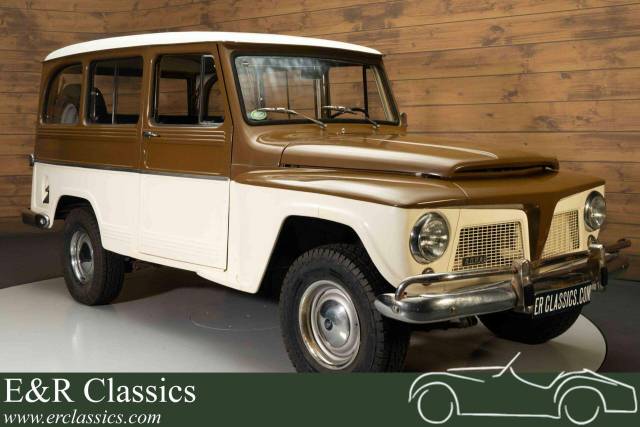
1972 | Ford Rural
Ford Rural Willys | Jaren 70 Station Wagon | 1972
Create search alert
Let yourself be notified as soon as a listing is published that matches your search filters.
Create listing
Do you have a Ford Rural that you want to sell? Then create a listing now.
Create listingFord Rural Classic Cars: Prices & Market Values
Introduction and history of the Ford Rural
The Ford Rural developed its identity within the unique context of the South American market, particularly in Brazil, where it was produced as a locally-adapted continuation of the Willys Jeep Station Wagon. Building on the foundation of the all-steel bodywork pioneered by Willys post-World War II, the Rural became an integral part of life in rural and agricultural regions. With Ford taking over production after acquiring Willys-Overland do Brasil, the model endured well into the 1970s, representing a blend of American design philosophy and local engineering requirements. The Rural's history is inseparable from the rise of utility-focused passenger vehicles, especially as global demand for versatile, off-road-capable family cars accelerated.
Model History
The Rural's development started under Willys as part of the Jeep Station Wagon lineage, with American production running from 1946 to 1964. In Brazil, production continued beyond this point as the Willys Rural, eventually transitioning to the Ford Rural after Ford acquired the local Willys operations. The Rural saw various updates—most notably, subtle design tweaks and technical improvements adapting the model for evolving consumer needs and local road conditions. Its durability and utility kept it in production until 1977 in Brazil, making it one of the longest-running derivatives of the Jeep Station Wagon worldwide.
Highlights of the Ford Rural
The Ford Rural stood apart for being among the earliest mass-market all-steel station wagons built for genuine off-road and multi-passenger use. Its ladder frame, leaf-sprung axles, and 4x4 drivetrain (in the Utility variant) set new standards for durability in utility vehicles. The straightforward, accessible mechanicals still appeal to classic utility enthusiasts who value serviceability over flash. In South America, its reputation for reliability and adaptability on challenging terrain made it a favoured vehicle for both work and family transport.
Technical Data
Special Editions and Collectible Models
Certain editions of the Rural were produced for specific commercial or government purposes, often with reinforced frames or specialist equipment. However, the core value comes from variants adapted to local needs—such as ambulance or utility conversions, which today are rare and sought after for their uniqueness.
Weak Spots and Common Issues
Maintenance on the Ford Rural tends to be straightforward due to its simple construction and mechanical layout. However, age and usage in harsh environments mean that rust in the bodywork and chassis, worn bushings in the suspension, and neglected drivetrain maintenance are areas requiring careful inspection. Parts availability remains reasonable in Brazil, but rarer elsewhere.
Engine and Performance, Transmission and Handling
The Ford Rural's mechanical package was built for handling rough terrain and heavy loads rather than high speed or agility. The leaf-sprung suspension, low-range gearbox option (in 4x4 versions), and torquey engines prioritise traction and robustness. Steering is heavy by modern standards, with ample feedback. Comfort is spartan, but off-road and load-carrying capabilities remain notable, especially compared to other contemporaries in this segment. Models equipped with the inline-six engine and factory four-wheel-drive system are highly regarded for their performance off-road and under load, often specified for commercial or agricultural applications.
Interior, Comfort, Exterior and Design
The Ford Rural's design remains unmistakable with its blocky, upright lines and functional, no-nonsense steel body. Interiors are sparse, but provide ample space and utility. Special Brazilian-market paint finishes and hard-wearing upholstery materials reflect adaptations to local climate and usage. Options frequently included additional seating or cargo configurations, and period accessories like roof racks or tow packages.
Other Relevant Features
International production and local assembly distinguish the Rural from many other classics, enabling it to be tailored for distinct market needs. Its role in daily life—particularly in Brazil—makes it a cultural automotive touchstone far beyond its original American roots.
Summary
The Ford Rural epitomises the evolution of the station wagon into a true multi-purpose vehicle, bridging the gap between agricultural utility and everyday family transport. Its continued popularity in supply and demand statistics highlights a strong, targeted interest from classic car buyers seeking reliable and characterful utility vehicles.