- Car
- Mercedes-Benz
- Mercedes-Benz L 1924 (1 offer)
Mercedes-Benz L 1924 classic trucks for sale
The Mercedes-Benz L 1924 belongs to the Schwerer Kurzhauber series—heavy short-bonnet trucks engineered for reliability and load capacity. As a representative of post-war German commercial vehicle development, the L 1924 distinguishes itself with robust construction, a powerful diesel engine, and unmistakable utilitarian design. It is particularly sought after by enthusiasts of historic trucks and those passionate about vintage commercial vehicles.
Search results
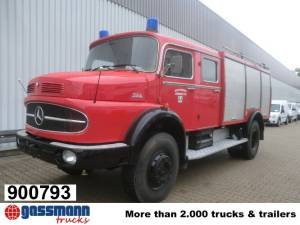
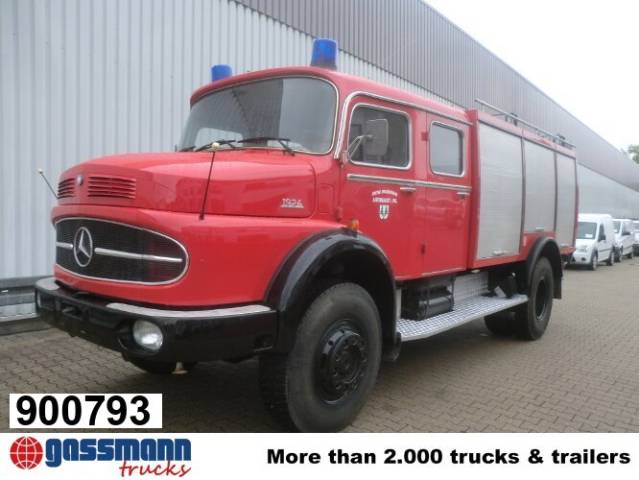
1974 | Mercedes-Benz LAK 1924
LAK 1924 4x4 TLF, Feuerwehr

Mercedes-Benz L 1924 Classic Cars: Prices & Market Values
History of the Mercedes-Benz L 1924
The Mercedes-Benz L 1924 emerged within the evolution of the 'Kurzhauber'—or short-nose—heavy truck series that had been part of the Daimler-Benz range since the 1950s. Developed for demanding logistics and construction work, this series served key roles in the economic boom and rebuilding efforts in post-war Germany. The L 1924 in particular was introduced as a response to increasing demands for payload and durability in harsh operating conditions. Its production contributed significantly to Mercedes-Benz's reputation for manufacturing long-lasting and hard-wearing vehicles in the European commercial sector.
Model history
The Schwerer Kurzhauber series, to which the L 1924 belongs, succeeded earlier bonneted truck lines as Mercedes-Benz transitioned to more compact and efficient models. The L 1924 itself is a development of the modular approach typical for Mercedes-Benz trucks in the era: utilising proven chassis with upgraded diesel engines and reinforced drivetrains. While various derivatives existed within the Kurzhauber family—each adapted for varying load requirements and regional regulations—the L 1924 was often considered the workhorse for especially heavy transport tasks before the arrival of the forward-control (cab-over-engine) NG series. Its particular place in the model hierarchy marked it as a bridge between older truck forms and the modern heavy-duty Mercedes-Benz lorries.
Unique characteristics of the Mercedes-Benz L 1924
This model stands out for its sheer durability—its ladder-type frame and leaf-sprung suspension set standards for longevity in the transport sector. The heavy-duty OM diesel engine ensured high torque at low revs, ideal for demanding off-road and construction site use. The L 1924's straightforward mechanics make it one of the most accessible classic trucks for restoration and maintenance. Visibility from the cab, the solid manual transmission, and a 4x2, 6x2 or 6x4 axle configuration, depending on specification, made it adaptable to a variety of commercial needs.
Technical Data
Special editions and collectible variants
As heavy-duty utility vehicles, the L 1924 typically came in standard trim suited for commercial operations. However, specialist bodybuilders occasionally converted these chassis for unique roles such as fire engines, long-haul transporters, or military applications. Vehicles preserved in their original configuration, particularly ex-fire brigade or municipal service trucks, are of special interest to collectors.
Weaknesses and known issues
With their utilitarian focus, the L 1924’s weak spots are minimal but age-related issues such as corrosion on the chassis and cab, as well as wear on the transmission and braking system, should be checked thoroughly. The simplicity of mechanicals makes repairs manageable for owners experienced with commercial vehicle technology.
Engine, performance, transmission, and handling
The L 1924 offers practical performance suited to heavy commercial work. The powerful OM diesel engine delivers reliable output even at high gross weights, and the multi-speed manual gearbox supports both highway and off-road logistics tasks. Handling is typical for vehicles of this class, with a focus on stability and durability rather than comfort or agility. Noteworthy in the series are the various drivetrain configurations, which allowed customisation for diverse operational demands. Within the Kurzhauber family, the L 1924 stands out for its engine output and reinforced construction, often making it the preferred option for the most demanding duties compared to lighter variants.
Cab, comfort, interior, and exterior design
Design in the L 1924 is dominated by function: the cab’s short bonnet ('Kurzhauber') layout not only improves manoeuvrability but also maximises visibility. Interior equipment is spartan, focused on ease of operation and durability—ideal for long hours under demanding conditions. Externally, the massive grille, large fenders, and exposed chassis details highlight its utilitarian character. Paint schemes were typically dictated by end-users, with fleet operators and municipal bodies often specifying unique colours, and custom accessories such as additional lights, toolboxes, and body modifications tailored for specific industry requirements.
Further relevant features
Given its modular construction and adaptability, the L 1924 offers numerous possibilities for classic commercial status conversions, ranging from period-accurate flatbeds to contemporary show trucks. Its mechanical layout also means parts sourcing can often be handled using components from later Mercedes commercial vehicles.
Summary
The Mercedes-Benz L 1924 stands as a pillar in the history of German heavy commercial vehicles, valued for its uncompromising durability, straightforward engineering, and reliable performance. Particularly attractive for those interested in commercial automotive history, it remains a key representative of the robust and practical lorry engineering from Mercedes-Benz.