Volvo PV 36 Classic Cars for Sale
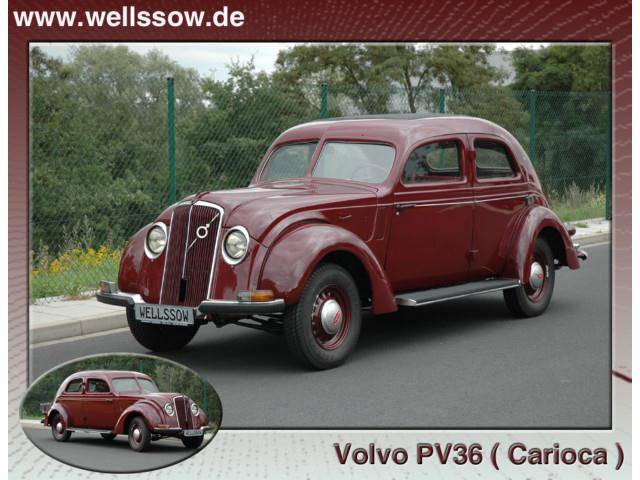
The Volvo PV 36, also known as the Carioca, is a luxury vehicle produced in limited numbers between 1935 and 1938. Characterised by groundbreaking aerodynamics and robust engineering, this rare model stands out for collectors and enthusiasts seeking true pre-war innovation and exclusivity.
Search results
Currently, there are no matching listings for your search.
Create search alert
Let yourself be notified as soon as a listing is published that matches your search filters.
Create listing
Do you have a Volvo PV 36 that you want to sell? Then create a listing now.
Create listingVolvo PV 36 listing references from Classic Trader
Below you will find listings related to your search that are no longer available on Classic Trader. Use this information to gain insight into availability, value trends, and current pricing for a "Volvo PV 36" to make a more informed purchasing decision.
1936 | Volvo PV 36
Oldtimer Volvo PV 36 Carioca
Create search alert
Let yourself be notified as soon as a listing is published that matches your search filters.
Create listing
Do you have a Volvo PV 36 that you want to sell? Then create a listing now.
Create listingVolvo PV 36 Classic Cars: Prices & Market Values
History of the Volvo PV 36
The Volvo PV 36 was developed under the guidance of engineer Ivan Ornberg and introduced as Volvo's answer to the rapidly modernising automotive world of the mid-1930s. Launched between 1935 and 1938, the PV 36 was a leap ahead for the Swedish manufacturer, aiming to appeal to affluent customers such as lawyers, executives, and doctors. With a production run of only 500 units—of which 18 went to the Swedish police—the PV 36 was never intended for mass-market appeal. Instead, it showcased Volvo's ambitions in the luxury segment. The moniker 'Carioca' was not just a nod to the contemporary dance craze in Sweden, but also a subtle reference to the vehicle’s popularity in Brazil, where several units were exported. Despite its advanced design, the high price meant some examples remained unsold, cementing its reputation as a car for the well-heeled and marking it as a standout in Volvo’s early history.
Model History of the PV 36
The inception of the PV 36 marks a significant turning point in Volvo’s production philosophy. Unlike its predecessors, which favoured more utilitarian or conservative designs, the PV 36 embraced modernity and innovation in both form and function. Its immediate predecessor did not benefit from the same aerodynamic advances or luxury features. Designed as a separate-frame car with a striking streamlined body, the PV 36 set standards not just for Volvo, but for Swedish automotive engineering in the pre-war era. Its relatively short production window, high cost, and subsequent rarity mean there was no direct successor with the same stylistic ambitions—later models would return to more conservative design before post-war innovation resumed.
Highlights of the Volvo PV 36
The PV 36 broke new ground for Volvo. It featured a fully steel-pressed body and a separate frame—a contrast to many contemporaries that were still using more traditional coachbuilding methods. Aerodynamic influences, notably from the Chrysler Airflow, are apparent in its flowing lines and sloped rear. The car’s 3.67-litre flathead six-cylinder engine provided 80–84 hp, transmitted via a three-speed manual gearbox. It was the first Volvo to offer independent front suspension—a considerable leap in ride comfort and handling for the era. Other distinguishing characteristics include its V-shaped bumpers, imposing chromed grille, and an externally mounted spare wheel in the boot. These elements were considered premium features in the 1930s, reflecting both technical and stylistic prowess.
Technical Data
Special Editions and Collectible Models
The PV 36 had no formal special editions; however, several notable variants exist. Among the 500 units produced, 18 were delivered specifically to the Swedish police as patrol vehicles—a rare use case for such a luxury car in its era. Models exported to Brazil have an added touch of historical significance, given the Carioca’s namesake and its connection to the South American market. These variants are especially prized by collectors for their provenance and unique backstory.
Engine and Performance, Transmission and Handling
The PV 36 was fitted with a 3,670 cc six-cylinder flathead engine, producing up to 84 hp, paired with a three-speed manual gearbox. Unlike earlier Volvos, the PV 36 introduced independent front suspension, significantly contributing to smoother ride quality and better road holding—especially significant for a luxury car of the 1930s. The longitudinal chassis and robust body construction deliver remarkable stability for the period, while the drum brakes on all four wheels provide adequate stopping power for contemporary speeds. While all PV 36 variants share core technical features, the Swedish police cars and the Brazil-exported models remain the most intriguing, due to their unique provenance.
Interior, Comfort, Exterior and Design
The PV 36 stands out for its streamline-inspired exterior, a direct homage to the contemporary Chrysler Airflow. Its large, chromed grille and separated headlamps make an immediate visual impression. The body’s pressed steel construction, at a time when most vehicles still relied on wooden frames and partial steel cladding, signified modernity and luxury. Inside, the interior was designed for affluent clientele, offering comfort and materials commensurate with its price tag: plush seating, a spacious cabin, and attention to ergonomic detail. Distinctive details such as the V-shaped bumpers, inclined rear window, and externally mounted spare wheel complete the package, reinforcing both form and function. Special equipment like the innovative luggage compartment with external spare wheel underlines the practical aspects of the design.
Other Relevant Features
The PV 36 was named after a famous dance, matching the cosmopolitan appeal Volvo sought for its clientele. Its introduction coincided with a wave of Art Deco influences seen in European luxury vehicles, positioning it as a symbol of 1930s progress and taste. The limited number of survivors adds to the vehicle’s mystique and appeal among knowledgeable collectors.
Summary
The Volvo PV 36 is an outstanding example of pre-war Scandinavian engineering and design. Its rarity, innovative features for the period, and strong connection to both Swedish and Brazilian history mark it as an important milestone in Volvo’s early evolution. Well-preserved examples are highly prized by enthusiasts who appreciate authentic luxury motoring from the 1930s.