Opel 1,3 Litre classic cars for sale
The Opel 1,3 Litre impresses enthusiasts with its rare presence on today’s classic car market and its distinctive pre-war engineering. This model offers a fascinating glimpse into Germany’s automotive landscape of the late 1930s, combining robust mechanical technology with design elements that unmistakably mark Opel’s pre-war period. Discover the details that set the Opel 1,3 Litre apart from other vintage models.
Search results
Currently, there are no matching listings for your search.
Create search alert
Let yourself be notified as soon as a listing is published that matches your search filters.
Create listing
Do you have a Opel 1,3 Litre that you want to sell? Then create a listing now.
Create listingOpel 1,3 Litre listing references from Classic Trader
Below you will find listings related to your search that are no longer available on Classic Trader. Use this information to gain insight into availability, value trends, and current pricing for a "Opel 1,3 Litre" to make a more informed purchasing decision.
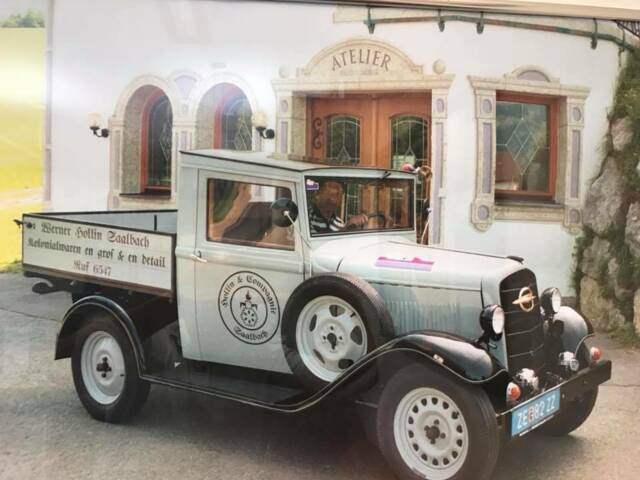
1954 | Opel 1,3 Litre
Geschäftswagen 1397

Create search alert
Let yourself be notified as soon as a listing is published that matches your search filters.
Create listing
Do you have a Opel 1,3 Litre that you want to sell? Then create a listing now.
Create listingOpel 1,3 Litre Classic Cars: Prices & Market Values
History of Opel 1,3 Litre
The Opel 1,3 Litre entered the market in the 1930s, marking an era where Opel was progressively shaping its identity within the German automobile industry. Exhibiting innovative features for its time, the 1,3 Litre played a significant role in expanding Opel's line-up with a vehicle aimed at the middle-class segment. Its launch coincided with a time of considerable socio-economic shifts, and cars of this size became particularly desirable for families seeking reliability and manageable upkeep costs. Despite restricted production numbers due to the political changes leading into WWII, the 1,3 Litre embodies pre-war Opel characteristics in both technology and style.
Model History
Within Opel’s line-up, the 1,3 Litre represented a bridging step between the smaller 1,2 Litre and the larger 1,8 Litre or 2,0 Litre models. While the 1,2 Litre had gained popularity as a practical small car, the 1,3 Litre’s added power and comfort made it attractive for more demanding buyers during its run. Successor models would eventually see engine updates and bodywork evolution, but the 1,3 Litre is remembered for its balance between simplicity and robust construction. Surviving examples are limited, reflecting how a turbulent period in history impacted automotive production.
Highlights of the Opel 1,3 Litre
Central to the Opel 1,3 Litre’s allure are its pre-war engineering solutions, including a sturdy chassis, reliable overhead-valve engine, and craftsmanship that defined mid-1930s Opel vehicles. The model stands out with its period-correct detailing, such as chrome accents and a body shape referencing the Art Deco movement. Its relative scarcity today amplifies its appeal to collectors and enthusiasts seeking a window into the automotive culture of pre-WWII Germany.
Technical data
Special Editions and Collectible Models
Available information does not indicate special limited editions or unique variants produced under the 1,3 Litre badge. Most vehicles remaining today are appreciated for their originality and historic accuracy rather than model variants.
Weak Spots and Common Issues
Due to the pre-war construction and materials used, prospective buyers should inspect thoroughly for corrosion, especially on the frame and underbody. Replacement parts availability is increasingly limited, requiring resourcefulness or the support of historic Opel specialists. Pay close attention to the condition of the drivetrain and suspension systems, as these can be costly to restore if neglected.
Engine and Performance, Transmission and Handling
The 1,287 cm³ engine provides a harmonious combination of modest performance and reliability for vehicles of its time, sufficient for relaxed cruising. The manual gearbox with non-synchronised gears demands a deliberate driving style—a throwback to pre-war motoring dynamics. The suspension is optimised for resilience rather than sportiness, and cornering requires anticipation due to body roll and period-typical narrow tyres. The standard saloon (Limousine) body style is the best-documented version, recognised for its fundamental engineering and honest driving experience. Some surviving 1,3 Litre cars have been restored with period-correct details, maintaining the original mechanical setup for authenticity.
Interior, Comfort, Exterior, and Design
Stylistically, the Opel 1,3 Litre displays a blend of rounded body lines and defined grille symmetry typical of 1930s Germany. The dashboard and interior trim utilise straightforward materials such as painted steel and basic fabrics, aimed at practicality and ease of manufacture. The car’s design rarely varied outside standard configurations, but factory options like colour choices and electrical fittings were available to the original buyers. Enthusiasts value cars with original paintwork or interior features, as changes over the decades alter historical context.
Other Relevant Features
Many examples have survived thanks to dedicated preservationists who value Opel’s contribution to pre-war German engineering. The 1,3 Litre occasionally appears in classic rallies and exhibitions as a testament to the everyday vehicles of an era often overshadowed by more luxurious contemporaries.
Summary
The Opel 1,3 Litre encapsulates a unique chapter in Opel’s history, representing pre-war pragmatism and engineering in the classic car market. Its rarity, combined with honest mechanical design and genuine period aesthetics, make it a stand-out choice for collectors determined to own an authentic piece of the German pre-war automobile history.