Citroën Berlingo classic cars for sale
The Citroën Berlingo stands out as one of the most versatile and practical vehicles in the classic segment, seamlessly blending commercial utility with the flexibility of a family car. Designed as both a light van and a multi-purpose passenger vehicle, the Berlingo is prized by enthusiasts for its clever engineering, straightforward mechanics, and robust everyday usability.
Search results
Currently, there are no matching listings for your search.
Create search alert
Let yourself be notified as soon as a listing is published that matches your search filters.
Create listing
Do you have a Citroën Berlingo that you want to sell? Then create a listing now.
Create listingCitroën Berlingo listing references from Classic Trader
Below you will find listings related to your search that are no longer available on Classic Trader. Use this information to gain insight into availability, value trends, and current pricing for a "Citroën Berlingo" to make a more informed purchasing decision.
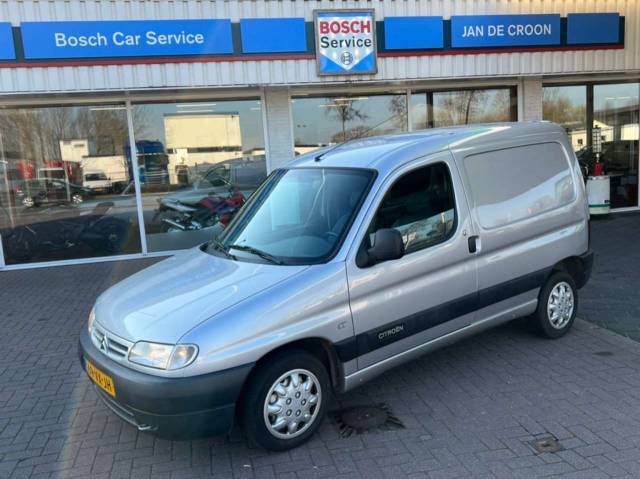
2001 | Citroën Berlingo 1.9 D
Citroen Berlingo 1.9d bestelwagen 155dkm 1e eig. marge #RIJKLAAR
Create search alert
Let yourself be notified as soon as a listing is published that matches your search filters.
Create listing
Do you have a Citroën Berlingo that you want to sell? Then create a listing now.
Create listingCitroën Berlingo Classic Cars: Prices & Market Values
Introduction and history of Citroën Berlingo
The Citroën Berlingo debuted in 1996 as a fresh approach to the light van and MPV (multi-purpose vehicle) concept. Conceived under PSA Group and produced in cooperation with Peugeot (Peugeot Partner), the model immediately set new standards for compact utility vehicles. The Berlingo’s success stemmed from its modularity—available both as a commercial van and as a passenger car with rear seats and increased glazing—answering a broad range of transportation needs. It quickly gained popularity across Europe due to its practicality, ease of maintenance, and characteristic French engineering. With each generation, from the original through to the current Stellantis-era models, the Berlingo has adapted to new regulatory requirements and user expectations, including expanding its reach with rebadged versions under Vauxhall, Opel, Toyota, and Fiat.
Model history
Launched in 1996, the Berlingo I was the result of a growing demand for compact vans that could double as family transport. Its predecessors in the Citroën range were traditional small vans, like the Citroën C15. The first generation Berlingo was produced until 2008, when it was succeeded by the Berlingo II, which further refined the formula with modernised styling and improved comfort. The Berlingo range has always remained closely tied to the Peugeot Partner, sharing platforms and mechanical components. Over time, the model family has expanded significantly: the third generation, from late 2018 onwards, includes versions badged under major international brands like Opel Combo, Vauxhall Combo Life, Toyota Proace City, and from 2022, the Fiat Doblò. Each generation kept updating safety features, efficiency, and interior versatility to maintain its relevance in both commercial and personal markets.
Highlights of Citroën Berlingo
The Berlingo’s defining feature is its modularity—quickly convertible between cargo hauling and comfortable passenger transport, it delivers both without unnecessary frills. With large sliding side doors and a low load deck, loading heavy or bulky items is straightforward. The high roof and versatile interior layout were ground-breaking in the compact van and MPV segments upon release. A five-speed manual gearbox, brisk acceleration (0–100 km/h in 11.2 seconds), and a maximum payload of 614 kg combine to make the Berlingo more than a practical runabout: it is a genuine workhorse adaptable for every environment.
Technical data
Special Editions and Collectible Models
Notable within the first-generation Berlingo range are the "Multispace" variants, which pushed the boundaries for comfort and utility, featuring additional glazing, modular seats, and more refined trim levels. Limited or special editions often included bespoke paint colours, enhanced stereo systems, or unique interior fabrics, distinguishing them from entry-level work vans. As collector interest grows, specific low-mileage Multispace versions and limited runs gain attention for their blend of practicality and period charm.
Weak Spots and Common Issues
Detailed documentation is key when considering a used Berlingo. Pay particular attention to evidence of hard commercial use, which can accelerate wear to suspension, brakes, and drivetrain components. The flexible interior mounting points and electrical systems can show signs of wear with high-mileage vehicles. Routine inspection of the clutch and gearbox is recommended, especially in high-mileage examples. Corrosion around the rear suspension mounting points and wheel arches also warrants attention.
Engine and Performance, Transmission and Handling
Typical Berlingo engines from this period deliver enough power to handle both urban stop-and-go driving and longer stretches at motorway speeds without stress. The 5-speed manual transmission is durable and geared for both city and open road use. Acceleration times are competitive for its class (0–100 km/h in 11.2 seconds), while front-wheel drive ensures stable and predictable handling even when fully loaded. The payload capacity of up to 614 kg and unbraked trailer limit of 500 kg make it exceptionally versatile for private or small business users. Popular examples include the Berlingo Multispace 1.6-litre petrol and 2.0-litre diesel models, praised for their balance between efficiency and everyday usability.
Interior, Comfort, Exterior and Design
The Berlingo is easily recognised thanks to its upright stance, pronounced front grille, and expansive glasshouse. The functional design language is unmistakably French, prioritising straightforward, practical features over luxury. Inside, the focus is on robust plastics and smart packaging—high seats, large cubby holes, and easily removable rear seats characterise the passenger variants. Multispace versions add upmarket trim details such as enhanced upholstery, additional soundproofing, and more comfortable seat geometry. Factory options included colourful interior accents, modular roof storage systems, and tailored roof rails. The simplicity and ease of maintenance make the interior popular for conversion into leisure vehicles or as practical family transport.
Other relevant features
Models equipped with additional heating and ventilation options, double sliding side doors, or pre-installed roof racks offer a higher level of user adaptability, increasing their appeal for those who need flexible transport solutions. Factory-fitted towing packages and long wheelbase editions are especially valuable for those with specialist requirements, such as light commercial users or camper van converters.
Summary
The Citroën Berlingo remains a milestone in the evolution of compact, practical vehicles—combining workhorse capability with everyday comfort. Its market share and demand statistics underline sustained interest, driven by its blend of reliability, load capacity, and adaptable interior. As a classic, the Berlingo stands apart for its functional approach, honest engineering, and the broad spectrum of configurations available to enthusiasts and collectors alike.