- Car
- Aston Martin
- Aston Martin DBR2 (0 offers)
Aston Martin DBR2 classic cars for sale
The Aston Martin DBR2, built in 1957 for higher engine capacity racing classes, stands as a unique piece in British motorsport history. With very limited production numbers and a competition-oriented design, the DBR2 appeals strongly to collectors seeking rarity and proven performance. Discover more about the DBR2’s fascinating backstory and its exclusive appeal on the market.
Search results
Currently, there are no matching listings for your search.
Create search alert
Let yourself be notified as soon as a listing is published that matches your search filters.
Create listing
Do you have a Aston Martin DBR2 that you want to sell? Then create a listing now.
Create listingAston Martin DBR2 listing references from Classic Trader
Below you will find listings related to your search that are no longer available on Classic Trader. Use this information to gain insight into availability, value trends, and current pricing for a "Aston Martin DBR2" to make a more informed purchasing decision.
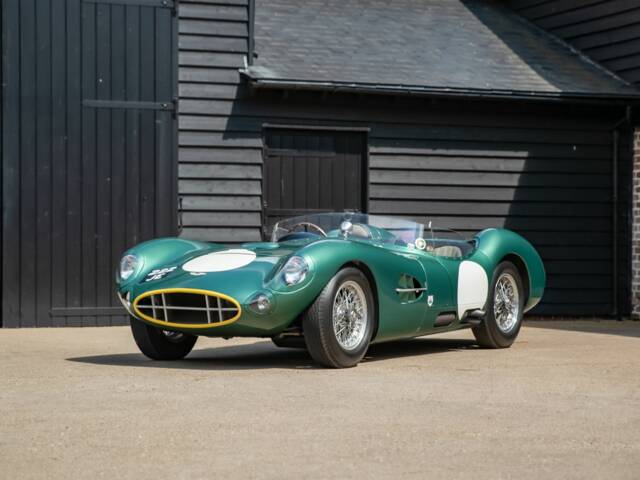
1971 | Aston Martin DBR2
Aston Martin DBR2 RECREATION Ex John Etheridge
Create search alert
Let yourself be notified as soon as a listing is published that matches your search filters.
Create listing
Do you have a Aston Martin DBR2 that you want to sell? Then create a listing now.
Create listingAston Martin DBR2 Classic Cars: Prices & Market Values
History of the Aston Martin DBR2
The Aston Martin DBR2 was introduced in 1957 as a direct response to racing regulations that separated vehicles by engine displacement. While its sibling, the DBR1, was built for the 3-litre category and famously won the 1959 24 Hours of Le Mans, the DBR2 was developed specifically for higher engine capacities. Taking cues from both design and mechanical layout of its sibling, the DBR2 was engineered to expand the brand’s reach in international motorsport. Its limited production makes it an ultra-rare presence, reserved almost exclusively for high-profile historic racing events and select private collections.
Model History
The DBR2’s ancestry is closely tied to the storied DBR racing cars produced by Aston Martin during the 1950s. Built as a parallel development to the Le Mans-winning DBR1, the DBR2 utilised a larger engine to compete in different racing classes. There were no subsequent mass-market successors to the DBR2; its production was extremely limited and primarily for factory-backed motorsport. The car’s heritage reflects a singular focus on competition and engineering for performance, rather than mass production or road-going comfort.
Highlights and Unique Features
The DBR2 stands out not only for its rare status but for engineering built to target larger-displacement motorsport contests. With fully handmade construction and a focus on weight reduction, the DBR2 is a showcase of late 1950s British racing innovation. Every aspect of the car—from its hand-formed aluminium bodywork to the competition-tuned drivetrain—was designed to maximise speed and driveability under rigorous racing conditions.
Technical Data
Special Editions and Collectible Models
Given the extreme rarity and limited production, every DBR2 is effectively a special edition. Each example has its unique racing provenance. With only a handful built, any DBR2 offered is considered a centrepiece for racing-oriented Aston Martin collections.
Weak Spots and Common Issues
No specific common issues are documented in our sources about the DBR2. As with all hand-built, racing-derived classics from this era, meticulous provenance and ongoing expert maintenance are critical. Interested buyers should pay attention to originality, period-correct components, and documentation of race history or restoration.
Engine, Performance, Transmission and Handling
Developed for high-capacity sports car racing, the DBR2 featured a powerful straight-six engine with bespoke tuning, delivering impressive acceleration and top speed relative to period rivals. The car’s chassis engineering focused on agility and predictable handling at the limit, befitting its motorsport origins. Manual transmission and responsive steering contribute to an engaging, tactile driving experience. The DBR2 itself is the most notable model in this series, purpose-built for racing with larger engine capacity.
Interior, Comfort, Exterior and Design
The DBR2’s exterior is formed from hand-hammered aluminium panels, shaped for aerodynamic efficiency and visual drama, typical of late 1950s endurance racers. The cockpit is purposefully sparse, focused on function and weight saving, with minimal creature comforts. Authenticity and originality are critical facets for collectors, with period materials and racing features such as bucket seats, exposed fastenings, and competition instruments. Special requests or unique one-off features may be present in individual builds, reflecting both the era and bespoke nature of the car.
Other Features
Because of its background as a pure racing car, many DBR2s were subjected to post-racing modifications, restorations, or upgrades. Understanding the individual pedigree—including race entries, ownership history, and specific mechanical changes over time—is crucial for evaluation. Support for parts and expertise can often be sourced from specialist classic Aston Martin workshops.
Summary
An Aston Martin DBR2 is rarely seen on the public market, representing the pinnacle of British motorsport engineering of its era. Each car tells a unique story tied to post-war endurance racing and bespoke craftsmanship. With its exclusivity and competition heritage, the DBR2 holds a distinct place for the serious collector or historic race participant.