Peugeot Type 63 classic cars for sale
Discover the Peugeot Type 63, a milestone in early French automotive history from 1904. Produced in limited numbers, this pre-war car stands out for its distinct wheelbase variants and authentic Peugeot engineering. Its rarity makes each example uniquely significant. Read more to dive into its journey from Armand Peugeot’s workshops to today's classic car listings.
Search results
Currently, there are no matching listings for your search.
Create search alert
Let yourself be notified as soon as a listing is published that matches your search filters.
Create listing
Do you have a Peugeot Type 63 that you want to sell? Then create a listing now.
Create listingPeugeot Type 63 listing references from Classic Trader
Below you will find listings related to your search that are no longer available on Classic Trader. Use this information to gain insight into availability, value trends, and current pricing for a "Peugeot Type 63" to make a more informed purchasing decision.
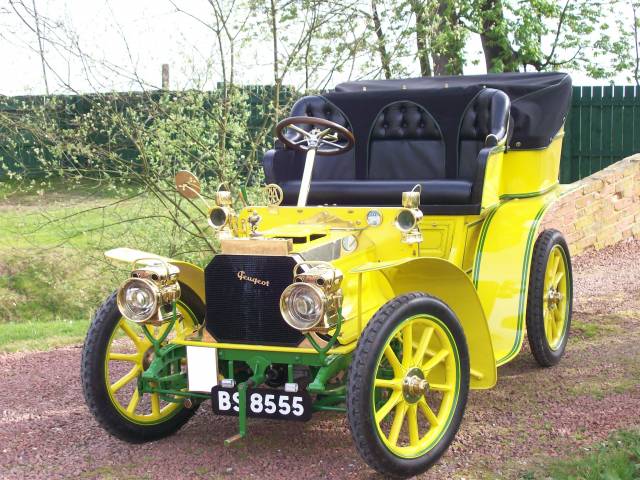
1904 | Peugeot Type 63 A Rear Entrance Tonneau
Create search alert
Let yourself be notified as soon as a listing is published that matches your search filters.
Create listing
Do you have a Peugeot Type 63 that you want to sell? Then create a listing now.
Create listingPeugeot Type 63 Classic Cars: Prices & Market Values
History of the Peugeot Type 63
The Peugeot Type 63 was introduced in 1904 and represents a significant step in the early days of motorised transport in France. Conceived by Armand Peugeot himself, this model rolled out of the Audincourt plant as part of the company’s evolutionary journey from bicycle manufacturing to pioneering automotive technology. The Type 63 was produced in a highly limited edition, with just 136 units built, making each surviving car a rare piece of motoring heritage. The differentiation into the 63A and the longer 63B showcased Peugeot's early experimentation with vehicle sizes, catering to varied customer needs.
Model History
Situated within Peugeot’s lineage of pre-war vehicles, the Type 63 followed earlier simple quadricycles and foreshadowed more complex models. With the 63A adopting a short wheelbase for manoeuvrability and the 63B offering a longer wheelbase for comfort and presence, Peugeot experimented with chassis length to suit different driving conditions and purposes. Limited production hints that many were handmade, highlighting the transition period at Peugeot before mass production became standard.
Highlights of the Peugeot Type 63
The Type 63 is distinguished by its split in wheelbase variants—Type 63A and 63B—reflecting Peugeot’s focus on customer needs even in the early 1900s. Each vehicle from the short-lived production run carries unique characteristics, with hand-built features prominent throughout. None of its successors were built in such limited numbers, underlining its exclusivity and bespoke craftsmanship.
Technical Data
Special Editions and Collectible Models
Owing to the extremely low production total of only 136 units, every surviving Peugeot Type 63 can be considered a rare collectible. The division into the 63A and 63B is itself a mark of distinction, and any variants surviving with original specifications or unique bodywork should be closely examined for their historical significance.
Weak Spots and Common Issues
Given the hand-built nature and age of the Type 63, sourcing original parts is a challenge, and upkeep demands the expertise of vintage vehicle specialists. The usability of early mechanical components such as brakes, fuel systems, and steering linkages should be checked thoroughly. Wear on non-standardised body and chassis components may also pose restoration challenges, so provenance and maintenance history are key factors for any potential buyer.
Engine and Performance, Transmission and Handling
The Type 63 features early-1900s engineering, with performance typical for pre-war motor vehicles: modest speed, minimal braking power, and unassisted steering. Ride quality and road handling vary between the shorter 63A and longer 63B, with the longer wheelbase version offering improved cabin comfort but less agility. When considering a Type 63 for historic events or preservation, consult surviving specialists or historic racing associations for approval of period modifications. Noteworthy are the 63A (short wheelbase—city-focused driving) and 63B (long wheelbase—more luxurious, likely more stable at low speeds). Exact technical data such as engine displacement varies by surviving chassis.
Interior, Comfort, Exterior and Design
The bodywork of the Peugeot Type 63 exhibits distinctive early-20th-century French automotive styling, typically open-topped with wooden trim, brass fittings, and bespoke details reflecting the artisan approach of the era. Interior comfort is sparse by today’s standards—chaise-style seating, minimal instrumentation, and exposed controls. Both variants might sport unique coachbuilt bodies owing to the custom nature of many period Peugeots, so attention to period accuracy and patina is valued among connoisseurs.
Other Features
Each Type 63’s provenance significantly affects its collectability. Details such as first owner, period-correct restoration, and survival of original coachwork can provide a remarkable window into early motoring history and should be scrutinised when considering purchase.
Summary
The Peugeot Type 63 stands as a symbol of early French automotive innovation, uniquely positioned in Peugeot’s history due to its low production numbers and the dichotomy of the 63A/63B wheelbases. Its custom-built approach, paired with the scarcity of surviving models, commands respect among experts and collectors seeking a tangible connection to the dawn of European motoring.