- Automobile
- Peugeot
- Peugeot Type 5 (0 offerte)
Peugeot Type 5 Classic Cars for Sale
The Peugeot Type 5, manufactured from 1893 to 1896, is one of the earliest examples of Peugeot’s innovative small car engineering. With only 14 units produced, this rare vehicle features a lightweight chassis, a 2 hp engine, and a compact layout derived from its predecessor, revealing the company’s engineering priorities at the dawn of automotive history.
Risultati della ricerca
Attualmente non ci sono annunci corrispondenti alla tua ricerca.
Create search alert
Let yourself be notified as soon as a listing is published that matches your search filters.
Create listing
Do you have a Peugeot Type 5 that you want to sell? Then create a listing now.
Create listingPeugeot Type 5 listing references from Classic Trader
Below you will find listings related to your search that are no longer available on Classic Trader. Use this information to gain insight into availability, value trends, and current pricing for a "Peugeot Type 5" to make a more informed purchasing decision.
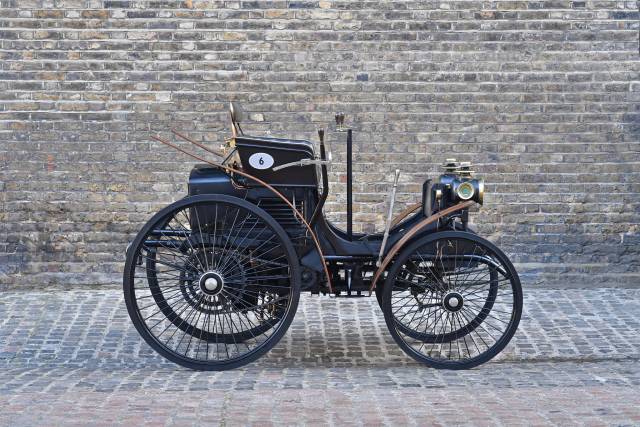
1894 | Peugeot Type 5
Create search alert
Let yourself be notified as soon as a listing is published that matches your search filters.
Create listing
Do you have a Peugeot Type 5 that you want to sell? Then create a listing now.
Create listingPeugeot Type 5 Classic Cars: Prices & Market Values
History of the Peugeot Type 5
The Peugeot Type 5 emerged in the early days of the automobile, produced from 1893 to 1896 as a further development of the Type 3. Peugeot used the same drivetrain and mechanical layout but introduced a shorter and lighter chassis, focusing on greater agility within a compact footprint. Despite these efforts, production was extremely limited with only 14 vehicles built, making the Type 5 an extraordinarily rare sight today. This model illustrates the brand’s early drive for technical progress and diversification in a market still in its infancy.
Model Series Evolution
The Type 5 is a direct evolution of the Peugeot Type 3, sharing much of its mechanical design but packaged into a significantly smaller and lighter frame. This reduction in size did not lead to major technical innovations, but it underlines Peugeot’s attempt to address varying market needs, contrasting the Type 5 to larger contemporaneous Peugeot models. The Type 5’s immediate successor featured more substantial technical changes as Peugeot continued to expand its line-up throughout the 1890s.
Highlights and Market Statistics
The Peugeot Type 5 is remarkable for its combination of low weight, compact dimensions, and an unmodified 2 hp engine inherited from its predecessor. Its direct lineage from the Type 3, paired with the extremely low total production volume, makes it a unique marker of early automotive experimentation. This vehicle stands out in any collection due to its historical context and production rarity.
Technical Data
Special Editions and Collectible Models
No special or limited editions of the Peugeot Type 5 were produced due to its already extremely limited run of only 14 vehicles. Each original Type 5 can be regarded as unique in its own right because of the low production numbers and the hand-built nature of vehicles at the time.
Engine, Transmission, and Handling
The Peugeot Type 5’s 2 hp engine, though modest, delivers surprisingly adequate performance for a car of its size and era, thanks to the lightweight design. The simplistic mechanical layout reflects the pioneering spirit of the 1890s, with straightforward controls and minimal driver assistance. Driving dynamics are characteristic of early cars: direct yet rudimentary, requiring both skill and attention. Not suited for demanding terrain, the Type 5’s strengths lie in manageable urban use and easy maintenance. Due to the minuscule production number, every Type 5 example is notable. Technical data should be considered individually, but reference to the Type 3 drivetrain is valid for all units.
Interior, Comfort, Exterior and Design
The design of the Peugeot Type 5 is minimalistic, with clear functional priorities. The compact body is stripped of excess weight, with the chassis, seating, and controls deliberately engineered for efficiency rather than luxury. Materials reflect what was available in the late 19th century, often featuring wood frames and simple metallic details. Accessories and custom features are virtually nonexistent, as buyers in this era prioritized reliability and innovation over comfort or visual flair.
Other Features
Given its exceptionally limited run, most surviving Type 5s may exhibit individual, period-specific modifications derived from their hand-built assembly process. Documentation and proven provenance are critical for each vehicle, as variations may exist between individual units.
Summary
The Peugeot Type 5 serves as a compelling artefact from the earliest chapters of automotive history. Produced in only 14 examples, it marked Peugeot’s move to diversify its range and test engineering boundaries with smaller, lighter vehicles. Today, a Type 5 remains a rare collector’s item, embodying pioneering technology in a minimalist, historically significant package.