Packard Deluxe classic cars for sale
Packard Deluxe models offer a fascinating combination of American pre- and post-war engineering and luxury. Known for their elegant straight-eight engines, spacious interiors, and a blend of traditional craftsmanship with technical improvements, these classics remain a reference among discerning collectors of American luxury vehicles.
Search results
Currently, there are no matching listings for your search.
Create search alert
Let yourself be notified as soon as a listing is published that matches your search filters.
Create listing
Do you have a Packard Deluxe that you want to sell? Then create a listing now.
Create listingPackard Deluxe listing references from Classic Trader
Below you will find listings related to your search that are no longer available on Classic Trader. Use this information to gain insight into availability, value trends, and current pricing for a "Packard Deluxe" to make a more informed purchasing decision.
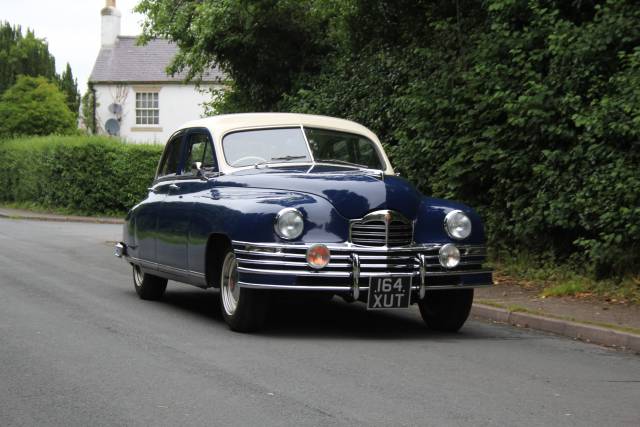
1948 | Packard Deluxe
1948 Packard 22nd Series Touring Sedan

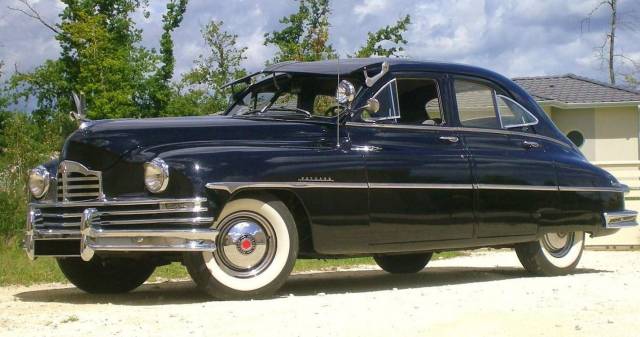
1948 | Packard Deluxe
PACKARD Eight De Luxe Touring de 1949

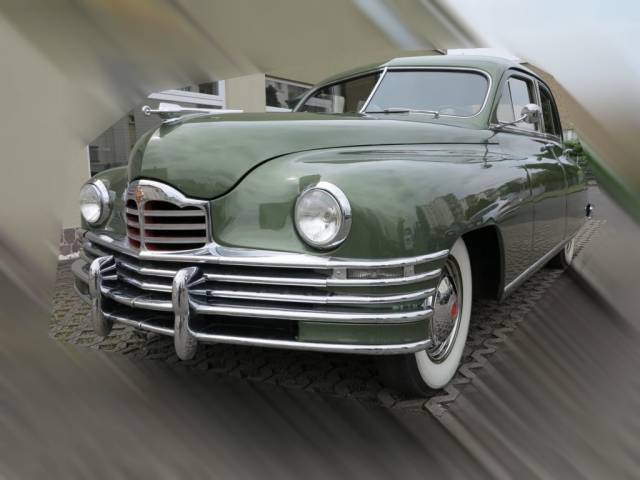
1948 | Packard Deluxe
343 SIX! VERHANDLUNGSBASIS / NEGOTIABLE

Create search alert
Let yourself be notified as soon as a listing is published that matches your search filters.
Create listing
Do you have a Packard Deluxe that you want to sell? Then create a listing now.
Create listingPackard Deluxe Classic Cars: Prices & Market Values
History of the Packard Deluxe
Packard introduced the Deluxe line in 1929 as a more exclusive variant of the Packard Eight, distinguished primarily by a longer wheelbase and refined equipment. The Deluxe Eight embodied the zenith of American luxury from the late 1920s, offering advanced mechanical features such as a side-valve straight-eight engine (6306 cc, 77 kW) and a twin-disc clutch mated to a partially synchronised three-speed manual transmission. Different body styles—ranging from elegant open to stately closed variants—addressed an upscale clientele. During the 1930 model updates, safety glass became standard. After a brief hiatus, the "Deluxe" designation returned post-WWII on upgraded Packard Eight models, reflecting shifts in the post-war American automotive landscape.
Model Development and Series History
Following the split of the Packard Eight into Standard and Custom lines in 1928, the Deluxe designation defined the top-tier variants. In 1933, the model line reverted to simply "Eight," with 16,001 Deluxe Eights built up to that point. The designation returned in 1948, when the Clipper Eight evolved into the Standard Eight and Deluxe Eight for the post-war market. Technical changes included a downsized straight-eight (now 4719 cc) and, by 1950, increased performance figures (up to 99 kW). Production numbers peaked in 1948 (75,228 units), with a combined 89,639 Deluxe and Standard Eights built in 1949 and 1950. The Packard 200 succeeded the Deluxe Eight in 1951.
Special Features and Market Impact
One of the defining features of all Packard Deluxe models is the robust straight-eight engine, lauded for its smooth running and significant torque. Early models are recognisable for their consistent wheelbase and strong mechanical brakes on all wheels. Packard introduced safety glass from 1930 and persistently engineered comfort, even in base trims. Post-war Deluxe variants placed particular value on sophisticated interiors and American luxury cues.
Technical Specifications
Special Editions and Collectible Models
Within the Deluxe series, limited-edition variants often featured bespoke bodywork from selected coachbuilders, especially prior to WWII. The automatic transmission 'Ultramatic' introduced in late 1949 is a point of distinction for collectors focused on technical uniqueness. Specific trim levels, upholstery options, and the larger rear window of the 1949 facelift are frequent search criteria among enthusiasts.
Weak Spots and Common Issues
No specific weak points are currently documented. As with all large American classics, buyers should inspect straight-eight engines for uniform compression and oil pressure. Drivetrain and chassis require expertise typical for luxury vehicles of the era—specialist maintenance is essential for the twin-disc clutch, early mechanical brakes, and any overhauled automatic transmission components.
Engine, Transmission, and Driving Experience
Packard Deluxe models are celebrated for their effortlessly smooth delivery, thanks to the generous displacement and configuration of their straight-eight engines. Early three-speed gearboxes demand skillful, unsynchronised operation, while the Ultramatic automatic option offers a markedly comfortable drive for its era. Large interiors and well-damped suspensions suit relaxed, long-range cruising, especially in later post-war cars. - 1929–1932 Packard Deluxe Eight: 6306 cc straight-eight, 77 kW, rear-wheel drive, mechanical brakes.
- 1948–1950 Packard Deluxe Eight: 4719 cc straight-eight, up to 99 kW, optional Ultramatic transmission, significant for comfort-focused enthusiasts.
Interior, Comfort, Exterior, and Design
Packard Deluxe models offer archetypal American luxury design between the wars and through the early 1950s. Early vehicles distinguished themselves by elongated hoods, classic chrome details, and a variety of open and closed bodies designed in conjunction with specialist coachbuilders. Later models, post-1948, featured modernised silhouettes, larger panoramic rear windows (from 1949), and even more refined seats and upholstery. Noteworthy are bespoke wood and chrome dashboards, plush carpeting, and a wide array of paint colours that mirror the aesthetic aspirations of American luxury buyers of the respective era.
Other Noteworthy Details
The Packard Deluxe series is emblematic of the shifting definition of American automotive prestige during the pre- and post-war era. Its evolution reflects changes in consumer expectations for luxury and technology, and marks the transition from the conservative, formal luxury of the 1930s to the comfort-oriented American sedans of the post-war years.
Summary
Packard Deluxe models combine technical excellence, historical significance, and distinct American luxury design. From innovative engineering features to the refined usability of the post-war versions, these vehicles remain benchmarks for enthusiasts seeking authentic US automotive heritage.