Opel Crossland classic cars for sale
The Opel Crossland represents the era where compact crossovers overtook compact MPVs in popularity, offering urban practicality and flexible space in a B-segment SUV package. Perfect for those who appreciate a modern classic with spacious interiors and efficient engines, the Crossland combines German engineering with a versatile design. Learn more about its origins and unique features below.
Search results
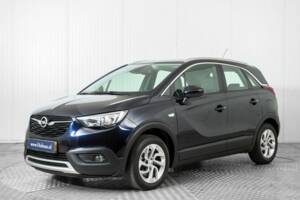
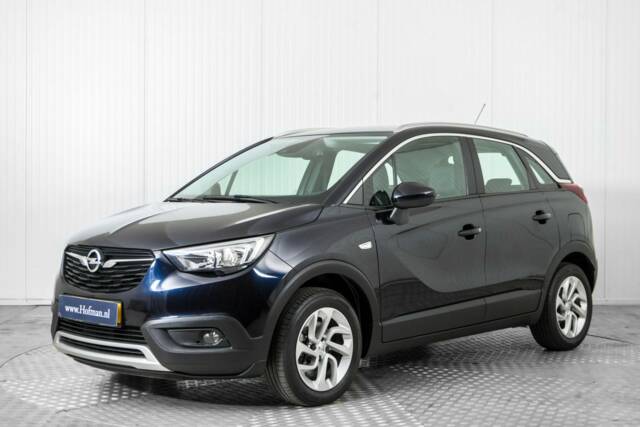
2019 | Opel Crossland X 1.2 Turbo
Opel Crossland X 1.2 Turbo Innovation

Opel Crossland listing references from Classic Trader
Below you will find listings related to your search that are no longer available on Classic Trader. Use this information to gain insight into availability, value trends, and current pricing for a "Opel Crossland" to make a more informed purchasing decision.
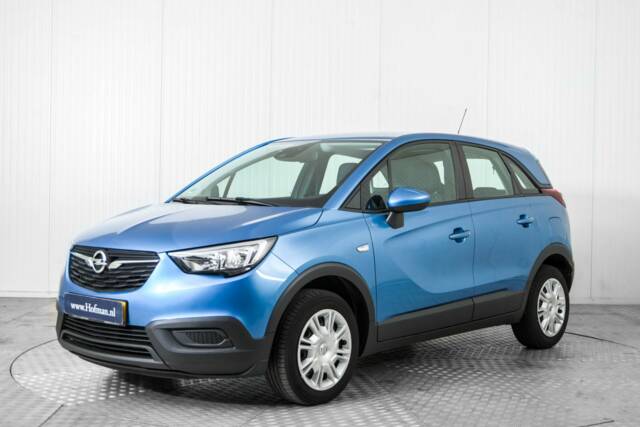
2020 | Opel Crossland X 1.2 Turbo
Opel Crossland X 1.2 Turbo Edition 1e eigenaar.
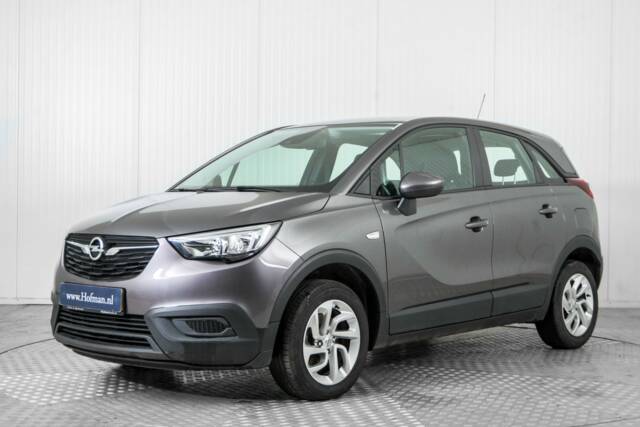
2020 | Opel Crossland X 1.2 Turbo
Opel Crossland X 1.2 Turbo Edition 17000 km!
Opel Crossland Classic Cars: Prices & Market Values
History of the Opel Crossland
Launched in 2017, the Opel Crossland responded directly to a shift in market trends: European buyers favoured small SUVs over formerly popular compact MPVs. Replacing the Opel Meriva, the Crossland marked Opel's entrance into the competitive B-segment crossover market. Debuting as the 'Crossland X' at the Geneva Motor Show in 2017, the model was marketed both under the Opel badge for continental Europe and as the Vauxhall Crossland for the UK market. Production continued until 2024, cementing its role as Opel's answer to the growing demand for versatile urban crossovers.
Model history of the Opel Crossland
The Crossland's production run began in March 2017 and concluded in December 2020. It succeeded the Opel Meriva, seizing the gap left in the lineup as compact MPVs fell out of favour. All Crossland versions feature front-wheel drive and manual transmissions with either 5 or 6 speeds. The model filled the demand for elevated driving positions and practical interiors, making it a strong competitor in the urban SUV segment. There is currently no direct successor in Opel's range, reflecting the merging of segments and changing priorities of both Opel and its customers.
Highlights of the Opel Crossland
The Crossland set itself apart with its flexible interior, generous luggage capacity, and compact exterior dimensions, making it particularly apt for city environments while offering substantial comfort for families. Its B-segment efficiency is underscored by emissions from 109 to 130 g/km and fuel consumption from 4.8 to 5 l/100 km, aligning with Euro 6 standards. The Crossland is the only model with its manufacturer code in this database, representing 100% of classic Opel Crosslands for sale, and attracts all of the interest (100%) from Crossland enthusiasts, based on supply and demand statistics.
Technical data for the Opel Crossland
Special Editions and Collectible Models
No specific special editions or limited runs of the Opel Crossland have been recorded for the period between 2017 and 2020. The model series focused on practicality and broad appeal, without significant factory variants or commemorative versions.
Weak Spots and Common Issues
No explicit weak spots or widespread quality issues have been reported for the Opel Crossland in the provided information. When considering models from this segment and era, buyers might wish to check for standard wear on manual gearboxes and suspension, but nothing is uniquely problematic for the Crossland based on current data.
Engine and Performance, Transmission and Handling
With a torque of 205 Nm and a 0-100 km/h time of 10.6 seconds, the Crossland offers lively urban response. The powertrain, exclusively front-wheel driven, balances efficiency and practicality for daily commutes and family outings. Both fuel economy (4.8–5 l/100km combined) and low inner-city consumption (ca. 5.6 l/100km) reflect its intended use as an urban crossover. The maximum permissible trailer load is 840 kg (braked), which covers light towing tasks. The six- and five-speed manuals contribute to both engaging driving and low running costs. Notable variations within the series pertain to small differences in equipment or trim, rather than distinct engine upgrades or limited runs. The variant offering the highest torque (205 Nm) and fastest 0-100 time (10.6 seconds) is particularly well-suited to buyers prioritising both economy and spirited urban driving.
Interior, Comfort, Exterior and Design
The Opel Crossland’s design reflects the late 2010s shift toward crossover styling: upright stance, short overhangs and a spacious cabin. Interiors focus on practicality, with five seats and flexible loading space. The height (161 cm) and wheelbase (260 cm) create a comfortable upright posture and easy access. Special design elements include clear dashboard layouts, high-mounted seating and a focus on visibility. There is no record of designer names, special colours or exclusive materials within the database, indicating the model’s mainstream but practical orientation. Accessory options and packages may have included enhanced infotainment or comfort features, consistent with the segment standard.
Other relevant features
The Crossland’s family-friendly approach can be seen in its high payload (up to 641 kg), making it practical for trips, errands, and small family journeys. It meets Euro 6 emission standards and belongs to energy efficiency classes B or C, reflecting late-2010s priorities for cleaner, more economical driving.
Summary
The Opel Crossland stands as an example of Opel’s response to a changing market, where compact crossovers replaced MPVs. Produced from 2017 to 2020, it offers a practical, efficient, and comfortable driving experience with a city-friendly size and trustworthy mechanics. Occupying a singular position in Opel’s classic offerings, the Crossland combines flexible space and efficient engines to meet the demands of urban drivers and small families alike.