- Car
- Mercedes-Benz
- Mercedes-Benz 770 (0 offers)
Mercedes-Benz 770 classic cars for sale
The Mercedes-Benz 770, known as the Großer Mercedes, represents uncompromising luxury and advanced engineering from the pre-war era. Designed for heads of state and dignitaries, every 770 boasted a custom build, imposing size, refined technology with a supercharged straight-eight engine, and an aura unmatched in its day. This rare masterpiece carries significant historical resonance and remains an outstanding example of German craftsmanship.
Search results
Currently, there are no matching listings for your search.
Create search alert
Let yourself be notified as soon as a listing is published that matches your search filters.
Create listing
Do you have a Mercedes-Benz 770 that you want to sell? Then create a listing now.
Create listingMercedes-Benz 770 listing references from Classic Trader
Below you will find listings related to your search that are no longer available on Classic Trader. Use this information to gain insight into availability, value trends, and current pricing for a "Mercedes-Benz 770" to make a more informed purchasing decision.
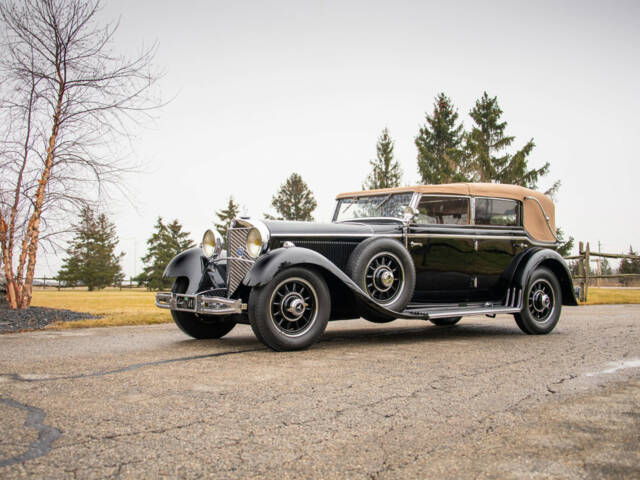
1930 | Mercedes-Benz 770 Cabriolet D
1930 Mercedes-Benz 770 K Pullman Cabriolet by Voll & Ruhrbeck
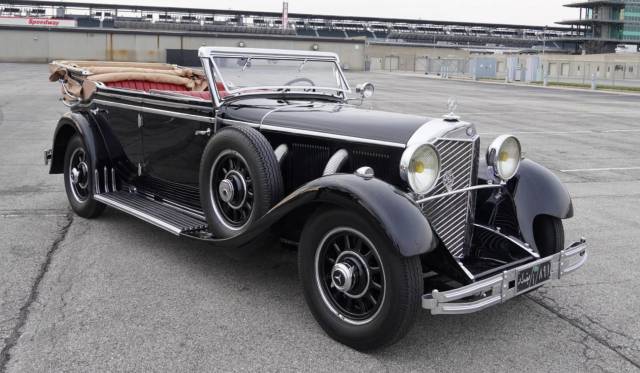
1930 | Mercedes-Benz 770 Cabriolet D
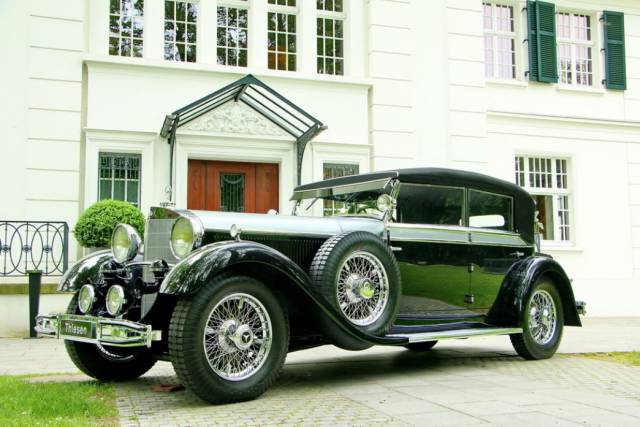
1931 | Mercedes-Benz 770 Cabriolet D
1931 Mercedes-Benz 770 K Cabriolet D (W 07) "Großer Mercedes"
Create search alert
Let yourself be notified as soon as a listing is published that matches your search filters.
Create listing
Do you have a Mercedes-Benz 770 that you want to sell? Then create a listing now.
Create listingMercedes-Benz 770 Classic Cars: Prices & Market Values
History of the Mercedes-Benz 770
Introduced in 1930, the Mercedes-Benz 770—officially the W07 generation—was conceived as the absolute top-tier luxury automobile of its era. This flagship continued Mercedes’ tradition of elitist "Großer" vehicles, preceding models like the Mercedes 600 and even the Maybach. Its primary role was to serve as an official vehicle for government and state use, and it set benchmarks in both construction quality and technical innovation. The 770 is closely associated with the 1930s and early 1940s political elite of Europe, making frequent appearances in archival records tied to significant historical events. Production spanned until 1944, with very few units surviving the turmoil of World War II.
Model History
The Mercedes-Benz 770's history breaks down into two main model series: the original W07 (1930–1938) and the succeeding W150 (1938–1944). The W07 laid the groundwork, showcasing a combination of a long wheelbase (148 inches), structural robustness, and mechanical refinement. The later W150 introduced subtle technical improvements and a restyled chassis, further enhancing performance and prestige. Both model series featured a bespoke approach—each car was essentially one-off, often crafted for government usage or for royalty. With only 107 examples produced across both generations, the 770's exclusivity is unparalleled. Later, this lineage inspired the genre-defining Mercedes 600 Pullman and eventually trickled down to the ultra-luxury Maybach segment.
Highlights and Features
The Mercedes-Benz 770 set itself apart with its modular chassis, extensive use of high-grade materials, and the availability of a supercharger on its powerful 7.7-litre inline-eight cylinder engine. Custom coachbuilt bodies were common, with designs tailored by leading carrozzeria, resulting in impressive, stately exteriors. Each car incorporated advanced touches such as a four-speed gearbox with vacuum-operated overdrive, maximizing both cruising comfort and performance for long official parades and journeys. Survivors are museum-quality and highly documented artifacts of their period.
Technical Data
Special Editions and Collectible Models
Given the bespoke nature of the Mercedes-Benz 770, every example can be considered a special edition. However, vehicles built with armoured plating, parade convertibles, and those delivered to prominent individuals (royalty, heads of state) carry extra historical interest. Notably, versions delivered with top-tier custom coachwork or armoured body shells are standouts among collectors.
Weak Spots and Common Issues
With so few surviving vehicles, maintenance challenges primarily revolve around the scarcity of original spare parts, highly specialized mechanicals, and the need for expert craftsmanship during restoration. The complex supercharged engine demands meticulous maintenance and expert knowledge. Due to museum-level preservation requirements and the exclusive, custom-made nature, restoring a 770 entails significant research and bespoke solutions for virtually every component.
Engine, Performance, Transmission and Handling
The Mercedes-Benz 770 drove with an unrivalled blend of torque and smoothness, especially when ordered with the optional supercharger. The 7.7-litre straight-eight was among the most accomplished engines of its day. The four-speed manual transmission, paired with a vacuum-controlled overdrive, provided effortless long-distance cruising. Handling was focused on comfort and stability—key traits for official limousines and parade cars, though the sheer size made dynamic driving secondary to stately presence and smoothness. - W07 (1930–1938): Most prevalent and sought-after among collectors; recognized as a Full Classic by the Classic Car Club of America.
- W150 (1938–1944): Technically evolved, even more rare, with a reputation for superior coachwork and armoured versions.
Interior, Comfort, Exterior and Design
Design for the 770 was always custom, typically entrusted to Old-World master coachbuilders. Interiors featured bespoke materials—high-grade wood, leather, and sometimes rare inlays—matching the taste and social status of the original commissioner. Exteriors were substantial, with classic lines, imposing upright grilles, and an unmistakably stately silhouette. Special accessories such as integrated flag holders or custom candelabras were not uncommon. Colour schemes varied but tended towards formal, understated elegance, befitting the car’s elevated status.
Other Relevant Features
A remarkable facet: Many 770s were equipped with advanced features for their time, including reinforced chassis for security and purpose-built accessories for ceremonial duties. As many cars have been destroyed or lost, those that remain are usually part of national or private collections, displayed worldwide, such as in the Daimler-Benz museum in Stuttgart.
Summary
The Mercedes-Benz 770 stands as one of the rarest and most individually-finished vehicles in classic car history. It represents the zenith of pre-war German engineering, luxury, and bespoke design, having played a controversial but undeniable role in world history. Survivors are seldom seen outside major collections, with their technical sophistication, provenance, and historic significance continuing to set them apart from all other luxury sedans of the 20th century.