Jaguar Mk IX classic cars for sale
The Jaguar Mk IX, produced between 1958 and 1961, is a flagship British saloon offering refined luxury, a 3.8-litre straight-six engine, four-wheel disc brakes and classic interiors finished with walnut and leather. With just over 10,000 units built, this model represents the peak of Jaguar's traditional luxury saloon era.
Search results
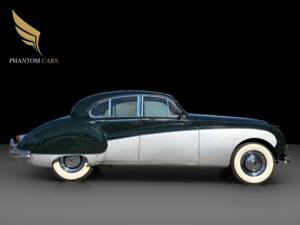
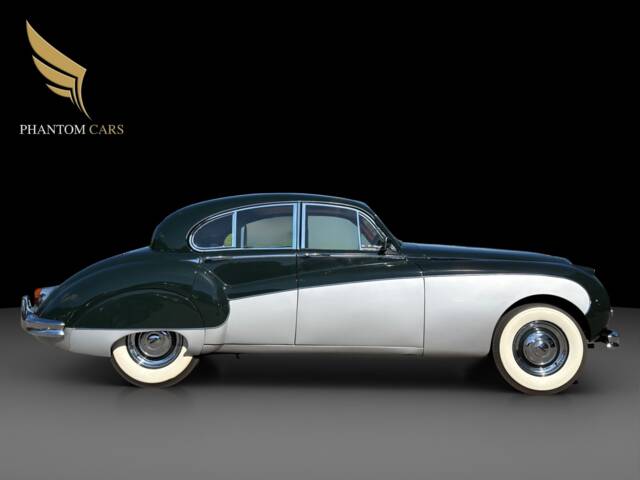
1960 | Jaguar Mk IX
*** VETERAN *** In the same ownership for 50 years *** Serviced & MFK Veteran *** Documentation available *** Trade-in & financing possible ***

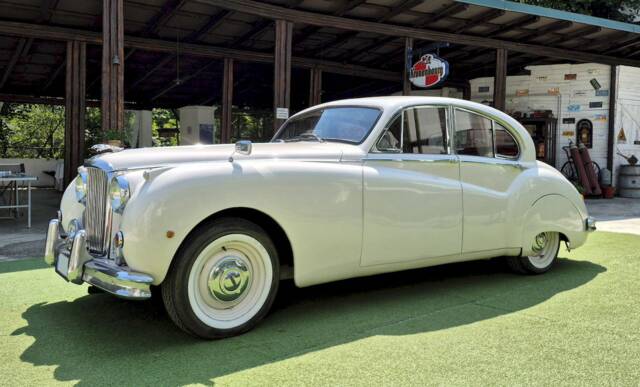
1960 | Jaguar Mk IX
SUMMER PRICE 2026 @ CITY MOTORS

1961 | Jaguar Mk IX
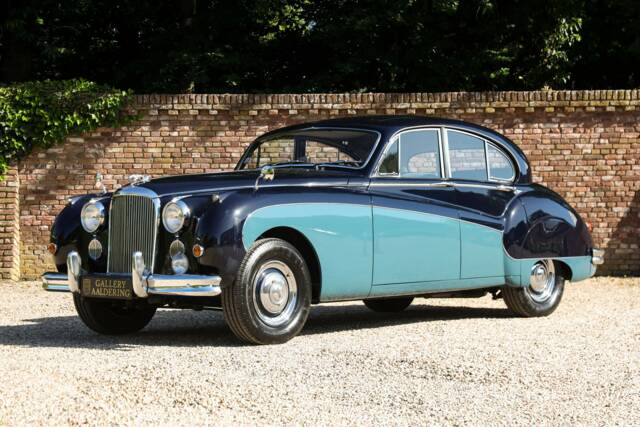
Jaguar Mark IX Saloon "The ex-Chilean embassy Jaguar" Probably the best-documented Jaguar - One owner for the past 40 years, Restored and rebuilt,Ordered from the factory by the Chilean Embassy in The Hague, With photographs from the late 1960s, Color scheme: Indigo Blue/Cotswold Blue with a light blue interior, "Every classic car has a story - but this one is pretty specific",Equipped with a 5-speed Getrag gearbox,

1958 | Jaguar Mk IX
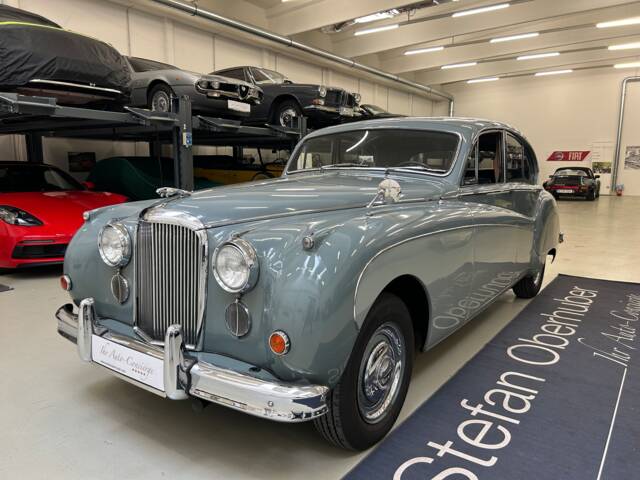
Top-Technik, Schiebedach

Newsletter
The best Jaguar listings, straight to your inbox
Get hand-picked Jaguar listings, plus the best of cars, motorbikes, and auctions on Classic Trader — all in one place.
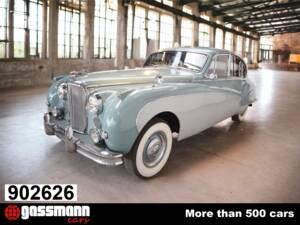
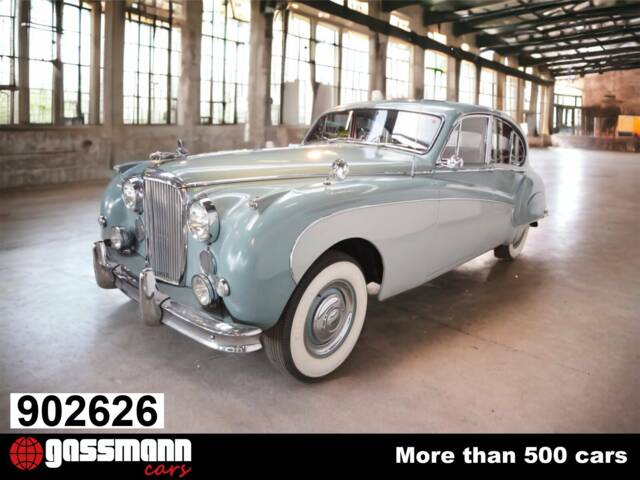
1960 | Jaguar Mk IX
MK IX / MK 9 3,8 Liter Limousine

Jaguar Mk IX listing references from Classic Trader
Below you will find listings related to your search that are no longer available on Classic Trader. Use this information to gain insight into availability, value trends, and current pricing for a "Jaguar Mk IX" to make a more informed purchasing decision.
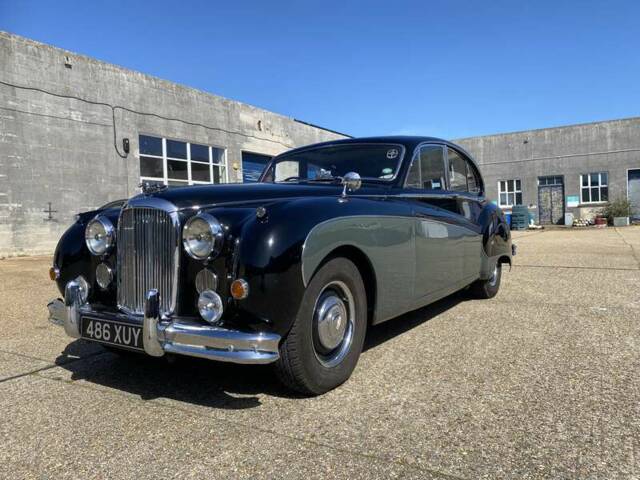
1960 | Jaguar Mk IX
1960 Jaguar Mk IX 3.8-Litre

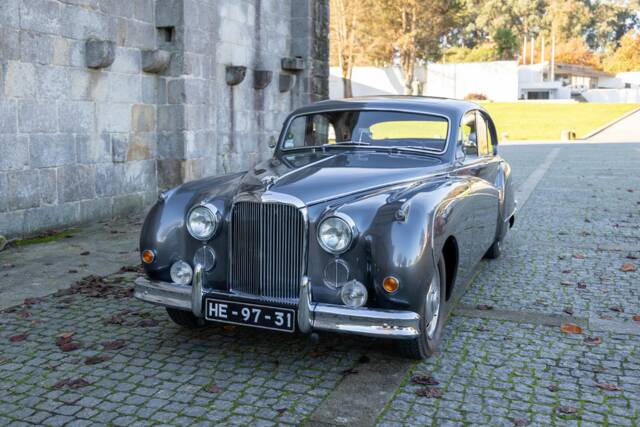
1960 | Jaguar Mk IX
Jaguar MK9 | 1960 | Route 66 Auctions - For sale by auction. Estimate 38500 EUR
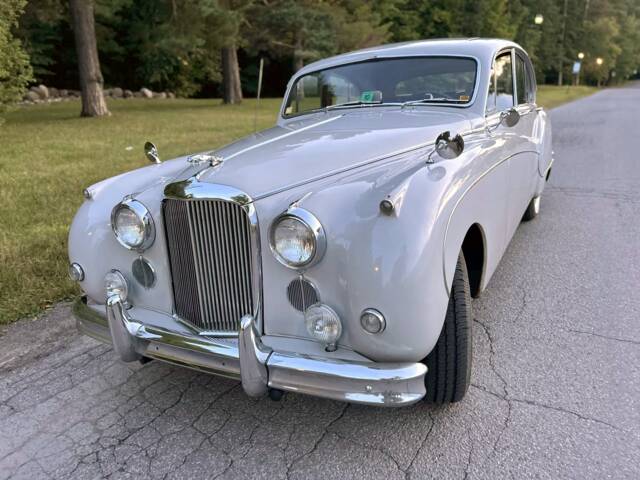
1960 | Jaguar Mk IX
Mechanically refreshed 1960 Jaguar Mk IX Saloon
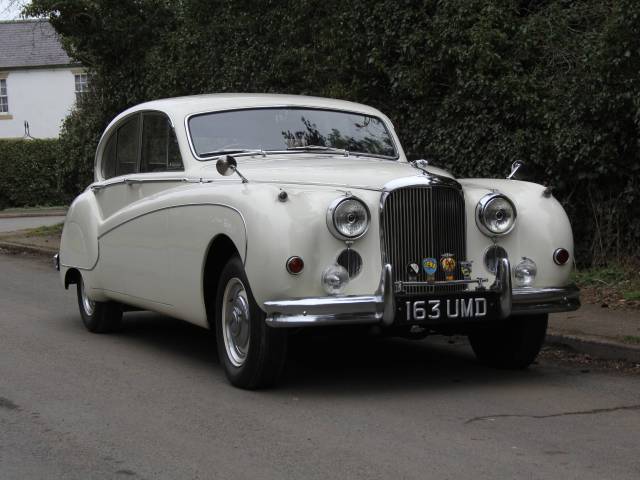
1958 | Jaguar Mk IX
1958 Jaguar MK IX 3.8 Automatic Saloon
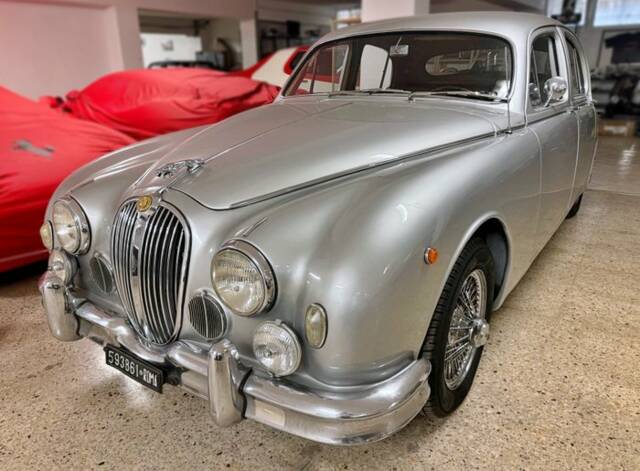
1958 | Jaguar Mk IX
Jaguar - Mk1 - 1958
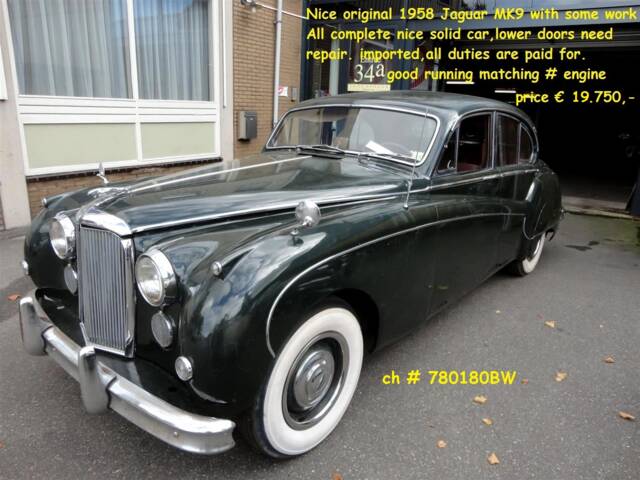
1958 | Jaguar Mk IX
Jaguar-MK9 ''58
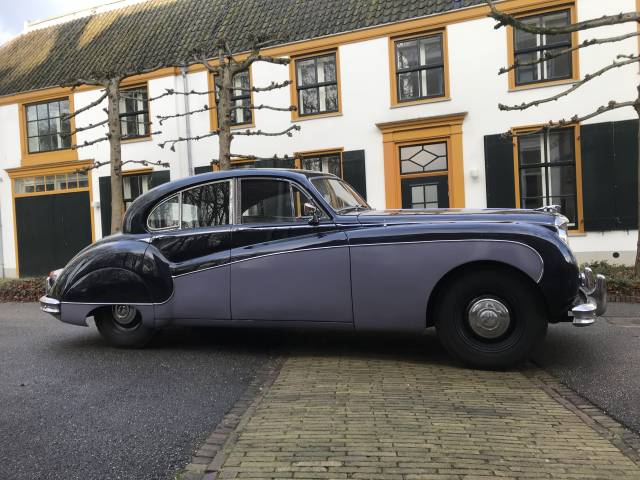
1960 | Jaguar Mk IX
MK IX met Quart muziek installatie en aangepast interieur.
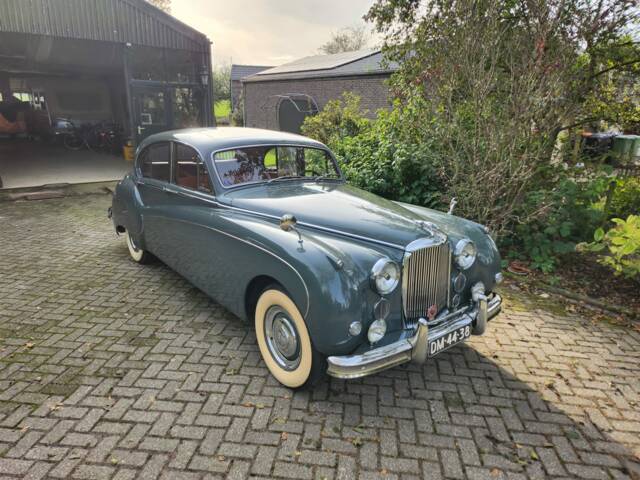
1960 | Jaguar Mk IX
Schitterende Jaguar MKX matching nummers uniek
Jaguar Mk IX Classic Cars: Prices & Market Values
History of the Jaguar Mk IX
Unveiled in autumn 1958 as the successor to the Mk VIII, the Jaguar Mk IX inherited the chassis and much of the bodywork from its predecessor, retaining a classical saloon silhouette but introducing key technological upgrades. Its arrival marked the final refinement of the separate-frame luxury Jaguars—a tradition dating back to the Mark V. Widely chosen by dignitaries and heads of state, the Mk IX exemplified British luxury and mechanical progress during its short production run.
Model Series Development and Evolution
The Mk IX directly followed the Jaguar Mk VIII and was the last in a long-running line of separate-frame Jaguar saloons. While the chassis and body were derived from the Mk VIII, notable distinctions lay beneath the bonnet: an uprated 3.8-litre straight-six developed 220 bhp, a jump in power reflecting contemporary advances. Transmission choices included a four-speed manual (optionally with overdrive) or a three-speed BorgWarner automatic. The Mk IX was discontinued in 1961, giving way to the unitary-construction Jaguar Mk X, which introduced a completely new design ethos and chassis structure.
Highlights and Unique Characteristics
The Mk IX distinguishes itself with factory-fitted four-wheel disc brakes and power-assisted steering as standard—features uncommon in luxury saloons of its era. With its blend of stately proportions, advanced engineering, and sumptuously appointed interior, the Mk IX became the definitive British saloon for those valuing both performance and comfort. Options included air conditioning and a sunroof, underlining its luxury credentials.
Technical Data
Special Editions and Variants
A rare military version known as the Mark-VIII-B was produced for the British military, substituting the power steering with a clutch disc. Mk IX owners could choose between single-tone or two-tone paint, with interiors customisable in various classic colour combinations. While not produced as a numbered limited edition, the car’s relatively low production volume (just over 10,000 units) and its reputation among dignitaries effectively make every Mk IX a standout.
Weak Spots and Common Issues
Although robust for its time, attention should be paid to rust in the frame and sills, worn suspension bushings due to the substantial kerb weight, and the integrity of the hydraulic braking system, as four-wheel disc brakes require consistent maintenance. As with many luxury cars of this period, restoring or preserving the walnut veneer and leather upholstery can demand specialist skills and investment.
Engine Performance, Transmission and Driving Dynamics
The 3.8-litre XK engine delivers impressive torque and smooth acceleration, with 0 to 100 km/h tested at around 11.3 seconds—remarkable for a car weighing close to 1.5 tonnes. Four-speed manual gearboxes (with overdrive as an option) allow relaxed, long-distance touring, while the BorgWarner automatic further emphasises comfort. The Mk IX’s power-assisted steering and all-around disc brakes generate a driving experience both secure and surprisingly nimble for a saloon of this size. The standard Mk IX saloon with the 3.8-litre engine forms the basis of all versions, with vehicles finished in desirable two-tone paint and equipped with rare factory options such as air conditioning especially sought-after among enthusiasts.
Interior, Comfort and Exterior Design
The Mk IX’s cabinetry of polished walnut veneer, thick leather upholstery and expansive interior measurements personify British craftsmanship of the late 1950s. Luxury touches include an optional electric sunroof and air conditioning, elements unusual outside the highest-end vehicles of the era. Externally, the Mk IX is unmistakable, with its substantial length (4.9 metres), broad stance, and generous use of chrome. Classic two-tone finishes and prominent Jaguar badging signal its prestige. Factory accessories and extras, like rear picnic tables, further elevate the ownership experience.
Other Noteworthy Features
The Jaguar Mk IX was chosen as official transport for the British royal family and dignitaries—including Queen Elizabeth (the Queen Mother) and Charles de Gaulle. Its stature and style made it a fixture at high-profile ceremonies and government events. The Mk IX was also the last of the separate-frame saloons before Jaguar moved to more modern monocoque construction with the Mk X.
Summary
The Jaguar Mk IX represents the summit of the traditional British luxury saloon, balancing imposing presence with significant advances in mechanical engineering, comfort and design. With sophisticated appointments, robust engineering and political cachet, it occupies a unique position in both the Jaguar lineage and post-war British motoring history.