- Car
- Dallara (1 offer)
Buy Dallara Classic Cars
Dallara is the name behind more racing chassis than almost any other constructor in history, yet the first road car to wear the badge only arrived in 2017. For collectors, that tension between motorsport ubiquity and road-car rarity is exactly what makes the marque compelling.
Search results
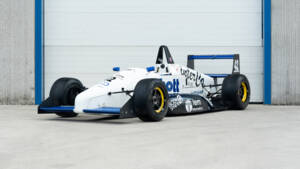
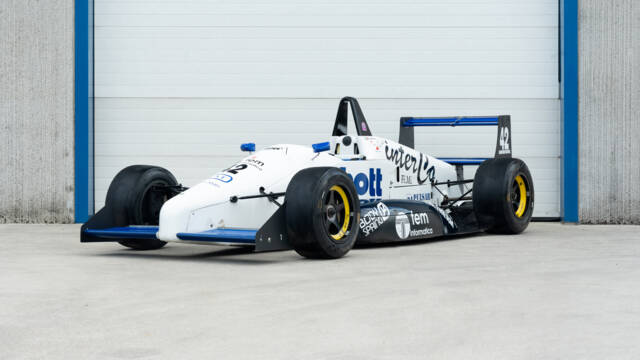
1992 | Dallara F392 Formula 3
Ex Giancarlo Fisichella

Dallara listing references from Classic Trader
Below you will find listings related to your search that are no longer available on Classic Trader. Use this information to gain insight into availability, value trends, and current pricing for a "Dallara" to make a more informed purchasing decision.
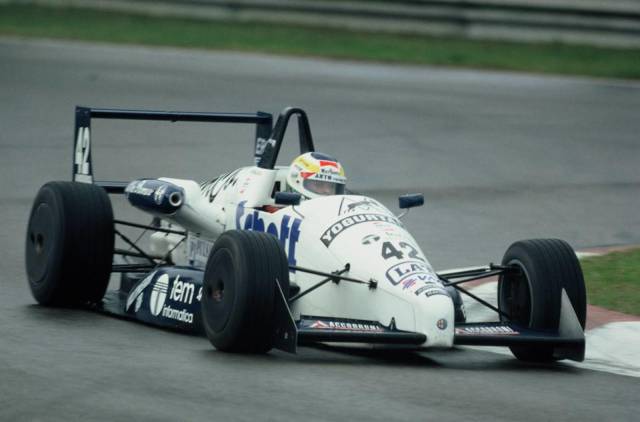
1992 | Dallara F392 Formula 3
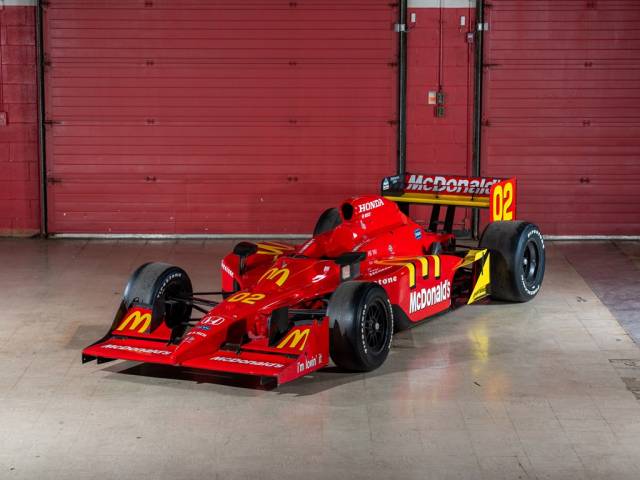
2007 | Dallara IR-05
2007 Dallara-Honda IR-05

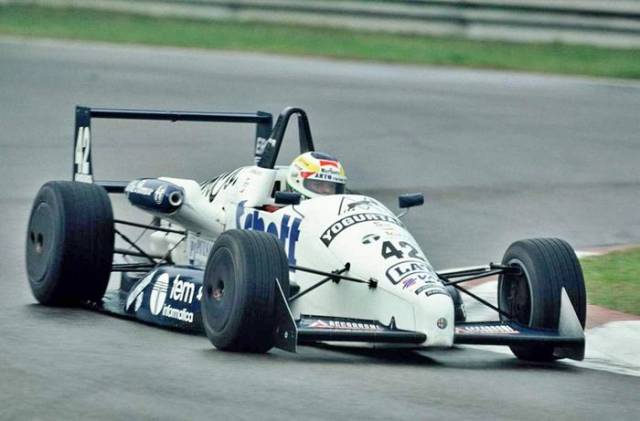
1992 | Dallara F392 Formula 3

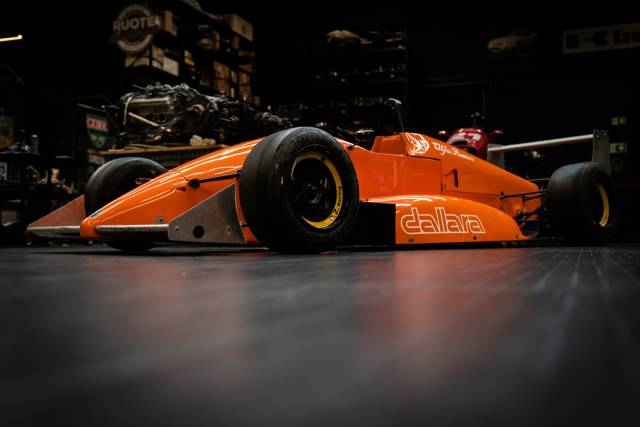
1991 | Dallara F391
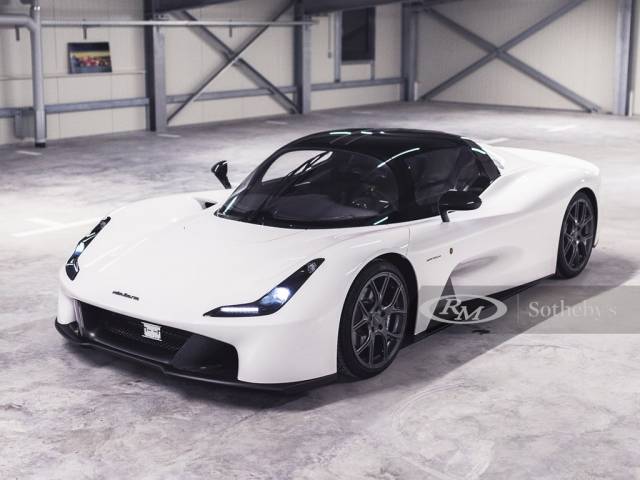
2019 | Dallara Stradale
2019 Dallara Stradale
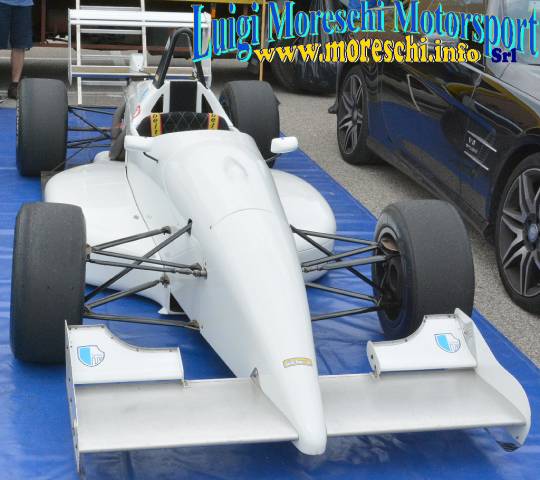
1993 | Dallara F393
Federale Renault
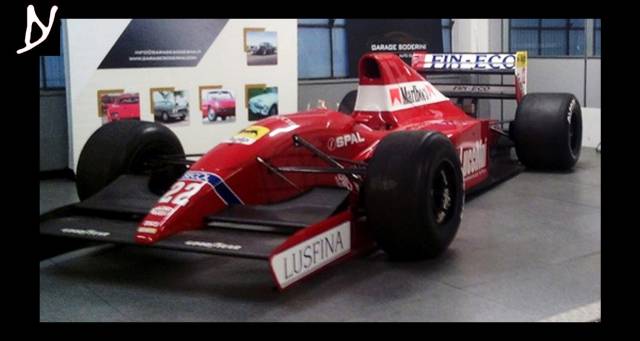
1992 | Dallara F192
ESTIMATE: 350.000/390.000 EURO - BIDS STARTING FROM EURO 50.000
History
The Dallara story begins not with a factory but with a young engineer and an extraordinary CV. Giampaolo Dallara graduated from Milan Polytechnic in 1959 with a degree in aeronautical engineering and walked straight into Ferrari. Within a few years he had also worked at Maserati and then Lamborghini, where, at just 27 years old, he became the technical lead on the project that would become the Miura — arguably the car that invented the modern supercar category. By the late 1960s he was involved with De Tomaso on their short-lived Formula 1 and Formula 2 programmes, and he contributed to the ISO-Marlboro F1 car run by Frank Williams Racing Cars.
In 1972, Dallara founded his own company in his hometown of Varano de' Melegari, in the heart of Italy's Motor Valley. The first project was a sports car, the SP1000, built in the garage of his family home with two colleagues. It featured a central driving position — a layout that would resurface more than fifty years later in the Dallara MPS Monoposto. The Italian hillclimb and sportscar market was competitive, with Abarth as the dominant rival, and Dallara soon found additional work with Lancia's racing department, developing the rally version of the Stratos and later the Beta Montecarlo.
The turning point came in 1978 when Dallara built a Formula 3 car for Walter Wolf Racing. Renamed the Emiliani, it won the 1980 Italian F3 Championship. The first true Dallara-badged F3 car, the F381, arrived in 1981, and Roberto Ravaglia scored the marque's first Italian championship race victory at Monza that September. Through the early 1980s, Dallara steadily increased its grid share in Italy until Franco Forini became its first F3 champion in 1985. By 1986, the Dallara F386 was winning races in France with a young Jean Alesi, and Bernd Schneider took the German crown in a Dallara as well. The era of Dallara dominance had begun.
The 1990s saw that dominance become absolute. The F395 achieved something no other constructor had managed: of 140 point-scoring drivers across the British, German, French, Italian and Japanese F3 championships, 137 were in Dallaras. Rivals Ralt and Reynard withdrew, and Martini and TOM'S were reduced to also-rans. Formula Three had become Formula Dallara. The company also returned to Formula 1 in the late 1980s, building cars for Scuderia Italia, and in 1999 was commissioned by Honda to design an F1 car for a projected return — though Honda ultimately chose to remain an engine supplier.
Dallara's entry into IndyCar came through an unlikely chain of events. The company's work on the Ferrari 333 SP endurance racer brought it into contact with Team Scandia, whose boss Andy Evans arranged a meeting with IRL founder Tony George. Dallara was asked to supply 20 cars, and despite a difficult start against rival G-Force, the company gradually won over the field. By the mid-2000s, Dallara was the dominant IndyCar chassis supplier, and in 2012 it became the sole chassis provider for the series — a position it still holds today.
Beyond IndyCar, Dallara now supplies spec chassis for Formula 2, the current FIA Formula 3, Japan's Super Formula and Super Formula Lights, Indy NXT, Euroformula Open and Formula E. The company employs over 800 people and also builds the carbon-fibre structures for Bugatti road cars and has contributed to Le Mans projects for BMW and Cadillac. Dallara's late daughter Caterina played a key commercial role, strengthening the company's market position before her untimely passing.
The road-car chapter finally opened in 2017 with the Dallara Stradale, a lightweight barchetta inspired by Colin Chapman's philosophy of doing more with less. The first car was delivered to Giampaolo Dallara on his 81st birthday. In 2021, the track-only EXP followed. And in 2024, the one-off MPS Monoposto — a single-seat road-legal car — sold for €1,000,000 at RM Sotheby's Monaco auction, with all proceeds going to the Caterina Dallara Foundation.
Highlights
Dallara's defining characteristic is its position as the world's foremost builder of racing chassis. No other company has supplied more single-seater racing cars across more categories. That engineering depth is what gives the road cars their credibility: the Stradale is not a vanity project from a boutique manufacturer, but the first road expression of a company that has shaped modern motorsport.
The Stradale is the car most collectors seek. It is a modular machine — a doorless barchetta in its base form, but convertible to a berlinetta with gullwing doors, a roadster or a targa top by adding interchangeable panels. Its carbon-fibre monocoque and 855 kg dry weight reflect Dallara's racing instincts, while the 2.3-litre Ford EcoBoost engine, uprated by Bosch to 400 bhp, provides accessible, turbocharged performance. There is no adaptive suspension, no complex drive-mode system and very little electronic intervention. This is a car built around chassis excellence and driver engagement, not software.
The EXP takes that formula further. With revised bodywork, a large rear wing and front dive planes, it generates 1,250 kg of downforce at 286 km/h — more than many dedicated racing cars. Power rises to 500 bhp, and the car is available only with a six-speed sequential gearbox and a Quaife limited-slip differential. It is a track-day weapon that shares its fundamental architecture with the road car.
The F3 series represents the other side of Dallara's collector appeal. Cars like the F392, driven by a young Giancarlo Fisichella to his first F3 victory at Imola in torrential rain, or the F396 in which Jarno Trulli and Juan Pablo Montoya honed their skills, are genuine pieces of motorsport history. These are the cars that fed drivers into Formula 1 for three decades, and they remain eligible for historic single-seater events across Europe.
The MPS Monoposto occupies a unique position. Built during the 2020 pandemic lockdown, it is a one-off single-seater inspired by the SP1000, with a central driving position and aerodynamics optimised for the reduced frontal area of a monoposto layout. Its sale at €1,000,000 confirmed that Dallara's name carries serious weight in the collector market.
Technical Data
The Stradale's technical specification deserves particular attention. The wheelbase is 2,475 mm, with a length of 4,185 mm and a width of 1,875 mm. The car generates up to 855 kg of downforce at maximum speed — a 1:1 ratio between weight and downforce, making it the first road-legal car to achieve that benchmark. The engine is mounted transversely behind the driver, driving the rear wheels through a limited-slip differential. The steering is unassisted, providing direct feedback that grows stiffer as speed and downforce build. Updates since launch include improved brake cooling, an upgraded fuel system to cope with sustained lateral g-loadings, and the option of centre-lock wheels.
Market Overview
Dallara occupies an unusual position in the collector market. The road cars are extremely rare, with production of the Stradale still ongoing at a rate far below the originally planned 600-unit cap. The F3 race cars are more numerous but vary enormously in value depending on provenance, condition and eligibility for historic events.
The Stradale commands strong prices. Auction data from 2024–2025 shows a range from approximately £156,000 to £191,000, with a median around £173,500. A 2022 Stradale achieved £191,274 at auction, while a 2019 Signature Edition sold for £156,023. New prices have risen steadily: a base barchetta now costs around £185,000 before taxes, while a fully specified coupé with adjustable suspension, centre-lock wheels and a custom colour can approach £250,000. The sell-through rate sits around 60 per cent, suggesting that well-priced examples move but over-optimistic asking prices do not.
The EXP sits above the Stradale in price and below it in road usability. As a track-only car, it appeals to a narrower buyer pool, but its performance credentials are exceptional. Expect prices in the region of £200,000 to £280,000 depending on specification and running hours.
The F3 race cars offer the most accessible entry into Dallara ownership. A Dallara F3 from the 1990s or 2000s can be found from around £20,000 to £60,000, depending on condition, engine, provenance and spares package. A 1996 Dallara F396 with Renault F7R engine, driven in period by Carlos Tavares, sold for €42,140 at Artcurial. A 1991 Dallara F391, the ex-Giambattista Busi Italian Championship-winning car, carried a Bonhams estimate of €50,000–€60,000. More recent F312 chassis with full FIA European Championship pedigree and freshly rebuilt engines are listed around €66,000–€75,000. At the budget end, a running Dallara F3 with a sealed Toyota engine and recent race victories can be found for approximately €35,000.
For British buyers, several factors shape the purchase decision. The Stradale was never type-approved for the United States, but a small number have found their way across the Atlantic, and European examples are the primary market. In the UK, the car's Ford-sourced engine means mechanical servicing is more straightforward than the badge might suggest — any specialist familiar with the Focus RS powertrain can work on the Dallara's motor. The carbon-fibre structure and bespoke chassis components, however, require Dallara factory support or authorised specialists.
The F3 cars are well suited to the UK's thriving historic single-seater scene. Events at Silverstone, Brands Hatch, Donington and Goodwood regularly feature F3 grids, and Dallara chassis are among the most competitive and best-supported options. Buyers should check for a valid FIA Technical Passport, engine hours since last rebuild, and the availability of spares — particularly gearboxes, as Hewland internals are serviceable but specific Dallara casings can be harder to source.
The MPS Monoposto is in a category of its own. As a one-off, its €1,000,000 auction result reflects both the car's uniqueness and the charitable cause. It is unlikely to appear on the open market again, but it has established a ceiling for what the Dallara name can command.
Driving Feel
The Dallara Stradale is, by any measure, one of the most analogue driving experiences available in a road-legal car. There are no drive modes to cycle through, no adaptive dampers to adjust, no synthetic steering weight to dial in. What you get is a carbon-fibre tub, an unassisted steering rack, a mid-mounted turbocharged four and very little between you and the road surface.
The engine, derived from the Ford Focus RS, delivers its power with a characteristic turbo swell. It is not the most charismatic four-cylinder ever built — the sound is an enhanced version of the RS's rorty note rather than something truly exotic — but the throttle response is sharp for a turbocharged unit, and the 400 bhp in a car weighing 855 kg delivers genuinely vivid acceleration. The six-speed manual is the enthusiast's choice, with a mechanical, positive feel that suits the car's philosophy. The automated single-clutch option is quicker but less engaging.
What truly defines the Stradale is its chassis. The unassisted steering is brilliant: light at parking speeds but growing progressively stiffer as aerodynamic load builds, until at higher speeds it feels as if the car is being pressed into the tarmac by an invisible hand. On track, with the optional rear wing fitted and Trofeo R tyres, the car generates up to 2G of lateral load, allowing corners to be taken at speeds that feel impossible from the driver's seat. The ride, honed by test driver Loris Bicocchi on broken Italian roads, is surprisingly compliant — the car absorbs imperfections with the sort of composure that only a properly sorted chassis can deliver.
The compromises are real. The brake pedal is over-servoed and poorly positioned for heel-and-toe work. Luggage space is essentially limited to your pockets. Without the windscreen, wind buffeting makes motorway speeds unpleasant. And the engine, while effective, does not feel special enough to justify the price tag when considered in isolation. But these are the trade-offs for a car that prioritises driving purity above everything else.
The EXP amplifies every sensation. With 500 bhp, 1,250 kg of downforce and slick tyres, it operates in a different performance bracket entirely. Neck muscles tire before the car runs out of capability. It is a track-day car that happens to share a name with a road car, and it demands to be driven hard to reveal its full character.
For the F3 cars, the experience is rawer still. A Dallara F392 with its Alfa Romeo Twin Spark engine and Hewland dog-leg gearbox offers a visceral, mechanical feel that is pure early-1990s junior formula racing. The steering is direct, the braking is enormous for the weight, and the car responds to inputs with an immediacy that makes modern track cars feel insulated by comparison. These are serious racing machines that reward committed driving and punish hesitation.
Design
Dallara's approach to design has always been dictated by engineering logic rather than stylistic fashion. The company's founder is an aeronautical engineer by training, and that discipline shows in every car Dallara has produced. Form follows airflow.
The Stradale was designed by Granstudio, a small Turin-based consultancy led by Lowie Vermeersch. The brief was unusual: create a car that could be transformed between four body styles — barchetta, roadster, targa and berlinetta — by adding or removing modular panels. The result is a shape that is clean, low and purposeful rather than conventionally beautiful. The absence of doors is the most striking feature. Entry requires stepping over the carbon-fibre sill, a process that Giampaolo Dallara himself, now in his late eighties, can still manage. The design team spent hundreds of hours in the wind tunnel refining the body surfaces, and the result is a car that looks as if it was shaped by air rather than by hand.
The Stradale's proportions are compact. At 4,185 mm long and 1,875 mm wide, it is smaller than most modern supercars, and at just 1,041 mm tall in barchetta form, it sits remarkably low. The exposed carbon-fibre elements, the functional air intakes and the sculpted rear diffuser all serve aerodynamic purposes. There is no ornamentation for its own sake.
The F3 cars represent a different kind of design honesty. Each generation evolved incrementally, with changes driven by regulation updates and aerodynamic refinement rather than styling exercises. The F385 introduced Dallara's first composite tub. The F392 brought updated aerodynamics and improved torsional rigidity. The F395 refined the package to the point of total dominance. The F312, the most recent FIA-spec F3 car, features a more sophisticated aerodynamic package with a sculpted nose, raised front wing pylons and a full-width rear diffuser — all designed to produce consistent downforce while allowing cars to follow each other closely for better racing.
The MPS Monoposto is perhaps the purest expression of Dallara's design philosophy. Designer Andrea Guerri was brought in to sculpt the form only after the aerodynamic volumes had been finalised. The livery echoes the SP1000, Dallara's first sports car, and the central driving position reduces frontal area for aerodynamic gain. It is a car shaped entirely by function, with beauty emerging as a by-product of engineering clarity.
For UK collectors, the design appeal lies in the Stradale's visual connection to the Lotus tradition. Giampaolo Dallara has always cited Colin Chapman as his personal engineering hero, and the Stradale's lightweight, doorless, driver-focused concept is a direct descendant of the same philosophy that produced the Seven, the Elise and the Exige. That lineage resonates strongly in British car culture.
Motorsport Heritage
Dallara's motorsport record is not merely impressive — it is arguably the most comprehensive of any racing car constructor in history. The company has won virtually every major Formula 3 championship on earth, supplied the sole chassis for IndyCar since 2012, built the cars for Formula E, and contributed to Le Mans-winning programmes.
In Formula 3, Dallara's dominance is almost total. From the mid-1990s onwards, the company won every major national and international F3 title. The list of drivers who learned their craft in Dallara F3 cars reads like a who's who of modern Formula 1: Jean Alesi, Emanuele Naspetti, Giancarlo Fisichella, Jarno Trulli, Juan Pablo Montoya, Sébastien Bourdais, and countless others. The F395's 1995 season — where 137 out of 140 point-scoring drivers across five major championships used Dallara chassis — remains one of the most dominant single-model performances in motorsport history.
In IndyCar, Dallara became the sole chassis supplier in 2012 with the DW12 (named in honour of Dan Wheldon, who died testing the car in 2011). The company has supplied every IndyCar since, including the current IR-18 chassis, and also builds the Indy NXT car for the feeder series. The Indianapolis 500 has been won in Dallara chassis numerous times, including by Eddie Cheever in 1998 and Kenny Bräck in 1999.
In endurance racing, Dallara's involvement includes the Ferrari 333 SP, the Toyota GT-One at Le Mans, and the Audi R8 that won the 24 Hours of Le Mans. More recently, the company has been involved in the design and construction of the BMW M Hybrid V8 and Cadillac V-Series.R LMDh prototypes competing in IMSA and at Le Mans. Dallara also builds the carbon-fibre chassis structures for the Bugatti Chiron and its derivatives.
The company's involvement in Formula 1 included building cars for Scuderia Italia in the late 1980s and early 1990s, and in 1999 designing a complete F1 car for Honda — a project that was ultimately shelved when Honda decided to remain an engine supplier. Dallara also built the chassis for the GP2 Series (later FIA Formula 2) from its inception in 2005, and continues to supply the current F2 and F3 machines.
For collectors, this motorsport heritage is directly relevant. A Dallara F3 car is not merely a racing machine — it is a car from the same constructor that shaped the careers of multiple F1 world champions and won the most prestigious races in motorsport. That provenance adds a layer of significance that few other race car manufacturers can match.
Summary
Dallara is a name that carries more weight in motorsport than almost any other constructor, yet remains remarkably rare on the road. The Stradale is the first and only production car to bear the Dallara badge, and with fewer than 600 planned, it will always be an uncommon sight. The EXP extends that formula into track-only territory, while the F3 series represents three decades of single-seater dominance that fed drivers into Formula 1 and won championships across every continent.
For British buyers, Dallara offers several distinct propositions. The Stradale is a future classic with genuine engineering substance — a lightweight, analogue sports car from the company that builds chassis for IndyCar, Formula 2 and Bugatti. The F3 cars are accessible, competitive and eligible for the UK's thriving historic single-seater scene. And the marque's connection to Colin Chapman's lightweight philosophy gives it a natural resonance in British car culture.
Prices range from around £20,000 for a serviceable F3 racer to over £170,000 for a Stradale, with the one-off MPS Monoposto establishing a €1,000,000 benchmark at the very top. The Ford-sourced engine in the road cars makes mechanical servicing more approachable than many exotic alternatives, while the carbon-fibre chassis and bespoke components require factory or specialist support.
Dallara is not a marque for those who seek luxury, brand cachet or mainstream recognition. It is for buyers who value engineering integrity, motorsport heritage and the kind of driving experience that modern regulations will soon make impossible to replicate. Browse current Dallara listings and discover now what Classic Trader has available.