Daimler New Fifteen classic cars for sale
The Daimler New Fifteen represents the entry point to Daimler’s pre-war luxury range, offering spacious saloon comfort and refined engineering between 1937 and 1940. This model’s evolution, with technical and design updates just before and after WWII, gives it a special place among British saloons of its era.
Search results
Currently, there are no matching listings for your search.
Create search alert
Let yourself be notified as soon as a listing is published that matches your search filters.
Create listing
Do you have a Daimler New Fifteen that you want to sell? Then create a listing now.
Create listingDaimler New Fifteen listing references from Classic Trader
Below you will find listings related to your search that are no longer available on Classic Trader. Use this information to gain insight into availability, value trends, and current pricing for a "Daimler New Fifteen" to make a more informed purchasing decision.
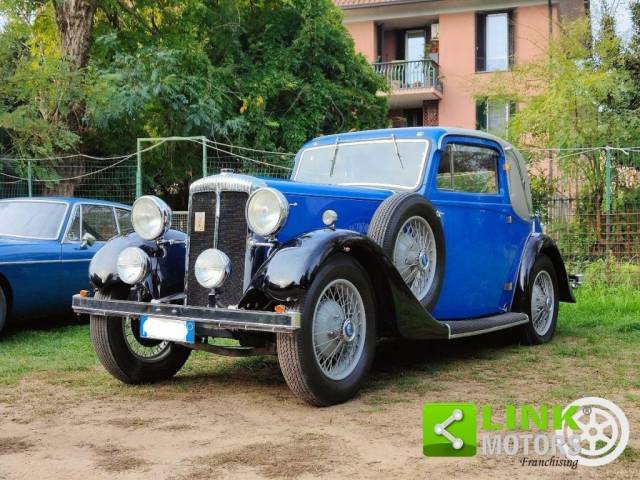
1935 | Daimler New Fifteen DB/17
OLDTIMER Daimler Dropped 15
Create search alert
Let yourself be notified as soon as a listing is published that matches your search filters.
Create listing
Do you have a Daimler New Fifteen that you want to sell? Then create a listing now.
Create listingDaimler New Fifteen Classic Cars: Prices & Market Values
History of the Daimler New Fifteen
First introduced in 1937, the Daimler New Fifteen was designed as a large saloon that broadened Daimler’s customer base by offering a more accessible entry into the brand’s renowned quality. With a tax rating of 16.2 hp, it balanced fiscal efficiency and comfort. In the late 1930s, the New Fifteen adapted to changing market expectations with a larger engine and continued on a trail of subtle refinements through to the early 1940s. In post-war Britain, production resumed with notable improvements that bridged pre-war and post-war automotive design, before evolving into the Daimler Eighteen.
Model Series Development
The original New Fifteen (1937) marked Daimler’s movement towards smaller-displacement, luxury-focused saloons while echoing technical advances and the restrained styling of the period. In September 1938, the model received a displacement increase (17.9 hp tax rating) but retained its established name, signifying continuity through change. After the war, its evolution became clearer as Daimler reintroduced the car as the Eighteen, updated with modernised cylinder heads, redesigned side window frames with chrome channels, and a cleaner look through the removal of running boards.
Highlights and Market Position
Key features of the Daimler New Fifteen include a generously sized interior, smooth-sounding six-cylinder engines, and typical Daimler build quality for its price class in the late 1930s. The model was notable for its adaptability to post-war market needs through technical and visual updates. The existence of pre-war and post-war variants underlines its significance among late 1930s and immediate postwar British saloons.
Technical Data
Special Editions and Collectible Models
While there are no official special editions of the Daimler New Fifteen, the transition models produced immediately after the war—featuring updated cylinder heads, chrome window frames, and the absence of running boards—are of particular interest to collectors seeking examples that serve as a technical and visual bridge between pre-war and post-war Daimler engineering.
Engine, Performance and Handling
New Fifteen models initially delivered steady performance through straight-six engines designed for refined power rather than outright speed. The larger engine offered from 1938 improved cruising capability, fitting the car’s intended comfortable, long-distance saloon role. Post-war revisions to the head further enhanced reliability and power delivery. Handling adheres to pre-war British luxury car standards, prioritising ride comfort and stability. Notable is the later pre-war variant with the 17.9 hp tax-rated engine, which balances improved drivability and pre-war character.
Interior, Comfort, Exterior and Design
The New Fifteen’s styling reflected Daimler’s understated approach, with a traditional upright grille, separate fenders, and a simple yet dignified exterior. Inside, passengers enjoyed a wider cabin typical of larger British saloons of the period. After 1946, models featured modernised trim with chrome channel window frames and the omission of running boards, lending a slightly more contemporary postwar appearance. Materials and finishes were tailored towards affluent customers seeking comfort without excessive ostentation.
Summary
The Daimler New Fifteen exemplifies British saloon development before and shortly after the Second World War, especially as Daimler’s answer to evolving market needs. Its technical updates and design evolution make it an intriguing proposition for enthusiasts interested in the transition between classic pre-war and post-war British motoring.