Cadillac Caribou classic cars for sale
The Cadillac Caribou combines American luxury with utilitarian pickup design, resulting from a fascinating period in the brand's experimentation. Enthusiasts are drawn to its rare blend of Cadillac comfort and the practicality of a pickup, making it a truly unique find.
Suchergebnisse
Zur Zeit sind keine passenden Inserate zu Ihrer Suche veröffentlicht.
Create search alert
Let yourself be notified as soon as a listing is published that matches your search filters.
Create listing
Do you have a Cadillac Caribou that you want to sell? Then create a listing now.
Create listingCadillac Caribou listing references from Classic Trader
Below you will find listings related to your search that are no longer available on Classic Trader. Use this information to gain insight into availability, value trends, and current pricing for a "Cadillac Caribou" to make a more informed purchasing decision.
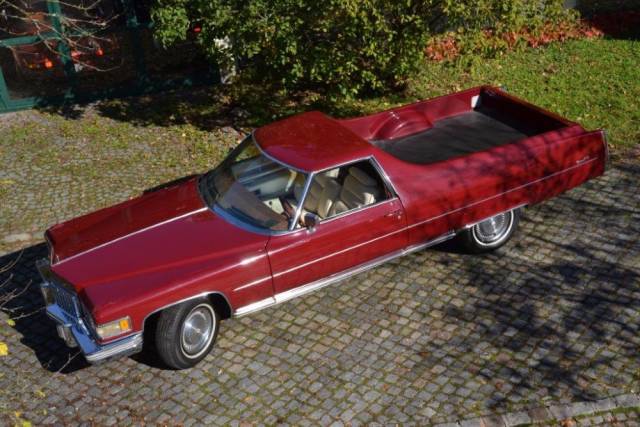
1975 | Cadillac Caribou
Absolut einzigartigen Luxus Pick Up
Create search alert
Let yourself be notified as soon as a listing is published that matches your search filters.
Create listing
Do you have a Cadillac Caribou that you want to sell? Then create a listing now.
Create listingCadillac Caribou Classic Cars: Prices & Market Values
History of the Cadillac Caribou
The Cadillac Caribou stands out as a rare and unusual vehicle that originated in the 1970s, during an era when coachbuilders adapted luxury American cars into bespoke vehicles. The Caribou was not the product of Cadillac’s own assembly lines, but rather the creation of independent coachbuilders—most notably, George Barris. Transforming Cadillac Coupe DeVille or Eldorado models, they produced an upmarket pickup for customers wanting the refinement of a Cadillac with added practicality. The Caribou represents a niche, combining the style and comfort of a full-size Cadillac with the everyday usability of a utility vehicle. It was a direct answer to a market that sought prestige with functionality, long before luxury trucks became mainstream.
Model History
The genesis of the Caribou lies in the custom car movement of the 1970s, when conversion specialists saw an opportunity for luxury pickups. Most Caribous started life as Cadillac Coupe DeVille or Eldorado models. They underwent extensive modifications: roofs were removed behind the B-pillar, and the rear was reconstructed with a cargo bed while retaining Cadillac’s signature front-end and features. The Caribou does not have a direct predecessor or successor in Cadillac's official lineup, making each unit a unique example of this rare customisation trend. Production was very limited—far fewer than mainstream Cadillac models of the same period.
Highlights of the Cadillac Caribou
What separates the Caribou from conventional pickups is its unrivalled blend of plush interior, advanced features for its era, and bespoke hand-built conversion. Details such as full leather interiors, genuine wood trim, and Cadillac’s advanced options—such as climate control and power accessories—remained intact. Cargo beds were custom fabricated, often lined to luxury standards uncommon in working trucks of the era.
Technical Data
Special Editions and Collectible Models
Given the Caribou’s bespoke origin, individuality is the rule rather than the exception. Some conversions featured unique paintwork, badges, or inputs from notable coachbuilders. Only a handful were made each year, with some units tied to celebrities or custom client requests, increasing their intrigue.
Weak Spots and Common Issues
Many typical issues stem from the base Cadillac’s underpinnings: complex electrical systems, vacuum-operated features, and period-specific engine and transmission quirks. Bespoke bodywork and custom rear accommodations mean replacement parts for the bed and conversion-specific elements can be challenging to source and restore. Rust in body panels, especially around modified joints, is another point of attention.
Engine and Performance, Transmission and Handling
Most Cadillac Caribou conversions used the same large V8 powerplants (such as the Cadillac 472 or 500 cubic inch blocks) mated to Turbo-Hydramatic transmissions. Power was ample for cruising, yet the increased rear weight necessitated careful chassis modification by coachbuilders. Performance matches period luxury coupes rather than utility vehicles: prioritising a serene, floating ride over sporty handling. Payload was lower than typical pickups, but this was never the Caribou’s mission. - 1973 Cadillac Caribou (based on Coupe DeVille 500ci V8)
- 1975 Cadillac Caribou (based on Eldorado 500ci V8, optional front-wheel drive) Both featured power everything, climate control, and deeply cushioned seating—true to the Cadillac ethos.
Interior, Comfort, Exterior and Design
The Caribou’s design departed from pure utilitarian looks, merging Cadillac’s unmistakable vertical grilles, hidden headlamps and chromed accents with the utility profile of a coupe-utility. Interiors retained the full DeVille trim, from tufted leather to real timber accents, and were sometimes specified with additional features by coachbuilders. Many wore custom badges, special colour schemes, and in rare cases, unique wheel designs. The rear pickup bed was often lined to a higher standard with carpeting or finished metal, and tonneau covers could be specified as bespoke accessories.
Other relevant features
Insurance and registration could vary by region due to the Caribou’s modified origins, with some jurisdictions necessitating special classification as a custom vehicle. Documentation verifying the quality and provenance of the coachbuilder is especially valuable in appraising these cars.
Summary
The Cadillac Caribou is a unique classic that stands apart for its rare combination of luxury and utility. Coachbuilt in extremely small numbers, every Caribou is part of a niche chapter in American automotive history, occupying a distinct space between grand tourer and working truck. For collectors seeking individuality and a story behind their vehicle, few Cadillacs are more conversation-worthy.