Packard Standard Eight Classic Car for Sale
The Packard Standard Eight stands as a testament to American automotive craftsmanship from the pre-war era, featuring straight-eight engines, handmade coachwork, and meticulously finished interiors. This series, with its robust engineering and range of body styles, is a focal point for historic vehicle enthusiasts who value authenticity and engineering pedigree.
Search results
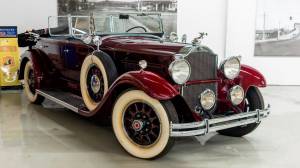
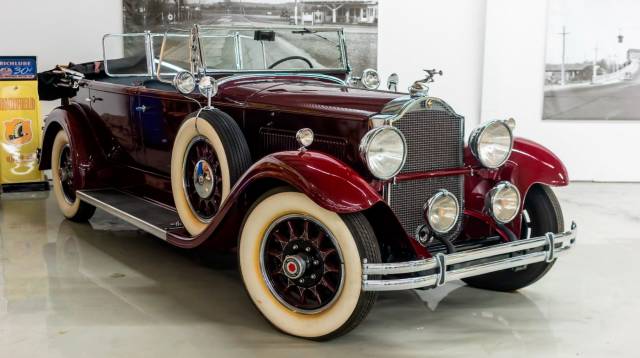
1931 | Packard Standard Eight 833
1931 Packard 833 Sport Phaeton
History of the Packard Standard Eight
The Packard Standard Eight was first introduced in 1924, positioning itself firmly in the premium segment in the American market. As part of the prestigious Packard Eight series, it contributed to defining luxury and performance standards of its time. From its launch, the Standard Eight evolved through the 1920s and '30s, with Packard continuously refining both the technical and comfort features. These vehicles were assembled primarily by hand in Detroit, reflecting Packard's commitment to high-quality manufacturing and reliability. The hallmark L-head straight-eight engine became a significant engineering achievement, underpinning the Standard Eight’s reputation for smoothness and endurance. By 1948, after multiple mechanical and design advancements, the model transitioned into the Packard Clipper Standard Eight and received further modernization, before ultimately being succeeded by the Packard 200 in 1951.
Model History and Evolution
Initially, the Packard Eight lineup was segmented in 1928 into Custom, De Luxe, and Standard models. The Standard Eight deliberately targeted buyers seeking luxury without the highest extravagance of the Custom series. Over the years, body styles ranged from five-passenger sedans and coupés to roadsters and convertibles, with coachbuilders like Murphy providing custom designs. Key mechanical changes included extensions of the chassis, improvements to the water pump, upgrades from three-speed to four-speed gearboxes in later years, and incremental increases in engine performance. The model remained in regular production and underwent several facelifts until its last iteration in 1950 before ceding its role to next-generation Packards.
Highlights and Special Features
The Packard Standard Eight impresses with its straight-eight L-head engine, producing between 90 and 109 horsepower at low RPM, notable for its era. Buyers could select various wheelbases and bespoke body configurations, including options from renowned US coachbuilders like Murphy. Innovations such as the Bijur central lubrication system, mechanical drum brakes on all four wheels, and hydraulic shock absorbers distinguished it from competitors. High-end detail included crank-operated windows, adjustable windscreens for ventilation, and often two side-mounted spare wheels. Interiors featured materials like leather, wood trim, and original dials, underscoring attention to luxury and quality.
Technical Data
Special Editions and Collectible Models
Special editions primarily derive from custom bodywork commissioned by buyers, often through renowned coachbuilders like Murphy. Certain convertible coupés, roadsters, and custom-bodied limousines from low-volume runs are especially desirable for their unique craftsmanship, luxury finishes, and rarity within the Standard Eight family.
Engine, Performance, Transmission and Handling
The heart of the Packard Standard Eight is its side-valve straight-eight engine, which is lauded for quiet operation and robust torque at low engine speeds. Performance, by 1920s and 1930s benchmarks, was brisk, with top speeds reaching up to 80 mph. Mechanical drum brakes provided solid stopping power, while a manually shifted transmission and leaf-spring suspension gave a genuine period-correct driving experience, requiring engaged, anticipatory handling. The model’s stable chassis, long wheelbase, and comprehensive suspension made for smooth and comfortable travel, particularly on period roadways. Noteworthy among this series are variants like the five-passenger sedan and custom convertibles, often equipped with accessories such as double side-mounted spares and fitted trunks. Technical standouts include higher displacement models and the extended wheelbase chassis, which allowed for both improved comfort and standout appearances at shows and rallies.
Interior, Comfort, Exterior and Design
The design of the Packard Standard Eight stands out with prominently chromed radiator grilles, the signature "Goddess of Speed" hood ornament, and disc wheels. Interiors were finished to a very high standard, combining leather, wood, fabric, and carpeting, often with unique dashboard jewelry and even marbleized shift knobs. Accessories and special fittings, such as clock faces and original dials, underline the attention to both luxury and operational practicality. Factory luggage carriers, crank windows, and auxiliary lamps were common, with custom upholstery and trim often decided by original owners.
Summary
The Packard Standard Eight represents an era when American engineering and coachbuilding merged to produce vehicles combining mechanical innovation with individual craftsmanship. With its smooth-running straight-eight engine, luxurious glass and wood interiors, and a wide choice of custom configurations, the Standard Eight remains the most represented and sought-after Packard model series among classic car aficionados and collectors today.