Rover 80 classic cars for sale
The Rover 80, produced from 1959 to 1962, represents one of the last developments in Rover’s renowned P4 luxury saloon series. Combining practical British engineering and refined comfort, the four-cylinder 2.3-litre Rover 80 remains a fascinating option for classic enthusiasts seeking a blend of traditional design and advanced period features.
Suchergebnisse
Zur Zeit sind keine passenden Inserate zu Ihrer Suche veröffentlicht.
Create search alert
Let yourself be notified as soon as a listing is published that matches your search filters.
Create listing
Do you have a Rover 80 that you want to sell? Then create a listing now.
Create listingRover 80 listing references from Classic Trader
Below you will find listings related to your search that are no longer available on Classic Trader. Use this information to gain insight into availability, value trends, and current pricing for a "Rover 80" to make a more informed purchasing decision.
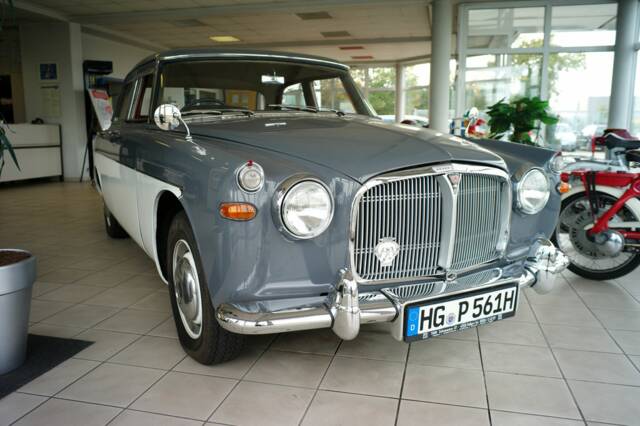
1961 | Rover 80
Rover Mk I Saloon | 1961 | Route 66 Auctions - For sale by auction. Estimate 10500 EUR

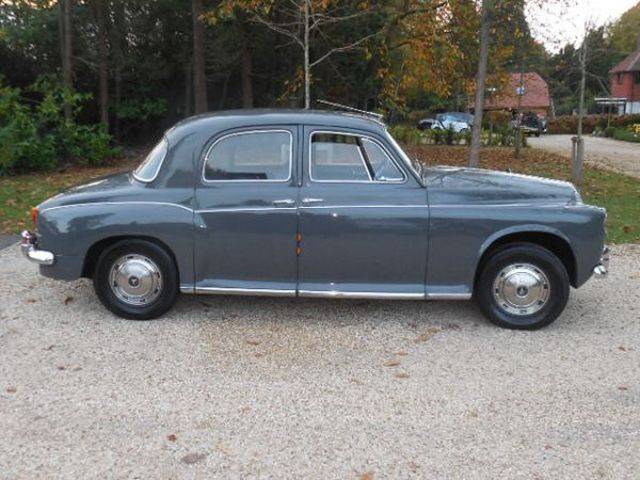
1962 | Rover 80

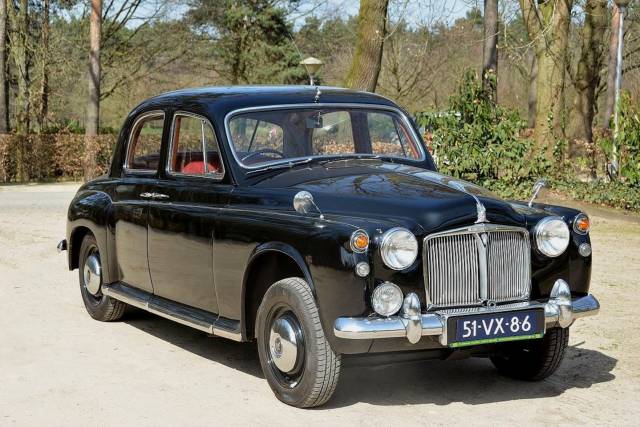
1960 | Rover 80
Topauto fur einen Liebhaber der etwas gutes sucht fur einen fairen Preis.
Create search alert
Let yourself be notified as soon as a listing is published that matches your search filters.
Create listing
Do you have a Rover 80 that you want to sell? Then create a listing now.
Create listingRover 80 Classic Cars: Prices & Market Values
History of the Rover 80
The Rover 80 emerged as the penultimate model within the P4 line, designed by Gordon Bashford to revitalise Rover's mid-size luxury saloon segment at the close of the 1950s. Debuting alongside the Rover 100, the 80 was introduced to an automotive market increasingly favouring modernity over traditional values. Despite advanced safety and comfort for its time, the P4 range was beginning to feel its age. With production starting in late 1959, the Rover 80 offered a rear-wheel drive layout, solid construction, and attention to driving comfort—longstanding hallmarks of the P4 series.
Model History and Series Evolution
The Rover 80’s lineage traces back to earlier P4 models, such as the 75, 60, 90, and the short-lived 105 variants. Once these predecessors phased out, the 80 and 100 continued the line until 1962. After that, the P4 95/110 briefly took over before the entire series was succeeded by the more contemporary Rover P6, closing a fifteen-year chapter of influential Rover saloons.
Highlights and Particularities
Key attributes of the Rover 80 include its robust 2.3-litre inline-four engine, reliable Girling front disc brakes, and, unusually for its class, an option for a four-speed automatic transmission. The interior featured period luxuries like front bench seats and an integrated radio. Wide tyres contributed to both its aesthetic and handling. Technologically conservative, yet with noteworthy comfort and engineering for late 1950s Britain, the Rover 80 excelled in offering solid, understated refinement.
Technical Data
Special Editions and Collectible Versions
No factory special editions of the Rover 80 were officially documented, with most cars sharing the same technical and equipment specification. Variations stem mainly from individual car options chosen at ordering, such as transmission type or period accessories like radios and special trim. Uniquely specified or exceptionally well-preserved examples can today be of particular collector interest.
Weak Spots and Common Issues
No explicit common issues have been provided for the Rover 80. However, as with many cars of its era, attention should be paid to body corrosion, mechanical wear on suspension and brakes, and the usual age-related electrical challenges. The Girling front disc brakes, a strong point in contemporary reviews, require regular inspection and maintenance to ensure reliability. Original parts for both engine and interior trim can be challenging to source, so buyers should check for completeness and mechanical integrity.
Engine, Performance, Transmission and Handling
The Rover 80’s 2.3-litre engine is known for smoothness rather than outright pace. With 80 hp on offer, spirited acceleration is not its forte, but cruising comfort and a composed ride over British roads define its character. The car offers a choice of a sturdy manual gearbox or an optional four-speed automatic, rare in mid-size saloons of the era. Upgraded brakes and wider tyres improved handling compared to earlier P4 models, contributing to secure, predictable road manners even by contemporary standards. The standout mechanical specification is the combination of Girling front disc brakes and the optional automatic transmission—advanced features at the time. Most Rover 80s featured standard bench seats, with some examples equipped with radios and other optional extras. All major variants share the same basic mechanics, underscoring the model’s focused design approach.
Interior, Comfort, Exterior and Design
The Rover 80 maintains traditional British luxury themes: a restrained yet dignified exterior, chrome trim, and upright, proportioned saloon bodywork unmistakably P4. The interior used quality materials, including comfortable front bench seats, wood veneer accents, and clear, functional instrumentation. Options like a radio and special upholstery fabrics allowed a modest degree of personalisation. The wide-tyred stance and rounded lines set the P4 apart from more angular contemporaries, while the dashboard and controls were laid out for ergonomic simplicity.
Other Noteworthy Details
The Rover 80 is considered a transitional model, bridging the classic post-war ethos with incremental technical refinement before the shift to the radically new P6. While never a sales hit, its mix of robust construction, advanced features for its class, and period comfort make it an interesting study in late '50s and early '60s British automotive evolution.
Summary
The Rover 80 occupies a distinct place in Rover’s history as the last four-cylinder P4 model built in moderate numbers, targeting buyers seeking a blend of tradition, comfort, and improved safety for its time. With less than 6,000 cars produced and limited current supply, the Rover 80 remains a noteworthy—if seldom seen—example of British mid-century engineering and design.