Rover 220 classic cars for sale
The Rover 220 stands as a representation of the collaboration between Austin Rover and Honda in the 1980s, merging British refinement with Japanese engineering. Known for its array of engines and matching Honda underpinnings, the 220 carved out its niche in the compact saloon segment. Its success was also cemented by TV appearances in British pop culture.
Suchergebnisse
Zur Zeit sind keine passenden Inserate zu Ihrer Suche veröffentlicht.
Create search alert
Let yourself be notified as soon as a listing is published that matches your search filters.
Create listing
Do you have a Rover 220 that you want to sell? Then create a listing now.
Create listingRover 220 listing references from Classic Trader
Below you will find listings related to your search that are no longer available on Classic Trader. Use this information to gain insight into availability, value trends, and current pricing for a "Rover 220" to make a more informed purchasing decision.
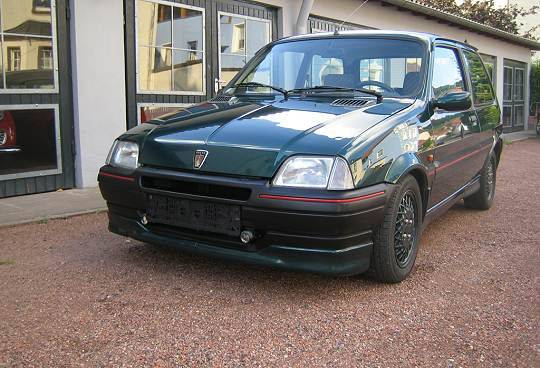
1996 | Rover 220
Rover 220
Create search alert
Let yourself be notified as soon as a listing is published that matches your search filters.
Create listing
Do you have a Rover 220 that you want to sell? Then create a listing now.
Create listingRover 220 Classic Cars: Prices & Market Values
History of the Rover 220
The Rover 220 was introduced by Austin Rover in 1984—a time of transition for the British car industry. Emerging from a joint effort with Honda, the 220 was closely related to the Honda Ballade and contemporaneous 200 Series models. Differences were largely cosmetic: unique front grilles, rear lights, and upgraded interiors. Debuting on 19 June 1984, the 220 soon gained recognition for blending British touches with a predominantly Japanese foundation. Production ran through 1989, after which the 400 Series succeeded it, marking an end to the first generation’s run. Despite initial criticisms of its external appearance, the 220 met with notable commercial success, especially among Britons looking for reliability mixed with upmarket trim.
Model History of the Rover 220
The 220 slot in the 200 Series line-up included the 213 and 216 models at first. The 213 housed a Honda-derived 1.3-litre SOHC engine producing 73 bhp, while the 216 featured a 1.6-litre British Leyland engine with fuel injection and up to 104 bhp in its sporty Efi Vitesse guise. Vitesse versions set themselves apart with alloy wheels, rubber rear spoilers, and sport seats. In 1986, the 216 SE with an 86 bhp carburettor engine joined the range, offering more comfort and automatic transmission options. October 1989 saw the release of a roomier, five-door 200 Series and later the Rover 400 saloon. The 1990s brought coupe variants like the 216i with 130 bhp and, at the top end, the turbocharged 220i Turbo pumping out 200 bhp with a Torsen limited-slip diff—the first of its kind on a front-driven Rover.
Highlights of the Rover 220
The Rover 220 is significant for its fusion of Japanese mechanicals and British styling updates. Noteworthy are the Efi Vitesse trim for sportier appeal, various engine options for different tastes—including the potent turbocharged 220i Turbo—and a comfort-oriented specification in the SE models. The multi-generational approach, with models evolving from four to five-door and coupe layouts, shows Rover’s response to changing customer demands. The 220 also earned its place in British culture, famously appearing in TV series such as 'Keeping Up Appearances' and 'Father Ted'—adding a layer of familiarity for UK classic enthusiasts.
Technical Data of the Rover 220
Special Editions and Collectible Models
The 216 Efi Vitesse stands out for its youthful, sport-oriented equipment: alloy wheels, distinctive spoilers, red bumper detailing, and sports seating. In the 1990s, the 220i Turbo coupe—boasting a 2.0-litre, 16-valve turbo engine producing 200 bhp—became notable for its advanced traction technology and elevated performance, distinguishing it as a sought-after edition among enthusiasts who value period-accurate factory upgrades.
Weak Spots and Common Issues
No specific weak spots or recurrent issues are detailed in the available data. As with any classic car of this era, buyers are advised to check for rust, electrical reliability, and condition of drivetrain components, particularly on high-performance or Turbo models where maintenance histories may vary.
Engine and Performance, Transmission and Handling
The Rover 220’s range reflected varied driver expectations—from practical commuting to spirited motoring. Early variants offered smooth, reliable driving courtesy of Honda’s engine technology. The 220 Efi Vitesse introduced a livelier edge with more agile handling and a respectable power boost. The 220i Turbo, equipped with a 2.0-litre turbocharged powerhouse and a Torsen diff, delivered robust linear acceleration and markedly improved traction for the era. Transmission choices extended from efficient five-speed manuals to convenient automatics. Later models, with uprated engines and improved chassis dynamics, ensured the 220 remained relevant well into the 1990s. • 216 Efi Vitesse (104 bhp, sport trim, manual) • 220i Turbo coupe (200 bhp, 5-speed manual, Torsen diff) • 216 SE (carburettor and injection options, comfort-focused) • 214 Si (1.4-litre, 16V, 95 bhp, multipoint injection)
Interior, Comfort, Exterior and Design
The Rover 220 range reflected a shift towards modern British comfort with Japanese efficiency. Exteriors—particularly in the first series—were conservative, echoing Honda contemporaries, but differentiated by the Rover grille, bespoke taillights, and higher-grade trim. Interiors shifted away from austere minimalism, especially on Vitesse and SE trims, where sports seats, enhanced fabric, and red accent lines were featured. Options included alloy wheels, body-coloured bumpers, and in the Turbo coupe, bold spoilers and period-correct badges. Accessories such as automatic transmissions and sunroofs added to appeal, especially in comfort-oriented models.
Other Features
The Rover 220’s presence in UK television, as the vehicle of choice for characters in beloved sitcoms, demonstrates its integration into British daily life during the late 1980s and 1990s. This cultural exposure makes it a recognisable model on classic car circuits in the UK today.
Summary
For those keen on a classic British saloon with a twist of Japanese engineering, the Rover 220 is a unique find. Spanning multiple engine types, trim levels, and even turbocharged performance, it bridges utility and enthusiasm. The model’s TV history, range evolution, and technical sophistication—especially in the Turbo models—set it apart for collectors attentive to British automotive developments of the late 20th century.