Renault Nervastella classic cars for sale
The Renault Nervastella represents the pinnacle of luxury engineering from Renault’s pre-war era, known for its sophisticated straight-eight engine and its striking, stately appearance. Favoured by French government officials, the Nervastella’s blend of advanced technology and opulent design stands out even among the grand touring cars of the 1930s.
Search results
Currently, there are no matching listings for your search.
Create search alert
Let yourself be notified as soon as a listing is published that matches your search filters.
Create listing
Do you have a Renault Nervastella that you want to sell? Then create a listing now.
Create listingRenault Nervastella listing references from Classic Trader
Below you will find listings related to your search that are no longer available on Classic Trader. Use this information to gain insight into availability, value trends, and current pricing for a "Renault Nervastella" to make a more informed purchasing decision.
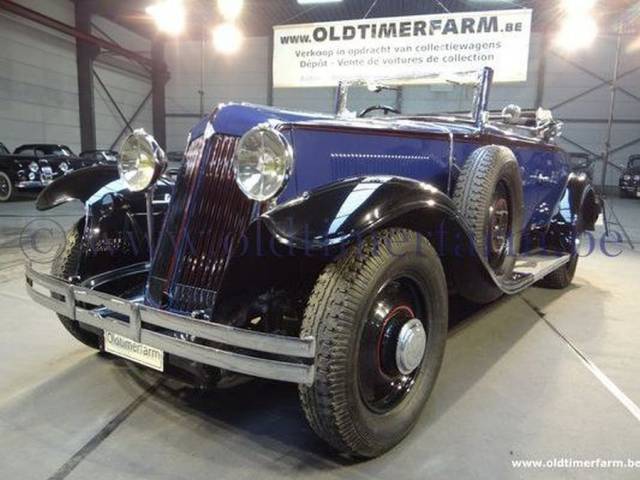
1931 | Renault Nervastella Type TG 2
Beautifull cabriolet between wars
Create search alert
Let yourself be notified as soon as a listing is published that matches your search filters.
Create listing
Do you have a Renault Nervastella that you want to sell? Then create a listing now.
Create listingRenault Nervastella Classic Cars: Prices & Market Values
History of the Renault Nervastella
Launched in 1930 and produced until 1937, the Renault Nervastella was the flagship model of the Renault line-up during the interwar years. Developed as a showcase of Renault’s technical capabilities and commitment to luxury motoring, the Nervastella quickly found favour as a state limousine. Images from the 1930s frequently show the French president and other dignitaries transported in these prestigious vehicles, underlining their status as an official state car. The Nervastella introduced a series of engineering and design features that set new standards for comfort and refinement in French automotive circles.
Model History: From Introduction to the End of Production
The Nervastella debuted in a period when Renault was already an established manufacturer of both mass-market and luxury vehicles. Designed as the successor to the earlier range-topping models, the Nervastella combined greater engine displacement and advanced chassis design. Over its seven-year production run, the car underwent several updates, particularly regarding its engine and body styles. The series evolved into more streamlined silhouettes towards the late 1930s, mirroring broader trends in automotive design of the era. Successor models—such as the post-war Frégate—never quite captured the same aura of state-level prestige.
Highlights and Vehicle Rarity
The Renault Nervastella boasts a large, imposing bodywork with elegant flowing lines and a straight-eight-cylinder engine, which was a technical highlight for the time. These vehicles were not only chosen by high-ranking government officials but also by wealthy private owners seeking distinction and comfort. The use of the Nervastella as a French state car in the 1930s is one of its defining features, lending it substantial historical gravitas. Due to its low production numbers and the car’s original clientele, surviving examples are seldom encountered on today’s classic car market.
Technical Data
Special Editions and Collectible Models
While there are no widely noted limited editions, some Nervastella units were produced with bespoke coachwork by noted French bodybuilders, making each example potentially unique. Vehicles with original state or ceremonial usage history, custom interiors, or rare body styles—such as convertibles or coupés—command particular attention among collectors.
Weak Spots and Common Issues
Due to lack of specific data, common issues typical for large, low-volume pre-war French luxury vehicles should be considered: scarcity of spare parts, complex engine maintenance due to the straight-eight configuration, and potential deterioration of unique trim and fabrics. Restoration may require sourcing specialist craftspeople familiar with early 20th-century Renault engineering.
Engine, Performance, Transmission and Handling
With a 4.2-litre, 8-cylinder engine producing 100 PS, the Nervastella excelled at smooth, high-speed cruising, prioritising refinement over raw acceleration. Power was delivered to the rear wheels via manual transmission, with the long wheelbase ensuring a comfortable, stable ride even on poor roads. The significant weight and dimensions required attentive handling, especially given the period brakes and steering equipment. Period reports praised the Nervastella for its ability to cover large distances effortlessly, a crucial attribute for a state limousine. Standout models include bespoke-bodied versions built for ceremonial or government use, as well as examples featuring the later, streamlined bodywork from the mid-1930s. The base-engine sedan, with its robust straight-eight, remains a benchmark for pre-war Renault engineering.
Interior, Comfort, Exterior and Design
Art Deco influences are clear in the design cues, with luxurious upholstery and inlaid wooden details in the cabin. The exterior combined stately proportions with elegant, sweeping fenders. Interiors typically featured high-quality leather, wood, and custom accessories like removable privacy screens or detailed clockwork. Many Nervastellas were tailored to their client’s wishes—including special paint colours, monogrammed door panels, or unique trims—making each surviving example potentially unique. Some versions incorporated advanced features for the era, such as windscreen washers or integrated trunk luggage solutions.
Other Relevant Features
Certain Nervastellas might retain period accessories like original toolkits, ceremonial flag holders, or documentation of official usage. Any such provenance significantly increases historical interest and can support precise restoration.
Summary
A Renault Nervastella offers an insight into the ambitions and technical achievements of 1930s French automotive engineering. Its rarity, stately design, and advanced period technology make it stand out from more commonly encountered pre-war classics. For enthusiasts intent on a grand tourer with authentic period prestige and significant restoration potential, the Nervastella holds a special appeal.