- Car
- Rayvolution (0 offers)
Buy Rayvolution classic cars
Rayvolution combines motorcycle pace with a low, hand-built three-wheel chassis and a cockpit that feels closer to a competition special than a conventional car. Find a carefully documented Rayvolution on Classic Trader and judge the individual build on its evidence.
Search results
Currently, there are no matching listings for your search.
Create search alert
Let yourself be notified as soon as a listing is published that matches your search filters.
Create listing
Do you have a Rayvolution that you want to sell? Then create a listing now.
Create listingRayvolution listing references from Classic Trader
Below you will find listings related to your search that are no longer available on Classic Trader. Use this information to gain insight into availability, value trends, and current pricing for a "Rayvolution" to make a more informed purchasing decision.
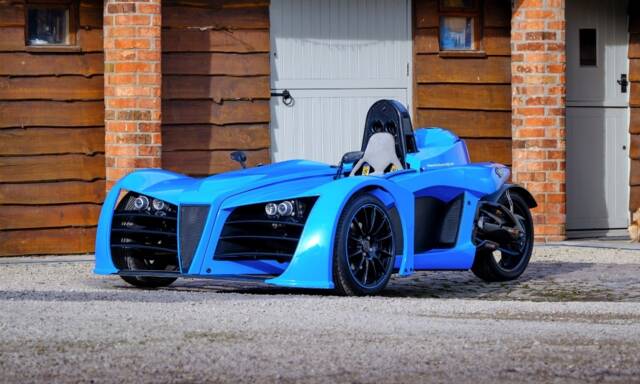
2013 | Rayvolution Evo
2013 Rayvolution EVO

Create search alert
Let yourself be notified as soon as a listing is published that matches your search filters.
Create listing
Do you have a Rayvolution that you want to sell? Then create a listing now.
Create listingHistory and identity
Rayvolution is not a volume manufacturer and should not be approached as though every example followed a rigid factory specification. It is a British-flavoured specialist marque built around a very particular idea: retain the urgent, compact power delivery of a litre-class motorcycle, place it in a very low three-wheeled machine and make the result feel deliberately engineered rather than merely improvised. That distinction matters when a car is for sale. The badge identifies a small hand-built proposition; the chassis number, build photographs, component invoices and registration history identify the actual vehicle.
The best-known early representative is the 2013 Rayvolution Evo. It is useful as a documented example of the marque, not as the subject of this make-level page. Contemporary descriptions credit Tony Lafayette with the design and describe GRP bodywork, Protech inboard suspension and Wolf Race wheels. The attraction was never a retro pastiche. The Rayvolution has its own wedge-like, open-wheel visual language: a narrow nose, exposed mechanical purpose and a cockpit set low between the wheels. Its closest cultural relatives are British kit-car and club-sport specials, yet the finish expected of a good Rayvolution is more integrated than a garage-built collection of parts.
The marque belongs to a long British tradition in which small makers use accessible donor engineering to create an experience unavailable from a mainstream manufacturer. The donor approach helps explain both the appeal and the diligence required. A well-executed car can combine recognised drivetrain parts with a bespoke chassis and body; a poorly documented one can leave a buyer dependent on unknown fabrication and untraceable decisions. For collectors, rarity is attractive only when it is accompanied by a clear story. For drivers, the prize is a machine that turns modest road speeds into a vivid occasion.
Highlights and character
The central Rayvolution appeal is power-to-weight rather than headline horsepower alone. A reported Evo specification uses Suzuki's GSX-R1000 K9 engine: a 999 cc, liquid-cooled inline four rated in Classic Trader material at 185 hp. In a light three-wheeler, that means a high-revving engine responds with more immediacy than the same unit in a heavier car. Sequential motorcycle gearing, a short wheelbase and open exposure to wind, sound and road surface give the driver far more sensory information than a conventional sports car.
Equally important is the contrast between specialist construction and familiar service items. The engine family has a substantial motorcycle knowledge base in Britain. Consumables, ignition expertise and engine-management understanding are more attainable than they would be for an obscure bespoke powerplant. The chassis, suspension installation, final drive, cooling plumbing, pedal box, wiring integration and body fit remain Rayvolution-specific in the practical sense: inspect what is on the car, not what another owner's car may have used.
A serious listing should make the individuality easy to assess. Look for a chassis or build number; clear V5C details; IVA or earlier approval evidence as appropriate to the registration date; photographs before bodywork was fitted; invoices for the donor engine and major work; and recent evidence of use. A low odometer reading is not automatically reassuring on a motorcycle-engined three-wheeler. Time standing can affect fuel, coolant, brake fluid, tyres, bearings and electrical connections as surely as mileage affects a hard-used example.
Technical data
Specifications vary by build. The table records the published 2013 Evo reference point and should never substitute for confirming an advertised car's documents.
That last row is especially important. A claimed kerb weight without scales, or an acceleration figure without a repeatable source, is marketing rather than a buying fact. Ask how the reverse function works, whether the driveline uses a differential, what ratio is fitted, and how the motorcycle engine is lubricated under sustained cornering. Establish the cooling-system capacity and fan control, because a close-fitting body and a high-output engine demand effective airflow at low speed. Check the date code and rating of every tyre; three wheels do not make tyre condition less important.
Market overview and buying tips
Rayvolution values are necessarily thinly traded, so an asking price is an anchor, not a price guide. In 2025 a Rayvolution Evo was advertised around £14,995, while another contemporary continental asking reference was about €16,000. A Historics catalogue described a circa £35,000 build cost for a 2013 example. None of those figures proves what another car is worth. Build cost is rarely recovered pound for pound, and a rare specialist can be worth less than its components if the paperwork is unclear. Conversely, a finished, registered, well-photographed and recently exercised car can be far more usable than a cheaper project.
For a UK buyer, begin with identity. Compare the V5C's make, model, VIN and fuel type with the chassis stamping and approval paperwork. Establish whether the registration is correct for the vehicle rather than a carried-over donor identity. Ask for the MOT history, but do not treat an MOT pass as a structural report. Examine the chassis tubes, weld quality, mounting tabs, front suspension pickups, steering joints and rear-drive brackets on a lift. Fresh powder coating can be excellent preservation or a way of hiding poor fabrication; build photographs and invoices settle the question better than appearance alone.
Then inspect the motorcycle conversion as a system. A cold start should be offered. Listen for cam-chain, clutch or gearbox noises, check that the engine reaches temperature without fan or hose drama, and confirm charging voltage. Review the exhaust routing and heat shielding around GRP panels, the fuel-tank installation and all brake lines. Test every gear under load in a safe setting. A sequential gearbox that works on a bike may feel different through a car linkage; missed shifts, a reluctant neutral or an uncertain clutch deserve diagnosis, not optimism. Check the reverse mechanism, handbrake, lights, wipers where fitted and any weather equipment.
Parts planning should be split into three lists: Suzuki service parts, standard motorsport hardware and Rayvolution-specific components. The first two can often be sourced through established suppliers; the third may require the original builder, a previous owner or careful remanufacture. Do not buy before knowing who can supply a windscreen, lamp cover, body panel or suspension bracket if it is damaged. An enthusiast club, detailed build archive and a folder of supplier contacts can add more real value than cosmetic modifications.
Driving feel
At its best, a Rayvolution is an intensely physical road car. The engine's response rises with revs, the gear changes come in quick steps and the low seating position makes a familiar B-road seem newly scaled. There is little insulation between driver and mechanism: intake note, tyre roar, wind pressure and the small movements of the chassis all arrive directly. That is the point, not a defect, provided the car is set up properly.
The experience is also more demanding than a conventional sports car. Three-wheel dynamics, exposed weather, a narrow cockpit and bike-derived controls reward smooth inputs and concentration. A buyer should take a meaningful test drive only after becoming familiar with the shift and reverse arrangements. Check straight-line stability, steering self-centring, brake balance, damping response over broken surfaces and whether the engine's heat becomes uncomfortable in traffic. A machine intended for Sunday roads may be thrilling there while remaining tiring on a wet motorway; choose for the use you will actually make of it.
Design and construction
Rayvolution's design succeeds because its styling follows function. GRP allows small-series bodywork with curved surfaces and sharp openings, while the exposed-wheel stance announces that this is not a conventional hatchback with an engine conversion. The reported Protech inboard suspension is part of that philosophy: compact components, controlled movement and an effort to keep the mechanical package purposeful. Panel gaps, mounting quality and access for maintenance are useful evidence of the standard to which a particular car was completed.
Unlike a mass-produced classic, originality is not simply a list of factory-correct finishes. Sensible upgrades can be valuable when they are documented and competently engineered: improved cooling, safer fuel plumbing, revised lighting or a better weather cover may make ownership easier. Avoid changes that compromise the approved specification, conceal wiring, alter structural members without evidence or make future servicing harder. The strongest cars preserve a coherent build narrative from donor purchase to present maintenance.
Ownership and provenance
Insurance should be discussed with a specialist before money changes hands. Explain the construction, engine, agreed-value requirement, annual mileage and storage arrangements rather than assuming a normal classic-car quotation will apply. Secure garaging, a battery conditioner used correctly and regular fluid checks suit a car whose exposed materials and small electrical system may dislike neglect. A pre-purchase inspection by someone familiar with motorcycle-engined specials is worth arranging even if the engine itself appears healthy.
Keep the file alive after purchase. Record every service, retain old parts, photograph repairs before refinishing and note suppliers. With a rare make, that archive protects resale confidence and makes the next repair faster. It also separates a genuine, thoughtfully maintained Rayvolution from a visually similar car with an uncertain past.
Budget for ownership as a specialist-car programme rather than a standard annual service. Establish the oil specification and change interval used by the engine installer, then find out whether the filter, plugs and coolant system can be reached without excessive dismantling. Inspect the chain, sprockets or other final-drive components at the intervals appropriate to the actual arrangement. A light car can put surprisingly sharp load changes through its driveline. Wheel alignment and corner weighting, where the chassis permits it, can transform confidence without altering its identity.
Road legality needs continuing attention. Keep the V5C address current, retain MOT certificates and ensure any modification is declared to the insurer. Replacement lights, exhaust systems and tyres must remain suitable for the car's construction and use. If the car has spent years in a collection, recommission brakes, fuel system and cooling system before treating a fresh MOT as proof that it is ready for a long trip. This approach costs less than recovering a rare, low-slung special from the roadside and preserves the evidence a future buyer will want.
Ask the seller which jobs were done personally and which were completed by named specialists. Receipts with dates, mileage and photographs are stronger than an undated statement that the car was “rebuilt”. They also make it easier to schedule the next inspection intelligently.
Summary
A Rayvolution is a compelling choice for the buyer who values lightness, mechanical immediacy and a genuinely uncommon British specialist. Judge it as an individual hand-built vehicle: verify registration, structure, engine installation, approval history and the availability of its unique parts. Find documented Rayvolution classic cars on Classic Trader, and let condition and provenance lead the decision rather than rarity alone.