Opel Kadett K38 classic cars for sale
The Opel Kadett K38 was produced from 1936 to 1940 and marked Opel's entry into the small family car segment before World War II. Its engineering and design influenced generations of compact cars. Explore available Kadett K38 classics and learn what makes these pre-war Opels so distinctive.
Search results
Currently, there are no matching listings for your search.
Create search alert
Let yourself be notified as soon as a listing is published that matches your search filters.
Create listing
Do you have a Opel Kadett K38 that you want to sell? Then create a listing now.
Create listingOpel Kadett K38 listing references from Classic Trader
Below you will find listings related to your search that are no longer available on Classic Trader. Use this information to gain insight into availability, value trends, and current pricing for a "Opel Kadett K38" to make a more informed purchasing decision.
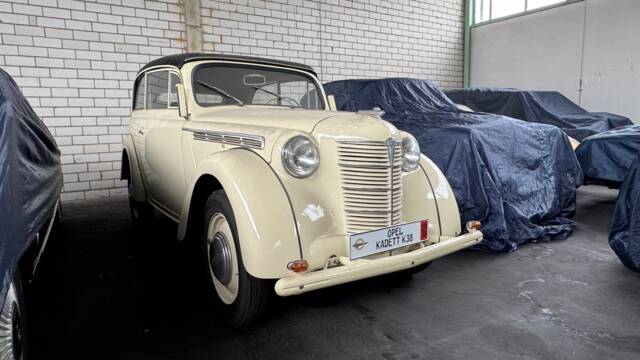
1938 | Opel Kadett

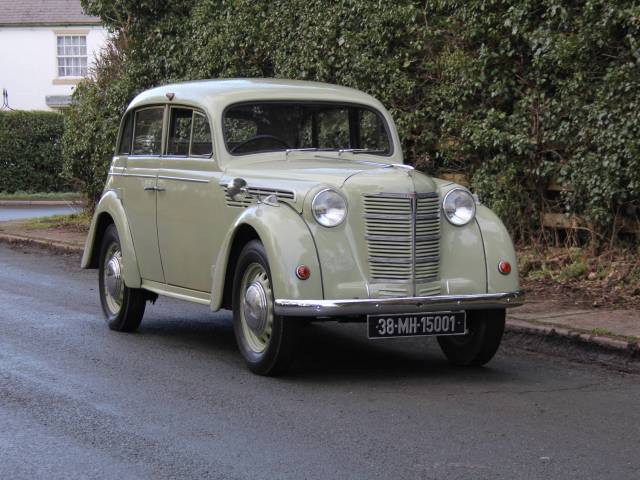
1938 | Opel Kadett

Create search alert
Let yourself be notified as soon as a listing is published that matches your search filters.
Create listing
Do you have a Opel Kadett K38 that you want to sell? Then create a listing now.
Create listingOpel Kadett K38 Classic Cars: Prices & Market Values
History of the Opel Kadett K38
The Opel Kadett K38 entered production in 1936 and quickly established Opel as a major player in the affordable family car market. Developed in Rüsselsheim, the Kadett K38 responded to increasing European demand for economical and reliable transportation before WWII. With production running until 1940, the Kadett K38 was one of the few German compact models of its era that could compete against similarly sized and priced cars from across Europe. Its reputation and significance persisted well after production paused, laying the groundwork for Opel's post-war success in this segment.
Model History
The Kadett K38 followed the earlier Opel 'Kadett' introduced in 1936, with improvements in engineering and design. After 1940, production halted due to the war and resumed only with a new generation—the Kadett A—in 1962. The K38 series bridged pre- and post-war technological progress at Opel, and is the direct ancestor of models like the Opel Kadett A and the later Astra.
Highlights and Special Features of the Opel Kadett K38
The Kadett K38 was among the earliest German cars with all-steel unitary body construction, making it notably lighter and roomier than its contemporaries. Its layout and technical package set standards for ergonomic interiors and mechanical simplicity. The car’s efficient size and practical engineering made it a benchmark in the segment just before WWII disrupted the European car industry.
Technical Data
Special Editions and Collectible Models
No widely documented factory special editions exist for the Opel Kadett K38, though period accessories and export versions sometimes featured unique trim or equipment.
Weak Spots and Common Issues
No specific weak spots or common technical issues are documented in the available information for the Kadett K38. Given the age of the vehicles, buyers should closely inspect for corrosion, worn components, and originality of restoration.
Engine, Transmission, and Road Handling
The Kadett K38’s four-cylinder engine offered reliable performance by the standards of the late 1930s, paired with a manually shifted gearbox. Its light body construction resulted in agile handling for its time. Compared to larger pre-war cars, the K38 is notable for its easy maneuverability and efficient fuel usage. - Opel Kadett K38 Limousine: Recognised for its compact proportions and functional layout.
- Opel Kadett K38 Cabriolet (very rare): Variants with factory or aftermarket open-top configuration appeal to collectors seeking uniqueness.
Design, Interior, and Comfort
The Opel Kadett K38 featured clean lines typical of 1930s automotive design, with a functional, no-nonsense approach. The interior layout prioritised practicality—simple upholstery, logical gauge placement, and efficient use of space made it family-friendly and competitive among its peers. Some models could be specified in a limited set of period-accurate colours, and original accessories included hubcaps, period radios, and luggage racks. The unitary construction allowed for a lower, more modern stance compared to separate-chassis rivals.
Other Notable Features
The K38 helped cement Opel’s reputation for reliability and value in the pre-war period and influenced the design philosophy of Opel compact cars for decades. Its engineering principles were partly adopted by the post-war Soviet Moskvitch 400, which was based on K38 tooling after the war.
Summary
The Opel Kadett K38 stands out as a hallmark of pre-war German engineering, setting standards in its class with its advanced construction and practicality. Its presence on the classic car market is rare and highly specific, appealing to enthusiasts interested in the roots of Opel’s design legacy and pre-war automotive history.