- Car
- Hotzenblitz (0 offers)
Buy Hotzenblitz classic cars
The Hotzenblitz is one of the rarest early electric cars you can buy: a German microcar built in tiny numbers between 1993 and 1996, with real collector intrigue in Britain. For UK buyers, the appeal is not everyday practicality but the chance to own a pioneering EV that sits between bubble-car curiosity, engineering experiment and serious rarity.
Search results
Currently, there are no matching listings for your search.
Create search alert
Let yourself be notified as soon as a listing is published that matches your search filters.
Create listing
Do you have a Hotzenblitz that you want to sell? Then create a listing now.
Create listingHotzenblitz listing references from Classic Trader
Below you will find listings related to your search that are no longer available on Classic Trader. Use this information to gain insight into availability, value trends, and current pricing for a "Hotzenblitz" to make a more informed purchasing decision.
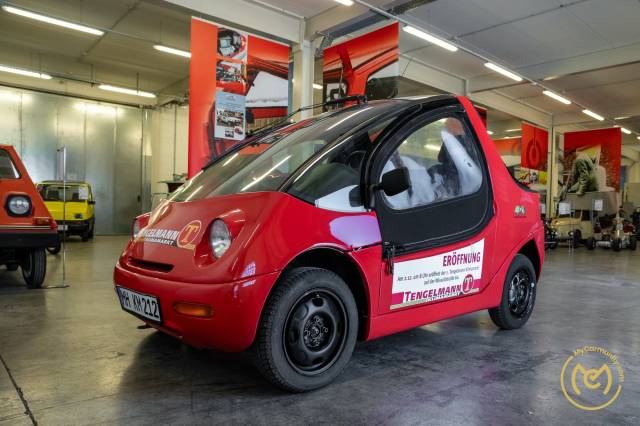
1995 | Hotzenblitz Buggy
Rarität, 1. Hand, Promi Vorbesitz, geringe Laufleistung, Originalzustand

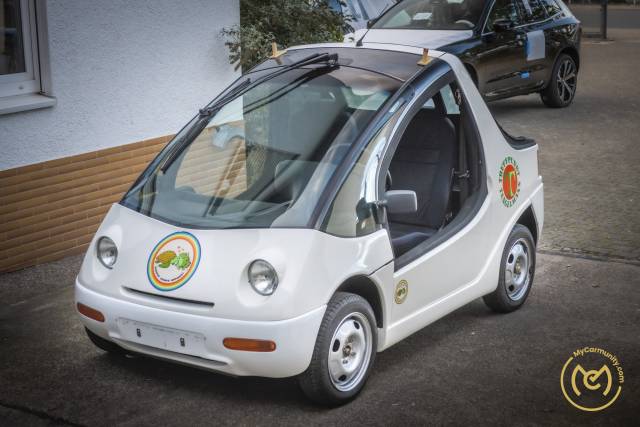
1995 | Hotzenblitz Buggy
Nr 25 von insg. 150 Stk, 1. Hand, einmalige Historie, Ausstellungsstück
Create search alert
Let yourself be notified as soon as a listing is published that matches your search filters.
Create listing
Do you have a Hotzenblitz that you want to sell? Then create a listing now.
Create listingHistory
The Hotzenblitz occupies a small but important corner of motor-car history. It was developed in Ibach, in the Hotzenwald region of south-west Germany, then built in Suhl between 1993 and 1996 as a purpose-designed electric microcar rather than a converted petrol model. That matters. Long before electric city cars became normal showroom stock, the Hotzenblitz was already using a tubular steel spaceframe, an aluminium battery floor and a lightweight plastic body to make an urban EV work on its own terms.
The project began around 1989, with Thomas Albiez and a small team pursuing an electric car that would be lighter, cleaner and easier to use in town than the conventional small cars of the day. Contemporary accounts and later retrospectives agree on the main arc: development moved quickly, the concept reached a driveable prototype in well under two years, and the car entered low-volume production with an ambition far larger than the business could ultimately support. The Hotzenblitz was not killed by lack of ideas. It was killed by the brutal economics of hand-built production, a high retail price and a market that was nowhere near ready for a battery-electric commuter car costing serious money in the mid-1990s.
Its historical significance is stronger now than it looked at the time. Period and later sources alike describe it as the first passenger car in post-war Germany to be developed, series-produced and sold exclusively as an electric vehicle. That does not mean it was the first electric car on the road, but it does mean it stands apart from conversion-based projects and fleet experiments. For collectors, that makes the Hotzenblitz more than a quirky footnote: it is an origin-story car for modern German EV history.
Production totals remain small enough to define the whole market. Most sources cite around 140 to 150 cars, with many identifying the open Buggy as the dominant version and the more enclosed City as much rarer. Some later reports split output into roughly 122 built in period plus around 30 assembled later from remaining parts, which helps explain why individual cars can differ in detail. In practice, buyers should think less in terms of tidy factory generations and more in terms of early and late build features, Buggy versus City bodywork, and original versus upgraded battery systems.
The body story is part of the appeal. Early cars used a hand-laminated GRP body, later cars shifted towards ABS plastic panels in an attempt to simplify manufacture and reduce finishing work. The Buggy used zip-in transparent side doors and a simple fabric roof arrangement; the City introduced fixed doors, a more enclosed profile and, on some cars, a small rear bench arrangement. The underlying idea never changed: this was a compact electric runabout for short-distance use, built with more imagination than money.
Financial trouble ended the original programme in 1996 before any proper industrial scale-up happened. Yet the Hotzenblitz did not disappear. It stayed alive through enthusiasts, researchers and engineers who saw promise in the platform. Later experiments included modern battery conversions, extended-range engineering studies and even fuel-cell-based research demonstrators. That afterlife matters in the British market too, because the surviving cars you encounter today are rarely identical. Some are near-original historical artefacts. Others are updated, usable early EVs with later chemistry and revised charging hardware. Knowing which sort you want is the first buying decision.
Highlights
The Hotzenblitz has no conventional prestige badge, no racing pedigree and no big-production back catalogue. What makes it attractive is a different mix of strengths.
First, it is genuinely rare. With only about 140-150 cars built, supply is tiny even by specialist classic standards. In Britain, that rarity is multiplied by geography: very few cars were ever aimed at the UK, and any buyer here is likely to be shopping in continental Europe or buying from another enthusiast who already did the hard import work.
Second, it was conceptually ahead of its time. The car’s technical layout now reads like a stripped-down forecast of later urban EV thinking: battery mass low in the chassis, lightweight construction, compact footprint, single-speed simplicity, modest power and a mission focused on town driving rather than motorway heroics. Even the packaging feels modern. A very short car with a panoramic glass area, low centre of gravity and minimal body overhangs speaks the same language as later urban mobility ideas, just with 1990s materials and battery limitations.
Third, the Hotzenblitz is especially interesting to British buyers because it sits at the overlap of two collector scenes that are both well established in the UK: microcars and early electric vehicles. Britain has a longstanding microcar culture, from the Micro Maniacs Club and the Scottish Micro-Car Club to the National Bubble and Microcar Museum in Lincolnshire. It also has a deeper EV enthusiast tradition than many casual buyers realise; the Battery Vehicle Society, founded in 1973, is still a reference point for early British EV enthusiasm. The Hotzenblitz speaks to both groups. It is small, odd, charming and historically important, yet it is also an authentic pre-mainstream EV rather than a retro novelty.
Fourth, it offers a distinct collector choice between originality and usability. An original car with its lead-gel setup, period electronics and early body details is historically rich but operationally delicate. A sympathetically upgraded car with modern cells and improved battery management may be more enjoyable on British roads and easier to insure, maintain and demonstrate at events, but it loses some of the untouched-artefact appeal. Unlike many classics, the “best” specification depends heavily on the buyer’s purpose.
Finally, the Hotzenblitz carries a strong conversation-value premium. It is the sort of car that attracts attention at a British classic show not because people recognise it, but because they do not. Set among bubble cars, kei imports, invalid carriages, Sinclair C5s or first-generation mainstream EVs, a Hotzenblitz looks like the missing chapter between 1950s microcar ingenuity and the modern electric city car. That is precisely why the right collector notices it.
Technical Data
Exact details vary by body type, build phase and later conversion work, but the core factory specification is broadly consistent across the best-documented sources.
Key dimensions and technical points commonly cited for the model family:
- Length: about 2,750 mm
- Width: about 1,480 mm
- Height: about 1,500 mm
- Wheelbase: about 2,050 mm
- Brakes: front discs, rear drums, plus regenerative braking effect
- Chassis: tubular steel frame with aluminium sandwich floor / battery tray
- Body: GRP on early cars, later ABS-plastic body shells on some examples
- Charging: on-board charger around 2 kW
- Charging time: roughly 5 to 7 hours from empty to full in period form
- Consumption: approximately 10-15 kWh/100 km in contemporary descriptions
- Acceleration: some sources quote 0-60 km/h in 5.8 seconds
- Seats: usually 2, with some layouts using a small rear bench or emergency-seat arrangement
- Original price when new: about DM 32,000 for the basic Buggy and up to DM 54,000 for a better-equipped City
The most important technical note for today’s buyer is simple: the battery system defines the car. A Hotzenblitz running tired lead-gel batteries is a very different proposition from one with a professionally engineered lithium conversion. Ask about battery chemistry, installation date, charge protocol, balancing, fuse strategy, charger compatibility, thermal protection, paperwork and whether the dashboard instrumentation still reports accurately. On a car this rare, the electrical state matters more than the brochure spec.
Market Overview & Buying Tips
The Hotzenblitz market is thin everywhere, and particularly thin in Great Britain. There is no deep UK price database, no steady stream of dealer stock and no reliable “going rate” in the way you would expect for a Mini, a Messerschmitt or even a first-generation G-Wiz. If you are shopping seriously, you must work from scattered public reference points and accept that condition, completeness and paperwork drive value more than any nominal guide price.
Public reference points from 2024-2026 remain sparse. A few are still useful:
- Classic Driver / MyCarmunity documented a 1995 Hotzenblitz Buggy auction in late 2023 with an estimate of €5,000-€15,000.
- emission-zero, updated in May 2026, gives a general used-value range of €5,000-€15,000.
- FirstEV listed a 1993 Hotzenblitz in February 2026 at €16,000, described as running and regularly used.
- Classic Trader archive material shows an older 1995 Buggy listing at €1,000, but that should be treated as a project-level anomaly, not a dependable market benchmark.
In pound terms, those continental reference points translate only roughly, but they suggest a British buyer should think in broad bands rather than precise numbers. A neglected, incomplete or long-stored car may still appear at low four figures. A more complete and documented example sits closer to mid-four to low-five figures in pounds once converted, before you even add transport, customs exposure, registration costs and remedial work. A truly sorted UK-registered car with a sensible battery update may justify more, precisely because the buyer avoids the hardest part of the process.
For British buyers, the real market question is not only “what does it cost?” but “what will it take to get it legal and usable here?”. GOV.UK guidance is clear on the main steps for a vehicle imported into Great Britain permanently. You must notify HMRC within 14 days of arrival via the NOVA process, settle any VAT and customs duty due, register the car with DVLA, and expect to pay the current £55 first-registration fee plus vehicle tax where applicable. DVLA also notes that the V5C can take up to 6 weeks after approval. For a Hotzenblitz sourced from Germany, that admin timeline should be treated as part of the purchase.
The good news is that a Hotzenblitz is now comfortably over 10 years old, which usually means it is exempt from vehicle approval requirements that catch newer imports. The less good news is that it is not yet old enough to qualify as a historic vehicle in UK legal terms. GOV.UK’s current historic-vehicle guidance uses a 40-year rule for MOT exemption and historic tax class, and a 1993-1996 Hotzenblitz is years away from that threshold. In plain English: in Britain, a road-going Hotzenblitz still needs a valid MOT, and you should not assume any historic-vehicle shortcut.
The V55/5 registration route for used imports also matters. DVLA guidance for imported used vehicles requires the foreign registration document, evidence of age, and MOT evidence if the vehicle is more than three years old. It also explicitly asks whether the car is left-hand drive or right-hand drive. That last point leads to one of the biggest UK-specific caveats.
Nearly every Hotzenblitz you are likely to find is left-hand drive. Legally, that is manageable in Britain. Commercially, it narrows the buyer pool. On a tiny car with big glass and good visibility the practical drawback is less severe than it would be on a large grand tourer, but resale in the UK is still likely to be easier for a buyer who embraces continental-spec oddities rather than one looking for a straightforward British classic. If you want maximum liquidity, a Hotzenblitz is the wrong car. If you want rarity, left-hand drive is part of the package.
What should you inspect before buying?
1. Structure and corrosion
The plastic body is not the whole story. Inspect the steel frame, suspension pick-up points, underbody, battery tray and any hidden steel sections carefully. Rust in a low-volume EV can be far harder to solve than cosmetic GRP damage.
2. Battery installation and charging hardware
Original lead-gel systems are historically interesting but often worn out. Upgraded cars are usually more useful, but only if the conversion is professionally documented. Ask for battery invoices, wiring diagrams, charger specs, fuse details, BMS information and evidence of safe installation.
3. Instrumentation and control electronics
The Hotzenblitz’s period battery-management and display logic were part of its appeal. Faulty gauges, dead displays or improvised wiring can turn a rare curiosity into an expensive electrical puzzle.
4. Registration file
For a UK buyer this is crucial. Ideally you want a car with its original registration papers, a clear VIN story, age evidence, import invoice trail, any customs paperwork and, if already in Britain, a proper V5C. A rare car without papers can become a long-term storage ornament.
5. MOT readiness
Because the Hotzenblitz is not yet a 40-year historic vehicle, a British road car still needs an MOT. Lighting, brake balance, steering play, corrosion around mounting points, tyre condition and windscreen / glazing condition all deserve attention.
6. Parts network
Do not buy the car in isolation. Buy the network around it: previous owners, marque contacts, saved documentation, spares, charger knowledge, battery specialists and any relationship with the wider microcar or EV community.
One further British-market angle is worth noting. The UK launch of the Microlino from 2024, with prices starting around £17,990, shows there is genuine appetite for small, style-led electric urban vehicles at surprisingly serious money. That does not make the Hotzenblitz directly comparable, but it does help explain why a rare, historic, hand-built early EV at similar money can attract British collectors who value story over outright usability.
Driving Experience
The Hotzenblitz does not drive like a normal classic, and that is exactly its charm. There is no engine note to warm to, no manual gearbox ritual and no period sporting mythology to lean on. Instead, the experience is light, direct, slightly experimental and intensely time-specific.
Sit in one and the first impression is openness. The glass area is generous, the cabin feels airy, and the short body makes the car seem even smaller from behind the wheel than it looks from outside. In a Buggy, with the simple roof and zip-in sides, the effect is halfway between microcar, beach car and prototype. In British terms, it feels closer in spirit to an eccentric bubble car than to a mainstream city hatchback, only with an electric drivetrain instead of a smoky two-stroke or tiny four-cylinder.
The low-mounted battery mass gives the Hotzenblitz a surprisingly planted feel at sensible speeds. Contemporary descriptions often note that it sits well on the road because of its low centre of gravity, and that seems entirely believable from the architecture alone. It is not fast in the modern sense, but neither is it flimsy in character. Around town or on gentle B-roads it should feel nimble, with enough instant electric response to make its modest output seem more vivid than the figures suggest.
That said, British buyers should keep expectations disciplined. This is not a machine for long motorway slogs, winter commuting or carefree classic touring. Range is limited even in ideal trim, and badly limited in a weak original-battery car. Crosswinds, weatherproofing, demisting performance and charging practicality all matter more in the UK than they do in a romantic summer description from continental Europe. A Hotzenblitz is best understood as a short-range occasion car: perfect for local events, club meets, village runs, seafront promenades, museum displays and conversations at charging points that did not exist when the car was built.
In a British collector setting, that can be enough. The pleasure comes from the strangeness of the whole experience: the tiny footprint on modern roads, the whirr rather than a thrum, the immediate responses, and the knowledge that you are driving an EV from the early 1990s that was trying to answer urban-mobility questions decades before most manufacturers cared.
Design
The Hotzenblitz looks like what it is: a clean-sheet attempt to imagine an electric city car before the category had a settled visual language. That gives it a design identity which is still fresh. It is not merely cute and not conventionally pretty. It is compact, transparent, geometric and optimistic.
The most memorable feature is the canopy-like glasshouse. One designer involved later compared the effect to a helicopter cockpit, and that feels right. The windscreen is large, the side area open, the cabin volume visibly prioritised over decorative surfacing, and the whole car seems to have been drawn from the inside out. The short overhangs and near-vertical cut-off points also serve the packaging honestly. Nothing is there for show.
The Buggy is the purer expression. With its removable or rollable weather protection and transparent side pieces, it has a slightly improvised, almost recreational character that fits the best traditions of eccentric small cars. The City version is more enclosed and easier to imagine as a practical commuter, but the Buggy is the one most collectors remember because it is the most visually singular.
Material choice is part of the design story. Early GRP bodies underline the car’s low-volume, almost workshop-built feel, while later ABS panels reveal the attempt to industrialise the concept. Either can be appealing to a collector, but they tell slightly different stories: one of handmade innovation, the other of unrealised scale.
For British enthusiasts used to the charm of Isettas, Bonds, Berkeleys, Invacars or even the Sinclair C5, the Hotzenblitz feels oddly legible. It belongs to that wider tradition of solving transport with small dimensions and bold thinking. Yet because it arrived in the 1990s and because it was fully electric, it also feels like a concept car that somehow escaped into public sale.
Other: UK Ownership Realities
A Hotzenblitz in Great Britain is not just a collector’s object. It is a test of patience, paperwork and purpose.
The first ownership reality is registration timing. HMRC notification, NOVA processing, transport documents, foreign registration papers, MOT preparation and DVLA registration can easily outlast the excitement of purchase. If the seller cannot supply the original registration certificate, DVLA may accept alternative age proof such as a manufacturer or enthusiast-club dating letter, but that is still extra work. For such a rare car, paperwork quality should affect your offer materially.
The second is insurance and declared modifications. If the battery chemistry, charger, instrumentation or body details differ from factory specification, declare them clearly. On a rare imported EV, ambiguity helps nobody. The same principle applies to the V5C: if the vehicle description, fuel type, weight or year information looks wrong, sort it before you need to sell.
The third is collector positioning. In Britain the most likely buyer is not someone cross-shopping a Fiat 500 classic or even an ordinary microcar. It is someone interested in low-volume engineering history, unusual electric vehicles, small-car culture, or the broader story of alternative mobility. That affects value. A Hotzenblitz may look underpriced to the right niche and overpriced to everyone else.
The fourth is right-use discipline. Britain’s weather, road speed patterns and charging expectations can make old EVs seem worse than they are if used in the wrong way. Treat a Hotzenblitz like a historic urban artefact with occasional road use, and it can be delightful. Treat it like a substitute for a modern city EV, and frustration will arrive quickly.
Summary
To buy a Hotzenblitz in Britain is to buy a very specific kind of rarity. It is a 1993-1996 German electric microcar, built in roughly 140-150 examples, offered mainly as the open Buggy and rarer City, and important because it was conceived from the start as an EV rather than adapted into one later.
For UK buyers, the attraction is threefold: historical importance, extreme rarity and a natural fit with Britain’s long-running enthusiasm for both microcars and early electric vehicles. The cautions are just as clear. The market is thin, left-hand drive is normal, public price evidence is sparse, original batteries are rarely an asset, and import / registration paperwork matters almost as much as the car itself. Also, despite its age, the Hotzenblitz is not yet a 40-year historic vehicle in the UK, so road-going examples still sit in the ordinary MOT and registration world rather than the fully exempt classic one.
If you find a sound, documented car with a coherent battery story and proper papers, the Hotzenblitz can make enormous sense as a specialist collectible. Few other classics let you park a genuine early-1990s EV beside Britain’s bubble cars and small-car oddities while still claiming a credible place in the broader history of European electric motoring. That is why the best Hotzenblitz examples are not simply curios. They are important survivors.