Citroën Bijou classic cars for sale
The Citroën Bijou stands out as a British-built, small coupé fashioned for local tastes, yet grounded in the technical innovation of the 2CV. Produced in Slough from 1959 to 1964, the Bijou is a rare sight and an intriguing choice for true connoisseurs of Continental engineering with a local twist.
Search results
Currently, there are no matching listings for your search.
Create search alert
Let yourself be notified as soon as a listing is published that matches your search filters.
Create listing
Do you have a Citroën Bijou that you want to sell? Then create a listing now.
Create listingCitroën Bijou listing references from Classic Trader
Below you will find listings related to your search that are no longer available on Classic Trader. Use this information to gain insight into availability, value trends, and current pricing for a "Citroën Bijou" to make a more informed purchasing decision.
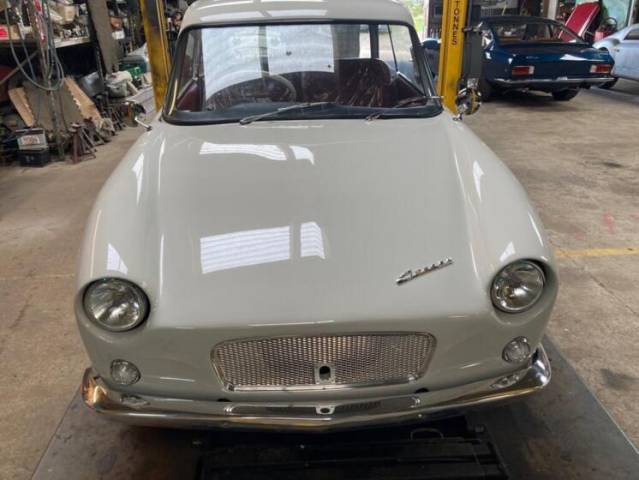
1961 | Citroën Bijou

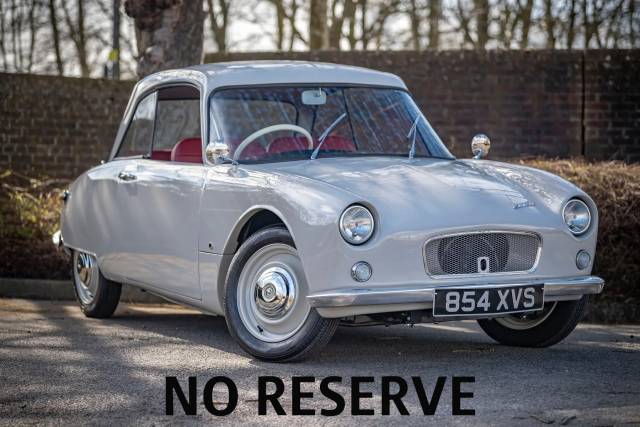
1961 | Citroën Bijou
Nut & Bolt Restoration - Could be Best in the World
Create search alert
Let yourself be notified as soon as a listing is published that matches your search filters.
Create listing
Do you have a Citroën Bijou that you want to sell? Then create a listing now.
Create listingCitroën Bijou Classic Cars: Prices & Market Values
History of the Citroën Bijou
The Citroën Bijou was introduced in 1959, assembled in Citroën's Slough factory in England, where the company had established itself since 1925. This model was Citroën’s response to the perceived demand for a sleeker, more traditionally styled car aimed at British buyers, who were unenthused by the utilitarian aesthetic of the 2CV. Despite sharing the robust underpinnings of the 2CV—including its interconnected suspension and chassis—the Bijou’s compact coupé body presented a noticeable departure from French minimalism. The production run lasted until 1964, making the Bijou a short-lived yet memorable chapter in both British and Citroën automotive history.
Model History
The Bijou has no true predecessor except the Citroën 2CV, from which it inherited its platform and technical architecture. Conceived exclusively for the British market, it never found a direct replacement within Citroën's core line-up, as consumer preferences shifted and Citroën would later focus on more universal models. Its limited production and region-specific conception set it apart from other Citroën vehicles, making it a unique entry in the company's catalogue.
Highlights of the Citroën Bijou
One defining aspect of the Citroën Bijou lies in its blend of French practicality and a body tailored for British conservatism. Its composite (fibreglass) coupé bodywork was innovative for its time and lighter than mainstream alternatives. Built in the UK for UK tastes, it is distinctly uncommon—a contrast to the utilitarian and globally known 2CV. Additional highlights include the advanced independent suspension and the accessible mechanics, all carried over from the donor 2CV.
Technical Data
Special Editions and Collectible Models
There are no broadly acknowledged special or limited edition variants of the Citroën Bijou. Given its very limited overall production, each example is de facto a rarity. Individual vehicles might feature period accessories or unique histories, but there is no officially designated special edition in the traditional sense.
Weak Spots and Common Issues
No vehicle-specific weak spots or widespread issues unique to the Bijou are available in the current data. Nevertheless, typical points of attention reflect those of early Citroën models: careful inspection of the chassis for corrosion is prudent, along with checking the integrity of the fibreglass bodywork for cracks or historical repairs, given its construction. Simple mechanics aid overall maintenance, but age-related wear on mechanical components is to be expected.
Engine, Performance, Transmission and Handling
The Bijou’s modest two-cylinder engine delivers steady, unpretentious performance geared more toward efficiency than speed. The car’s unique advantage stems from its light weight, which complements the flexible, independent suspension system—an arrangement that provides an unexpectedly composed ride over rough British roads. The four-speed manual transmission allows effective power delivery and ease of maintenance.
Popular models of interest include any surviving original Bijou, particularly those retaining period-correct mechanicals and body panels, as their numbers are inherently low. Given the small production figures, every extant Bijou represents a significant slice of automotive history. undefined
Interior, Comfort, Exterior and Design
The Bijou features a simple, function-driven interior distinguished by lightweight materials and minimalistic appointments. Its coupé silhouette, executed in fibreglass, was a conscious attempt to appeal to British tastes—less eccentric than Continental designs, but still unconventional by the local standards of the late 1950s and early 1960s. Colour offerings and trim choices were limited, with most vehicles completed in a handful of period-appropriate shades. Accessories were kept simple, in line with the car’s accessible ethos. Special features include the unique coupé roofline and the use of composite materials, rare in Britain at the time.
Other Features
As a car conceived for a specific market and rarely seen outside the UK, the Bijou occupies a niche within both British and Citroën histories. Its use of fibreglass body panels and its localised manufacture underline Citroën’s willingness to experiment, albeit with commercial outcomes that proved modest in scale.
Summary
The Citroën Bijou is a distinctive British interpretation of French engineering, blending the mechanical durability of the 2CV with a styling crafted for local preferences. Practical, exceptionally rare, and notable for its innovative use of fibreglass, the Bijou holds a special place not just as a Citroën curiousity, but as a time capsule of early transnational car design thinking.