- Car
- Railton (2 offers)
Buy Railton Classic Cars
Railton combined British coachbuilt style with the easy torque of Hudson and Terraplane engines from 1933. For Australian collectors, a genuine Railton is a rare pre-war touring car whose body, identity and import preparation matter as much as its handsome radiator.
Search results
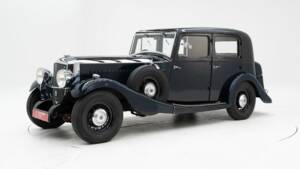
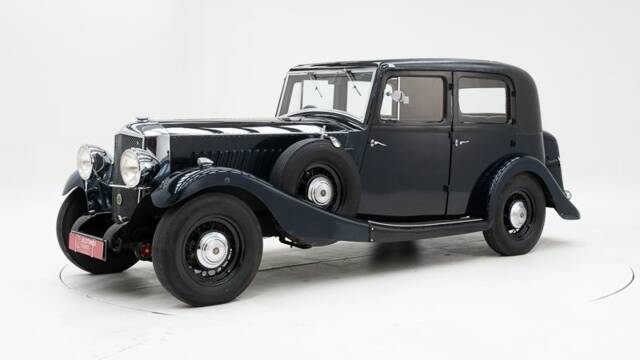
1935 | Railton Straight Eight
1935 Railton Fairmile Series I '35

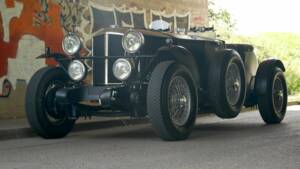
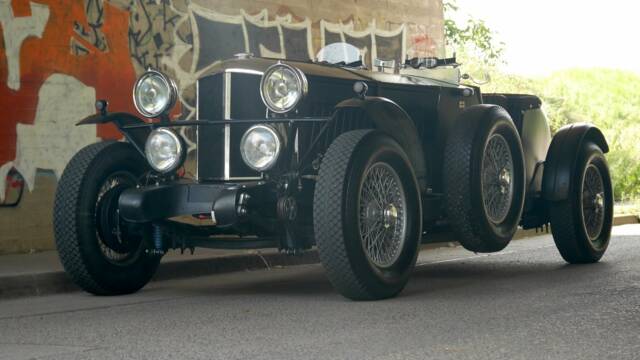
1935 | Railton Straight Eight Light Sports Brooklands
Railton Light Sports straight eight

Railton listing references from Classic Trader
Below you will find listings related to your search that are no longer available on Classic Trader. Use this information to gain insight into availability, value trends, and current pricing for a "Railton" to make a more informed purchasing decision.
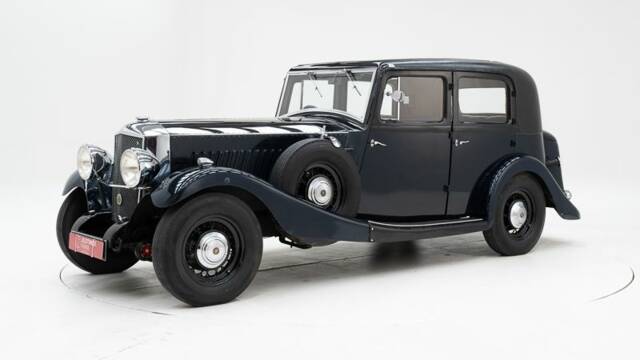
1935 | Railton Straight Eight Stratton
1935 Railton Fairmile Series I '35
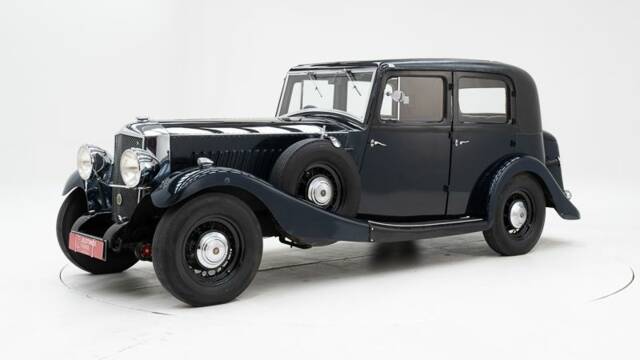
1935 | Railton Straight Eight
1935 Railton Fairmile Series I '35
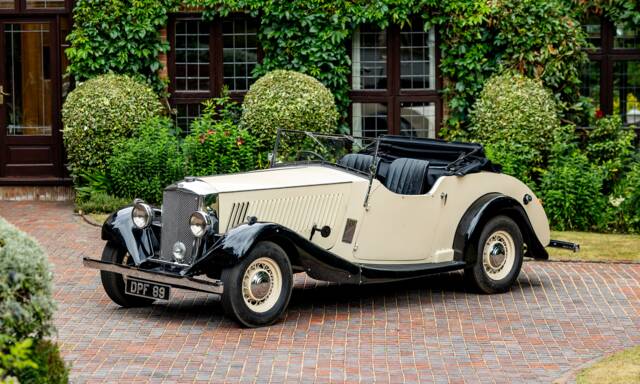
1935 | Railton Straight Eight Open Tourer
1935 Railton Eight Tourer by Abbot

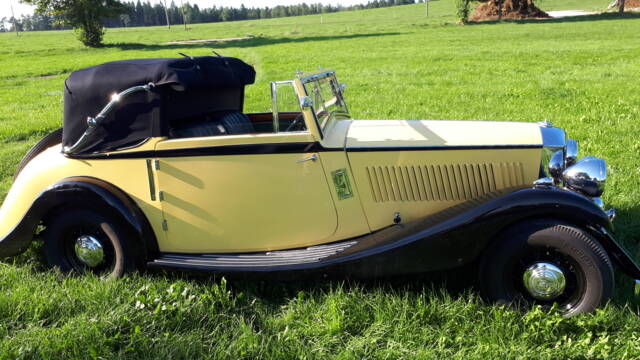
1935 | Railton Straight Eight Light Sports Brooklands
3 Position Drophead Coupe ,Body von Coachcraft
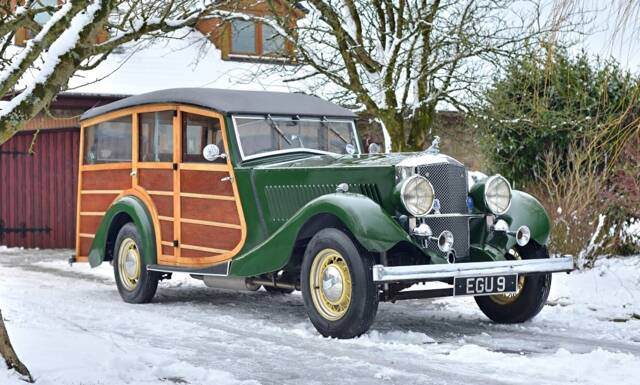
1935 | Railton Eight ‘Woody’ Estate
1935 Railton Eight 'Woody' Estate Car
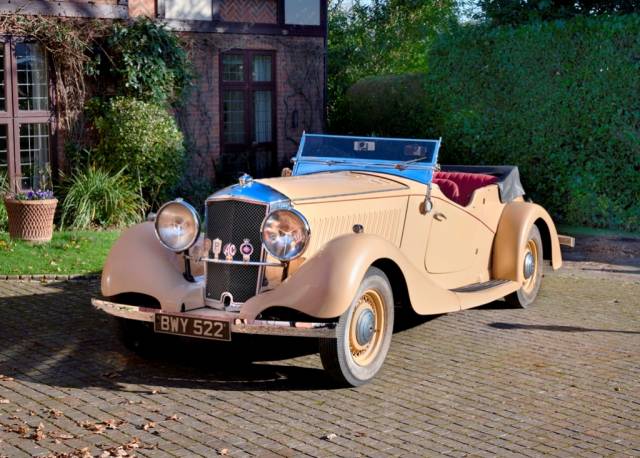
1937 | Railton Straight Eight Light Sports Brooklands
Railton 2+2 Tourer by Carbodies
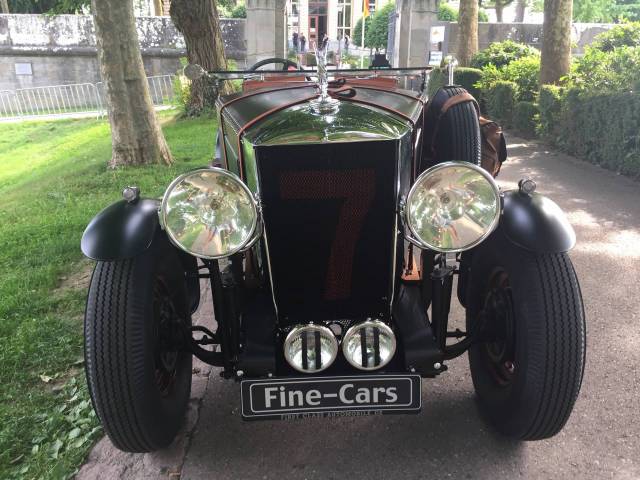
1934 | Railton Straight Eight Open Tourer
RAILTON STRAIGHT EIGHT OPEN TOURER (1934)
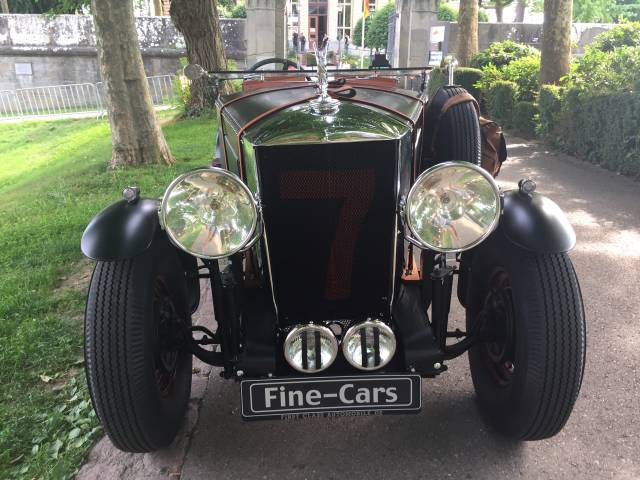
1934 | Railton Straight Eight Open Tourer
RAILTON STRAIGHT EIGHT OPEN TOURER (1934)
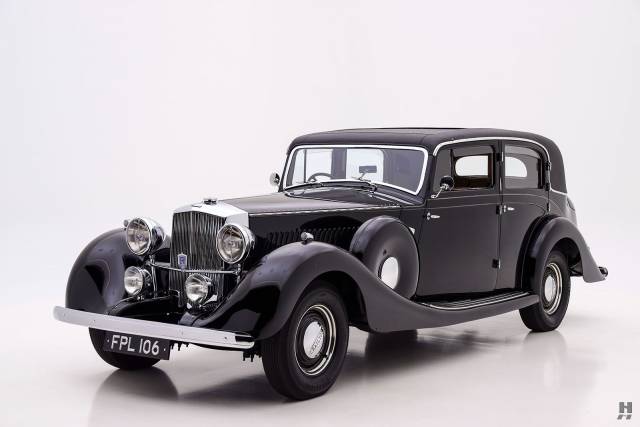
1937 | Railton Straight Eight Stratton
Railton Stratton
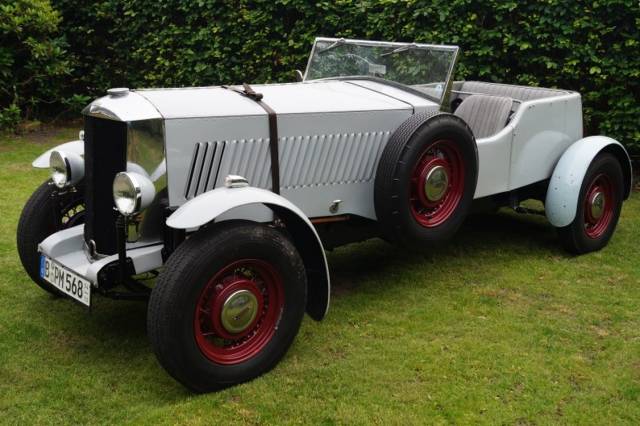
1934 | Railton Straight Eight Open Tourer
Railton Straigt Eight
History and Heritage
Railton was Noel Macklin’s answer to a very British problem of the early 1930s: how to offer vivid long-distance performance without funding an entirely new engine and chassis programme. Macklin had already made his name with Invicta, but the depression had made that expensive venture difficult to sustain. In 1933, from Cobham in Surrey, he adopted proven Hudson and Terraplane mechanicals, shortened and adapted the chassis where appropriate, and surrounded them with lighter, more individual British coachwork. Fairmile Engineering built the cars until war work ended regular production.
The name was licensed from Reid Railton, one of the era’s most respected competition engineers. It was a clever association, but it needs careful interpretation when assessing an advertisement. Railton designed record and racing cars; the production Railtons were Macklin’s enterprise, using American running gear with British bodies. The famous 1933 Napier-Railton, built for John Cobb by Thomson & Taylor, is therefore not a Railton Cars model. Its 24-litre Napier Lion engine and Brooklands record make it an important part of the name’s story, not a comparable road-car specification or value benchmark.
The first mainstream Railton Eight used the 4,010cc Hudson Terraplane straight eight, rated at 94 bhp. In its British setting that large side-valve engine brought something unusual: deep torque and swift acceleration in a car that could be much lighter and less bulky than its American donor. The 1935 revision adopted Hudson’s 4,168cc eight, initially rated at 113 bhp and later around 124 bhp. Tourers, dropheads, saloons and coupés followed, and the exact bodybuilder mattered as much as the basic chassis. Ranalah, R.E.A.L., Carbodies and Coachcraft were among the names associated with the marque.
Railton did not present a single uniform catalogue in the modern sense. A Fairmile Drophead, a Cobham saloon, a Stratton saloon and a Victoria coupé share the same family resemblance but may have materially different construction, weight, weather equipment and ownership costs. The Light Sports Tourer is the sharpest illustration. Two factory cars were made in 1935 with shorter chassis, a moved-back engine and aluminium/duralumin bodywork. A period Motor Sport test recorded 0–60 mph in 8.8 seconds and more than 100 mph. That performance belongs to those exceptionally light specials, not to every Eight wearing a similar badge.
The range broadened late in the decade. The 16.9, introduced in 1937 with a 2.723-litre Hudson six, gave Railton a lower-tax alternative; the Railton Owners Club records 81 built. In 1938 the 10 HP used Standard Flying Nine/Flying Ten four-cylinder mechanicals beneath Little Cobham or Little Fairmile bodywork, and just 51 were made. These smaller cars are genuine Railtons but offer a distinctly different pace and parts equation from an Eight. The Owners Club’s register records 1,379 Eights, a figure that explains why the marque is known internationally yet encountered only occasionally in Australia.
War altered the business permanently. Macklin’s Fairmile works turned to fast naval craft, while Hudson had already taken control of the marque. A few chassis were completed during or after the war, but there was no sustained post-war Railton programme. That short production life is precisely why an authentic car today can feel so personal: its chassis and engine have a common family history, while its coachwork, delivery record and later restoration often have a story of their own.
Highlights of the Marque
The appeal of a Railton lies in the unlikely compatibility of its ingredients. The Hudson-derived eight is a big, long-stroke side-valve unit rather than a highly strung sporting engine. It develops useful pulling power at low revs and suits the broad Australian distances between club events far better than its pre-war appearance might suggest. A sound Eight does not need to be hurried; it gathers speed with a deliberate, muscular feel and makes a three-speed gearbox less of a burden than the specification suggests.
That approachable mechanical basis is a practical advantage. The Railton Owners Club maintains a register, workshop information and a parts scheme of more than 300 lines for shared six- and eight-cylinder mechanical components. It is sensible for an Australian buyer to establish contact before committing to a car, then ask what is available, what must come from the United Kingdom or North America, and which components have to be remanufactured locally. Engine, ignition, brake and suspension support is a very different proposition from sourcing a grille shell, a windscreen frame, original instruments or a one-off door fitting.
Coachwork variety is both the attraction and the expensive risk. An original Railton may combine an ash frame, aluminium skin, steel panels, handmade hinges and coachbuilt hood fittings. There is no universal parts catalogue for all of it. The Club specifically notes that body panels are generally unavailable because the coachbuilders varied. A restored Fairmile with a documented timber-frame renewal can be a better acquisition than an apparently untouched car with swelling paint, misaligned doors and concealed decay. Buyers should value evidence over an unqualified claim of “original body”.
The marque also rewards precise language. “Straight Eight” is a common informal description of an Eight, but the Railton make embraces much more than that engine. The 16.9 and 10 HP are important as compact alternatives; open Eight tourers supply the strongest sense of pre-war speed; Cobham and Stratton saloons offer a more enclosed touring experience; and the Light Sports Tourer is an extremely scarce special rather than a normal trim level. A listing should be assessed by chassis number, body type, coachbuilder and mechanical configuration before the badge alone is allowed to influence the price.
For Australians, the usual preference for right-hand drive is a welcome fit. Most production Railtons were built for the British market, and a UK-sourced example normally retains the natural driving position for Australian roads. That does not remove the need to check lamps, tyres, glazing, seat-belts if fitted, wipers and the requirements of the intended state or territory. Nor does it make a car automatically registrable: Commonwealth import approval and entry on the Register of Approved Vehicles are separate from state or territory registration decisions.
Technical Data
These are period starting points, not a substitute for inspecting the particular vehicle. Railtons have been repaired, rebodied and modified for more than eight decades. A replacement engine, changed rear-axle ratio, later carburettor or upgraded cooling arrangement should not automatically rule out a usable car, but it must be disclosed and priced accordingly. A Light Sports-style body on another chassis is not the same as one of the two factory cars, and an Eight fitted with an incorrect six-cylinder engine is not an original Eight merely because the engine family is related.
On the large engines, inspect cooling thoroughly. The Owners Club has highlighted blocked cooling passages and water-distribution issues as real operating concerns. Ask for a cold start, observe oil pressure and temperature through an unhurried road test, then look for boiling, seepage or a difficult hot restart after a heat soak. Carburettor vapourisation can occur in hot conditions, a consideration more relevant on an Australian summer run than on a brief English auction preview. Sound heat shielding and an orderly fuel system are preferable to improvised insulation, extra switches and unlabelled electric pumps.
The three-speed gearbox deserves period technique rather than force. Check clutch take-up, propeller-shaft play, engagement under load and the condition of the braking system; drum brakes, kingpins, wheel bearings, steering box, springs and dampers all influence confidence at road speed. The Club also cautions that old-looking-good tyres can have hardened or deteriorated internally. Tyre date codes, correct dimensions and wheel condition deserve the same attention as paintwork, particularly before a long interstate journey.
Market Overview and Buying Tips
Railton values cannot be reduced to one model figure. Coachbuilder, structural condition, documented identity, restoration standard and suitability for road use carry more weight than the year shown in a short listing. A useful recent international anchor is the 1935 Railton Eight Victoria Coupé by Ranalah, which sold through Hagerty Marketplace for US$27,820 on 25 February 2026. That is a recorded sale, not an estimate, but it is not a universal Australian price. Freight, exchange rate, insurance, import costs, biosecurity work and state registration must be added before it becomes a local comparison.
At the other end of the character spectrum, Classic.com records a €145,000 high bid for a 1938 Light Sports in September 2024, but not a completed sale. Bonhams sold a 1935 Eight Special Saloon for £23,000 including buyer’s premium in 2022. Together, these references show why a normal saloon, a well-presented coachbuilt coupé and a rare competition-flavoured special should never be valued as interchangeable. For an Australian buyer, a locally registered, genuinely right-hand-drive car with known state paperwork can justify a different calculation from a cheaper UK purchase waiting at the dock.
Before bidding on an overseas car, confirm the chassis number, engine number, body identity and paperwork with the Railton Owners Club register where possible. Request the original sales record or factory evidence, old registration books, UK V5C if applicable, restoration invoices and photographs taken before paint. Because coachbuilders were varied, study the hood sticks, door apertures, timber structure, bulkhead, dashboard, body tags and frame repairs rather than relying on a seller’s body name. A well-documented later body restoration is far more reassuring than smooth lacquer over unknown ash, sill and floor condition.
The Australian import sequence should be planned before shipping. The Department of Infrastructure says a road vehicle needs an import approval before importation; for a passenger car more than 25 years old, a concessional RAV entry approval for an older vehicle is the relevant route in ordinary cases. The application is made in ROVER and requires evidence such as ownership documents, build date, photographs and the VIN or chassis number. The approval also serves as permission to import and leads to entry on the RAV, but it does not guarantee registration. Check the intended state or territory’s inspection and registration requirements before paying a deposit, particularly if the car has non-standard lights, substantial modifications or no modern 17-character VIN. A newly allocated VIN may have to be permanently marked as required by the approval and local authority.
Biosecurity is a budget item, not an afterthought. The Department of Agriculture, Fisheries and Forestry places used vehicles under biosecurity control on arrival and normally requires external and internal inspection. Soil, seeds, leaves, insects, animal material and mud can be hidden in wheel arches, chassis rails, underbody seams, radiator fins, spare-wheel wells, carpets, seat folds and door seals. On a wood-framed pre-war car, the buyer should also make sure there is no loose organic debris or untreated timber material carried as cargo. Ask the exporter to clean the vehicle internally and externally immediately before loading, document it with photographs, and keep it clean through transport. If contamination is found, treatment, reinspection, export or destruction can be directed at the owner’s expense.
DAFF’s recognised offshore cleaning and pre-inspection arrangements can reduce, but not eliminate, the level of arrival inspection for eligible used passenger vehicles. They are not an excuse to ship a freshly driven country-road car with mud in its guards. Read the live BICON conditions for the actual consignment and shipping method; break-bulk vehicles are inspected at the wharf, while containerised consignments are inspected at an approved arrangement site. A car that needs repeated cleaning can accumulate storage, handling and inspection charges quickly, so the realistic landed budget needs contingency beyond sea freight and insurance.
Once in Australia, registration is state-based. A federal approval and RAV record are essential parts of the pathway, not a promise of plates. Historic or club schemes can be attractive for limited-use cars, but their eligibility, inspection evidence and driving conditions differ by jurisdiction. Buyers who want regular touring should establish whether full registration, not just a club permit, is practical. A pre-purchase inspection by someone comfortable with timber-framed British coachwork and Hudson mechanicals is money well spent; a general modern-vehicle inspection is not enough.
Driving Feel
A healthy Railton Eight feels more like a swift pre-war express than a small sports car. The long bonnet, upright windscreen and separate mudguards create an occasion before the engine is even started. At low revs the eight is soft-spoken and weighty, then delivers its strength as a sustained wave rather than a sudden surge. On a flowing road, the pleasure is in selecting a tall gear early and letting torque carry the car through the next rise. That character makes the Eight particularly appealing for relaxed club touring when the car has been sorted properly.
The driver must still respect its age. Steering response, braking distances, tyre technology, traffic speeds and weather sealing are from another period. A Railton should track straight, stop evenly and maintain temperature, but none should be expected to feel like a post-war sports saloon. An honest test drive includes low-speed manoeuvres, a warm restart, gearbox shifts both ways, a sustained hill and a check for heat, vibration and wandering. In a country as large as Australia, the distance home from an event is an important part of the ownership experience.
The smaller 16.9 and 10 HP models offer a gentler, more modest version of the idea. They may suit collectors who value rarity, lighter controls and the look of a Cobham or Fairmile body without the thirst and physical mass of an Eight. The Light Sports Tourer sits at the opposite extreme: its short chassis and light body promise genuine urgency, though it remains a valuable specialist car that should be driven according to its condition, not its period test figures.
Design and Coachwork
Railton proportions are its most enduring signature: a long engine compartment, rear-set cabin, narrow radiator and freestanding guards, with the body tailored around a chassis that began in America. The radiator design is associated with motoring artist F. Gordon Crosby, and it gave the cars a distinctive face rather than a disguised Hudson. British instrumentation and control layouts completed the transformation.
Coachcraft supplied many bodies, yet the marque was never visually standardised. Fairmile dropheads, Cobham and Stratton saloons, Carrington and Claremont coupés, University limousines, Ranalah bodies and Carbodies work can all differ substantially. That variety lets a buyer choose between open-air theatre, enclosed touring or the intimacy of a coupé, but it also makes exact identification fundamental. A body that looks “close enough” in a low-resolution listing might hide altered wheelarches, later doors, an incorrect screen or a rebuilt frame with little supporting evidence.
For an Australian climate, inspect hood fabric, side screens, windscreen sealing, timber dryness and the quality of any previous heat or UV protection. These practical issues do not make a car less authentic; they determine whether it will be enjoyable away from a covered display. Properly repaired coachwork and carefully maintained brightwork are signs of a car prepared for use, while a cosmetic restoration without structural photographs should invite further questions.
Summary
To buy a Railton classic car is to choose a scarce Anglo-American pre-war machine with real touring ability and unusually individual bodywork. The Eight defines the marque, while the Fairmile, Cobham, 16.9 and 10 HP show its breadth; the Light Sports Tourer remains the rare exception, not the standard.
For Australian ownership, prioritise verified identity, sound timber and chassis, a proven cooling system, tyre age and documented mechanical support. If importing, secure the ROVER approval before shipment, plan for DAFF biosecurity inspection and confirm state registration requirements early. A well-documented, cleanly imported right-hand-drive Railton can be a remarkable club car; rarity alone cannot compensate for missing provenance, poor coachwork or an unplanned landed cost.